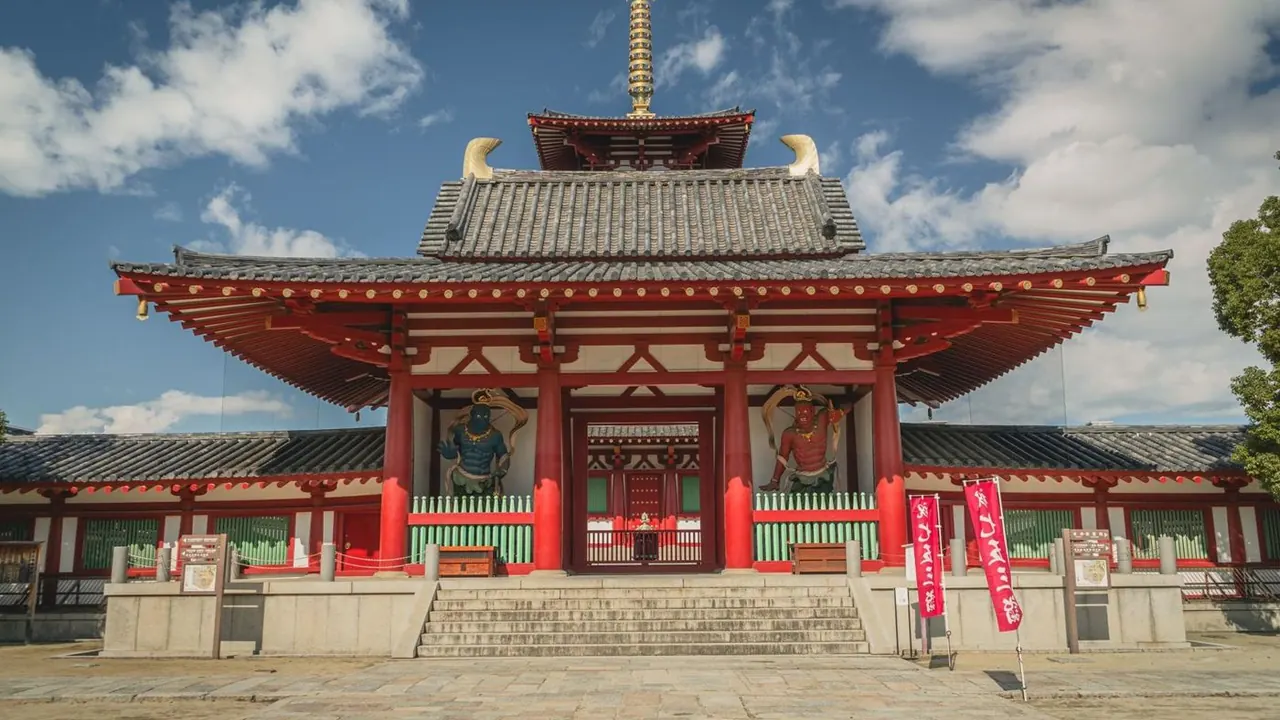
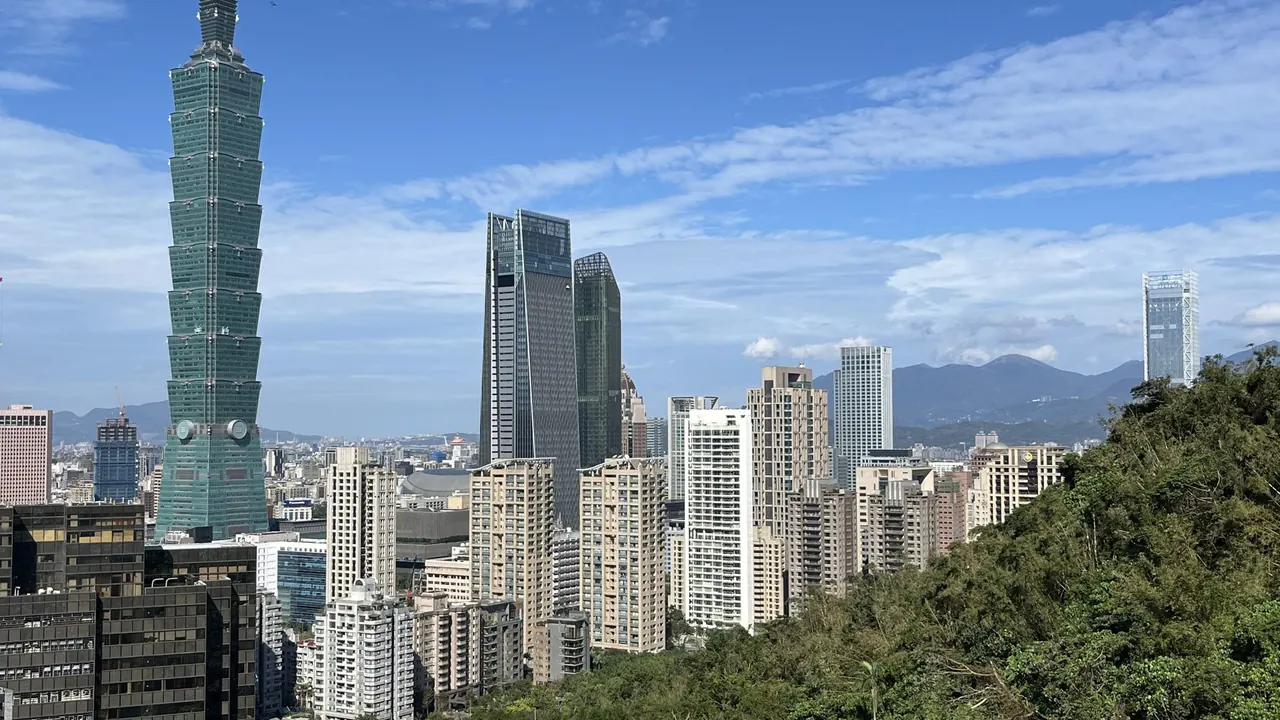
Photos: Osaka by Sarmat Batagov, Pexels License; Taipei by Another Believer, CC BY-SA 4.0, cropped.
Osaka or Taipei?
Our verdict in twelve categories, each scored against the same fixed benchmark cities, and the climate month by month, so you can choose for your trip.
Choose Osaka for
- nightlife
- day trips
- families
Osaka suits the traveller who wants a lively base for a whole region. Kyoto, Nara, Kobe and Himeji are all a short train ride away, the evenings in Minami run late over counter food and standing bars, and with Universal Studios Japan and the Kaiyukan aquarium on the bay it is the easier pick for families too. Choose it if your trip is about eating, going out and seeing as much of western Japan as you can from one hotel.
Choose Taipei for
- nature and the outdoors
- wellness
- beaches
Taipei is the better choice for a slower trip with green hills on the doorstep. Yangmingshan, Elephant Mountain and the Maokong tea terraces start where the streets end, Beitou's hot springs are on the metro, and the National Palace Museum gives it a single collection of real depth. The nights are calmer and the days cost a little less, so it rewards walkers, bathers and anyone happy to graze through night markets rather than bar-hop until dawn.
Scoreboard
Twelve categories on one fixed scale from 0 to 100. The shaded stretch is the gap between the two.
Your match
Pick a travel style or drag the sliders, and both match scores follow your weighting.
Wins on nightlife and day trips with your weighting.
Wins on nature and the outdoors and wellness with your weighting.
What matters to you?
Category by category
What the scores mean for a trip.
Beaches & swimming
Neither city is a beach destination, though Taipei has a slight edge. Its nearest strand, Fulong, is a long golden spit with a river lagoon about an hour away, and the water stays warm from June to September, but open-coast rips and typhoon closures cut into that.
Osaka's beaches at Suma or Tannowa are coarse-sand summer outings on a built-up bay, open little beyond July and August. For proper sand, people from either city head somewhere else entirely, Okinawa from Osaka or the east coast from Taipei.
Food & drink
Both are cities where eating is the point of the trip, and they are close to equal. Osaka's food is griddle and counter food: okonomiyaki at the table, kushikatsu, takoyaki in Dotonbori, with Kitashinchi's kaiseki and sushi counters at the top end and Umeda's department store food halls in between.
Taipei eats in the open air at Raohe, Ningxia and Shilin night markets, then starts again at breakfast with soy milk and youtiao. Its drinks culture is wider too, with mountain oolong in traditional teahouses, speciality coffee in Da'an and bubble tea where it began.
Culture & sights
The two are broadly level, but the shape differs. Taipei has one world-class museum, the National Palace Museum, plus atmospheric working temples such as Longshan and restored shophouse streets in Dadaocheng, enough for three or four days.
Osaka's heritage is scattered landmarks, the castle on its huge original walls, Shitennoji and Sumiyoshi Taisha, along with strong ceramics and art museums on Nakanoshima. Its real cultural advantage is that Kyoto and Nara are so close.
Nightlife
Osaka is far livelier after dark. Minami's neon streets, izakaya alleys and Amerikamura's DJ bars stay busy, the city has a national reputation for sociable drinkers, and many people simply stay out until the trains restart in the morning.
Taipei's evenings are quieter and more polished. Its strength is cocktail bars in Da'an and Zhongshan built around local tea and fruit, with Xinyi's clubs for weekend dressing up, but much of the city settles into karaoke rooms and night markets and winds down early on weeknights.
Nature & outdoors
Taipei has much more on its doorstep. Yangmingshan National Park, with fumaroles, silvergrass and the summit of Qixingshan, lies inside the city limits, short steep trails climb from Xinyi to skyline views, and a gondola runs up to Maokong's tea terraces. Wulai's gorges and the northeast coast's cliffs add longer outings.
Osaka is flat concrete, and nature means a train out to Minoo's waterfall trail, the Rokko ridges behind Kobe or the gentle wooded hills to the east. It is good for a day's walk in maple or blossom season, not for an outdoor trip.
Day trips
Osaka is one of the best bases anywhere for day trips. Kyoto is under half an hour away, Nara and its deer about forty minutes, and Himeji Castle, Kobe, Uji and the monastery mountain of Koyasan are all easy on frequent trains, enough to fill two weeks.
Taipei's outings are smaller in scale but full of charm: the lantern-lit stairways of Jiufen, sky lanterns on the Pingxi line, Tamsui's fort and sunsets, and the pottery town of Yingge. High-speed rail reaches Tainan's old temples in about two hours, but the range doesn't come close to Osaka's.
Good for families
Osaka has the bigger draws for children. Universal Studios Japan, the Kaiyukan aquarium with its whale sharks and Tennoji Zoo are all in the city, the Expo '70 park and its giant Tower of the Sun are a short train ride north, and stations and department stores are set up with lifts and baby rooms.
Taipei is just as safe and friendly towards small children, and the zoo's pandas followed by the Maokong gondola make a good day. But its theme parks are an hour or more out, and scooters in the side streets make walking with a pushchair harder work.
Getting around
Both have excellent, English-signed metros and a single card that also works on regional trains, so they are broadly level. Osaka's weak point is its stations, especially the maze of Umeda, while its flat streets make cycling easy. In Taipei the MRT is simpler to navigate and taxis are cheap and honest, but pavements outside the arcaded centre are often blocked by parked scooters.
Shopping & style
Osaka offers more in volume and variety. The Shinsaibashi-suji arcade, the old Umeda department stores, Den Den Town for electronics and anime, and the kitchen knives of Doguyasuji make for serious shopping days.
Taipei suits browsing over buying big. Its best finds are Taiwanese design at the Huashan and Songshan cultural parks, high-mountain oolong and teaware, and dried goods on Dihua Street, with Xinyi's malls covering the international brands.
Affordability
Taipei is a little kinder to the budget. Night-market meals, noodle shops and taxis all cost very little, and many trails and temples are free.
Osaka is still fair, with cheap street food and set lunches, but rooms climb sharply in blossom and autumn-leaf season and big tickets like Universal Studios add up. In both cities hotels take the largest share, and staying just outside Namba and Umeda, or around Zhongshan and Ximending, helps.
Live music & performing arts
Osaka has the more distinctive stage. The National Bunraku Theatre puts on full puppet theatre seasons with English guides, Festival Hall and Symphony Hall host orchestras, and the Takarazuka Revue is a short train ride away, though the manzai comedy is Japanese-only.
Taipei's offer is solid rather than famous: the National Theater and Concert Hall at Liberty Square, contemporary work at the Taipei Performing Arts Center, and glove puppetry and Taiwanese opera at temple festivals and in Dadaocheng.
Wellness & relaxation
Taipei is the more restful choice. Beitou's hot springs are at the end of an MRT line, with sulphur pools, private tubs and an open-air public bath, and there are more springs at Yangmingshan and Wulai, foot reflexology on nearly every street and slow afternoons over tea in Maokong.
Osaka's bathing is in neighbourhood sento and large super sento, and real onsen means an hour's trip to Arima. The city itself is fast and noisy, with calm limited to early mornings at the shrines.
When should you go?
Pick your month. The climate figures are measured averages, not a forecast.
Osaka in July
Taipei in July
Daytime high, °C
Rainfall in the month, mm
Where the figures come from
Taipei has no rain gauge within 25 km of the centre, so its rainfall comes from a gridded climate dataset read at the city rather than from a gauge further away.
Temperature and rainfall are climate normals, averaged over the years shown. Osaka: 1991-2020 normals, Osaka (1.8 km from centre). Taipei: 1992-2020 (rainfall 1991-2020) normals, Sungshan / Taipei (3.5 km from centre).
Osaka has four distinct seasons. Winters are cold for sightseeing, with daytime highs around 10°C in January, while spring and autumn are the comfortable months for walking. The rainy season peaks in June, and July and August are hot and sticky, reaching 34°C, though August is also the sunniest month and the sea is warm enough for the short summer swimming season.
Taipei never gets properly cold, with winter days near 20°C, but it is wet in every month and much wetter than Osaka, with the heaviest rain from August into September at around 340mm. Summer heat matches Osaka's, and the sea stays warm for longer, from about May to October. October to December and March to April are the easiest times to hike and explore; Osaka has the drier winter, Taipei the milder one.
Which traveller are you?
On a food and nightlife trip, Osaka is the pick. Both cities eat superbly, but Osaka's evenings carry on, from takoyaki stalls in Dotonbori to tiny bars in Ura-Namba and Ohatsutenjin, where strangers chat at the counter until the first train.
For an outdoors trip, Taipei wins clearly. Trails start minutes from the metro, so a short climb fits in before lunch and a full day in the hills or on the coast is easy. Go in spring or autumn; Osaka needs a train for any real hike.
On a family trip with children, Osaka is the stronger choice, ideally in spring or autumn. Young children can feed the deer at Nara and spend a wet afternoon at Kids Plaza, while Taipei's night-market games suit older children more.
Before you go
| Measure | Osaka | Taipei |
|---|---|---|
| Official language | Japanese | Taiwanese Sign Language, Amis, Taiwanese Hokkien, Rukai, Bunun, Kanakanavu, Standard Taiwanese Mandarin, Paiwan, Yami, Atayal, Saaroa, Kavalan, Tsou, Seediq, Puyuma, Saisiyat, Sakizaya, Taiwanese Hakka, Truku, Matsu dialect, Kinmen dialect, Wuqiu dialect |
| Currency | Yen (JPY) | New Taiwan Dollar (TWD) |
| Sockets | AB100 V, 50 and 60 Hz depending on the region | AB110 V, 60 Hz |
| Driving side | Left | Right |
| Time zone | UTC+9 | UTC+8 |
| Emergency number | Police 110, fire 119 | 110 or 112 or 119 |
| Elevation | 20 m | 10 m |
| Main airport | Kansai International Airport (KIX)38 km from centre62 non-stop destinations | Taiwan Taoyuan International Airport (TPE)33 km from centre |
| Public holidays this year | 16 days | - |
By the numbers
| Measure | Osaka | Taipei |
|---|---|---|
| City population | 2,751,862 | 2,429,429 |
| People per km² | 12,340 | 8,938 |
| Museums within 10 km | 44 | 69 |
| UNESCO World Heritage sites within 50 km | 6 | 0 |
| Swim season, months above 21 °C | 5 months | 8 months |
Where else could you go?
Every comparison below shares a destination with this one, so you can follow Osaka or Taipei somewhere new.