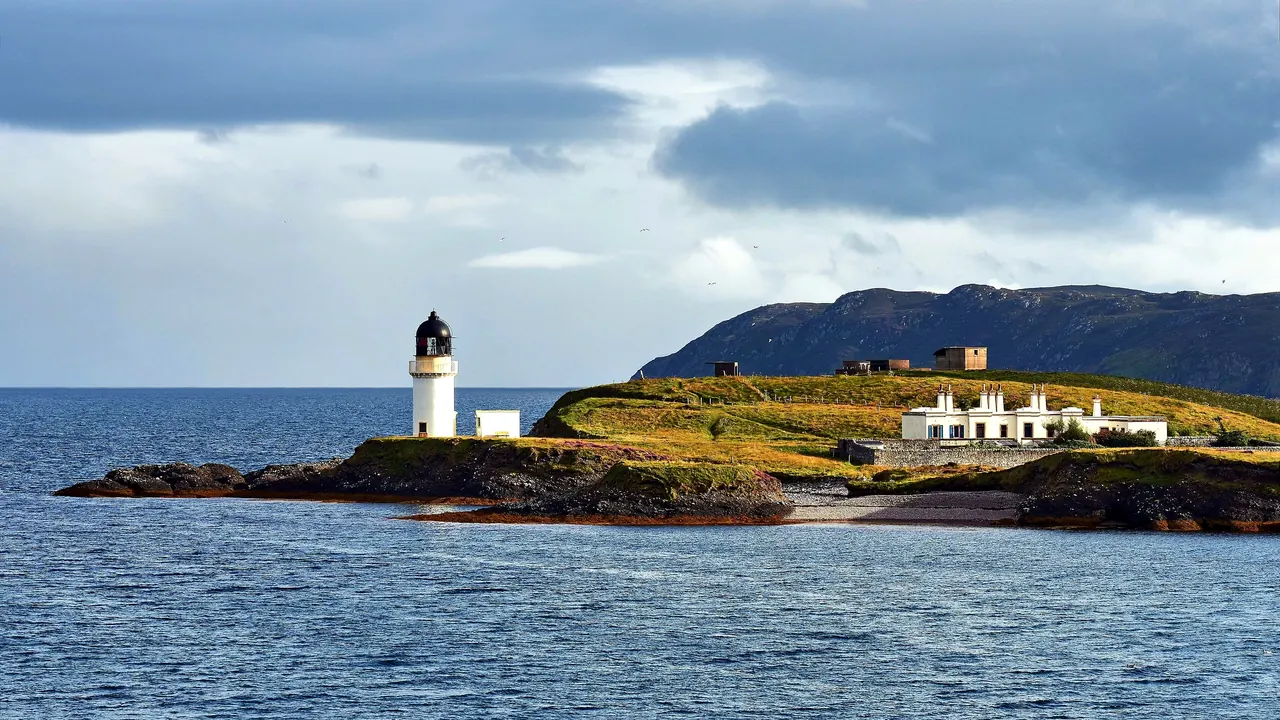
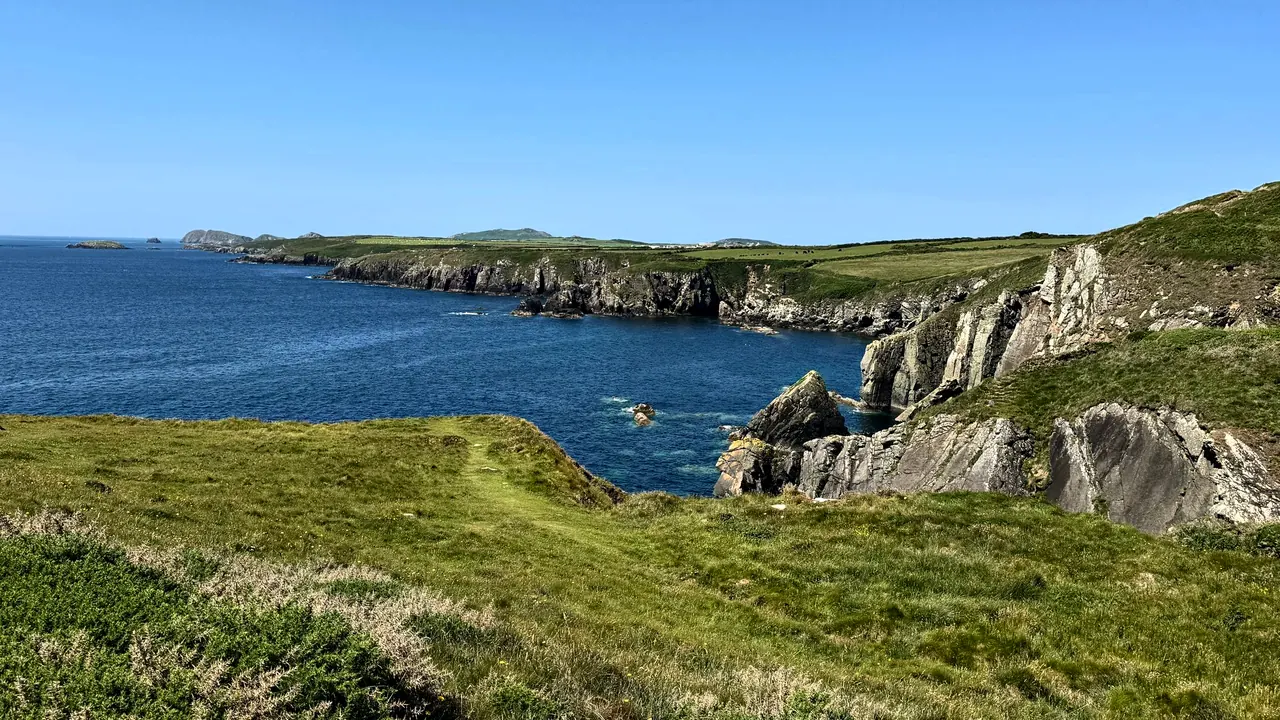
Photos: Outer Hebrides by Virtual-Pano, CC BY-SA 4.0, cropped; Pembrokeshire by Petra Nesti, Pexels License.
Outer Hebrides or Pembrokeshire?
Our verdict in twelve categories, each scored against the same fixed benchmark cities, and the climate month by month, so you can choose for your trip.
Choose Outer Hebrides for
- shopping
- live music and the arts
- wellness
The Outer Hebrides suit travellers who want to get far away from everything. Long drives cross peat moorland to white strands with nobody on them. You may see eagles and otters, summer boats run out to St Kilda, and a Gaelic-speaking island life sets the tone more than any single sight. It asks a lot of you: a car is essential, there are few places to eat and almost nothing happens after dark. Walkers, birdwatchers and anyone happy with a cottage and whatever the weather brings will love it.
Choose Pembrokeshire for
- beaches
- families
- culture and sights
Pembrokeshire is the easier choice and offers more. The sand is better and there is more of it, the sea is a little less cold, and Tenby and Saundersfoot make a vacation with children straightforward. St Davids, the Norman castles and a coast path you can walk a day at a time give you more to fill a week. The whole county takes only about an hour to cross.
Scoreboard
Twelve categories on one fixed scale from 0 to 100. The shaded stretch is the gap between the two.
Your match
Pick a travel style or drag the sliders, and both match scores follow your weighting.
Wins on shopping and live music and the arts with your weighting.
Wins on beaches and families with your weighting.
What matters to you?
Category by category
What the scores mean for a trip.
Beaches & swimming
The Hebridean strands at Luskentyre, Scarista, Uig and Vatersay are emptier and perhaps more striking, with turquoise shallows when the sun is out. But the Atlantic there stays cold even in late summer and the wind often cuts the day short, so these are beaches for walking and picnics rather than swimming.
Pembrokeshire is much more of a beach destination. There are many bays to choose from, at Tenby, Barafundle, Newgale and around the Marloes peninsula, many with lifeguards in summer. The water warms a few degrees more by late summer, so short swims are realistic, especially in a wetsuit.
Food & drink
Both depend on what comes off the boats and the fields rather than on restaurants. The Hebrides have the more distinctive larder: langoustines and scallops, Stornoway black pudding and gin flavoured with kelp. Away from Stornoway and a few places on Harris, though, eating out comes down to a hotel bar, and many places close in winter and on Sundays.
Pembrokeshire has more places to sit down and eat. St Davids, Fishguard and Narberth have good restaurants, and the coast has beach cafés and pubs with sea views, so finding dinner without planning is easier. Self-catering works well in both: buy from the pier and the smokehouse on the islands, from farm shops and farmers' markets in Wales.
Culture & sights
The Hebrides have a short but powerful list of sights. There are the Calanais stones and Dun Carloway broch, the blackhouses at Gearrannan and Arnol, and some of the Lewis Chessmen in Stornoway. They are spread far apart along long roads, and Gaelic, spoken every day, is the strongest part of the islands' culture.
Pembrokeshire has more to see, closer together. St Davids Cathedral and the Bishop's Palace, Pembroke Castle and its ring of Norman fortresses, Tenby's walls and the burial chamber at Pentre Ifan will fill several days. Both have a link to Stonehenge: Calanais is older than its great circle, and the Preselis supplied some of its bluestones.
Nightlife
Neither is a place for a night out, but Pembrokeshire has a little more going on. In the Hebrides you are choosing between a hotel bar and one of Stornoway's few pubs, perhaps with a music session, and Sundays on Lewis and Harris are almost silent. Pembrokeshire has Tenby on summer weekends, when the harbour pubs fill and a few bars stay open late, though elsewhere it is quiet village inns.
Nature & outdoors
This is the strongest side of both, and they are evenly matched, but the landscapes feel very different. The Hebrides are about emptiness: bare gneiss in South Harris, moorland scattered with lochans, the Clisham, and eagles, otters and corncrakes. St Kilda's seabird cliffs are a summer boat trip away.
Pembrokeshire is a coast to be active on. Its national park path runs for about 300km, puffins nest on Skomer and seals pup on Ramsey, and coasteering and sea kayaking make easy outdoor days, with more people around. Both have good surf, on the west coast of Lewis and at Freshwater West.
Day trips
In the Hebrides a day trip means crossing a causeway or taking a short ferry to the next island, whether Berneray, the Uists, Eriskay or Barra, and finding a village and a beach at the end. It is lovely but the days start to feel alike, and Portree on Skye is the only real change of scene.
Pembrokeshire has more variety within reach. You can visit the monks of Caldey Island, Cardigan and Aberaeron up the coast and Dylan Thomas's Laugharne, and the Gower is about two hours away. None is a major destination, but there are more kinds of day out.
Good for families
The Hebrides give children freedom, with empty sand, rock pools and seals. Little is made for them beyond the pool in Stornoway, though, and long single-track drives test young passengers.
Pembrokeshire is much the better choice with children. Tenby and Saundersfoot are walkable and have beaches in town. Many beaches have lifeguards in summer, children can go crabbing off the harbour walls, and a farm park, a zoo and soft-play centres save rainy days.
Getting around
You need a car in both, but Pembrokeshire asks less of the driver. The Hebrides stretch about 210km along mostly single-track roads with two ferry crossings, and buses are sparse, barely running on Sundays on Lewis and Harris.
Pembrokeshire takes about an hour to cross. Its hedged lanes are narrow, but branch railway lines reach Tenby and Fishguard, and summer coastal buses let you walk the coast path one way and ride back.
Shopping & style
Both are about crafts rather than shops, and the thing to buy in each is woven cloth. In the Hebrides it is Harris Tweed, bought from weavers' sheds beside their houses, so buying it becomes part of the trip. Pembrokeshire's mills weave Welsh blankets and throws, and Narberth gives it a small town of independent shops and antiques, which the islands lack beyond Stornoway's high street.
Affordability
Neither is cheap in summer, but the Hebrides cost more. Car hire, vehicle ferries and shipped-in food add up, and rooms are scarce, so they go early.
Pembrokeshire charges peak rates during the school summer break, but there are no ferries to pay for, and pubs and cafés are moderately priced. In both, spring and early autumn are better value, and self-catering helps.
Live music & performing arts
In the Hebrides, Gaelic song and traditional music are part of island life rather than something put on a stage. You hear them at a ceilidh or summer fèis in a village hall, at a session in a Stornoway pub, or when the Hebridean Celtic Festival brings bands to the town each July. The arts centre in Stornoway adds a little film and theatre.
Pembrokeshire's main musical event is the classical festival held in St Davids Cathedral in early summer. Beyond that, small theatres in Milford Haven and Fishguard put on touring productions and films, and the rest is folk sessions in pubs or, with luck, a choir.
Wellness & relaxation
The Hebrides go deeper into stillness. The single-track roads are empty, there is little to do but watch the weather over the machair, and a cottage by a sea loch gets summer light until late in the evening. Treatments hardly exist, apart from the odd hotel room and the pool in Stornoway.
Pembrokeshire has a little more to book, with spas in a handful of country-house and coastal hotels and yoga or retreat stays in farmhouses. For most visitors, though, unwinding there means a stretch of coast path and a room with a sea view, and the quiet is easier to find outside August.
When should you go?
Pick your month. The climate figures are measured averages, not a forecast.
Outer Hebrides in July
Pembrokeshire in July
Daytime high, °C
Rainfall in the month, mm
Where the figures come from
Pembrokeshire's temperatures are measured 46 km from the centre, at Aberporth.
Pembrokeshire has no rain gauge within 25 km of the centre, so its rainfall comes from a gridded climate dataset read at the destination rather than from a gauge further away.
Temperature and rainfall are climate normals, averaged over the years shown. Outer Hebrides: 1991-2020 normals, Stornoway (4.1 km from centre). Pembrokeshire: 1991-2020 normals, Aberporth (46.2 km from centre).
Both sit on the cool Atlantic edge of Britain and neither ever gets hot. Pembrokeshire is the milder and sunnier of the two through the year. July and August reach about 18°C there, against 16°C in the Hebrides. Off Pembrokeshire the sea peaks near 17°C in August, while around the islands it stays at about 13°C. Even so, the water is bracing in both, so a beach day means a quick dip rather than a long swim.
The Hebrides are at their best in May and June, the driest and brightest months, when the machair flowers bloom. From October the rain builds steeply, and the winter months there regularly pass 130mm. Pembrokeshire's sunniest stretch is also late spring, especially May. Its wet season arrives in autumn too, but falls less heavily. In winter both are for walkers with good waterproofs, not for easy sightseeing.
Which traveller are you?
For a beach and sun trip, Pembrokeshire is the clear choice. Tenby, Barafundle and Whitesands have lifeguards in summer, the sea is a few degrees warmer and summers are noticeably sunnier. The Hebridean strands are mostly for walking.
On a family trip with children, Pembrokeshire is far easier. Tenby and Saundersfoot have beaches in town, there are farm parks and soft play for wet days, and drives are short. The Hebrides offer rock pools and seals, but little else.
For an outdoors trip into real wilderness, the Outer Hebrides have the edge. There are eagles over Harris, otters, the Clisham and summer boats to St Kilda, with a solitude Pembrokeshire's busier coast rarely gives. Pembrokeshire is better for coasteering and Skomer's puffins.
Before you go
| Measure | Outer Hebrides | Pembrokeshire |
|---|---|---|
| Official language | English | English |
| Currency | Pound Sterling (GBP) | Pound Sterling (GBP) |
| Sockets | G230 V, 50 Hz | G230 V, 50 Hz |
| Driving side | Left | Left |
| Time zone | UTC, UTC+1 in summer | UTC, UTC+1 in summer |
| Emergency number | 112 or 999 | 112 or 999 |
| Main airport | Stornoway Airport (SYY)6 non-stop destinations | Cardiff International Airport (CWL)32 non-stop destinations |
| Public holidays this year | 10 days | 8 days |
By the numbers
| Measure | Outer Hebrides | Pembrokeshire |
|---|---|---|
| Population | 26,720 | 125,818 |
| People per km² | 9 | 78 |
| Swim season, months above 21 °C | None | None |
Where else could you go?
Every comparison below shares a destination with this one, so you can follow Outer Hebrides or Pembrokeshire somewhere new.
- Isle of Skyevs Outer Hebrides
- Scottish Highlandsvs Outer Hebrides
- Cornwallvs Pembrokeshire
- Snowdoniavs Pembrokeshire
- Devonvs Pembrokeshire
- Jurassic Coastvs Pembrokeshire