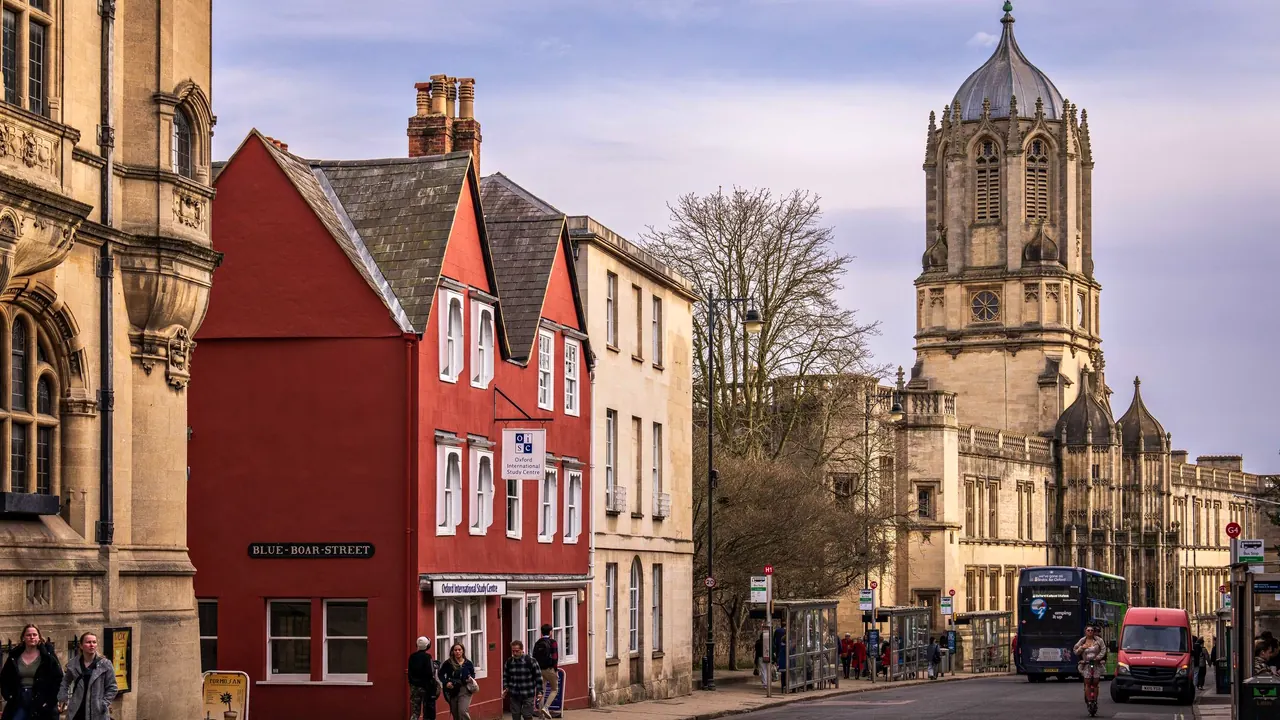
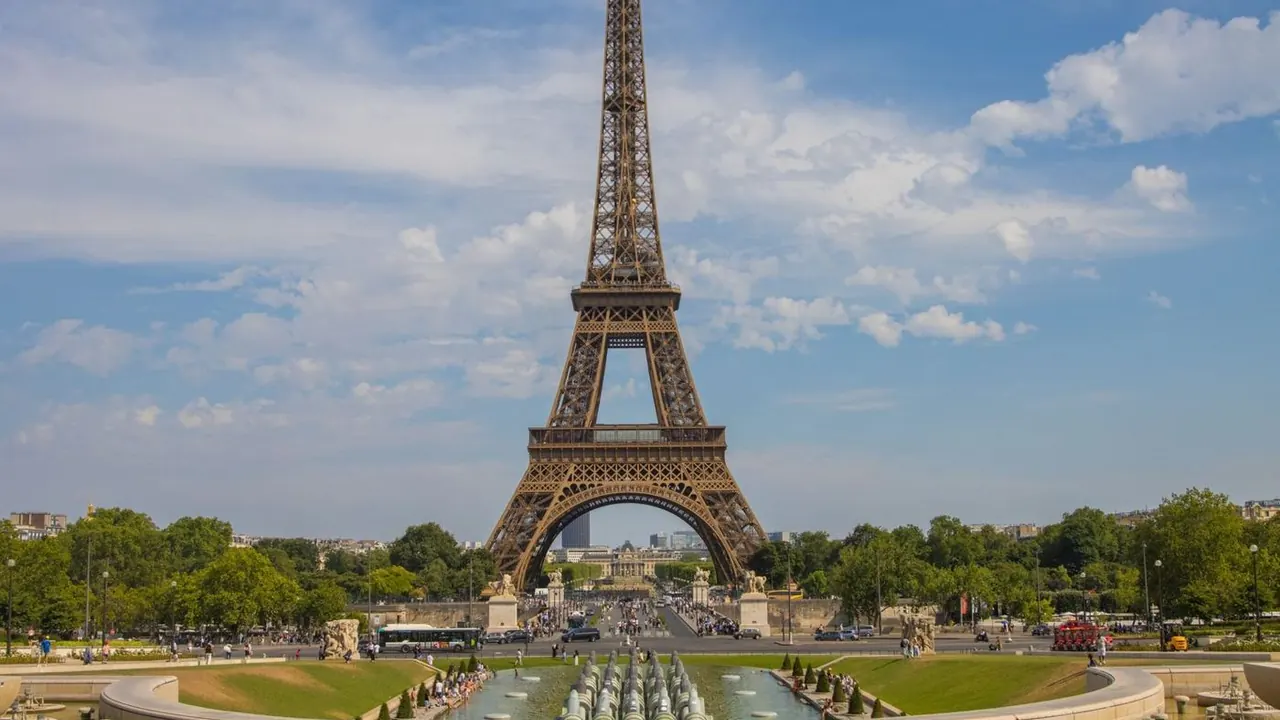
Photos: Oxford by Mark Stebnicki, Pexels License; Paris by Efrem Efre, Pexels License.
Oxford or Paris?
Our verdict in twelve categories, each scored against the same fixed benchmark cities, and the climate month by month, so you can choose for your trip.
Choose Oxford for
- prices
- beaches
Oxford suits a traveller who wants one compact, beautiful place to walk around and absorb: college quads and chapels, the Ashmolean and Pitt Rivers, Evensong in a candlelit chapel, a punt on the Cherwell and a pub by the Thames. It is quieter and smaller in every way than Paris. That makes it a good choice for a short, unhurried trip or as a base for Blenheim, the Cotswolds and Bath, but not for anyone who wants great food or late nights.
Choose Paris for
- food and drink
- shopping
- nightlife
Paris is the stronger choice for almost everything else. Its eating, shopping, nightlife, concert halls and art collections are on a different scale, and families get theme parks and hands-on museums that Oxford cannot match. Pick it for a longer stay with plenty of appetite and energy, and accept the crowds, queues and metro stairs that come with it.
Scoreboard
Twelve categories on one fixed scale from 0 to 100. The shaded stretch is the gap between the two.
Your match
Pick a travel style or drag the sliders, and both match scores follow your weighting.
Wins on prices and beaches with your weighting.
Wins on food and drink and shopping with your weighting.
What matters to you?
Category by category
What the scores mean for a trip.
Beaches & swimming
Neither city has a beach, and from both of them the sea is a separate trip. The south coast is more than an hour and a half from Oxford, and the Normandy coast is about two hours from Paris by train. In Oxford, swimming feels like being in the countryside: you get into the Thames off Port Meadow or into the Cherwell from grassy banks, or you use the open-air pool at Hinksey.
In Paris, swimming is a city affair. In summer, sand and deckchairs are laid out along the riverbanks, and there are swimming spots in the Bassin de la Villette and the Seine. For the rest of the year there are handsome Art Deco public pools.
Food & drink
Food is one of the widest gaps between these two cities. Oxford eats well but plainly: ale and a Sunday roast in a beamed tavern or riverside pub, lunch at the Covered Market, and cheap, varied cooking up Cowley Road. Beyond a handful of serious restaurants, the centre is mostly chains.
In Paris, eating is a reason to go in itself. You can move from a morning market at Aligre to a zinc-counter bistro, from a neo-bistro in the 11th to couscous in Belleville, and the patisserie and terrace cafés fill the gaps between. The only trap is the set-menu streets right beside the big sights.
Culture & sights
Oxford's strength is concentration. Working college quads, the Radcliffe Camera, the Bodleian and Christ Church sit within a few minutes of each other, and the Ashmolean and Pitt Rivers are better than such a small city has any right to. Two or three days cover it properly.
Paris works at another scale. The Louvre alone outlasts all of Oxford, and the Orsay, Orangerie, Rodin and Cluny museums, the Sainte-Chapelle and the Haussmann boulevards would each make a trip in their own right. The cost of that richness is queues and the need to book ahead.
Nightlife
Paris gives you a proper night out and Oxford mostly does not. Evenings in Oxford mean a historic tavern or a summer pint by the Thames, with Cowley Road's late bars as the liveliest option. The city follows the university calendar and goes quiet in the long vacation.
Paris runs from wine-bar terraces to the crowded bars of Oberkampf and Belleville, cocktail bars in South Pigalle and the gay scene in the Marais, then on to house and techno clubs and riverside barges until dawn. The feel is chic rather than wild, and doors can be selective.
Nature & outdoors
These two are much alike: gentle green space rather than wild landscape. In Oxford the countryside comes right up to the centre, with cattle on Port Meadow, flat towpaths and punts on the river. The Cotswolds, the Chilterns and the Ridgeway are within an hour.
Paris is greener in a more formal way, with the Luxembourg and Tuileries gardens, the cliffs of the Buttes-Chaumont and the large Bois de Boulogne and Bois de Vincennes. The forest of Fontainebleau, about forty minutes by train, adds sandstone boulders that draw climbers, and Oxford has nothing like them.
Day trips
Both are excellent bases, but Paris reaches further and more easily. From Oxford, Blenheim Palace is about twenty minutes away, London is an hour by train, and Bath, Stratford and Windsor are all within reach. The Cotswold villages, though, really need a car or a tour.
From Paris, Versailles, Fontainebleau, Chantilly and Giverny are close, and fast trains bring Reims and its Champagne houses, Rouen, the Loire châteaux and even Brussels within a comfortable day. On a long stay you could fill a week with outings alone.
Good for families
Paris gives children far more to do. Disneyland and Parc Astérix are a short train ride away, and the Cité des Sciences, the Jardin d'Acclimatation, the zoo, the aquarium, and the carousels and toy boats of the Luxembourg can fill days in the city. The drawbacks are stairs in the metro, cramped hotel rooms and long queues.
Oxford is calmer and easier with a pushchair, but it runs out sooner. The free Natural History Museum with its dinosaurs, the Pitt Rivers, punting and the Harry Potter spots at Christ Church are the highlights. Most of the rest, from the wildlife park to the studio tour, means a trip out of the city.
Getting around
Both centres are best on foot, but Paris covers its much larger area better. Its dense metro puts a station a few minutes from almost anywhere, and the RER runs to the airports, Versailles and Disneyland. The price is long corridors, stairs, packed rush hours and pickpockets.
Oxford needs no system at all: you can cross the centre on foot in twenty minutes, several streets are closed to traffic, and the station is a short walk away. Buses and bikes handle the suburbs, and in both cities a car is a burden.
Shopping & style
This is where the two cities are furthest apart. Paris is where luxury fashion began, with the great houses on the rue du Faubourg Saint-Honoré, the department stores of Galeries Lafayette and Le Bon Marché, Marais concept stores, the covered passages, the Saint-Ouen flea market and the bouquinistes along the Seine.
Oxford is mostly high-street chains. What makes it worth browsing is Blackwell's, the Covered Market traders, the independents of Jericho and the antique map sellers. For designer labels you need to go out to the Bicester outlet village.
Affordability
Neither is cheap, and the main cost in both is a bed. Oxford has very few central rooms, and university events keep them dear, so many visitors stay near the ring road or come for the day from London. Once you are there, the free museums and pub meals keep spending modest.
Paris rooms are costly and small too, and the big museums charge full admission. You can save with free permanent collections in the city's own museums, bakeries and lunchtime set menus, a riverside picnic and a hotel in the outer arrondissements.
Live music & performing arts
Oxford's great live experience is Evensong. Hearing the choirs of Christ Church, Magdalen or New College in term is something Paris cannot offer in quite the same way, and the Holywell Music Room and the Sheldonian add concerts. Theatre is mostly touring shows and student productions in college gardens.
Paris has much more on overall, from the Palais Garnier and Opéra Bastille to the Philharmonie, concerts in the Sainte-Chapelle, jazz cellars on the rue des Lombards, and cabaret in Pigalle. The serious theatre is largely in French.
Wellness & relaxation
Neither city suits a vacation built around treatments, but Paris has a little more to offer. The tiled steam rooms and mint tea of the Grande Mosquée hammam and a few smaller neighbourhood hammams give it a bathing culture of sorts, though the city's noise and pace work against real rest.
Oxford has almost no spas. Its calm comes instead from places: the Botanic Garden, Addison's Walk past the Magdalen deer park, and a slow afternoon on a punt.
When should you go?
Pick your month. The climate figures are measured averages, not a forecast.
Oxford in July
Paris in July
Daytime high, °C
Rainfall in the month, mm
Where the figures come from
Oxford's temperatures are measured 37 km from the centre, at Fairford Royal Air Force Base.
Oxford has no rain gauge within 25 km of the centre, so its rainfall comes from a gridded climate dataset read at the city rather than from a gauge further away.
Oxford's sunshine is measured 57 km from the centre, at Lyneham.
Temperature and rainfall are climate normals, averaged over the years shown. Oxford: 1961-1990 (sunshine 1991-2020, rainfall 1991-2020) normals, Fairford Royal Air Force Base (37 km from centre). Paris: 1991-2020 (sunshine 1961-1990) normals, Paris-Montsouris (4.6 km from centre).
Both cities are best from late spring to early autumn, and neither is a beach destination at any time of year. Paris runs a few degrees warmer all year, reaching about 26°C in July and August, which is warm enough for the riverbank beaches and outdoor pools but can feel close on long days of sightseeing. Oxford peaks at around 22°C in July, mild enough for walking all day, and it has its sunniest weather from May to July, which is the time for punting and river swims.
Winters are grey in both. Oxford drops to about 5°C in January and gets little sun from November to January, so it suits museums and pubs more than meadows at that time. Rain is spread fairly evenly in both cities with no real dry season. Oxford's wettest months are October and November at around 69mm, while Paris has a damp spike in May of about 75mm. Spring and September are good months for walking in either city.
Which traveller are you?
On a food and nightlife trip, Paris wins easily. Oxford gives you good ale, a Sunday roast and a quiet centre by midnight. Paris moves from morning markets and neo-bistros to wine-bar terraces and clubs that play until dawn.
For a shopping trip, Paris is the place to go. Oxford fills an afternoon with familiar chains, old bookshops and a college sweatshirt. Paris can fill days, with each district having its own character, from couture and vintage to antiques, old books and chocolate to take home.
For a short city break, Oxford has one advantage: you can actually finish it. The colleges, the Bodleian and the museums lie within a twenty-minute walk and fill two or three days, whereas a weekend in Paris barely makes a start on the Louvre.
Before you go
| Measure | Oxford | Paris |
|---|---|---|
| Official language | English | French |
| Currency | Pound Sterling (GBP) | Euro (EUR) |
| Sockets | G230 V, 50 Hz | CE230 V, 50 Hz |
| Driving side | Left | Right |
| Time zone | UTC, UTC+1 in summer | UTC+1, UTC+2 in summer |
| Emergency number | 112 or 999 | 112 |
| Elevation | 73 m | 27 m |
| Main airport | London Heathrow Airport (LHR)63 km from centre224 non-stop destinations | Charles de Gaulle International Airport (CDG)22 km from centre277 non-stop destinations |
| Public holidays this year | 8 days | 11 days |
By the numbers
| Measure | Oxford | Paris |
|---|---|---|
| City population | 147,500 | 2,103,778 |
| People per km² | 3,235 | 19,960 |
| Museums within 10 km | 11 | 251 |
| UNESCO World Heritage sites within 50 km | 1 | 5 |
Where else could you go?
Every comparison below shares a destination with this one, so you can follow Oxford or Paris somewhere new.