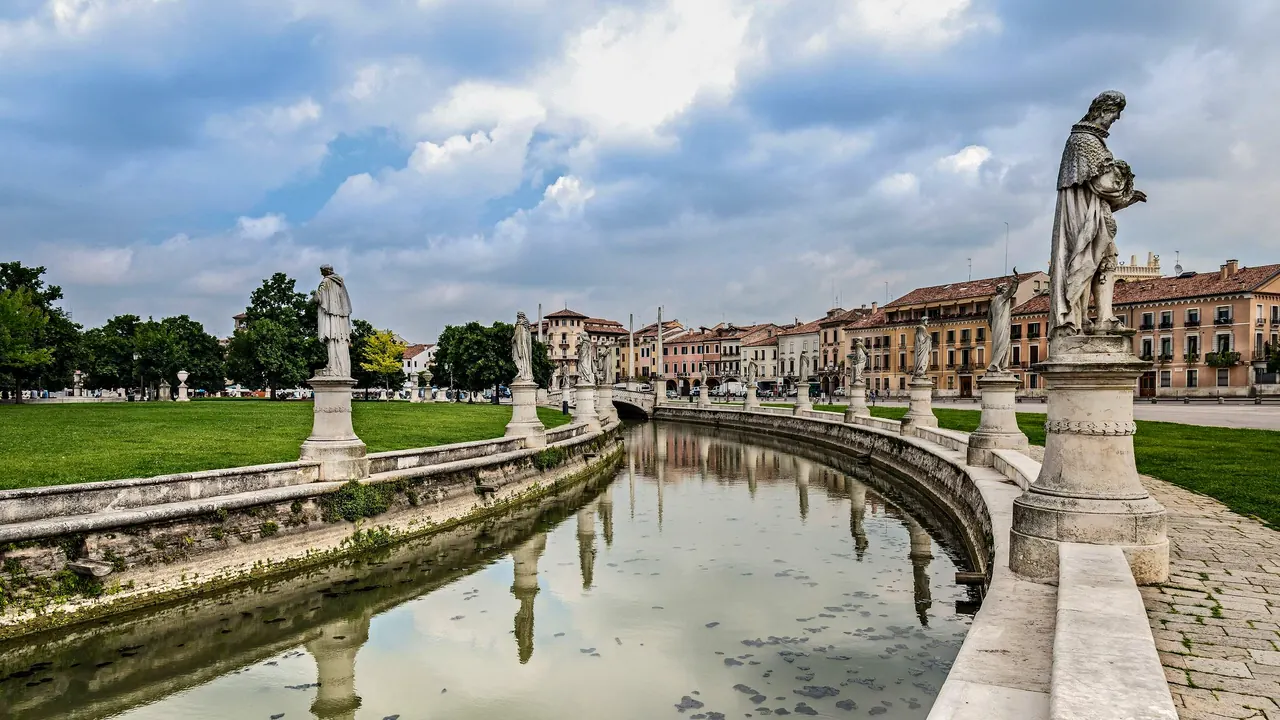
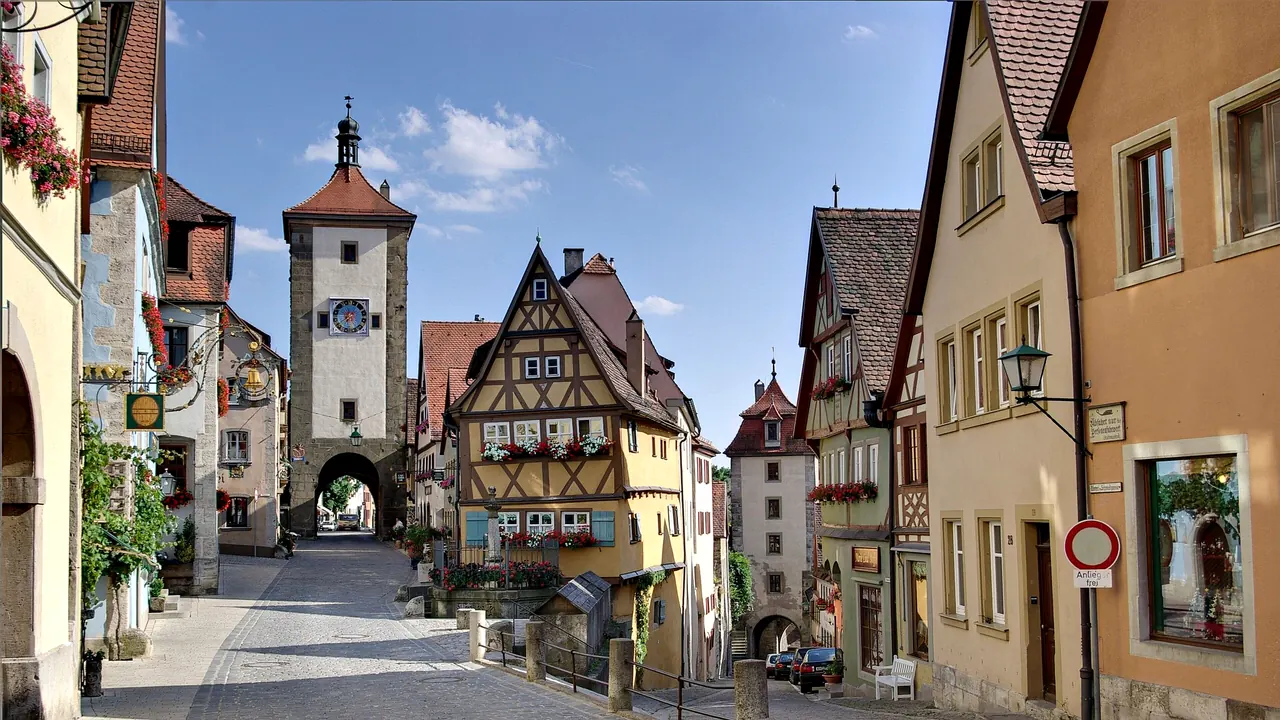
Photos: Padua by Didier Descouens, CC BY-SA 4.0, cropped; Rothenburg ob der Tauber by Berthold Werner, Public domain.
Padua or Rothenburg ob der Tauber?
Our verdict in twelve categories, each scored against the same fixed benchmark cities, and the climate month by month, so you can choose for your trip.
Choose Padua for
- nightlife
- food and drink
- wellness
Padua suits travellers who want a base rather than a single sight. Giotto's frescoes and the Basilica of Saint Anthony fill a day or two, and then the main-line station takes over: Venice, Vicenza, Verona and Bologna are all easy by train without a car. Evenings with a spritz among students in the market squares, the market cooking and the thermal pools at Abano make it a stay that can run to a week without running out.
Choose Rothenburg ob der Tauber for
Rothenburg ob der Tauber does not lead in any category we score.
Rothenburg ob der Tauber is for someone who wants to walk inside a near-intact medieval town, see it empty at dawn and after the coaches leave, and then move on. It works best as one or two nights on a Romantic Road drive, or as a December trip built around its Christmas market. Expect quiet evenings, plain Franconian food and a hire car if you want to see the walled towns nearby.
Scoreboard
Twelve categories on one fixed scale from 0 to 100. The shaded stretch is the gap between the two.
Your match
Pick a travel style or drag the sliders, and both match scores follow your weighting.
Wins on nightlife and food and drink with your weighting.
Has no clear advantage with the weighting you have chosen.
What matters to you?
Category by category
What the scores mean for a trip.
Beaches & swimming
Neither is a beach destination, but Padua at least has the Adriatic within about an hour, at Sottomarina or on the Lido of Venice. The water there is shallow, calm and warm in summer, though the long rows of umbrellas are practical rather than pretty.
Rothenburg is about as far from salt water as Germany gets. A swim means the town's outdoor pool or a drive to the grassy shores of the Franconian lakes such as the Altmühlsee.
Food & drink
Padua eats far better. Its cooking is Venetian home food, from bigoli with duck sauce to baccalà and spring risotto, and the daily markets under the Palazzo della Ragione make shopping for cheese, cured meats and fish part of the day. The early-evening spritz, the Euganean wines and Caffè Pedrocchi add a drinking culture worth planning around.
Rothenburg offers a narrow, filling repertoire of roast pork, Schäufele and bratwurst with Silvaner from the Bocksbeutel, plus the much-photographed Schneeball. Many places around the Marktplatz cook for coach groups, so the better meals are in family guesthouses and wine taverns away from the square.
Culture & sights
Padua has the more important art. Giotto's Scrovegni Chapel changed European painting, and it sits within a UNESCO-listed group of fourteenth-century fresco cycles. Add Donatello's work at the Basilica of Saint Anthony, the world's oldest permanent anatomical theatre at Palazzo Bo and the Orto Botanico of 1545, and it is a serious cultural stop.
In Rothenburg the main attraction is the whole townscape: gabled houses, the covered wall walk, the Plönlein and the view from the Rathaus tower. Riemenschneider's Holy Blood Altar in St Jakob's is its one masterpiece, and the Medieval Crime Museum its main collection. Both centres are covered quickly, Rothenburg the quicker.
Nightlife
Padua has an actual evening life. The aperitivo fills Piazza delle Erbe and Piazza dei Signori, and in term time students keep wine bars and small pubs busy around the Bo and the old ghetto, though clubs are few and summer is quiet.
Rothenburg's evening highlight is the night watchman's tour, followed by a glass in a wine tavern. For anything livelier you would have to drive to Würzburg or Nuremberg.
Nature & outdoors
Of the two, Padua gives an active traveller more room, though its outdoors begins out of town. The Euganean Hills, old volcanic cones about 15km to the south-west, rise straight from the plain with marked trails, chestnut woods, vineyards and roads popular with cyclists, while the Brenta towpaths make level rides through villa country. For proper mountain walking, Monte Grappa and the Asiago plateau are about an hour and a half away by car.
Rothenburg's outdoors is gentler but right at the gate. Paths drop from the walls into the Tauber valley, past mills and the little Topplerschlösschen, and the Tauber valley cycle path runs downstream through vineyards and villages at an easy family pace. Beyond the orchards and the rolling Frankenhöhe there are no mountains or wild country.
Day trips
This is where Padua pulls furthest ahead. Venice is under half an hour by train, close enough for several separate visits, and Vicenza, Verona, Treviso, Bologna and Ferrara are all easy rail trips. Closer still are the Brenta villas and the walled towns of Este, Monselice and Montagnana.
Rothenburg's surroundings are excellent in their own right. Dinkelsbühl and the crater town of Nördlingen rival it, and Würzburg's Residenz and Nuremberg are about an hour away. But the branch-line train makes a car almost essential.
Good for families
The two are about equal for families, but for different reasons. Padua is easy rather than exciting: flat, largely pedestrianised and pushchair-friendly, with Prato della Valle for running about. Gardaland, Lake Garda and the Adriatic are close enough to fill the gaps.
Rothenburg has more of a sense of adventure, with ramparts to walk, a tower to climb and a night watchman to follow, but the cobbles and steep valley paths are tiring for small children and a day or two covers it.
Getting around
Padua is easier on foot and far easier beyond. The centre is flat, arcaded against sun and rain, and served by a tram, and its station sits on main lines in every direction, so a car is needed only for the hills.
Rothenburg's walled centre takes about fifteen minutes to cross, but the lanes are cobbled and the climb back from the valley is steep. Leaving town by train usually means changing at Steinach, and buses are sparse, so drivers have the advantage.
Shopping & style
Padua offers more ordinary, useful shopping: Italian fashion and shoes under the arcades, university bookshops, food delicatessens beneath the Palazzo della Ragione, and a monthly antiques market on Prato della Valle.
Rothenburg's shops are almost entirely for visitors, and dominated by year-round Christmas decorations, nutcrackers, cuckoo clocks and pewter. That narrow theme does give it one of Germany's most atmospheric Christmas markets.
Affordability
Padua is somewhat kinder on the budget. Its hotels cost what you would expect in northern Italy and make an economical base for Venice. The standing spritz and market produce are cheap, and walking covers most transport.
Rothenburg adds a tourist premium inside the walls, especially in December and on summer weekends. Sleeping outside the gates or in a nearby village brings costs down noticeably.
Live music & performing arts
Neither town is somewhere to plan a trip around shows, but Padua's programme runs through the year, while Rothenburg's comes as a few set pieces. Teatro Verdi stages prose theatre and some opera, the chamber orchestra plays in the frescoed Sala dei Giganti and the Basilica, and students keep small live-music venues going, with the Fenice and Verona's Arena close by for major opera.
In Rothenburg, performance means history: the costumed Meistertrunk play, a small open-air theatre in summer, and organ and choral concerts in St Jakob's. Outside those, evenings end at the dinner table.
Wellness & relaxation
Padua has a major spa asset on its doorstep. Abano Terme and Montegrotto Terme, about 12km away, have used hot mineral water and therapeutic mud since Roman times, and many spa hotels take day visitors after a morning of sightseeing.
Rothenburg's calm comes from emptiness rather than water: quiet lanes at dawn and after the day visitors leave. For thermal bathing you need to drive to Bad Windsheim or Bad Mergentheim.
When should you go?
Pick your month. The climate figures are measured averages, not a forecast.
Padua in July
Rothenburg ob der Tauber in July
Daytime high, °C
Rainfall in the month, mm
Where the figures come from
Padua's temperatures are measured 35 km from the centre, at Treviso / Istrana.
Padua has no rain gauge within 25 km of the centre, so its rainfall comes from a gridded climate dataset read at the city rather than from a gauge further away.
Padua's sunshine is measured 36 km from the centre, at Treviso / S. Angelo.
Rothenburg ob der Tauber's sunshine is measured 27 km from the centre, at Feuchtwangen-heilbronn.
Temperature and rainfall are climate normals, averaged over the years shown. Padua: 1991-2020 normals, Treviso / Istrana (35.4 km from centre). Rothenburg ob der Tauber: 1991-2020 normals, Rothenburg ob der Tauber (0.9 km from centre).
Padua is the warmer of the two all year, and in July and August it gets properly hot, around 31°C and humid, which makes the middle of the day hard going for sightseeing but good for a trip to the Adriatic, where the sea reaches about 25°C. May, June and September are the most comfortable months for walking the arcades and getting out to the hills. Rain is spread through the year and peaks in autumn, with November the wettest and dullest month.
Rothenburg is a cooler, greyer place. Summer highs stay mild, around 25°C, so July and August are pleasant for the walls and the Tauber valley rather than oppressive. Winter is cold, with days only a few degrees above freezing and very little sun in December. That suits the Christmas market but makes for short, dark sightseeing days. Late spring and early autumn are the best months for walking and cycling in the valley.
Which traveller are you?
For a food and nightlife trip, Padua is the clear choice. It has morning markets in Piazza delle Erbe, bigoli and Euganean wines, and every evening students crowd the squares with a spritz. Rothenburg serves hearty inn food and is silent by eleven.
On a relaxing and wellness trip, Padua wins because Abano and Montegrotto, one of Europe's largest thermal districts, are a short ride away and take day visitors. In Rothenburg, rest means a quiet early-morning walk on the walls, and the real spas are an hour's drive away.
On a family trip with children, Rothenburg has the stronger storybook appeal: covered ramparts, the Rathaus tower and the night watchman's lantern tour. Padua is flatter and easier with a pushchair but offers children mostly frescoes, so families lean on day trips.
Before you go
| Measure | Padua | Rothenburg ob der Tauber |
|---|---|---|
| Official language | Italian | German |
| Currency | Euro (EUR) | Euro (EUR) |
| Sockets | CFL230 V, 50 Hz | CF230 V, 50 Hz |
| Driving side | Right | Right |
| Time zone | UTC+1, UTC+2 in summer | UTC+1, UTC+2 in summer |
| Emergency number | 112 | 112 |
| Elevation | 12 m | 430 m |
| Main airport | Venice Marco Polo Airport (VCE)39 km from centre103 non-stop destinations | Nuremberg Airport (NUE)66 km from centre56 non-stop destinations |
| Public holidays this year | 13 days | 12 days |
By the numbers
| Measure | Padua | Rothenburg ob der Tauber |
|---|---|---|
| City population | 206,496 | 11,331 |
| People per km² | 2,220 | 272 |
| Museums within 10 km | 29 | 6 |
| UNESCO World Heritage sites within 50 km | 5 | 2 |
| Swim season, months above 21 °C | 4 months | - |
Where else could you go?
Every comparison below shares a destination with this one, so you can follow Padua or Rothenburg ob der Tauber somewhere new.
- Venicevs Padua
- Nurembergvs Rothenburg ob der Tauber
- Veronavs Padua
- Bambergvs Rothenburg ob der Tauber
- Stuttgartvs Rothenburg ob der Tauber
- Heidelbergvs Rothenburg ob der Tauber