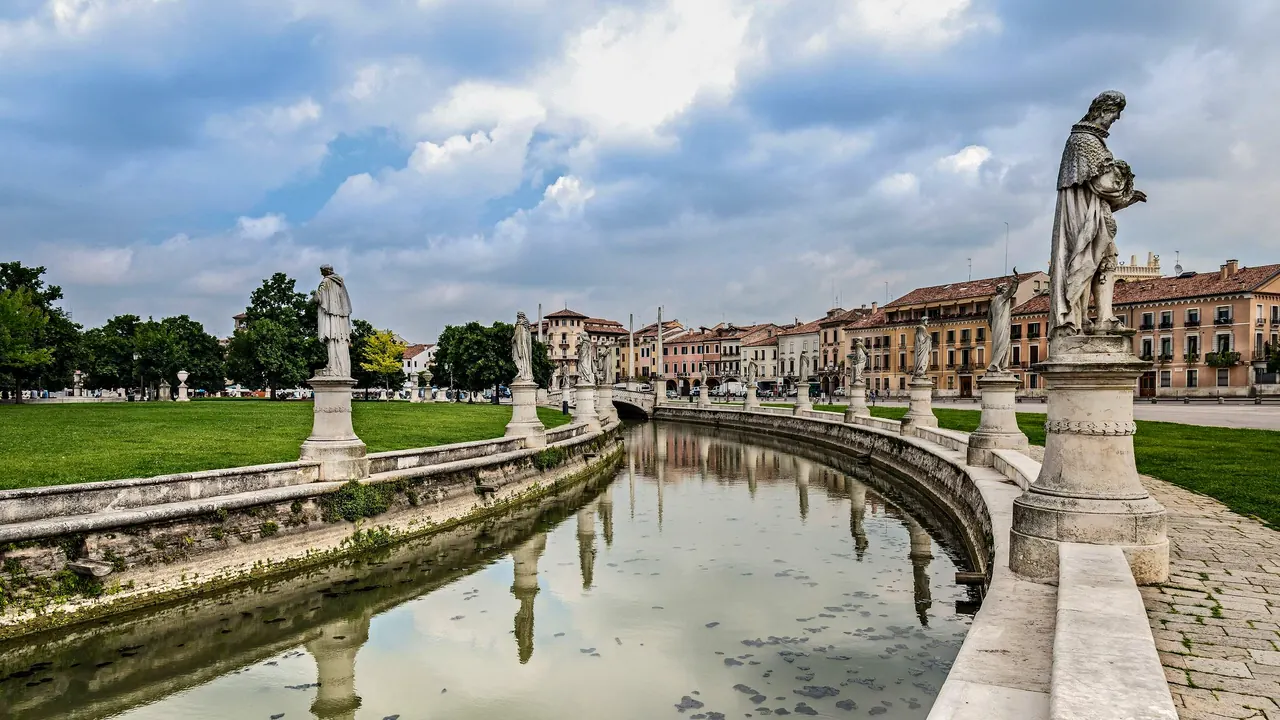
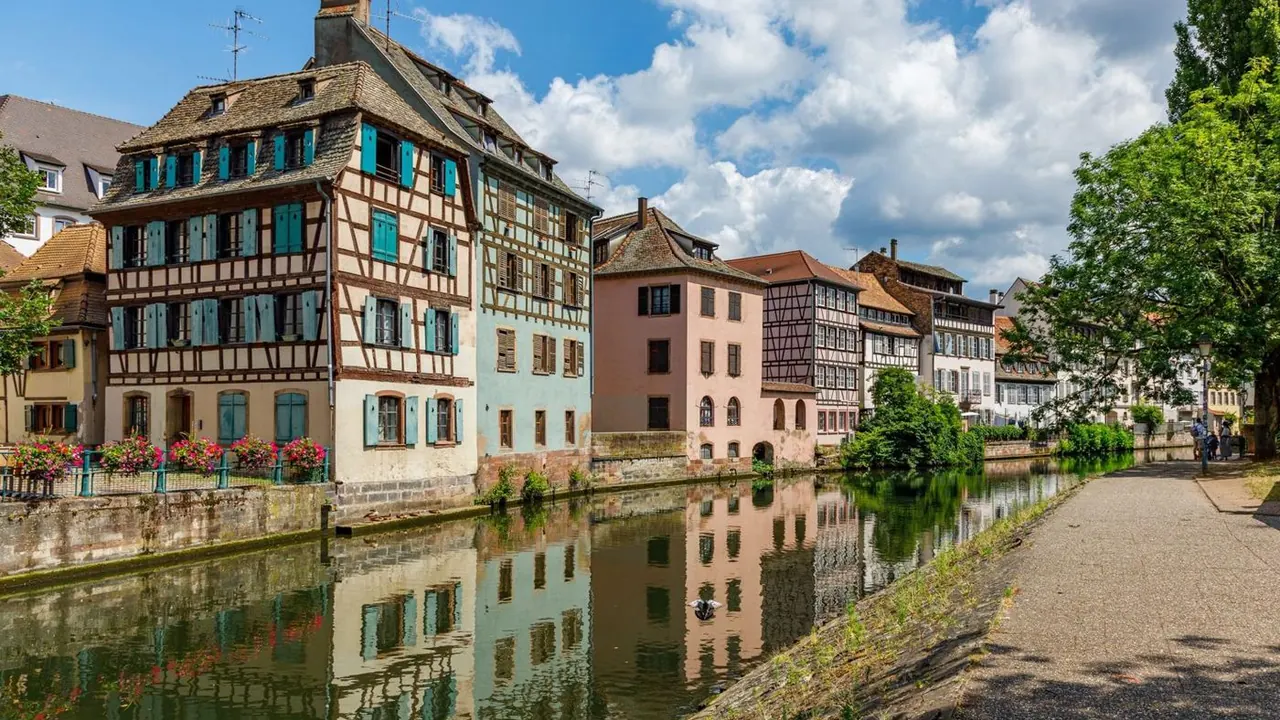
Photos: Padua by Didier Descouens, CC BY-SA 4.0, cropped; Strasbourg by Edoardo Colombo, Pexels License.
Padua or Strasbourg?
Our verdict in twelve categories, each scored against the same fixed benchmark cities, and the climate month by month, so you can choose for your trip.
Choose Padua for
- beaches
- day trips
- wellness
Padua suits a traveller who wants a calm, moderately priced base for seeing a whole region by train. Venice, Vicenza, Verona and Bologna are all within easy reach, Giotto's Scrovegni Chapel is in the city itself, and the hot springs of Abano Terme are there at the end of the day. It is the better choice for spa days and a cheaper bed, though children will find little in town made for them.
Choose Strasbourg for
- families
- live music and the arts
- nature and the outdoors
Families, and anyone who plans evenings around opera, theatre or concerts, will do better in Strasbourg. Its canal boat trips, the Orangerie park and the science centre, with Europa-Park across the border, give children far more to do. The Opéra national du Rhin and the Théâtre National de Strasbourg give it a stage programme Padua cannot match. The Vosges and the Black Forest also bring proper walking closer.
Scoreboard
Twelve categories on one fixed scale from 0 to 100. The shaded stretch is the gap between the two.
Your match
Pick a travel style or drag the sliders, and both match scores follow your weighting.
Too close to call, level with your weighting
Wins on beaches and day trips with your weighting.
Wins on families and live music and the arts with your weighting.
What matters to you?
Category by category
What the scores mean for a trip.
Beaches & swimming
Neither city is a beach destination, but Padua at least has the sea within about an hour. Sottomarina and the Lido of Venice have the shallow, calm Adriatic, with long rows of umbrellas and bathing establishments, which is fine for a day of paddling with children.
Strasbourg has no sea at all. People swim there in summer in lifeguarded gravel-pit lakes such as the Baggersee, which you can reach by tram. They are pleasant on a hot afternoon on the grass, but not a reason to go.
Food & drink
Both cities eat heartily and well, and the main difference is where the eating happens. In Padua it happens outdoors: the morning markets in Piazza delle Erbe and Piazza della Frutta, bigoli and baccalà in trattorias, and the early-evening spritz drunk standing in the squares, with the grand Caffè Pedrocchi as its institution.
Strasbourg eats indoors in the wood-panelled winstub, over choucroute, baeckeoffe and tarte flambée with a pichet of Alsace Riesling, and it has more fine dining, including local foie gras. Its rich cooking is at its best in a cold month, while Padua's risottos and spritz suit a warm evening.
Culture & sights
The two are close in weight but different in kind. Padua's great sights are paintings and church interiors, while in Strasbourg the main sight is the town itself. Padua's UNESCO listing covers its fourteenth-century fresco cycles. Giotto's Scrovegni Chapel leads them, and its short, timed visits are worth booking ahead. There are more frescoes in the Eremitani church and the Baptistery. Add the Basilica of Saint Anthony with Donatello's bronzes and the old anatomical theatre at Palazzo Bo, and you have a centre that is rich but can be seen quickly.
In Strasbourg the listing takes in the streets themselves. The Grande Ile has the pink sandstone cathedral and its astronomical clock, Petite France has its timber-framed lanes, and the Neustadt has its imperial avenues. The Palais Rohan museums and the European institutions add variety, and the main sights fill two or three unhurried days.
Nightlife
Both are university towns where evenings are sociable rather than late, and neither has many clubs. In Padua the evening happens outdoors in the squares, with students and locals standing over spritz glasses around the Palazzo della Ragione, and the city goes quiet in high summer and the university breaks. Strasbourg's evenings are more of a round of bars, through the beer cellars and student bars of Krutenau and, in summer, the riverside terraces.
Nature & outdoors
Strasbourg has better outdoors close by. Within an hour are the forested Vosges, with sandstone castle ruins and the ridge walk at Mont Sainte-Odile. Across the Rhine are the higher fir-covered ridges of the Black Forest, and long, level cycle routes follow the Rhine into Germany.
Padua's nearest high ground is the Euganean Hills, about 15km away: gentle volcanic cones with vineyards, chestnut woods and marked trails. There are also easy towpath rides along the Brenta. Real mountain walking on Monte Grappa or the Asiago plateau means about an hour and a half by car.
Day trips
Both are good bases, but Padua is exceptional. Venice is under half an hour by train, Vicenza a quarter of an hour, and Verona, Treviso, Bologna and Ferrara around an hour. In a week you can see several of Italy's great cities without changing hotel.
Strasbourg's list is shorter but quite different. It has Colmar and the Alsace wine villages such as Riquewihr and Eguisheim, then Baden-Baden, Freiburg and Basel over the border. The wine route is easier by car or bike, whereas nearly all of Padua's trips work by train.
Good for families
Strasbourg is the better place to bring children. As well as a flat, mostly car-free centre, it has things built for them: canal boat trips, playgrounds and rowing on the Orangerie lake, the Le Vaisseau science centre and the moving figures of the astronomical clock. For days out there are Europa-Park and the stork and monkey parks of the Vosges.
Padua is safe, compact and easy with a pushchair, and Prato della Valle gives children room to run, but there is little else aimed at them. Families staying there usually fill the gaps with trips to Gardaland, Lake Garda or the Adriatic.
Getting around
Both centres are flat and you can walk across either in about twenty minutes, so neither needs a car. Strasbourg has the fuller tram network, reaching the European quarter and across the Rhine to Kehl, and it is one of France's best cycling cities. Padua's tram matters less than its railway station, which puts Venice, Verona and Bologna within quick reach, and its arcades keep walkers out of the sun and rain.
Shopping & style
Neither is a shopping destination, but Strasbourg has a little more. Place Kléber and the Rue des Grandes Arcades have a department store and chain stores, and the lanes near the cathedral have independent shops. Soufflenheim pottery, printed linens and kougelhopf moulds make distinctive things to take home, and the Christmas market adds crafts in December.
Padua's arcades have Italian shoes, fashion and university bookshops, but its strength is food to take home from the markets and the delicatessens beneath the Palazzo della Ragione. Once a month there is a Sunday antiques market in Prato della Valle.
Affordability
Padua is the cheaper of the two. Its hotels are moderately priced, which is why many visitors sleep there rather than in Venice, and a standing spritz with market food costs little.
Strasbourg is not expensive for France. Its free sights, cheap trams and good-value wine by the pichet all help, but rooms cost more and rise sharply during the Christmas market and the weeks when the European Parliament sits. Padua's rooms also go up around trade fairs and graduation season, so in both cities it pays to choose your dates.
Live music & performing arts
Strasbourg has much the richer stage. The Opéra national du Rhin, a full philharmonic season, the Théâtre National de Strasbourg and the autumn Musica festival of contemporary music give it a programme worth planning a trip around, and there is a jazz festival too.
Padua offers less: theatre and some opera at the Teatro Verdi, and chamber concerts in the Sala dei Giganti and the Basilica of Saint Anthony. For major opera, visitors staying in Padua take the train to the Fenice in Venice or to the Arena in Verona in summer.
Wellness & relaxation
Padua has the bigger spa draw right on its edge. Abano Terme and Montegrotto Terme, about 12km away, form one of Europe's largest thermal districts. Dozens of hotel pools there take day visitors, and mud treatments go back to Roman times.
Strasbourg's own bathhouse is the tiled, early twentieth-century Bains municipaux with a hammam and saunas, and the grander baths of Baden-Baden are under an hour away across the Rhine. Both cities move at an unhurried pace, though Strasbourg's centre fills with Christmas market crowds in December.
When should you go?
Pick your month. The climate figures are measured averages, not a forecast.
Padua in July
Strasbourg in July
Daytime high, °C
Rainfall in the month, mm
Where the figures come from
Padua's temperatures are measured 35 km from the centre, at Treviso / Istrana.
Padua has no rain gauge within 25 km of the centre, so its rainfall comes from a gridded climate dataset read at the city rather than from a gauge further away.
Padua's sunshine is measured 36 km from the centre, at Treviso / S. Angelo.
Temperature and rainfall are climate normals, averaged over the years shown. Padua: 1991-2020 normals, Treviso / Istrana (35.4 km from centre). Strasbourg: 1991-2020 normals, Strasbourg (9.1 km from centre).
Padua is the warmer of the two all year. July and August reach about 31°C and feel humid. That suits a trip of about an hour to the Adriatic, where the sea is around 25°C, but makes touring frescoes and churches on foot hard going. May, June and September are the comfortable months for walking. Autumn turns wet, with November the rainiest month, and in winter fog settles over the plain.
Strasbourg runs cooler. Summer highs of about 26°C make July and August good for walking and cycling, with plenty of sun and none of Padua's heavy heat. Winters are colder and much greyer, with January around 5°C and very little sunshine from November to January, so late spring to early autumn is the best window. It is also drier than Padua in most months.
Which traveller are you?
On a family trip with children, Strasbourg is the easier choice. Boat rides through Petite France, rowing boats and nesting storks in the Orangerie, the hands-on Le Vaisseau and Europa-Park about an hour away keep children busy. Padua's sights are mostly frescoes and churches.
For a relaxing and wellness trip, Padua is the better choice. The thermal pools and mud treatments of Abano Terme and Montegrotto Terme are a short bus or train ride away, so a soak fits around a morning of sightseeing, and the city keeps an unhurried provincial pace.
On a tight budget, Padua makes your money go further. Its hotels are a sensible base for Venice and the wider Veneto, trattoria meals are fairly priced and the train does the rest. Strasbourg's rooms cost more and get much dearer during the Christmas market.
Before you go
| Measure | Padua | Strasbourg |
|---|---|---|
| Official language | Italian | French |
| Currency | Euro (EUR) | Euro (EUR) |
| Sockets | CFL230 V, 50 Hz | CE230 V, 50 Hz |
| Driving side | Right | Right |
| Time zone | UTC+1, UTC+2 in summer | UTC+1, UTC+2 in summer |
| Emergency number | 112 | 112 |
| Elevation | 12 m | 132 m |
| Main airport | Venice Marco Polo Airport (VCE)39 km from centre103 non-stop destinations | Strasbourg Airport (SXB)10 km from centre43 non-stop destinations |
| Public holidays this year | 13 days | 11 days |
By the numbers
| Measure | Padua | Strasbourg |
|---|---|---|
| City population | 206,496 | 293,771 |
| People per km² | 2,220 | 3,752 |
| Museums within 10 km | 29 | 21 |
| UNESCO World Heritage sites within 50 km | 5 | 3 |
| Swim season, months above 21 °C | 4 months | - |
Where else could you go?
Every comparison below shares a destination with this one, so you can follow Padua or Strasbourg somewhere new.
- Venicevs Padua
- Baden-Badenvs Strasbourg
- Colmarvs Strasbourg
- Freiburgvs Strasbourg
- Veronavs Padua
- Stuttgartvs Strasbourg