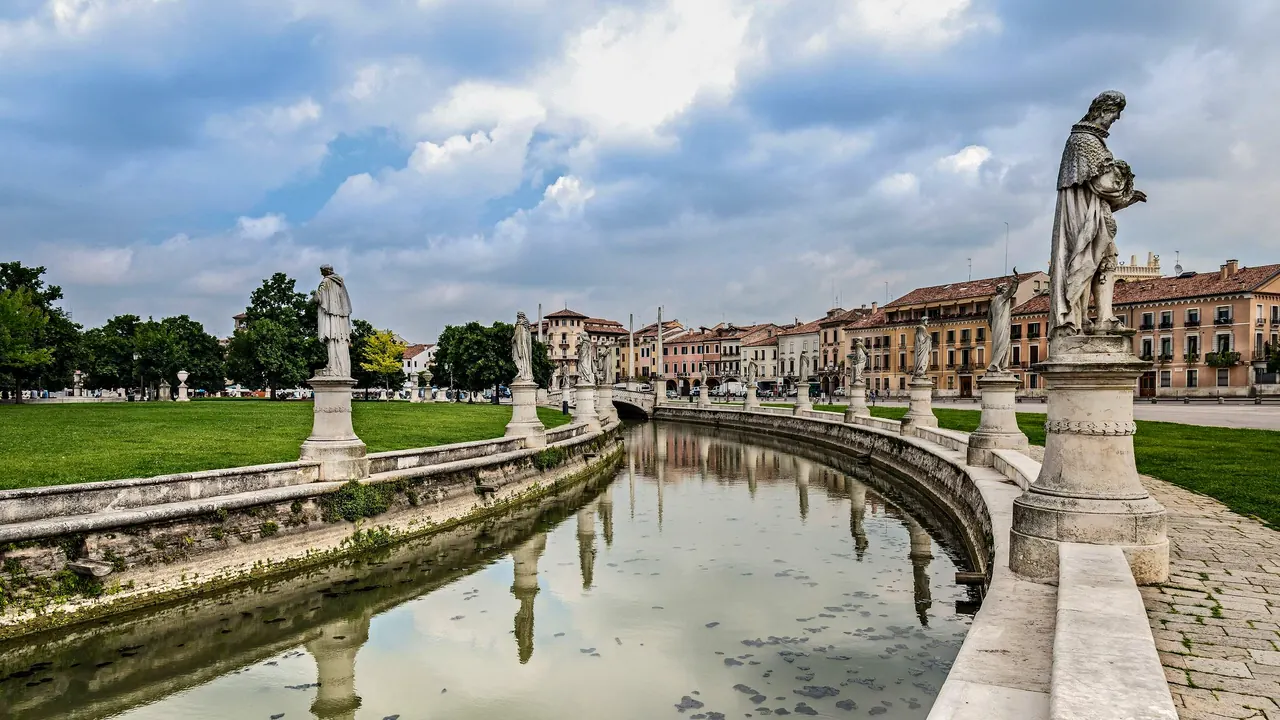
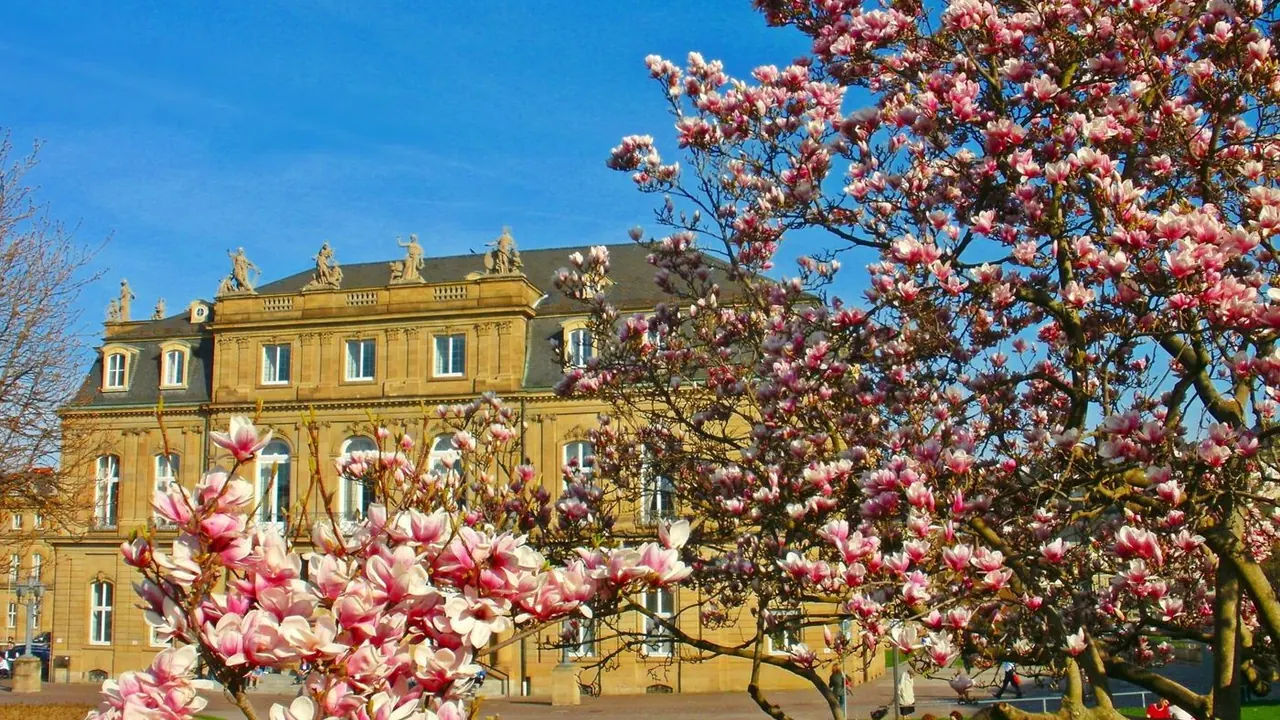
Photos: Padua by Didier Descouens, CC BY-SA 4.0, cropped; Stuttgart by Baden de, CC BY 3.0, cropped.
Padua or Stuttgart?
Our verdict in twelve categories, each scored against the same fixed benchmark cities, and the climate month by month, so you can choose for your trip.
Choose Padua for
- beaches
- day trips
- prices
Padua suits travellers who want a lot of Italy for a moderate outlay. Giotto's frescoes and the Basilica of Saint Anthony are on the doorstep, Venice, Vicenza and Verona are a short train ride away, and evenings are spent over a spritz in the market squares. It works best for adults on a culture-led trip who are happy to treat the city as a base, travel by rail, and finish a long day in the thermal pools at Abano.
Choose Stuttgart for
- live music and the arts
- families
- shopping
Choose Stuttgart if your evenings matter as much as your days, and above all if you want to see ballet or opera. Its stage life is in a different league. Families also do better here, because Wilhelma, Killesberg park and the car museums give children things made for them, and wooded hills and vineyards start almost at the tram stop. Expect to pay more, and expect modern design and engineering rather than medieval frescoes.
Scoreboard
Twelve categories on one fixed scale from 0 to 100. The shaded stretch is the gap between the two.
Your match
Pick a travel style or drag the sliders, and both match scores follow your weighting.
Too close to call, level with your weighting
Wins on beaches and day trips with your weighting.
Wins on live music and the arts and families with your weighting.
What matters to you?
Category by category
What the scores mean for a trip.
Beaches & swimming
Neither city is a beach destination, but Padua at least has the Adriatic within about an hour. The shallow, calm water at Sottomarina or on the Venice Lido suits paddling children, even though the sand is flat and lined with umbrellas.
Stuttgart has nothing comparable. The Neckar is a working river, so in summer people swim in outdoor pools, some of them fed by mineral springs. Lake Constance is more than two hours away.
Food & drink
Both cities eat regionally and well, but the food is very different. Padua's table is Venetian: bigoli with duck sauce, baccalà and spring risotto, with fresh ingredients from the morning markets in Piazza delle Erbe and Piazza della Frutta. Its real ritual is the early-evening spritz with small bites, with Euganean wines alongside.
Stuttgart's Swabian cooking is heavier: Maultaschen and Käsespätzle in wine taverns, Trollinger from vineyards inside the city, and seasonal Besen taverns opened by growers in their own homes. Stuttgart also has a deeper fine-dining tier, which Padua largely lacks.
Culture & sights
Padua is the stronger draw for art and history. Giotto's Scrovegni Chapel, the UNESCO-listed fresco cycles, the Basilica of Saint Anthony with Donatello's bronzes and the anatomical theatre at Palazzo Bo give the centre real weight, even though it is compact.
Stuttgart's culture is modern: the Mercedes-Benz and Porsche museums, the Staatsgalerie and the Le Corbusier houses on the Weissenhof Estate. Wartime bombing left only pockets of the old town, so Stuttgart appeals more to fans of design and engineering than to people who come for old buildings.
Nightlife
Neither city is built for a big night out, and the difference is mostly one of style. In Padua the evening means the outdoor aperitivo, with students and locals standing over spritz glasses in the squares around the Palazzo della Ragione and small bars in the old ghetto. There are few clubs, and the city empties in high summer and the university breaks.
Stuttgart has more of a club scene, in basements and old industrial spaces with a following for electronic music, and a strip of bars along Theodor-Heuss-Strasse. Its liveliest times are seasonal: the beer tents of the Cannstatter Volksfest and the late-summer wine village.
Nature & outdoors
Padua sits on the flat plain, so you have to travel a little way to reach the countryside. The volcanic Euganean Hills are about 15km out, and the Brenta towpaths are good for level bike rides. The lagoon suits birdwatching, and Monte Grappa and the Asiago plateau offer proper mountain walking further away.
Stuttgart has the outdoors closer to hand. Wooded hills and vineyards ring its basin, so a walk from the centre soon reaches the Rotwildpark forest. The cliff-edge trails of the Swabian Jura and the ridges of the northern Black Forest are each about an hour away.
Day trips
Both cities are excellent bases, but Padua's position is exceptional. Venice is under half an hour by train and Vicenza a quarter of an hour, and Verona, Bologna and Ferrara are all easy to reach by rail. The Brenta villas and the walled towns around the Euganean Hills are closer still.
Stuttgart's list is good rather than extraordinary: Ludwigsburg's palace, Tübingen, Heidelberg about forty minutes away by fast train, Hohenzollern Castle and Ulm's spire. None of them has the pull of Venice.
Good for families
Padua is safe, flat and welcoming, children are made welcome in its trattorias, and Prato della Valle gives them room to run. Its sights are mostly frescoes and churches, though, so families there tend to rely on day trips to Lake Garda or the Adriatic.
Stuttgart is the better choice with children. Wilhelma, with its zoo and Moorish-style pavilions, fills a day, and Killesberg park has a narrow-gauge railway and a lookout tower. There are also outdoor pools and child-friendly beer gardens, although the hills can be hard work with a pushchair.
Getting around
Padua is a city for walking. Almost everything is within a 20-minute stroll on flat, arcaded streets, the tram and bicycles cover the rest, and the main-line station makes day trips by rail easy.
Stuttgart's flat centre is just as easy on foot, but the city climbs steeply beyond it. You will rely more on the Stadtbahn and S-Bahn, which one ticket covers along with the buses, rack railway and funicular, or on the Stäffele stairways.
Shopping & style
Padua is a pleasant place to browse rather than a shopping destination. Its arcades hold Italian shoe and fashion shops and university bookshops. The best buys are food: cheeses, cured meats and Euganean wine from the markets, plus finds from the monthly antiques market on Prato della Valle.
Stuttgart offers considerably more, especially for brand shoppers. Königstrasse is one of Germany's longest pedestrian shopping streets, a long-established department store just off it sells designer fashion, and the outlet town of Metzingen is about half an hour away.
Affordability
Padua is the cheaper place to stay. Its moderately priced hotels make it a common base for exploring the Veneto, a standing spritz and market produce cost little, and the walkable centre keeps transport costs low.
Stuttgart is a prosperous business city where rooms and smart restaurants cost more, especially during trade fairs. Hotel rates drop at weekends and in the quieter months, and tavern meals give generous portions for the money.
Live music & performing arts
Padua's stage life is modest. Teatro Verdi, a horseshoe theatre, puts on plays and occasional opera, the Sala dei Giganti and the Basilica host chamber concerts, and students keep small live-music venues going. For serious opera, people take the train to La Fenice in Venice or the Arena in Verona.
Stuttgart is in another class. The Stuttgart Ballet, famous since John Cranko's era, shares the state theatre with the bold Staatsoper, and the Liederhalle has a strong Bach tradition. Long-running musicals and a jazz scene fill the rest of the week. Book the ballet early.
Wellness & relaxation
Both cities have real thermal water, but they use it differently. Padua's is at Abano and Montegrotto, about 12km out, one of Europe's largest spa districts, with mud treatments and dozens of spa hotels. A proper spa stay can sit alongside the sightseeing there, and the slower provincial pace helps you rest.
Stuttgart's mineral springs feed public baths inside the city, such as the Mineralbad Cannstatt and the Mineralbad Leuze. There you soak in naturally carbonated warm water and use the saunas, which makes it a relaxing afternoon rather than a whole retreat.
When should you go?
Pick your month. The climate figures are measured averages, not a forecast.
Padua in July
Stuttgart in July
Daytime high, °C
Rainfall in the month, mm
Where the figures come from
Padua's temperatures are measured 35 km from the centre, at Treviso / Istrana.
Padua has no rain gauge within 25 km of the centre, so its rainfall comes from a gridded climate dataset read at the city rather than from a gauge further away.
Padua's sunshine is measured 36 km from the centre, at Treviso / S. Angelo.
Temperature and rainfall are climate normals, averaged over the years shown. Padua: 1991-2020 normals, Treviso / Istrana (35.4 km from centre). Stuttgart: 1991-2020 normals, Stuttgart / Neckartal (2.8 km from centre).
Padua has the hotter, sunnier summer. July and August reach 31°C on the plain, and the humid heat makes walking between churches tiring by midday. This is also when the nearby Adriatic is warmest, at around 25°C, and the sea is pleasant for a beach day from June to September. May, June and September are the most comfortable months for sightseeing. Autumn turns wet, with rain peaking at 97mm in November, and winter is chilly, with fog often lying low over the plain.
Stuttgart stays milder, topping out at around 26°C in high summer, so July and August are comfortable for walking the hills and sitting in beer gardens. Its rain falls mainly from May to July, with July the wettest month, and August is noticeably drier. Winters are colder than Padua's, with daytime highs of about 6°C from December to February. They are drier too, but darker, with clearly less winter sunshine than Padua gets. April, May and September are good months for the vineyard trails and the Swabian Jura.
Which traveller are you?
On a family trip with children, Stuttgart is the easier choice. Wilhelma's zoo and gardens fill a whole day, Killesberg park has a little railway and animal enclosures, and the rack railway is a treat in itself. Padua's main sights are frescoes and churches.
For a trip on a tight budget, Padua makes your money go further. Its hotels are a sensible base for the whole Veneto, a standing spritz and market produce cost little, and Venice is close enough to visit by train without paying to sleep there.
For lovers of ballet and opera, Stuttgart has something Padua cannot match on its doorstep. The Stuttgart Ballet is one of Europe's most respected companies, and it shares the state theatre by the palace gardens with an opera company known for bold productions.
Before you go
| Measure | Padua | Stuttgart |
|---|---|---|
| Official language | Italian | German |
| Currency | Euro (EUR) | Euro (EUR) |
| Sockets | CFL230 V, 50 Hz | CF230 V, 50 Hz |
| Driving side | Right | Right |
| Time zone | UTC+1, UTC+2 in summer | UTC+1, UTC+2 in summer |
| Emergency number | 112 | 112 |
| Elevation | 12 m | 245 m |
| Main airport | Venice Marco Polo Airport (VCE)39 km from centre103 non-stop destinations | Stuttgart Airport (STR)10 km from centre124 non-stop destinations |
| Public holidays this year | 13 days | 12 days |
By the numbers
| Measure | Padua | Stuttgart |
|---|---|---|
| City population | 206,496 | 609,365 |
| People per km² | 2,220 | 2,938 |
| Museums within 10 km | 29 | 42 |
| UNESCO World Heritage sites within 50 km | 5 | 3 |
| Swim season, months above 21 °C | 4 months | - |
Where else could you go?
Every comparison below shares a destination with this one, so you can follow Padua or Stuttgart somewhere new.
- Venicevs Padua
- Veronavs Padua
- Baden-Badenvs Stuttgart
- Heidelbergvs Stuttgart
- Strasbourgvs Stuttgart
- Bolognavs Padua