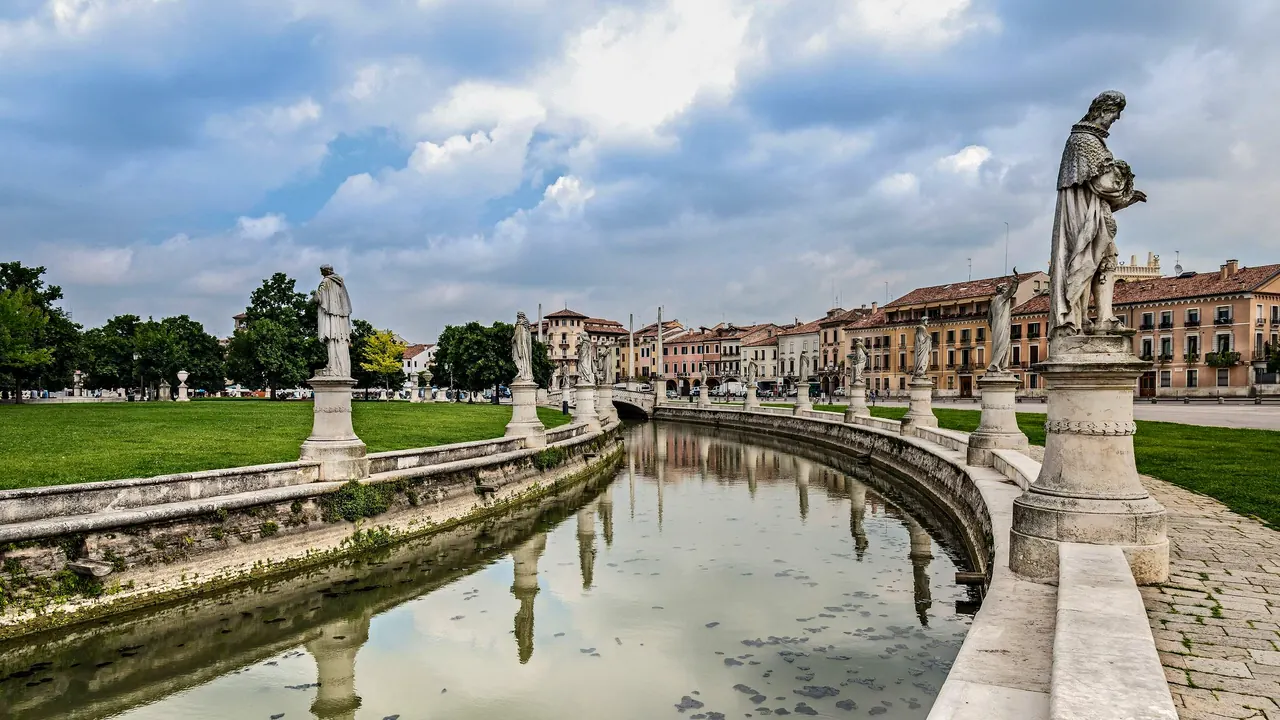
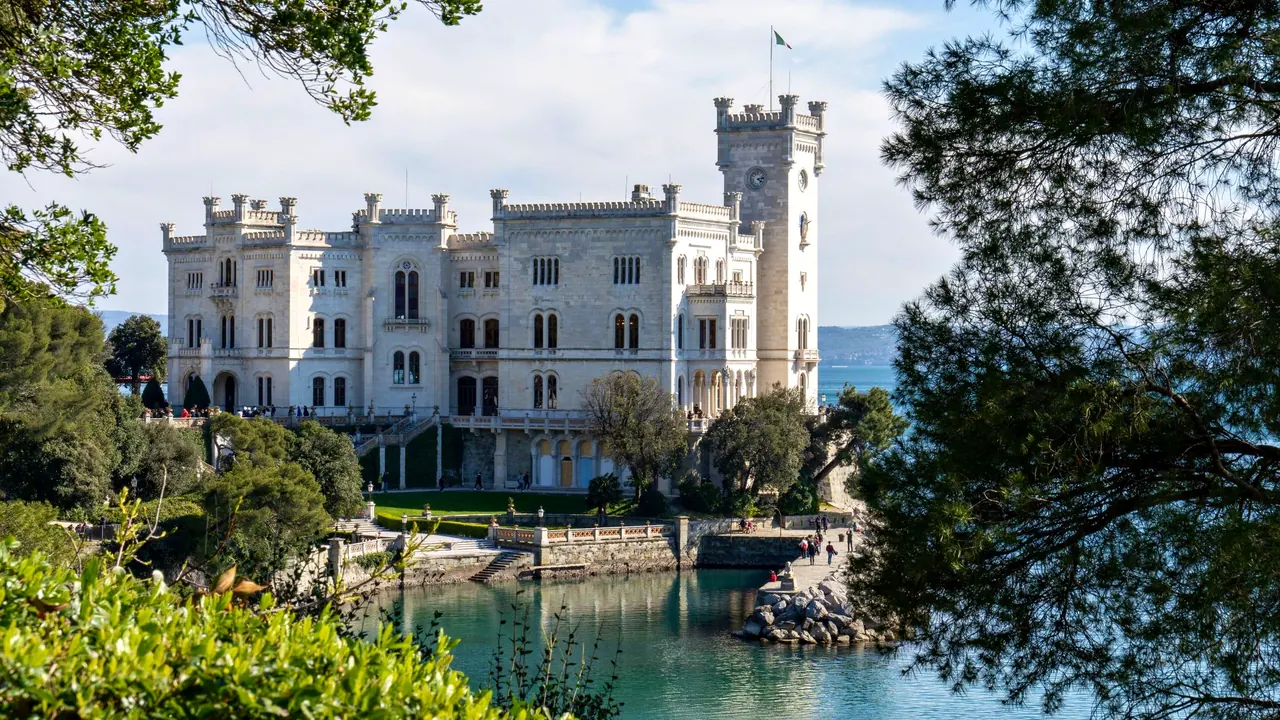
Photos: Padua by Didier Descouens, CC BY-SA 4.0, cropped; Trieste by Tibor Szabo, Pexels License.
Padua or Trieste?
Our verdict in twelve categories, each scored against the same fixed benchmark cities, and the climate month by month, so you can choose for your trip.
Choose Padua for
- wellness
- day trips
- nightlife
Padua suits a traveller who wants art history and a base for exploring. Giotto's frescoes in the Scrovegni Chapel and the Basilica of Saint Anthony fill a day or two, Venice and Vicenza are short train rides away, and the thermal pools of Abano are close enough for a soak after sightseeing. The flat, compact centre and lively student squares make it easy to settle in and travel out each day.
Choose Trieste for
- beaches
- live music and the arts
- nature and the outdoors
Trieste is the better choice if you want the sea and the landscape on your doorstep. You can swim off the Barcola promenade, walk the edge of the Karst above the gulf and go underground at the Grotta Gigante without needing a car. Add a proper opera house, Habsburg coffee houses and Slovenia within the hour, and it rewards a slower trip that is more about a place than about its sights.
Scoreboard
Twelve categories on one fixed scale from 0 to 100. The shaded stretch is the gap between the two.
Your match
Pick a travel style or drag the sliders, and both match scores follow your weighting.
Too close to call, level with your weighting
Wins on wellness and day trips with your weighting.
Wins on beaches and live music and the arts with your weighting.
What matters to you?
Category by category
What the scores mean for a trip.
Beaches & swimming
Trieste lives by the sea, and Padua visits it. In Trieste people swim from the city itself: off the stepped concrete platforms and pine-shaded lawns at Barcola, from old bathing establishments near the centre, or in the pebble coves below the cliffs at Sistiana and Duino, where the water is clear.
From Padua the sea takes about an hour to reach, at Sottomarina or the Lido of Venice. There, at least, you find what Trieste lacks: soft sand and calm, shallow water where small children can paddle. You pay for it with a long day out and a flat, crowded shoreline.
Food & drink
The two cities eat equally well, but the cooking points in different directions. Padua's is Venetian home cooking: bigoli with duck sauce, baccalà and spring risotto, bought fresh in the twin market squares and eaten with an early-evening spritz and Euganean wine.
Trieste looks north and east. Its buffet counters carve boiled pork and sausages with horseradish and sauerkraut, and it serves jota soup and Central European cakes. Its coffee culture has a language of its own, and the osmize farmhouses up on the Karst open for a few weeks at a time. Neither city has much fine dining.
Culture & sights
Padua has the masterpieces. Giotto's Scrovegni Chapel changed European painting, and around it stands a UNESCO-listed group of fourteenth-century fresco cycles. Add Donatello's bronzes at Saint Anthony, the world's oldest permanent anatomical theatre and the original botanical garden of 1545, and the art lover has a dense couple of days.
Trieste offers more townscape than treasures. You get the sea-facing grandeur of Piazza Unità, the Habsburg grid of the Borgo Teresiano, San Giusto's mosaics and castle, and Miramare on the shore, with the Risiera di San Sabba as a sober counterweight. Its literary past with Joyce and Svevo adds atmosphere rather than places to visit.
Nightlife
Both cities centre their evenings on the aperitivo, but Padua's crowd is younger and stays out later. During term, students fill Piazza delle Erbe and Piazza dei Signori with spritz glasses on weekday evenings too, and wine bars line the old ghetto, though the city empties in the summer break.
Trieste is quieter. Its population is older and its streets are calm by midnight in winter. Its best evenings come in summer, when the kiosks along the Barcola seafront stay open late. Neither city is the place for clubbing.
Nature & outdoors
Trieste has wild country at the end of its streets. The Karst plateau rises steeply behind the city, with the Strada Napoleonica high above the gulf, the Rilke Path along the cliffs at Duino, climbing in Val Rosandra and the vast Grotta Gigante. The sea adds sailing and snorkelling in the Miramare marine reserve.
Padua sits on flat farmland, so getting outdoors takes a short trip. The volcanic Euganean Hills, about 15km away, have trails, vineyards and quiet roads for cyclists, and the Brenta towpaths make gentle bike rides. Real mountain walking means driving to Monte Grappa or the Asiago plateau.
Day trips
Padua is one of Italy's best bases for day trips. Venice is under half an hour by train, close enough to visit on several days and still sleep somewhere calmer. Vicenza's Palladian buildings, Verona, Treviso, Bologna and Ferrara are all an hour or less, with the Brenta villas and the walled towns of Este and Montagnana closer still.
Trieste's list is wider in range rather than closer to hand. It covers Roman Aquileia, star-shaped Palmanova, Piran across the Slovenian border, Ljubljana and the Postojna cave. Some of these are easier by car, and Venice takes about two hours each way.
Good for families
Neither city is built around children, but Trieste gives them more to do. The Grotta Gigante amazes older children, and there are the Miramare gardens, a small aquarium, a hands-on science centre and summer days among local families at Barcola. The catches are steep, stepped streets and swimming off rocks rather than sand.
Padua is the easier city to push a buggy through, being flat, compact and largely free of traffic. Prato della Valle gives children room to run. Its sights are mostly frescoes and churches, though, so families tend to head out to Gardaland or the Adriatic for the day.
Getting around
Padua is slightly easier. Its centre is flat and sheltered by arcades, and everything from the Scrovegni Chapel to Saint Anthony is within a 20-minute walk, with a tram and bicycles for the rest. Its station is a main junction with fast lines in every direction.
Trieste's waterfront is just as walkable, but the climb to San Giusto and the hillside districts involves long flights of steps. Buses run up onto the Karst and out to Miramare, and passenger boats crossing the bay to Muggia add a pleasure Padua cannot match.
Shopping & style
Padua has a little more to browse. Its arcaded streets hold Italian fashion, independent boutiques and university bookshops, and once a month a large antiques market fills Prato della Valle. Trieste's shops are plainer, and its most characterful browsing is in the antique and second-hand shops of the old town lanes.
In both cities the best things to bring home are edible. From Padua that means cheese and Euganean wine from the markets. From Trieste it means roasted coffee, Karst wine and presnitz.
Affordability
The two cost about the same, moderate for northern Italy without being cheap. They save you money in different ways. Padua's fair hotel prices make it a sensible base from which to see Venice and the region by train, though rooms get dearer around trade fairs and graduation season.
Trieste's best experiences cost nothing: swimming at Barcola, the cathedral hill and walks on the Karst. A buffet plate or a coffee at the bar costs little, but rooms tighten around the autumn regatta and in high summer.
Live music & performing arts
Each city has a nineteenth-century Teatro Verdi, but Trieste's is the one with a full season of opera and ballet. Trieste also keeps a Habsburg fondness for operetta that is rare in Italy, and adds a Slovenian-language theatre and summer concerts in the courtyard of San Giusto castle.
Padua's programme is smaller: prose theatre, some opera, and chamber concerts in the frescoed Sala dei Giganti and the Basilica of Saint Anthony. For major opera, Padua's visitors travel to the Fenice in Venice or the summer Arena in Verona.
Wellness & relaxation
Padua has a real spa district on its doorstep. Abano Terme and Montegrotto Terme, about 12km away, draw mineral water from the ground at up to 87°C. They have been using the local mud since Roman times, and many spa hotels let day visitors into their pools.
Trieste's restfulness comes from its pace rather than from treatment. It offers long mornings in old coffee houses and sunset walks out along the Molo Audace. For thermal baths you have to leave the city.
When should you go?
Pick your month. The climate figures are measured averages, not a forecast.
Padua in July
Trieste in July
Daytime high, °C
Rainfall in the month, mm
Where the figures come from
Padua's temperatures are measured 35 km from the centre, at Treviso / Istrana.
Padua has no rain gauge within 25 km of the centre, so its rainfall comes from a gridded climate dataset read at the city rather than from a gauge further away.
Padua's sunshine is measured 36 km from the centre, at Treviso / S. Angelo.
Temperature and rainfall are climate normals, averaged over the years shown. Padua: 1991-2020 normals, Treviso / Istrana (35.4 km from centre). Trieste: 1991-2020 normals, Trieste (1.6 km from centre).
Spring is pleasant in both cities, with April and May warm enough for long days on foot. After that they part. Padua, out on the plain, reaches about 31°C in July and August, which makes afternoons among its sights heavy going. September is its best month for the streets and the Euganean Hills: still warm, and drier than June or August. October stays mild but turns wetter, and the rain builds to its peak in November. Padua's sea, an hour away, is warm enough for swimming from June to September, but only as a day out.
Trieste peaks a little cooler at about 29°C and gets a little more sunshine. June to August is its best stretch. The sea is warm enough for daily swimming at Barcola, rain stays moderate, and July is its sunniest month. From September the rain sets in hard and builds to about 125mm in November, so autumn is the weaker season here, the reverse of Padua, where September is one of the best months. Winters are cool and grey in both cities, with fog over Padua's plain and the cold Bora in Trieste, though January is about as dry as either city gets.
Which traveller are you?
For a beach and sun trip, Trieste is the clear pick. You swim straight from the city at Barcola, and there are clear coves at Sistiana and Duino. From Padua, Sottomarina or the Lido is a full day out, and those beaches are flat rows of umbrellas.
On a relaxing and wellness trip, Padua has the advantage. The thermal district of Abano and Montegrotto lies just outside town, with hot mineral pools and mud treatments that go back to Roman times. Trieste offers calm coffee houses and seafront strolls, but no spas of note.
For an outdoors trip, Trieste wins. The Karst plateau rises right behind the city, with cliff paths, the Val Rosandra gorge, huge caves, a marine reserve and a gulf for sailing. Padua's walking and cycling start in the Euganean Hills, and real mountains are further off.
Before you go
| Measure | Padua | Trieste |
|---|---|---|
| Official language | Italian | Italian |
| Currency | Euro (EUR) | Euro (EUR) |
| Sockets | CFL230 V, 50 Hz | CFL230 V, 50 Hz |
| Driving side | Right | Right |
| Time zone | UTC+1, UTC+2 in summer | UTC+1, UTC+2 in summer |
| Emergency number | 112 | 112 |
| Elevation | 12 m | 2 m |
| Main airport | Venice Marco Polo Airport (VCE)39 km from centre103 non-stop destinations | Trieste Airport (TRS)31 km from centre32 non-stop destinations |
| Public holidays this year | 13 days | 13 days |
By the numbers
| Measure | Padua | Trieste |
|---|---|---|
| City population | 206,496 | 198,417 |
| People per km² | 2,220 | 2,332 |
| Museums within 10 km | 29 | 33 |
| UNESCO World Heritage sites within 50 km | 5 | 5 |
| Swim season, months above 21 °C | 4 months | 4 months |
Where else could you go?
Every comparison below shares a destination with this one, so you can follow Padua or Trieste somewhere new.