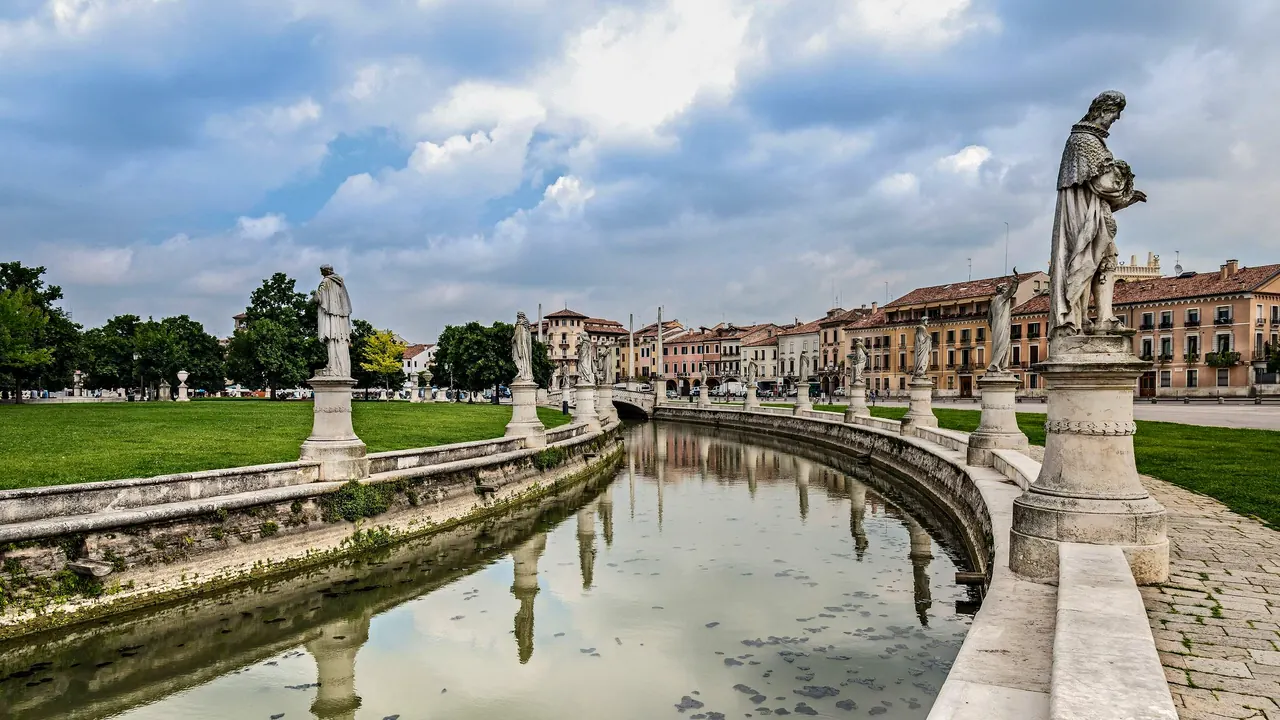
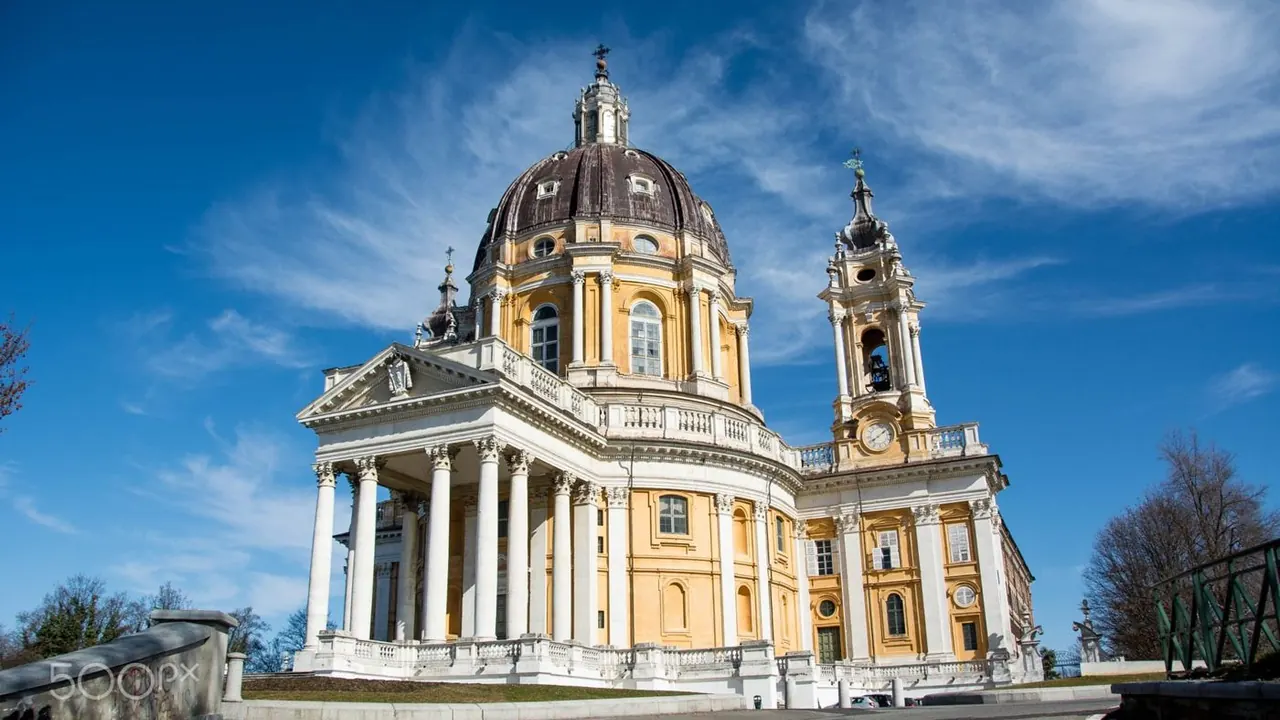
Photos: Padua by Didier Descouens, CC BY-SA 4.0, cropped; Turin by Konstantin Dacosta, CC BY 3.0, cropped.
Padua or Turin?
Our verdict in twelve categories, each scored against the same fixed benchmark cities, and the climate month by month, so you can choose for your trip.
Choose Padua for
- wellness
- beaches
- day trips
Padua suits travellers who want a compact, walkable base with the rest of the Veneto on its doorstep. Venice, Vicenza and Verona are easy train rides away, Giotto's frescoes fill a morning, and the thermal pools of Abano Terme are a short hop for an afternoon soak. It works best for a trip spent moving between famous cities and coming back to a quieter, cheaper bed at night.
Choose Turin for
- live music and the arts
- nature and the outdoors
- food and drink
Choose Turin if you want the city itself to carry the trip. Its Piedmontese cooking and wine are richer, the Teatro Regio gives it a proper opera season, and the Alps are close enough for a day of hiking or skiing. Families will find more to keep children busy here too, from the cinema museum in the Mole to the mummies of the Museo Egizio.
Scoreboard
Twelve categories on one fixed scale from 0 to 100. The shaded stretch is the gap between the two.
Your match
Pick a travel style or drag the sliders, and both match scores follow your weighting.
Wins on wellness and beaches with your weighting.
Wins on live music and the arts and nature and the outdoors with your weighting.
What matters to you?
Category by category
What the scores mean for a trip.
Beaches & swimming
Neither city is a place for swimming, but Padua gets you to the sea far more easily. Sottomarina and the Lido of Venice are about an hour away, with shallow, calm Adriatic water that suits small children, even if the beaches themselves are plain rows of umbrellas. From Turin the Ligurian Riviera takes about an hour and three-quarters each way, so in summer most people settle for a lake such as Avigliana instead.
Food & drink
Turin is the stronger food city. Piedmontese cooking is rich and precise, with agnolotti del plin, vitello tonnato and white truffles from the Langhe in autumn, all served with Barolo and Barbaresco. The city also gave the world vermouth and gianduja, and drinking bicerin in an arcaded café is a ritual in itself.
Padua eats more simply, with Venetian home dishes such as bigoli with duck sauce and baccalà, and its morning markets in Piazza delle Erbe and Piazza della Frutta are a pleasure. The standing spritz and Euganean wines are the highlights, but there are fewer special-occasion restaurants.
Culture & sights
The two are about even, but they offer different kinds of sightseeing. Padua's treasures are medieval and religious: Giotto's Scrovegni Chapel, the UNESCO-listed fresco cycles, the Basilica of Saint Anthony with Donatello's bronzes and the university's anatomical theatre. All of them sit in a centre you can cover in a couple of days.
Turin is a former royal capital built around big museums. The Museo Egizio, the Royal Palace, the Savoy residences and the cinema museum inside the Mole fill more days, and modern art at the Castello di Rivoli and the Fiat history at the Lingotto broaden it beyond the past.
Nightlife
Both are student cities where the evening centres on the aperitivo rather than late clubbing, and both go quiet outside term. In Padua the night stays in one place: crowds stand with spritz glasses across Piazza delle Erbe and Piazza dei Signori, then drift into wine bars in the old ghetto.
Turin spreads its evenings across several districts, from the cocktail bars of the Quadrilatero Romano to the pavement crowds of San Salvario and the more alternative Vanchiglia. In summer the Murazzi along the Po add riverside nights, and a few clubs occupy old industrial buildings.
Nature & outdoors
Turin has real mountains within reach. The Gran Paradiso, with ibex and high trails, and the slopes of the Via Lattea are about an hour or an hour and a half away, giving you skiing in winter and hut-to-hut hiking in summer. Closer in, the hill up to Superga and the riverside Valentino park offer easy walks.
Padua's outdoors is gentler. The volcanic Euganean Hills, about 15km off, have vineyard trails and quiet cycling roads, and the Brenta towpaths make level bike rides. Proper mountain walking means a drive of about an hour and a half to Monte Grappa or Asiago.
Day trips
Padua is one of the best bases in Italy for day trips. Venice is under half an hour by train and Vicenza about fifteen minutes, with Verona, Bologna and Ferrara all around an hour. You can visit several major cities without a car and still have the Brenta villas and the walled towns of Este and Montagnana for quieter days.
Turin's outings are excellent but more spread out. The Langhe wine villages, Alba and Barolo are about an hour south and best done by car, Milan is an hour by fast train, and Genoa and Aosta take about two hours.
Good for families
Turin keeps children busier. They can ride the glass lift up through the Mole, look at cars in the Museo dell'Automobile and see the mummies at the Museo Egizio, and the rack railway to Superga is a treat on its own. The Zoom park at Cumiana, with animals in open enclosures and summer pools, makes a good day out by car.
Padua is safe, flat and easy with a pushchair, and Prato della Valle gives children room to run. Most of its sights, though, are frescoes and churches, so families tend to rely on Gardaland or the Adriatic beaches.
Getting around
Padua is the easier city to get around. Almost every sight is within a 20-minute walk under the arcades, a single tram connects the station to the centre, and the main rail lines make car-free day trips simple.
Turin's grid of arcaded streets is easy to walk too, but the city is larger. Its single metro line covers only part of it, and the trams and buses that fill the gaps take longer to learn.
Shopping & style
Turin offers more for shoppers. Via Roma has the luxury labels under its arcades, Via Garibaldi the high-street names and Via Maria Vittoria the antique dealers, and the Balon flea market runs every Saturday behind Porta Palazzo. Its chocolate makers and truffle delicatessens are the most distinctive part.
Padua's shopping is pleasant but modest: fashion and shoe shops along the arcades, university bookshops, and cheeses and Euganean wine from the markets, with a large antiques market in Prato della Valle once a month.
Affordability
Costs are much the same in both, moderate for northern Italy, and hotels in either get dearer during trade fairs. What differs is where you save. Padua's main saving is as a base, since sleeping there is cheaper than in Venice. In Turin a generous aperitivo can replace dinner, but the truffle season and fine dining can push the bill up.
Live music & performing arts
Turin has a far fuller performing arts calendar. The Teatro Regio stages a complete opera and ballet season, the RAI National Symphony Orchestra plays in its own auditorium, there are concerts in Renzo Piano's Lingotto hall, and jazz clubs and music festivals run through the year.
Padua's programme is smaller but real. It has prose theatre and some opera at Teatro Verdi, and chamber concerts in the Sala dei Giganti and the Basilica. For major opera, Padua residents go to the Fenice in Venice or the Arena in Verona.
Wellness & relaxation
Padua is the better choice for a restful stay, thanks to Abano Terme and Montegrotto Terme about 12km away. This is one of Europe's largest thermal districts, where mud treatments go back to Roman times, and many of its spa hotels let day visitors use their hot outdoor pools.
Turin has no bathing tradition of its own. Its calm comes from long café breaks and slow walks along the Po, and the nearest real thermal water is at Acqui Terme or in the Aosta valley, close to two hours away.
When should you go?
Pick your month. The climate figures are measured averages, not a forecast.
Padua in July
Turin in July
Daytime high, °C
Rainfall in the month, mm
Where the figures come from
Padua's temperatures are measured 35 km from the centre, at Treviso / Istrana.
Padua has no rain gauge within 25 km of the centre, so its rainfall comes from a gridded climate dataset read at the city rather than from a gauge further away.
Padua's sunshine is measured 36 km from the centre, at Treviso / S. Angelo.
Turin has no rain gauge within 25 km of the centre, so its rainfall comes from a gridded climate dataset read at the city rather than from a gauge further away.
Temperature and rainfall are climate normals, averaged over the years shown. Padua: 1991-2020 normals, Treviso / Istrana (35.4 km from centre). Turin: 1991-2020 normals, Torino / Caselle (15.4 km from centre).
Both cities have cold, grey winters and hot summers, and spring and autumn are the easiest seasons for walking. Padua runs hotter and stickier in high summer, reaching 31°C in July and August, which is tiring in the streets but is also when the nearby Adriatic is warmest, at about 26°C in August. June to September is the season for a beach day from Padua, and July is its sunniest month. Rain is spread through the year but is heaviest in November, at about 97mm.
Turin is a little milder at the peak, around 29°C in July. Its wettest stretch comes in late spring, with May the rainiest month at about 115mm, while its winters are noticeably drier than Padua's. That makes Turin's early autumn, and its crisp, dry winter days, better times to visit than May. Padua is at its best in late April and in September and October.
Which traveller are you?
On a relaxing and wellness trip, Padua lets each day turn on rest: a morning with Giotto, an afternoon in thermal pools below the hills, then a slow evening under the arcades. Turin is calm too, but its spas are mostly hotel pools.
For an outdoors trip, Padua offers gentle walking and cycling among the vineyards and chestnut woods of the Euganean Hills. Turin is the place to go, though: the Gran Paradiso and the Sestriere slopes are close enough for high trails, climbing and skiing.
For a food and nightlife trip, Padua gives you simple Venetian cooking and a sociable spritz hour in its squares. Turin goes further, with agnolotti, Langhe truffles, Barolo and its own vermouth, and evenings that move on from the aperitivo into several bar districts.
Before you go
| Measure | Padua | Turin |
|---|---|---|
| Official language | Italian | Italian |
| Currency | Euro (EUR) | Euro (EUR) |
| Sockets | CFL230 V, 50 Hz | CFL230 V, 50 Hz |
| Driving side | Right | Right |
| Time zone | UTC+1, UTC+2 in summer | UTC+1, UTC+2 in summer |
| Emergency number | 112 | 112 |
| Elevation | 12 m | 239 m |
| Main airport | Venice Marco Polo Airport (VCE)39 km from centre103 non-stop destinations | Turin Airport (TRN)14 km from centre65 non-stop destinations |
| Public holidays this year | 13 days | 13 days |
By the numbers
| Measure | Padua | Turin |
|---|---|---|
| City population | 206,496 | 841,600 |
| People per km² | 2,220 | 6,474 |
| Museums within 10 km | 29 | 72 |
| UNESCO World Heritage sites within 50 km | 5 | 4 |
| Swim season, months above 21 °C | 4 months | - |
Where else could you go?
Every comparison below shares a destination with this one, so you can follow Padua or Turin somewhere new.