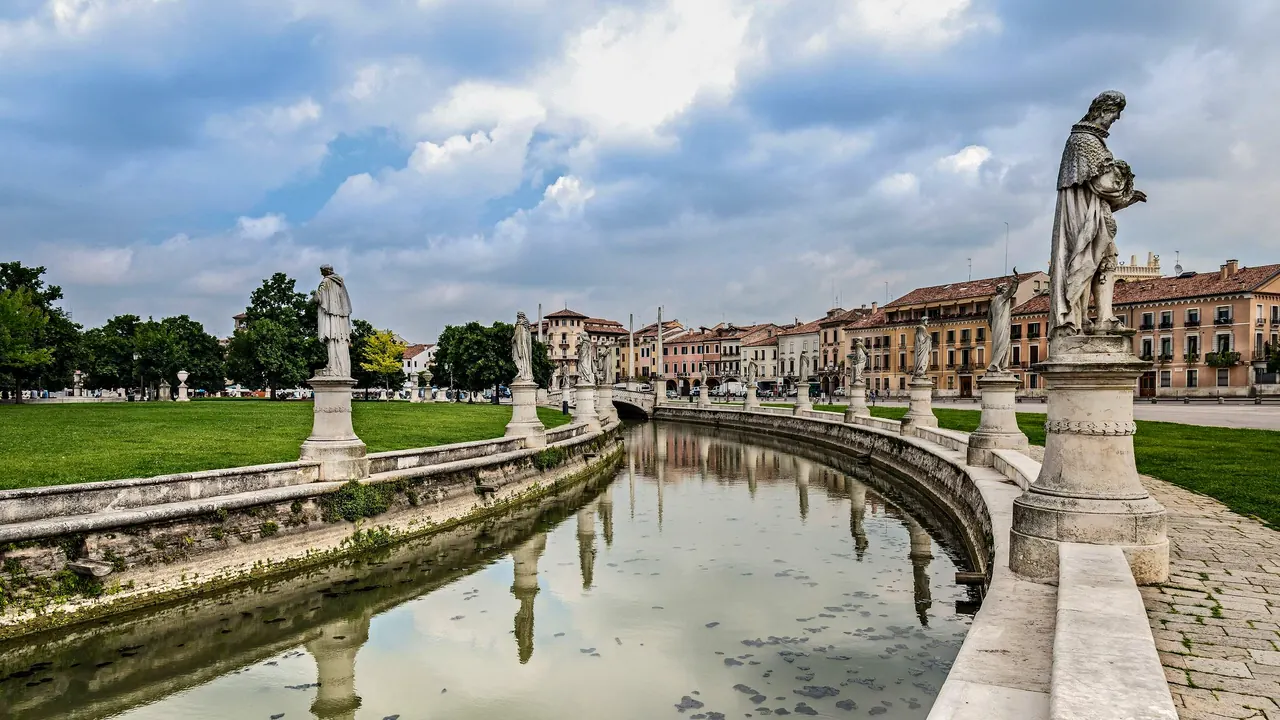
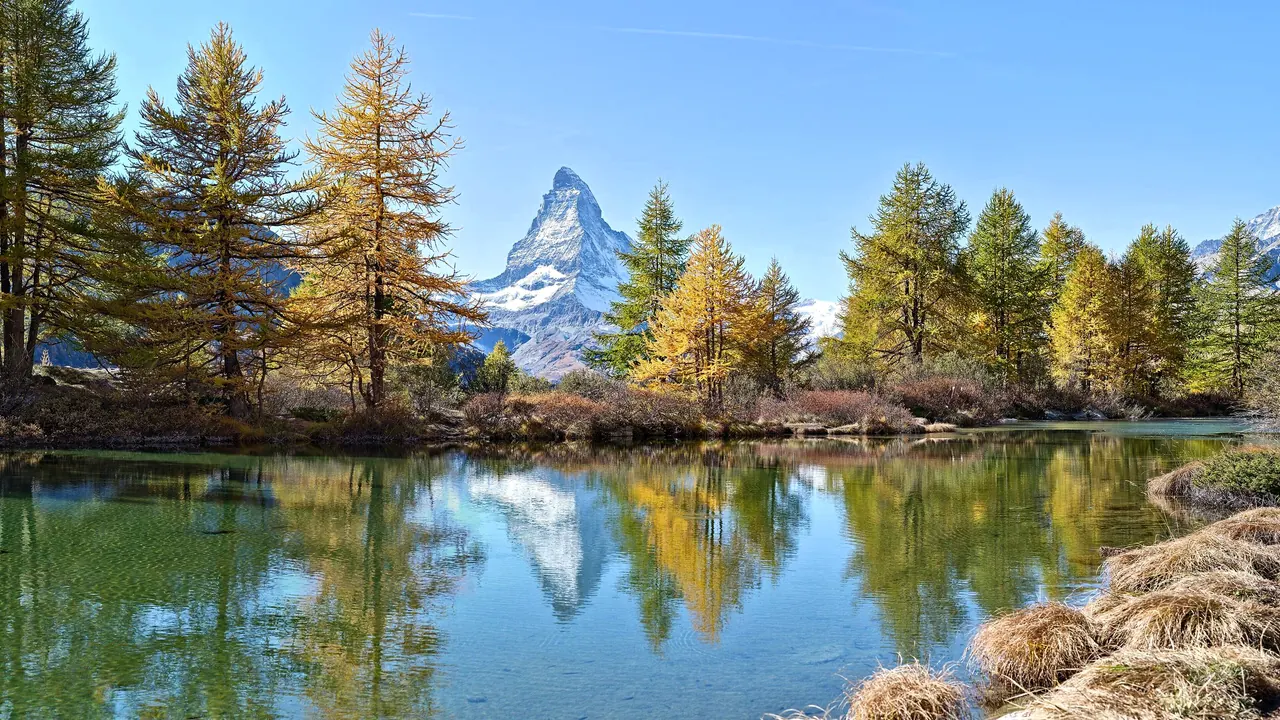
Photos: Padua by Didier Descouens, CC BY-SA 4.0, cropped; Zermatt by Roy Egloff, CC BY-SA 4.0, cropped.
Padua or Zermatt?
Our verdict in twelve categories, each scored against the same fixed benchmark cities, and the climate month by month, so you can choose for your trip.
Choose Padua for
- day trips
- culture and sights
- prices
Padua suits travellers who want art, history and an easy rail base. Giotto's frescoes in the Scrovegni Chapel, the Basilica of Saint Anthony and a compact arcaded centre fill a couple of days. After that, Venice, Vicenza, Verona and Bologna are all short train rides away, and the thermal pools of Abano are close by for tired legs. It is also much easier on the wallet.
Choose Zermatt for
- nature and the outdoors
- families
- getting around
Zermatt is the choice when the mountains are the point of the trip. The Matterhorn stands over a car-free village, and lifts and cog railways carry skiers in winter and walkers in summer into some of the highest terrain in the Alps. In return you get little culture, few outings to other towns and very high costs. What you are paying for is time on glaciers, trails and pistes.
Scoreboard
Twelve categories on one fixed scale from 0 to 100. The shaded stretch is the gap between the two.
Your match
Pick a travel style or drag the sliders, and both match scores follow your weighting.
Wins on day trips and culture and sights with your weighting.
Wins on nature and the outdoors and families with your weighting.
What matters to you?
Category by category
What the scores mean for a trip.
Beaches & swimming
Neither city is a beach destination, but Padua can at least reach one. Sottomarina and the Venice Lido are about an hour away, with shallow, calm water warm enough in summer for children to paddle. Zermatt has no sea and no lake for bathing. Its tarns are fed by glaciers and are only good for reflecting the Matterhorn, so swimming means a hotel pool.
Food & drink
Padua is the better place for everyday eating. Meals follow the morning markets in Piazza delle Erbe and Piazza della Frutta and the Venetian home cooking that comes from them, such as bigoli with duck sauce or salt cod done the Vicenza way. Wines come from the Euganean Hills just outside town, and coffee at the grand old Caffè Pedrocchi is a ritual of its own. There is little fine dining, but good, fairly priced food is easy to find in any month.
In Zermatt the food that stays in the memory is up on the mountain. Long lunches of raclette or air-dried beef on chalet terraces at Findeln or Furi come with the Matterhorn in view and a glass of Valais white. It makes a great outing rather than a varied week of eating. Choice in the village is narrow, cheap meals are hard to find, and between the ski and hiking seasons many kitchens close, while Padua's markets trade every morning.
Culture & sights
Padua offers days of serious art and history, while Zermatt's heritage fills a morning. Giotto's Scrovegni Chapel is the centrepiece, and it sits among a UNESCO-listed group of fourteenth-century fresco cycles in the Eremitani, the Baptistery and the Oratory of Saint George. Beyond them are the pilgrim Basilica of Saint Anthony, the frescoed hall of the Palazzo della Ragione, the university's anatomical theatre at Palazzo Bo and a Renaissance botanical garden still on its original site.
Zermatt's history is about climbing. The Matterhorn Museum tells the story of the 1865 first ascent and the deaths on the way down, the mountaineers' cemetery lies beside the parish church, and the old larch-wood barns of the Hinterdorf recall the farming village that came before the hotels. The Gornergrat cog railway, running since the late nineteenth century, is a period piece too, but the peaks themselves are what people come to see.
Nightlife
Padua's evenings are livelier, and they run through the whole university term. Students and locals fill Piazza delle Erbe and Piazza dei Signori for the aperitivo, then move on to wine bars around the old ghetto and the Bo. Zermatt is loud in a different way, with après-ski in ski boots on the runs into the village and a few bars and small clubs on the main street on winter weekends. In summer, though, evenings there end after dinner.
Nature & outdoors
Zermatt is in another league here. The Matterhorn rises straight above the village, lifts climb to over 3,800m at the Matterhorn Glacier Paradise and the skiing reaches across into Italy. In summer there are hundreds of kilometres of trails, such as the Five Lakes walk and the Europaweg.
Padua's outdoors is gentler and starts outside town. There are vineyard and chestnut trails in the Euganean Hills, flat bike rides along the Brenta towpaths and birdwatching on the lagoon. For real mountain walking, Monte Grappa and the Asiago plateau are about one and a half hours away.
Day trips
Padua makes an exceptional base. Venice is under half an hour away by train and Vicenza a quarter of an hour. Verona, Treviso, Bologna and Ferrara are around an hour away, and the Brenta villas and walled towns such as Este and Montagnana are closer still.
From Zermatt, every outing starts with the long train ride down the valley. Sion, with its castle hills and vineyards, and the old centre of Brig are worth the trip, and Saas-Fee is close by bus. Even so, most visitors spend their spare days back up in the mountains.
Good for families
Zermatt has the edge with children, though both have limits. Padua is flat, compact and welcoming, with Prato della Valle to run about in and the botanical garden's glasshouses for older children. The main sights are frescoes and churches, though, so families tend to rely on day trips to Gardaland, Lake Garda or the Adriatic.
Zermatt's car-free village is calmer and safer, with ski schools and nursery slopes at Sunnegga. In summer children have marmots, lakeside walks and the fun of cog railways and gondolas. Rainy days and the thin air at the highest viewpoints can be hard, so it works best for families who ski or hike together.
Getting around
Both are easy on foot, but in different ways. In Padua's flat centre, the Scrovegni Chapel and the Basilica of Saint Anthony are within a twenty-minute walk under the arcades, and a tram runs from the station to Prato della Valle. Trains leave on main lines in every direction, so day trips need no car.
Zermatt bans ordinary cars altogether. You arrive by train via Täsch and then walk a compact strip along the river, with electric taxis and ski buses out to the further lift stations. Most of the real travelling goes uphill, by cog railway, underground funicular and cable car, and leaving the valley takes over an hour.
Shopping & style
Padua is the better place to browse. It has arcaded streets of Italian fashion and shoe shops, university bookshops, daily food markets, delicatessens under the Palazzo della Ragione and a monthly antiques market on Prato della Valle. Zermatt's one main street is mostly Swiss watches, jewellery and souvenirs, though its ski and mountaineering shops are genuinely good if you need gear.
Affordability
The gap here is huge. Padua is moderately priced for northern Italy, cheap enough that many visitors sleep there and spend their days in Venice. Standing spritzes, market food and fairly priced trattorias keep daily costs down.
Zermatt is one of the most expensive places in the Alps. Rooms, meals on mountain terraces and the lifts everyone uses all cost far more than in most of Europe. Self-catering or staying down the valley in Täsch helps, but a trip there is still a splurge.
Live music & performing arts
Padua has a steady if modest programme. There is theatre and some opera at the horseshoe-shaped Teatro Verdi, a chamber orchestra with a regular season, and concerts in the Sala dei Giganti and the Basilica, with La Fenice in Venice and the Verona Arena within easy reach. Zermatt has no theatre or concert hall. Outside Zermatt Unplugged in spring and the late-summer chamber music festival in the village church, live music there means a band in an après-ski bar.
Wellness & relaxation
Padua has the stronger hand, thanks to Abano Terme and Montegrotto Terme about 12km away. Together they form one of Europe's largest thermal districts, with hot mineral pools and mud treatments used since Roman times. Many spa hotels take day visitors, so a soak after a morning of sightseeing is easy.
Zermatt has no thermal springs, but it does have many excellent hotel spas with saunas and mountain views, some of them open to non-residents. The quiet streets without cars and the clean air are restful in themselves, although the mood is active, built around the day's skiing or walking.
When should you go?
Pick your month. The climate figures are measured averages, not a forecast.
Padua in July
Zermatt in July
Daytime high, °C
Rainfall in the month, mm
Where the figures come from
Padua's temperatures are measured 35 km from the centre, at Treviso / Istrana.
Padua has no rain gauge within 25 km of the centre, so its rainfall comes from a gridded climate dataset read at the city rather than from a gauge further away.
Padua's sunshine is measured 36 km from the centre, at Treviso / S. Angelo.
Zermatt has no weather station within reach, so its figures come from a gridded climate model rather than a measured record, and read a broad area rather than the city itself.
Temperature and rainfall are climate normals, averaged over the years shown. Padua: 1991-2020 normals, Treviso / Istrana (35.4 km from centre). Zermatt: 1991-2020 normals, TerraClimate 4 km grid at the town, no weather station within 90 km.
Padua is best for walking the streets in late spring and early autumn, when days are mild and fairly sunny. July and August are hot and humid at around 31°C. That is too warm for long afternoons of sightseeing, but right for a day on the Adriatic, where the sea reaches about 25°C. Winters are cool and grey, often foggy. Rain falls through the whole year and is heaviest in late autumn.
Zermatt has two good seasons. From December to March, daytime highs stay below freezing, which keeps the snow in good condition for skiing. Summer is short and fresh, with highs of only about 14°C in July and August. That is ideal for hiking but never beach weather. November is the wettest month at 130mm, and together with the chilly, damp weeks of late spring it is the least rewarding time to go.
Which traveller are you?
On a culture and arts trip, Padua is the clear pick. Giotto's Scrovegni frescoes, the UNESCO-listed fresco cycles, Donatello's bronzes at Saint Anthony and the old anatomical theatre are all a short walk apart, while Zermatt's heritage fills a single morning.
For an outdoors trip, Zermatt has few rivals. Lifts climb above 3,800m, the skiing crosses into Italy, glacier pistes stay open into summer and trails lead to lakes, mountain huts and ibex country. Padua offers gentle hills and towpaths by comparison.
On a trip on a tight budget, Padua is the only realistic option of the two. Hotels are moderately priced, a standing spritz and market food cost little and the centre is walkable. In Zermatt, rooms, meals and lift tickets are all steep.
Before you go
| Measure | Padua | Zermatt |
|---|---|---|
| Official language | Italian | French, German, Italian, Romansh |
| Currency | Euro (EUR) | Swiss Franc (CHF) |
| Sockets | CFL230 V, 50 Hz | CJ230 V, 50 Hz |
| Driving side | Right | Right |
| Time zone | UTC+1, UTC+2 in summer | UTC+1, UTC+2 in summer |
| Emergency number | 112 | 112 |
| Elevation | 12 m | 1,624 m |
| Main airport | Venice Marco Polo Airport (VCE)39 km from centre103 non-stop destinations | Geneva International Airport (GVA)128 km from centre150 non-stop destinations |
| Public holidays this year | 13 days | 9 days |
By the numbers
| Measure | Padua | Zermatt |
|---|---|---|
| City population | 206,496 | 6,023 |
| People per km² | 2,220 | 25 |
| Museums within 10 km | 29 | 2 |
| UNESCO World Heritage sites within 50 km | 5 | 2 |
| Swim season, months above 21 °C | 4 months | - |
Where else could you go?
Every comparison below shares a destination with this one, so you can follow Padua or Zermatt somewhere new.
- Venicevs Padua
- Chamonixvs Zermatt
- Veronavs Padua
- Interlakenvs Zermatt
- Luganovs Zermatt
- Lausannevs Zermatt