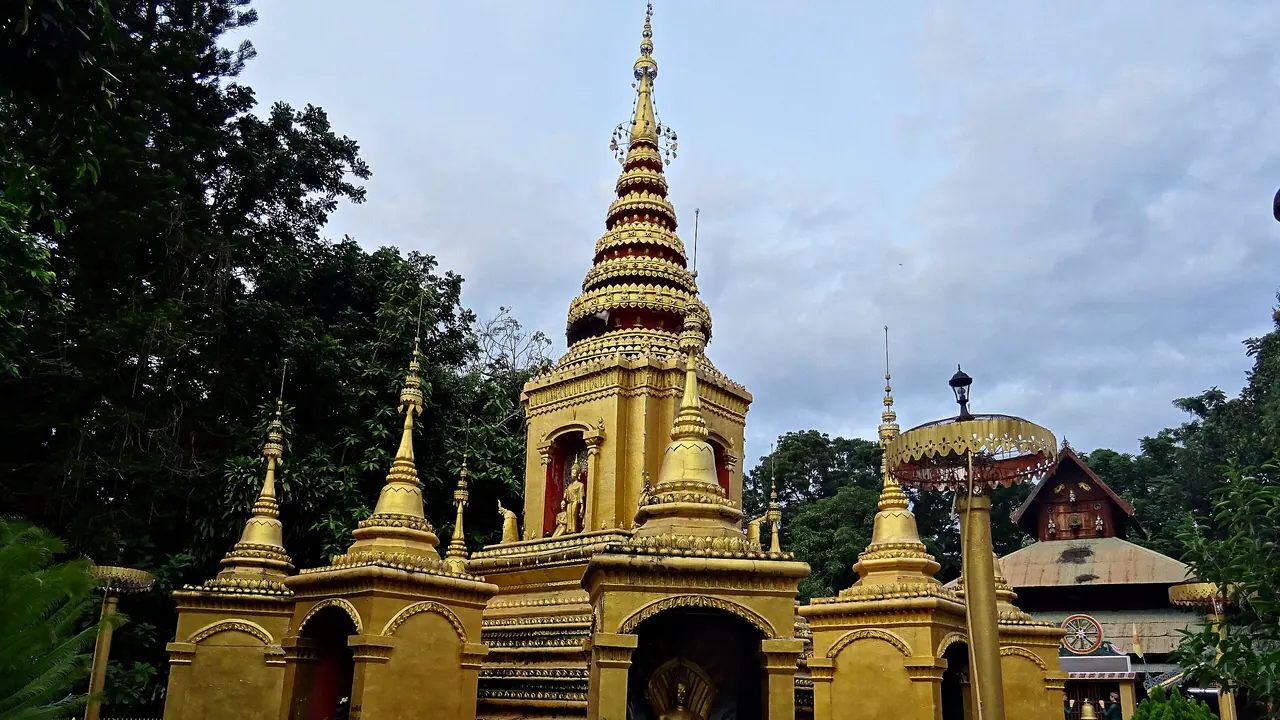
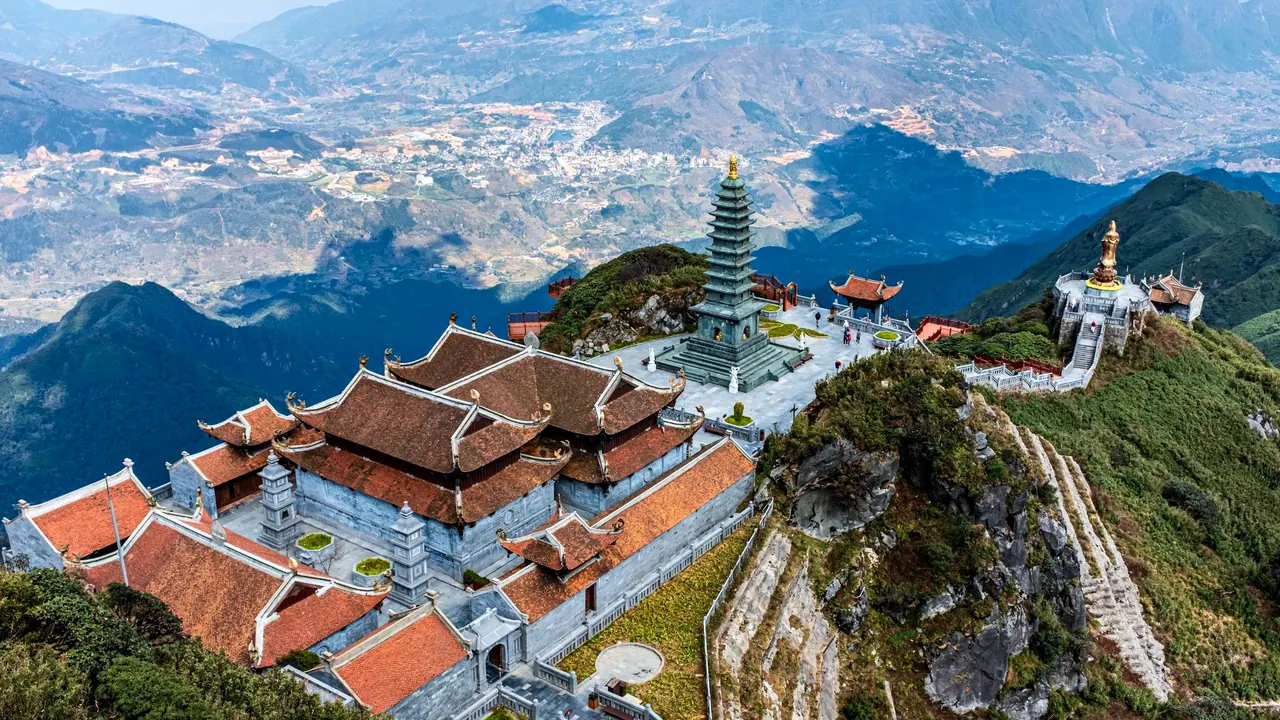
Photos: Pai by Christophe95, CC BY-SA 4.0, cropped; Sapa by Kirandeep Singh Walia, Pexels License.
Pai or Sapa?
Our verdict in twelve categories, each scored against the same fixed benchmark cities, and the climate month by month, so you can choose for your trip.
Choose Pai for
- wellness
- nightlife
- live music and the arts
Pai suits the traveller who wants to stop moving for a while. Hot springs, cheap massage, yoga retreats and hammocks over the rice fields make it an easy place to unwind, and in the evening the walking street, the backpacker bars and the open-stage music give it a social life Sapa doesn't have. It works best for a long, unhurried stay with a scooter and few plans.
Choose Sapa for
- day trips
- nature and the outdoors
- culture and sights
Sapa is the stronger choice if the mountains themselves are the point. The terraced Muong Hoa valley, multi-day treks between Hmong and Dao villages with homestays, and Fansipan above it all make for a more serious walking trip. You also meet the hill peoples on their own ground, and markets such as Bac Ha are within reach. Expect early nights and cool, often misty weather.
Scoreboard
Twelve categories on one fixed scale from 0 to 100. The shaded stretch is the gap between the two.
Your match
Pick a travel style or drag the sliders, and both match scores follow your weighting.
Too close to call, 2 points apart
Wins on wellness and nightlife with your weighting.
Wins on day trips and nature and the outdoors with your weighting.
What matters to you?
Category by category
What the scores mean for a trip.
Beaches & swimming
Neither town has a coast, so plan any beach time for another part of the trip. Pai at least gives you some way to cool off: tubing down the Pai River in the hot season, a dip under Mo Paeng waterfall and guesthouse pools. In Sapa the mountain streams are cold and shallow, and nobody swims in them.
Food & drink
The food is about equally good in both places, but it tastes of very different places. Pai's walking street mixes khao soi and Shan dishes with grilled skewers, and its cafés cater to long-stay travellers with vegan plates, pizza and good coffee. Santichon village adds Yunnanese noodles and tea.
Sapa eats for the cold. There are hotpots of farmed salmon and sturgeon, charcoal grills by the lake and Hmong dishes such as thang co, washed down with corn wine. Pai is easier for a vegetarian, while Sapa tastes more of the place itself.
Culture & sights
Sapa has more to offer here, though not inside the town. Apart from the French-era stone church and a small ethnographic museum, its culture lives in the Black Hmong, Red Dao, Tay and Giay villages along the trails, where you see indigo dyeing, weaving and wooden houses. The further from town you walk, the more everyday life you see.
Pai's sights fill about half a day. There is the white Buddha at Wat Phra That Mae Yen, a few Shan-style temples, the wartime iron bridge and Santichon's mud-brick houses. The town is pleasant, but you go for the valley rather than its heritage.
Nightlife
Pai is easily the livelier of the two. After the night market, the bars along and off the walking street fill with backpackers, from reggae spots to open-air gardens, with the odd party out of town. There are no clubs, and things wind down around midnight.
Sapa's evenings are built around the next morning's trek. A handful of travellers' bars with pool tables and the grill stalls by the lake are about all there is, and most people are in bed early.
Nature & outdoors
Both places are all about the landscape, but Sapa's is on a bigger scale. From a ridge at 1,500m, its rice terraces fall for kilometres into the Muong Hoa valley, and walking routes start right at the edge of town. Fansipan, the highest peak in Indochina, gives you a real summit, whether you climb it or take the cable car.
Pai's valley is gentler and greener: the eroded ridges of Pai Canyon at sunset, the Pam Bok and Mo Paeng waterfalls, mist at the Yun Lai viewpoint and the great cave of Tham Lod. Much of it is explored by scooter rather than on foot.
Day trips
Sapa has more to do beyond town. Bac Ha's Sunday market, where Flower Hmong trade buffalo and textiles, is about two hours away, and smaller weekly markets at Can Cau and Coc Ly have fewer visitors.
From Pai, the Lahu and Lisu villages near Soppong are the main outing. Mae Hong Son and Chiang Mai lie three winding hours away, which makes them a change of base rather than a day out.
Good for families
Both work for families with older children who like being outdoors, and both are hard going with toddlers. Pai's draws are gentler: farm visits, hot springs, river tubing and the night market, though the road from Chiang Mai is notorious for making children sick. Sapa offers village walks, buffalo in the paddies and the Fansipan cable car, but it also has steep streets, cold rooms in winter and persistent vendors.
Getting around
Sapa is a little easier without your own wheels. Trekking trails lead straight from town to the villages, and a short tram runs down to the cable car station. Drivers and motorbike taxis cover the rest, though getting there from Hanoi takes most of a day.
In Pai you can walk the centre in minutes, but the canyon, waterfalls and hot springs are spread across the valley with no public transport. That leaves a rented scooter, which is risky on the hill roads for beginners, or hired songthaews and tours.
Shopping & style
Neither is a shopping destination, and both mostly sell handmade goods. Pai's evening stalls are relaxed and light-hearted, with cotton trousers, woven bags, jewellery and art prints, though much of the range repeats from stall to stall. Sapa's crafts are rooted in the hill peoples, with Hmong indigo cloth, Dao embroidery and silver, and the best pieces are fine handwork, though you have to spot the machine-made copies and handle insistent sellers.
Affordability
Both are very cheap, and a long stay costs little in either. In Pai the savings come from bungalows, night-market meals and scooter rental, while prices in the centre rise around the new year. In Sapa they come from village homestays, street grills and guided treks. The Fansipan cable car is the one real splurge, and you are expected to bargain for crafts and rides.
Live music & performing arts
Pai has the more lasting live music, as most nights several bars host acoustic sets and blues, reggae or jazz jams by local and passing musicians. The quality varies, but there is usually something to hear.
Sapa has no venues at all. Its music comes from short weekend shows of Hmong and Dao pan pipes and dance in the town square or in villages. They are worth a look, and they show a culture Pai's bar stages don't, but they are brief.
Wellness & relaxation
This is one of Pai's clearest advantages. A forest soak at the Tha Pai hot springs, cheap Thai massage on every street and retreats lasting from a day to several weeks make the town itself a place to unwind, at least outside the hazy burning season.
Sapa's highlight is the Red Dao herbal bath in wooden tubs, which is a real pleasure after trekking. Yet the town is noisy with traffic and selling, so calm means staying out in a valley homestay.
When should you go?
Pick your month. The climate figures are measured averages, not a forecast.
Pai in July
Sapa in July
Daytime high, °C
Rainfall in the month, mm
Where the figures come from
Pai's temperatures are measured 64 km from the centre, at Mae Hong Son.
Pai's station stands 242 m below the city centre, so the centre is likely a little cooler than the figures say.
Pai has no rain gauge within 25 km of the centre, so its rainfall comes from a gridded climate dataset read at the city rather than from a gauge further away.
Pai's sunshine is measured 86 km from the centre, at Chiang Mai.
Sapa has no weather station within reach, so its figures come from a gridded climate model rather than a measured record, and read a broad area rather than the city itself.
Temperature and rainfall are climate normals, averaged over the years shown. Pai: 1971-2000 (sunshine 1991-2020, rainfall 1991-2020) normals, Mae Hong Son (63.7 km from centre). Sapa: 1991-2020 normals, TerraClimate 4 km grid at the town, no weather station within 90 km.
The two places run on almost opposite climates. Pai is a warm valley that is at its best from November to February, with clear, dry days and pleasant highs of around 30°C. By March and April the heat climbs towards 38°C and smoke from field burning hides the hills. The rains arrive in May and peak in August, when sunshine is at its lowest, so tracks turn muddy, though the river is high enough for rafting.
Sapa is cool all year. Winter highs sit around 15°C, with fog, damp and the odd frost, and November and December are dry but cold. Summer stays mild at about 25°C, but July brings as much as 433mm of rain and clouds that come and go over the views. The best balance for trekking is spring before the heavy rains, or September and October, when the terraces turn gold and the rain eases off. In midwinter, Pai is the warmer and sunnier of the two by some way.
Which traveller are you?
On a relaxing and wellness trip, go to Pai. You can soak in the small hill pools in the cool morning air, and a meditation or detox course can easily turn a week into a month. In Sapa, rest is what you earn after a hard day on muddy trails.
For an outdoors trip, Pai has hill-tribe treks and whitewater rafting on the Pai River in the wet season. Sapa still gives walkers more. Local guides cost little, the trails pass through bamboo forest and streams, and the Tram Ton Pass and Silver Waterfall make good extra outings.
On a food and nightlife trip, Pai makes a fuller evening. You can eat dumplings and fruit shakes from the stalls and then join a crowd of travellers who stayed longer than they planned. In Sapa you get sticky rice roasted in bamboo and apple spirit by the fire, and then an early night.
Before you go
| Measure | Pai | Sapa |
|---|---|---|
| Official language | Thai | Vietnamese |
| Currency | Baht (THB) | Dong (VND) |
| Sockets | ABCF220 V, 50 Hz | ACFG220 V, 50 Hz |
| Driving side | Left | Right |
| Time zone | UTC+7 | UTC+7 |
| Emergency number | Police 191, ambulance 1669, fire 199 | Police 113, ambulance 115, fire 114 |
| Elevation | 509 m | 1,544 m |
| Main airport | Chiang Mai International Airport (CNX)86 km from centre28 non-stop destinations | Noi Bai International Airport (HAN)238 km from centre91 non-stop destinations |
By the numbers
| Measure | Pai | Sapa |
|---|---|---|
| City population | 3,598 | 70,663 |
| People per km² | - | 103 |
| Museums within 10 km | 0 | 0 |
| UNESCO World Heritage sites within 50 km | 0 | 0 |
Where else could you go?
Every comparison below shares a destination with this one, so you can follow Pai or Sapa somewhere new.