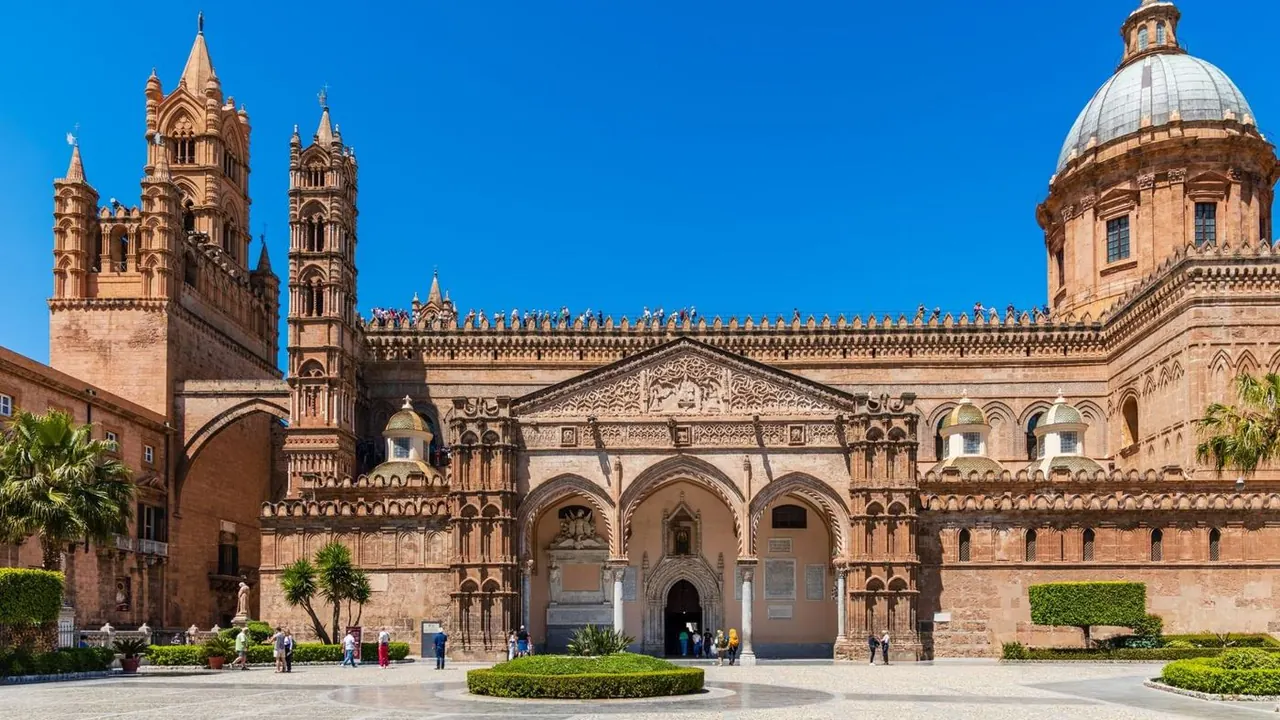
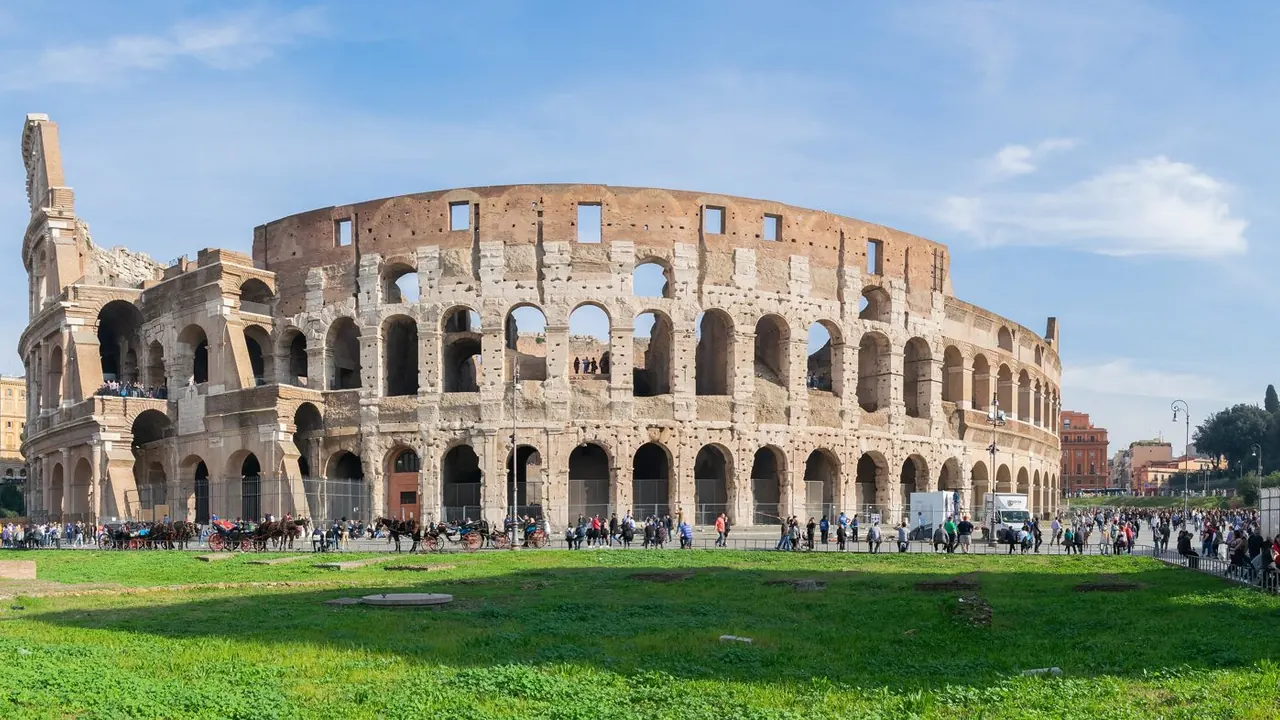
Photos: Palermo by Antonino Giangrasso, Pexels License; Rome by Tournasol7, CC BY-SA 4.0, cropped.
Palermo or Rome?
Our verdict in twelve categories, each scored against the same fixed benchmark cities, and the climate month by month, so you can choose for your trip.
Choose Palermo for
- beaches
- prices
- nature and the outdoors
Palermo suits travellers who want a city break with the sea attached. Mondello's clear water is a short bus ride from the old town, Monte Pellegrino and the coastal reserves are close by, and the market street food and family-run guesthouses keep a stay cheaper than in most big Italian cities. You need some tolerance for crumbling streets, slow buses and a hire car for the ancient sites.
Choose Rome for
- shopping
- culture and sights
- getting around
For a first trip to Italy, or for anyone who wants as much history, art and architecture as a week can hold, Rome is the stronger choice. The Forum, the Vatican and the Baroque piazzas are all within walking distance of each other, the shopping is far better, and fast trains make Florence, Naples and Etruscan country easy day trips. In return the rooms cost more and the sea is an afterthought.
Scoreboard
Twelve categories on one fixed scale from 0 to 100. The shaded stretch is the gap between the two.
Your match
Pick a travel style or drag the sliders, and both match scores follow your weighting.
Too close to call, 2 points apart
Wins on beaches and prices with your weighting.
Wins on shopping and culture and sights with your weighting.
What matters to you?
Category by category
What the scores mean for a trip.
Beaches & swimming
Palermo is far better for swimming. Mondello's half-moon of pale sand and clear, shallow water is a short bus ride from the centre. For deeper water, the flat rocks towards Sferracavallo and Capo Gallo have ladders straight into the sea, and Cefalù's long town beach is an hour away by train.
Rome's sea is a day out rather than part of the stay. Ostia is quick to reach by train, but its dark volcanic sand is mostly divided into paid lidos and the water is rarely clear. For prettier coves you have to travel as far south as Sperlonga or Sabaudia.
Food & drink
The two cities eat equally well, but in different ways. Palermo's cooking happens in the markets of Ballarò, the Capo and the Vucciria, with fried chickpea panelle, spleen sandwiches and dishes such as pasta con le sarde that still carry the island's Arab sweet-and-sour flavours. Its pastry shops, with cannoli and brioche with granita, are a reason to go in themselves, and Sicilian wines give it the edge in the glass.
Rome's strength is the trattoria and its four classic pastas, together with Jewish-style artichokes in the Ghetto and offal in Testaccio. The catch is the centre, where food near the big sights is dull, so it pays to walk out to Trastevere or Monti for dinner.
Culture & sights
Palermo's Arab-Norman monuments are unlike anything else in Italy: the gold mosaics of the Palatine Chapel under an Islamic carved ceiling, the red domes of San Giovanni degli Eremiti, and Serpotta's stucco oratories. They can be seen properly in a few days.
Rome works on another scale. The Colosseum, the Forum and the Pantheon are only the ancient layer. On top of them come early Christian mosaics, Bernini's piazzas, Caravaggios in side chapels, and the Vatican and Borghese collections. Palermo is a fascinating single chapter, while Rome takes weeks and still leaves things unseen.
Nightlife
Both cities spend their evenings outdoors with a drink rather than in clubs. Palermo's version is rougher and more seasonal: the Vucciria market becomes a street party of grills and cheap beer, the Kalsa has wine bars, and in summer the dancing moves out to the beach venues around Mondello, while winter weeknights go quiet.
Rome has more distinct quarters to choose from. Trastevere has the crowds, Monti the cocktail bars, San Lorenzo is the student quarter and Pigneto the arty one, with the few clubs gathered in Testaccio and Ostiense.
Nature & outdoors
Palermo has wild country much closer to hand. Monte Pellegrino rises straight above the streets, with an old path up to Santa Rosalia's sanctuary, and Capo Gallo offers cliff walks and snorkelling. Further out are the Zingaro coastal trail and the Madonie peaks of nearly 2,000m, though you need a car for most of them.
Rome's green spaces are gentler and more cultivated: the villa parks, the cycle along the Appian Way past tombs and aqueducts, and the crater lakes of the Alban Hills. Real mountains in the Apennines are about ninety minutes away.
Day trips
Both cities make excellent bases, but Rome is the easier one. Ostia Antica and Tivoli's two great villas are close, the Etruscan tombs, Orvieto and Civita di Bagnoregio lie to the north, and high-speed trains put Florence and Naples within reach for a day.
Palermo's list is remarkable in its own right: Monreale's mosaics half an hour away, Cefalù by train, the lonely temple at Segesta, hilltop Erice, and Agrigento's Valley of the Temples about two hours away. The difference is access. Many of Palermo's ancient sites really need a hire car, while Rome's excursions mostly run by rail.
Good for families
Neither city is built around children, but Rome has slightly more for them to do. Villa Borghese has the Bioparco zoo, rowing boats and space to run, there is a children's museum, and gladiators and catacombs catch young imaginations.
Palermo's best card is Mondello's shallow, sandy bay, which beats anything Rome offers small swimmers, and the puppet shows of knights and Saracens appeal to older children. Away from those, its narrow lanes without pavements are hard going, and a seaside base often works better than the old town.
Getting around
Both centres are best seen on foot. Palermo's main sights line two straight streets between the Norman Palace and the sea, but beyond them the buses crawl, the trams serve the suburbs, and a car becomes almost necessary for Segesta or the interior, despite the difficult driving.
Rome is somewhat easier. Its metro barely enters the historic core, but it does reach the Vatican, the Colosseum and Termini, and the train network covers the day trips, so a car is more burden than help. In both cities, expect cobbles and scooters underfoot.
Shopping & style
Rome is a real shopping destination. The big fashion houses line Via Condotti and the streets around the Spanish Steps, Monti has young designers and vintage, Via Margutta and Via dei Coronari keep their artisans and antique dealers, and Porta Portese is a huge Sunday flea market.
Palermo's Via Libertà has some Italian fashion, but what is worth carrying home is regional: painted ceramics and moor's-head vases, marionettes from the puppet workshops, coral jewellery, and capers or almond paste from the markets.
Affordability
Palermo is clearly the cheaper stay. Market street food makes a filling meal, family trattorie and local wine cost far less than further north, and old-town guesthouses are fairly priced for most of the year. The main costs are a hire car for day trips and the July and August demand at Mondello.
In Rome, the expense comes mainly from small, costly rooms in the centre and the entry fees at the Vatican, the Colosseum and the Borghese. Standing espresso, pizza al taglio, free drinking fountains and free churches help to balance it.
Live music & performing arts
Rome has the broader programme. The Teatro dell'Opera moves outdoors in summer to the Baths of Caracalla, the Santa Cecilia orchestra plays in Renzo Piano's Auditorium, which also stages jazz and world music, and the churches hold frequent organ concerts.
Palermo's Teatro Massimo is a grand opera house where tickets are easy to get. What Rome cannot match is the Opera dei Pupi, the hour-long marionette battles from the Charlemagne legends performed in small family-run theatres.
Wellness & relaxation
Neither city has a bathing tradition of its own, but Palermo makes rest harder to find. Its nearest thermal water means a train ride east to Termini Imerese, and in town there is little calm between the market noise and the scooters. Travellers who want a proper rest usually stay outside the city.
Rome is easier for a few quiet hours during a city stay. The sulphur-fed outdoor pools of Bagni di Tivoli are just past the edge of the city, and the free hot springs around Viterbo make a good day out. Back in the centre, the large villa gardens and the Aventine hill have more shade and room to sit than anywhere in Palermo's old town.
When should you go?
Pick your month. The climate figures are measured averages, not a forecast.
Palermo in July
Rome in July
Daytime high, °C
Rainfall in the month, mm
Where the figures come from
Palermo has no rain gauge within 25 km of the centre, so its rainfall comes from a gridded climate dataset read at the city rather than from a gauge further away.
Palermo's sunshine is measured 67 km from the centre, at Ustica.
Rome's sunshine is measured 31 km from the centre, at Vigna Di Valle.
Temperature and rainfall are climate normals, averaged over the years shown. Palermo: 1991-2020 (sunshine 1961-1990) normals, Palermo / Punta Raisi (24.1 km from centre). Rome: 1991-2020 normals, Roma / Ciampino (15.1 km from centre).
Palermo has the longer beach season. From June to October the sea off Mondello is warm enough to swim in, peaking around 27°C in August, and the summer is almost rainless. Rome gets hotter in the city, with July and August highs around 31°C against Palermo's 28°C, so walking between ruins at midday is harder there than in sea-cooled Palermo. Rome's sea only warms up properly in high summer.
Both cities are at their best for sightseeing in spring and early autumn. Rome is warmer than Palermo in May and is the wetter of the two all year. Its autumn is especially wet, with November bringing about 114mm. Palermo's rain also arrives in October and lasts through the winter, but it stays a little milder and sunnier. Neither city is reliably warm from December to February, and that is the time for museums rather than the sea.
Which traveller are you?
For a beach and sun trip, Palermo is the clear choice because the sea fits into the city stay. You can spend a morning among the mosaics, swim in the afternoon and be back for dinner. From Rome, a decent swim takes up a whole day.
Travelling on a tight budget, you get further in Palermo. Beds cost less there, and grazing through the markets makes eating well cheap. In Rome the room alone strains the budget, however modestly you eat.
A shopping trip belongs in Rome. It covers everything from the top Italian labels to small designers and antique dealers, enough to fill several afternoons. In Palermo, shopping means pleasant browsing for crafts and food to take home, not a reason to go.
Before you go
| Measure | Palermo | Rome |
|---|---|---|
| Official language | Italian | Italian |
| Currency | Euro (EUR) | Euro (EUR) |
| Sockets | CFL230 V, 50 Hz | CFL230 V, 50 Hz |
| Driving side | Right | Right |
| Time zone | UTC+1, UTC+2 in summer | UTC+1, UTC+2 in summer |
| Emergency number | 112 | 112 |
| Elevation | 14 m | 21 m |
| Main airport | Falcone–Borsellino Airport (PMO)25 km from centre106 non-stop destinations | Rome–Fiumicino Leonardo da Vinci International Airport (FCO)23 km from centre242 non-stop destinations |
| Public holidays this year | 13 days | 13 days |
By the numbers
| Measure | Palermo | Rome |
|---|---|---|
| City population | 630,167 | 2,748,109 |
| People per km² | 3,924 | 2,135 |
| Museums within 10 km | 42 | 178 |
| UNESCO World Heritage sites within 50 km | 1 | 7 |
| Swim season, months above 21 °C | 5 months | 5 months |
Where else could you go?
Every comparison below shares a destination with this one, so you can follow Palermo or Rome somewhere new.