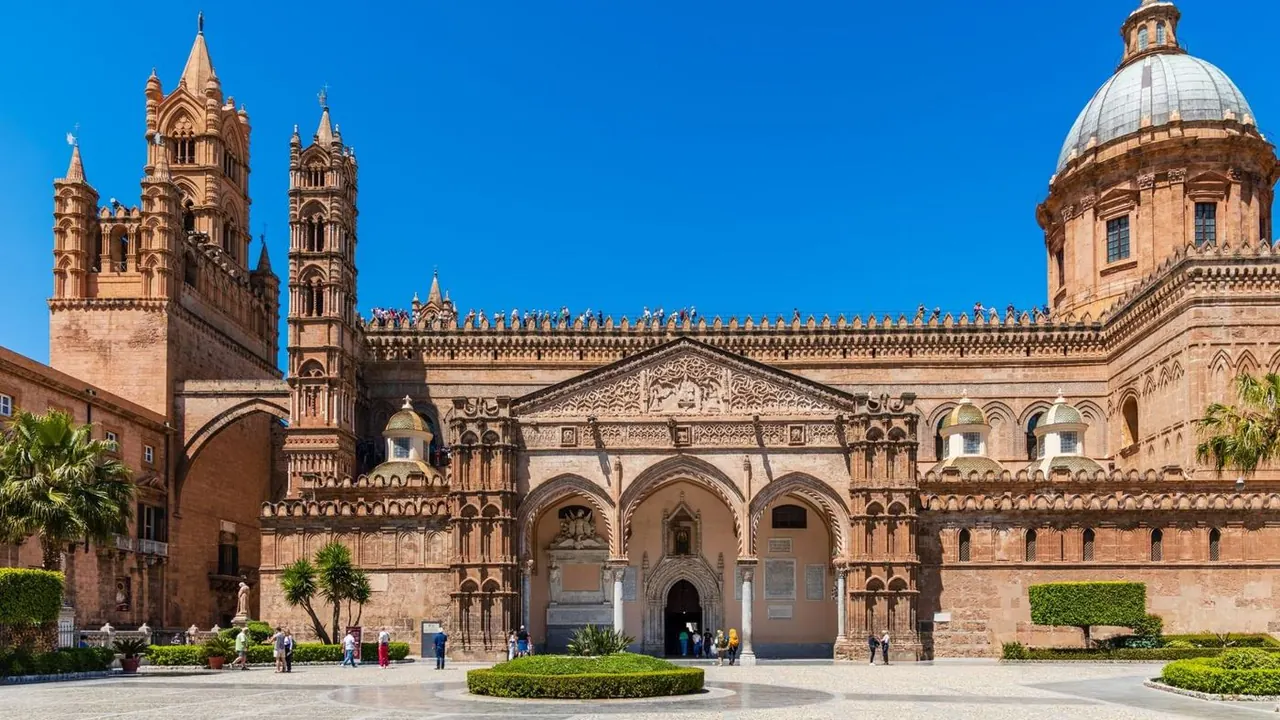
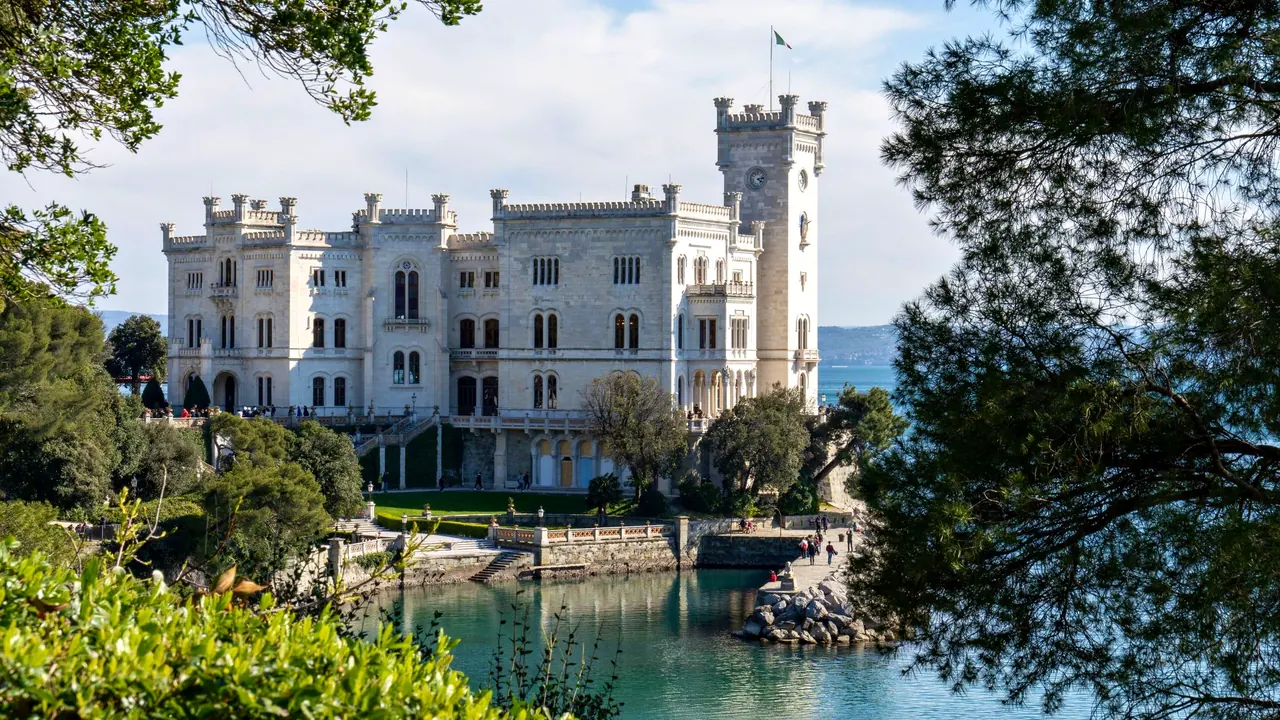
Photos: Palermo by Antonino Giangrasso, Pexels License; Trieste by Tibor Szabo, Pexels License.
Palermo or Trieste?
Our verdict in twelve categories, each scored against the same fixed benchmark cities, and the climate month by month, so you can choose for your trip.
Choose Palermo for
- nightlife
- food and drink
- culture and sights
Palermo is for travellers who want a city that hits hard on the senses. Its Arab-Norman mosaics, street markets full of fryers and sweet stalls, and late, crowded evenings outdoors give it more depth in food, sights and nights out. Add the sandy bay at Mondello and the Greek temples within a day's reach and it suits a first trip to Sicily, as long as you can put up with noise, traffic and some rough edges.
Choose Trieste for
- getting around
- families
- wellness
Trieste is the quieter choice, and it is easier to move around. A flat Habsburg centre by the sea, coffee houses, rock swimming at Barcola and the Karst plateau right behind the city make it good for an unhurried stay, families with older children and anyone who likes crossing into Slovenia for the day. Expect early nights, a smaller food scene and more rain.
Scoreboard
Twelve categories on one fixed scale from 0 to 100. The shaded stretch is the gap between the two.
Your match
Pick a travel style or drag the sliders, and both match scores follow your weighting.
Wins on nightlife and food and drink with your weighting.
Wins on getting around and families with your weighting.
What matters to you?
Category by category
What the scores mean for a trip.
Beaches & swimming
Palermo has the better swimming, mainly because of Mondello. It is a curve of pale sand with shallow turquoise water half an hour from the centre, and the sea stays warm well into October. For deeper water off rocks there is the coast towards Capo Gallo, and Cefalù's long sandy beach is an hour away by train.
Trieste has hardly any sand. People swim from the concrete steps and lawns at Barcola, from old bathing establishments, or in the pebble coves at Sistiana and Grignano. That is fine for confident swimmers, but anyone who wants to lie on soft sand is better off in Palermo.
Food & drink
Palermo is the stronger food city by a wide margin. Its markets are working street kitchens where you can eat spleen sandwiches, sfincione and arancine. Arab influences show up in the raisins, saffron and sweet-and-sour sauces of dishes like pasta con le sarde, and its pastry tradition, from cannoli to convent almond sweets, could fill a trip on its own.
Trieste's food is a Central European mix. You get boiled pork with horseradish at a buffet counter, jota soup, strudel, and coffee with its own local vocabulary. The osmize on the Karst plateau, where farms sell their own wine and cured meats, are a real pleasure, but the range of restaurants is narrower.
Culture & sights
Palermo has more heritage of the first rank. The Palatine Chapel's gold mosaics under an Islamic wooden ceiling, the red domes of San Giovanni degli Eremiti and the rest of the UNESCO Arab-Norman route are things you cannot see anywhere else. On top of these come Serpotta's stucco oratories and two strong museums, the Salinas and Palazzo Abatellis.
Trieste's appeal lies in the cityscape as a whole. Its Habsburg squares and the Borgo Teresiano grid, Miramare Castle, San Giusto with its Roman theatre, and the sobering Risiera di San Sabba make a good few days, and its literary past adds atmosphere. It has fewer individual masterpieces.
Nightlife
Palermo has far more going on after dark. The Vucciria turns into an open-air bar of grills and cheap beer, and the streets off Via Maqueda fill up after late dinners. In summer the dancing moves to the beach venues at Mondello.
In Trieste the evening rarely goes beyond a spritz by the Canal Grande or the seafront kiosks at Barcola. On winter weeknights the streets are quiet by midnight.
Nature & outdoors
There is little to choose between them, but the landscapes differ. Palermo has Monte Pellegrino above the city, the cliffs and coves of Capo Gallo and Zingaro, and the Madonie, with beech woods and peaks near 2,000m. Most of it is easier to reach with a car, and summer heat rules out walking in the middle of the day.
Trieste's outdoors starts at the edge of town. You can walk along the Strada Napoleonica above the gulf, hike the Val Rosandra gorge, visit the caves of the Karst, and sail on a gulf known for its autumn regatta. The Bora wind can make winter days harsh.
Day trips
Both are excellent bases for day trips, and the difference is the kind of trip. From Palermo you visit Sicily's ancient past: Monreale's mosaics, the lone temple at Segesta, Erice above its salt pans, and Agrigento's Valley of the Temples, which takes a long day.
From Trieste you can cross borders. Aquileia's mosaic floor, star-shaped Palmanova and the Collio wineries are in Italy, Piran and Ljubljana are in Slovenia, and Venice is a long but realistic day out by train.
Good for families
Trieste is the easier city with children. It is calm and safe, and the Grotta Gigante, the gardens at Miramare and a hands-on science centre keep older children busy, although the steep stepped streets and rock swimming are harder for toddlers.
Palermo welcomes children warmly at the dinner table and has Mondello's shallow sand. Beyond the beach and the puppet shows, though, the old town is a hard place for families, with scooters in narrow lanes without pavements, uneven stone streets and strong summer heat.
Getting around
Trieste is the easier city to get around. Its main sights sit on flat ground by the water, and a dense bus network plus passenger boats to Muggia cover most of the rest. The real effort is the climb up the steps to San Giusto.
Palermo's centre is also walkable along Via Maqueda and the Corso. Beyond it, buses crawl through traffic and the trams mostly serve the suburbs. You will probably want a hire car for Segesta or Erice, and driving there is stressful.
Shopping & style
Neither city is a reason to travel for shopping, but Palermo has a little more to offer. Via Libertà has Italian fashion shops and a few luxury labels, and the craft souvenirs are distinctive: painted moor's-head vases, puppet-workshop marionettes, and coral and filigree jewellery.
Trieste's best finds are in the antique shops in the old town's lanes and in edible souvenirs such as roasted coffee, Karst wine and presnitz.
Affordability
Palermo goes further on a budget. You can make a full meal from several market stops, trattorie and pastries are cheap, and old-centre guesthouses are fairly priced. Costs rise in high summer around Mondello, and a hire car adds up.
Trieste is fair for northern Italy, with cheap buffets, coffee and buses and free pleasures like swimming at Barcola. Ordinary restaurants and hotels charge normal Italian city prices, so your money stretches less far than in Sicily.
Live music & performing arts
Palermo has a little more to offer. The Teatro Massimo is one of Italy's largest opera houses and runs a full season, the Politeama is home to a symphony orchestra, and the Opera dei Pupi, with its armoured marionettes fighting Charlemagne's battles, is a tradition worth seeing in its own right.
Trieste's Teatro Verdi offers a proper opera season on the waterfront, and the city's love of operetta, a Habsburg legacy, is unusual in Italy. Beyond that, a Slovenian-language theatre and summer concerts on San Giusto make up a smaller programme.
Wellness & relaxation
Trieste is the more restful of the two. It moves at a slower pace, with long sittings in coffee houses over a newspaper and sunset walks along the Molo Audace. Neither city has real thermal baths, so spa treatments mean hotel spas in both.
Palermo is noisy, with scooters, market shouting and traffic. Calm there comes in small doses, in the Orto Botanico, quiet cloisters and evening walks along the Foro Italico. For proper thermal waters you need to take the train to Termini Imerese.
When should you go?
Pick your month. The climate figures are measured averages, not a forecast.
Palermo in July
Trieste in July
Daytime high, °C
Rainfall in the month, mm
Where the figures come from
Palermo's sunshine is measured 67 km from the centre, at Ustica.
Temperature and rainfall are climate normals, averaged over the years shown. Palermo: 1991-2020 normals, Palermo / Punta Raisi (24.1 km from centre). Trieste: 1991-2020 normals, Trieste (1.6 km from centre).
Palermo has the longer and more reliable warm season. Winters are mild, with daytime highs around 15°C even in January, and summer is almost completely dry, with about 6mm of rain in July and long hours of sunshine. The sea is warm enough for swimming from June into October and reaches about 27°C in August. July and August are hot for walking the old town at midday, so spring and October are the most comfortable months for sightseeing. The rain comes back from late September.
Trieste is much colder in winter, with highs of about 9°C in January, and it is wetter than Palermo in almost every month. It has no real dry season, and autumn is the wettest time, with about 125mm in November. Summer is about as warm as in Palermo, and the sea is pleasant from June to September. June and September are the best months for combining walks with a swim. May is good for walking, but the water is still cool. From October the days turn grey and wet much sooner than they do in Sicily, with far less sunshine.
Which traveller are you?
For a food and nightlife trip, Palermo is the clear pick. You can graze through Ballarò and the Vucciria on panelle, arancine and cannoli, and after a late dinner the market lanes and the Kalsa stay busy with drinkers past midnight. Trieste's evenings mostly end after aperitivo by the water.
For a short city break, Trieste is the easier choice. Piazza Unità, the Canal Grande, the coffee houses and the museums sit close together on flat ground by the sea, and buses run out to Miramare. In Palermo, slow buses and traffic eat into a short stay.
On a family trip with children, Trieste works better, especially with older children. The streets are calmer and safer, and the Grotta Gigante, Miramare's gardens and the aquarium make good outings. Palermo has Mondello's sandy shallows, but the old town's narrow lanes, scooters and summer heat are hard with young children.
Before you go
| Measure | Palermo | Trieste |
|---|---|---|
| Official language | Italian | Italian |
| Currency | Euro (EUR) | Euro (EUR) |
| Sockets | CFL230 V, 50 Hz | CFL230 V, 50 Hz |
| Driving side | Right | Right |
| Time zone | UTC+1, UTC+2 in summer | UTC+1, UTC+2 in summer |
| Emergency number | 112 | 112 |
| Elevation | 14 m | 2 m |
| Main airport | Falcone–Borsellino Airport (PMO)25 km from centre106 non-stop destinations | Trieste Airport (TRS)31 km from centre32 non-stop destinations |
| Public holidays this year | 13 days | 13 days |
By the numbers
| Measure | Palermo | Trieste |
|---|---|---|
| City population | 630,167 | 198,417 |
| People per km² | 3,924 | 2,332 |
| Museums within 10 km | 42 | 33 |
| UNESCO World Heritage sites within 50 km | 1 | 5 |
| Swim season, months above 21 °C | 5 months | 4 months |
Where else could you go?
Every comparison below shares a destination with this one, so you can follow Palermo or Trieste somewhere new.
- Rovinjvs Trieste
- Ljubljanavs Trieste
- Bledvs Trieste
- Venicevs Trieste
- Cortina d'Ampezzovs Trieste
- Cataniavs Palermo