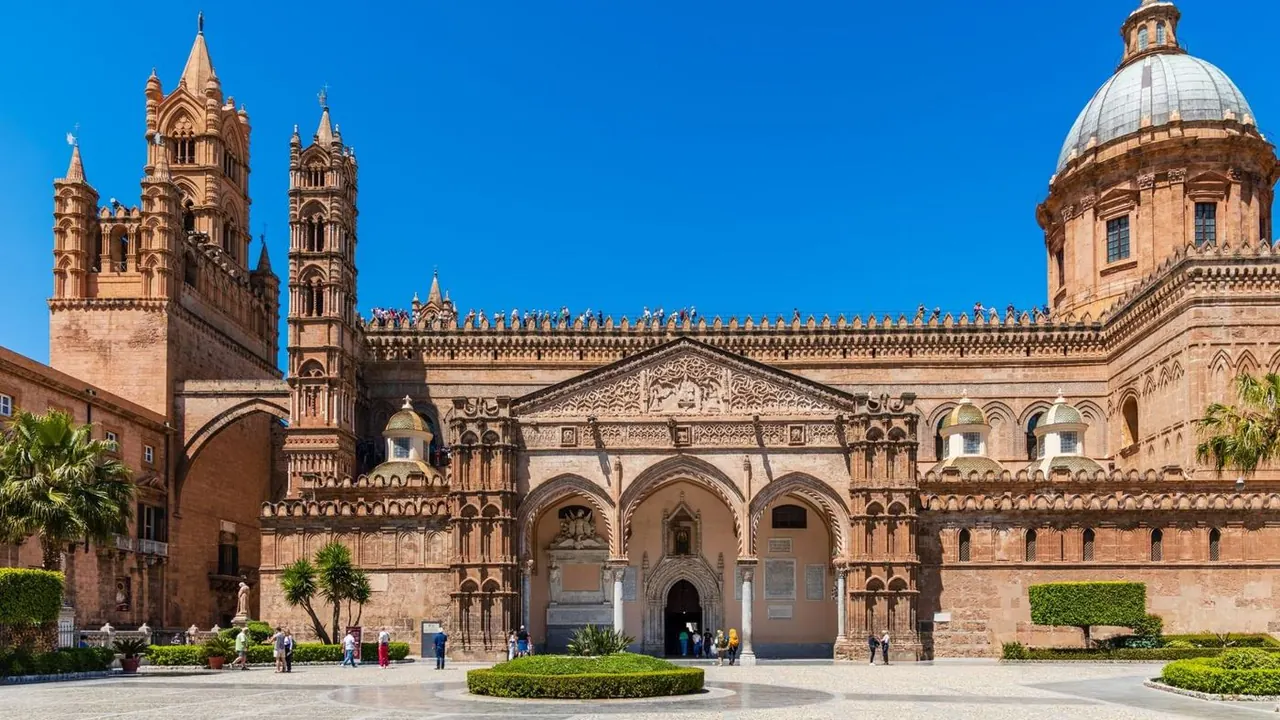
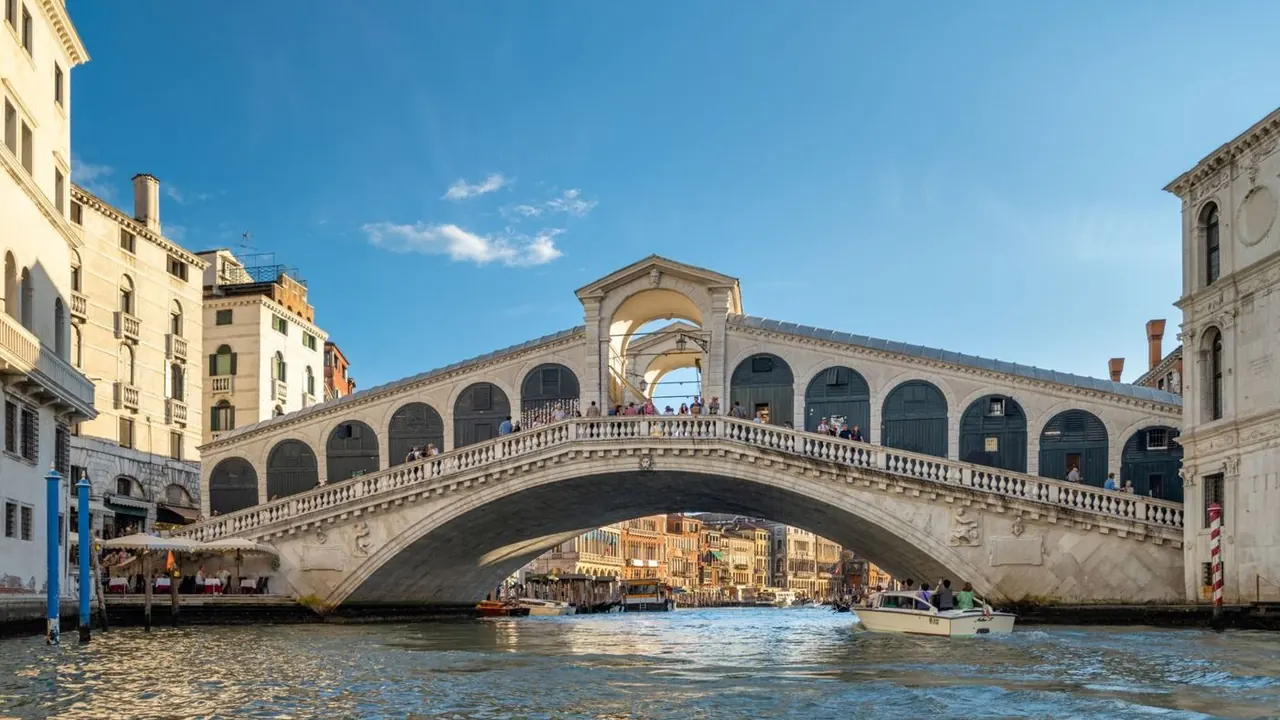
Photos: Palermo by Antonino Giangrasso, Pexels License; Venice by David Vives, Pexels License.
Palermo or Venice?
Our verdict in twelve categories, each scored against the same fixed benchmark cities, and the climate month by month, so you can choose for your trip.
Choose Palermo for
- prices
- nightlife
- nature and the outdoors
Palermo is the better choice for travellers who want to eat well, spend less and mix city sightseeing with time by the sea. Its street-food markets, the sandy bay at Mondello and the limestone mountains around the Conca d'Oro make for a varied trip, and the evenings run late out of doors. In return you have to put up with crumbling streets, scooters and traffic, and you will want a hire car for the best excursions.
Choose Venice for
- getting around
- culture and sights
- shopping
Choose Venice when the art and the setting are the reason for the journey. Its palaces, churches and painting collections go deeper than almost anywhere, the car-free centre can be crossed on foot, and the quiet after dark is part of the pleasure. It suits a stay built around culture with a generous budget. Anyone hoping for lively nights, good swimming or open countryside will find less here.
Scoreboard
Twelve categories on one fixed scale from 0 to 100. The shaded stretch is the gap between the two.
Your match
Pick a travel style or drag the sliders, and both match scores follow your weighting.
Wins on prices and nightlife with your weighting.
Wins on getting around and culture and sights with your weighting.
What matters to you?
Category by category
What the scores mean for a trip.
Beaches & swimming
Palermo has the better swimming. Mondello's pale sand and clear turquoise water are half an hour away by bus, the rocks around Sferracavallo and Capo Gallo offer swims in deep water, and Cefalù's town beach is an hour along the coast by train.
Venice's Lido is easy to reach by vaporetto, and its long, shallow Adriatic beach is gentle enough for children. But the water is greenish rather than clear, and much of the sand is taken up by rows of private cabanas. Few visitors give it more than a hot afternoon.
Food & drink
Palermo is the more rewarding city to eat in. The markets at Ballarò, the Capo and the Vucciria are a meal in themselves, and the cooking carries Arab flavours of saffron, raisins and pine nuts. Cannoli, cassata and brioche with granita make the pastry counters a reason to come in their own right.
Venice has its own pleasures: cicchetti eaten standing at the counter of a bacaro, and lagoon dishes such as black cuttlefish risotto. But tourist restaurants line the main routes, and a good meal takes some searching in the quieter sestieri. Neither city offers much beyond its own cooking.
Culture & sights
Venice goes deeper. The whole city is the monument, and beyond San Marco and the palazzi of the Grand Canal there is the Accademia, Titian in the Frari, Tintoretto at the Scuola Grande di San Rocco and modern art at the Guggenheim. That is easily enough for a week.
Palermo has something Venice lacks: the blend of Norman, Byzantine and Arab work in the Palatine Chapel, La Martorana and San Giovanni degli Eremiti. Add Serpotta's stucco oratories and the Selinunte metopes at the Salinas museum. Even so, it is a shorter and rougher-edged circuit, set in an old centre that is partly crumbling.
Nightlife
Palermo is clearly the livelier city after dark. Evenings carry on late in the street, from the grills and cheap beer of the Vucciria to the wine bars of the Kalsa, and in summer the dancing moves out to the coast near Mondello.
Venice is at its liveliest during the aperitivo, with spritzes along the Fondamenta della Misericordia, and only Campo Santa Margherita keeps going much later. Neither city has a real club scene, but Venice is dark and silent by midnight.
Nature & outdoors
Palermo has real landscape on its doorstep. Monte Pellegrino rises straight above the city, Capo Gallo and the Zingaro reserve have cliff paths and coves, and the Madonie peaks reach close to 2,000m, which means proper hiking.
The outdoors in Venice is flat and watery: herons and flamingos in the northern lagoon, kayaking or a lesson in Venetian rowing, and cycling along the sea walls of the Lido and Pellestrina. For hills you go to the Euganean or Prosecco country, and the Dolomites mean a long day.
Day trips
Both cities are excellent bases, but the trips are of different kinds. From Palermo they lean towards the ancient world and the coast: Monreale's mosaics, Cefalù, the lone temple at Segesta, Erice, and the Valley of the Temples at Agrigento about two hours away. A car makes most of these easier.
From Venice the fast trains do the work, reaching Padua's Scrovegni Chapel, Palladio's Vicenza and Verona in about an hour or less. The lagoon islands of Murano, Burano and Torcello need only a boat.
Good for families
Neither city is easy with children, and the difficulties are different. Palermo is warm towards families and has the shallow sand at Mondello and its puppet shows, but cars and scooters squeeze through lanes without pavements, and the summer heat lasts for months.
Venice has no cars, which removes one worry, and boat rides, glass-blowing on Murano and the Lido please most children. Its stepped bridges are a constant struggle with a pushchair, though. Both work better with older children than with toddlers.
Getting around
Venice is the easier city for a visitor to get around, even with no roads. Everything is within walking distance, vaporetti link the Grand Canal with the Lido and the islands, and trains arrive at Santa Lucia, right on the edge of the centre. The price is steps on every bridge and crowded boats.
Palermo's main sights are also within a compact, flat walk along Via Maqueda and Corso Vittorio Emanuele. Beyond that, buses are slow in traffic, the side lanes are full of scooters, and a hire car becomes almost essential for Segesta and Erice.
Shopping & style
Venice has more to buy, mostly crafts with centuries of history behind them: Murano glass, Burano lace, papier-mâché masks and marbled paper, with the big fashion names along Calle Larga XXII Marzo. Cheap imitations on the main routes mean it pays to find the real workshops.
Palermo's best things to take home are edible: pistachio pesto, capers and almond paste from the markets. It also has painted ceramics, puppets and coral jewellery, and Italian fashion along Via Libertà.
Affordability
The gap here is wide. Palermo is one of Italy's cheaper big cities, where market food, trattorie and guesthouses in the old centre keep daily costs low. Only high summer by the sea and a hire car push them up.
Venice is among the most expensive places to stay in Italy, with hotels, water transport and most church entries priced for visitors. Eating cicchetti at the counter, staying in Mestre or coming in winter will soften the cost, but rarely to Palermo's level.
Live music & performing arts
Each city has a grand opera house with a full season: the Teatro Massimo in Palermo and La Fenice in Venice, where Verdi and Rossini premiered works. The difference is in the local tradition. Palermo's is the Opera dei Pupi, armoured marionettes fighting Charlemagne's battles in small family theatres, and the city also has a loyal jazz following.
In Venice, Vivaldi is played in churches and scuole grandi most evenings, though the quality varies, and the Biennale runs its own festivals of contemporary music, theatre and dance.
Wellness & relaxation
Venice is the calmer place to rest, mainly because it has no traffic. Early mornings in Castello, Cannaregio or on Giudecca are hushed, there are spas in palazzo hotels, and the thermal pools of Abano Terme are about an hour away.
Palermo is loud with scooters and market calls, and its quiet comes in pockets: the Orto Botanico, the cloisters and the evening walk along the Foro Italico. The nearest thermal waters are at Termini Imerese, forty minutes away by train.
When should you go?
Pick your month. The climate figures are measured averages, not a forecast.
Palermo in July
Venice in July
Daytime high, °C
Rainfall in the month, mm
Where the figures come from
Palermo has no rain gauge within 25 km of the centre, so its rainfall comes from a gridded climate dataset read at the city rather than from a gauge further away.
Palermo's sunshine is measured 67 km from the centre, at Ustica.
Venice has no rain gauge within 25 km of the centre, so its rainfall comes from a gridded climate dataset read at the city rather than from a gauge further away.
Venice's sunshine is measured 26 km from the centre, at Treviso / S. Angelo.
Temperature and rainfall are climate normals, averaged over the years shown. Palermo: 1991-2020 (sunshine 1961-1990) normals, Palermo / Punta Raisi (24.1 km from centre). Venice: 1991-2020 normals, Venezia / Tessera (6.7 km from centre).
Palermo is the sunnier of the two in every month, and the milder in winter, at about 15°C by day in January against 7°C in Venice. From May to August it stays almost dry. The sea is warm enough to swim from June into October and reaches about 27°C in August, but the strong summer sun makes walking at midday in July and August tiring. April, May and late September into October are the best months for sightseeing. The rain sets in during October and lasts through the winter.
Venice has sharper seasons. From May to July it is actually as warm as Palermo by day, with highs near 29°C in July. That suits an afternoon at the Lido, where the sea is warm from June to September, but it is hard going on foot. Rain falls all through the year and is heaviest in autumn, about 78mm in September. Spring and early autumn are the best times for walking. Winter is cold and grey, with much less sun than Palermo.
Which traveller are you?
On a trip on a tight budget, Palermo is far easier. You can make a meal of fritters and arancine at the market stalls, trattorie and local wine are cheap, and guesthouses in the old centre are fairly priced. In Venice, hotels, water buses and entry to the sights all cost a lot.
For a culture and arts trip, Venice is the stronger choice. Titian in the Frari, Tintoretto at San Rocco, the Accademia and the Doge's Palace can fill a week. Palermo's Arab-Norman mosaics are superb, but they make a shorter list.
On a food and nightlife trip, Palermo is the better city. Its markets fry panelle and crocchè all day, and after dark the Vucciria becomes an open-air bar with grills smoking past midnight. Venice has fine cicchetti at aperitivo time but goes quiet soon afterwards.
Before you go
| Measure | Palermo | Venice |
|---|---|---|
| Official language | Italian | Italian |
| Currency | Euro (EUR) | Euro (EUR) |
| Sockets | CFL230 V, 50 Hz | CFL230 V, 50 Hz |
| Driving side | Right | Right |
| Time zone | UTC+1, UTC+2 in summer | UTC+1, UTC+2 in summer |
| Emergency number | 112 | 112 |
| Elevation | 14 m | 2 m |
| Main airport | Falcone–Borsellino Airport (PMO)25 km from centre106 non-stop destinations | Venice Marco Polo Airport (VCE)7 km from centre103 non-stop destinations |
| Public holidays this year | 13 days | 13 days |
By the numbers
| Measure | Palermo | Venice |
|---|---|---|
| City population | 630,167 | 250,369 |
| People per km² | 3,924 | 602 |
| Museums within 10 km | 42 | 52 |
| UNESCO World Heritage sites within 50 km | 1 | 5 |
| Swim season, months above 21 °C | 5 months | 4 months |
Where else could you go?
Every comparison below shares a destination with this one, so you can follow Palermo or Venice somewhere new.