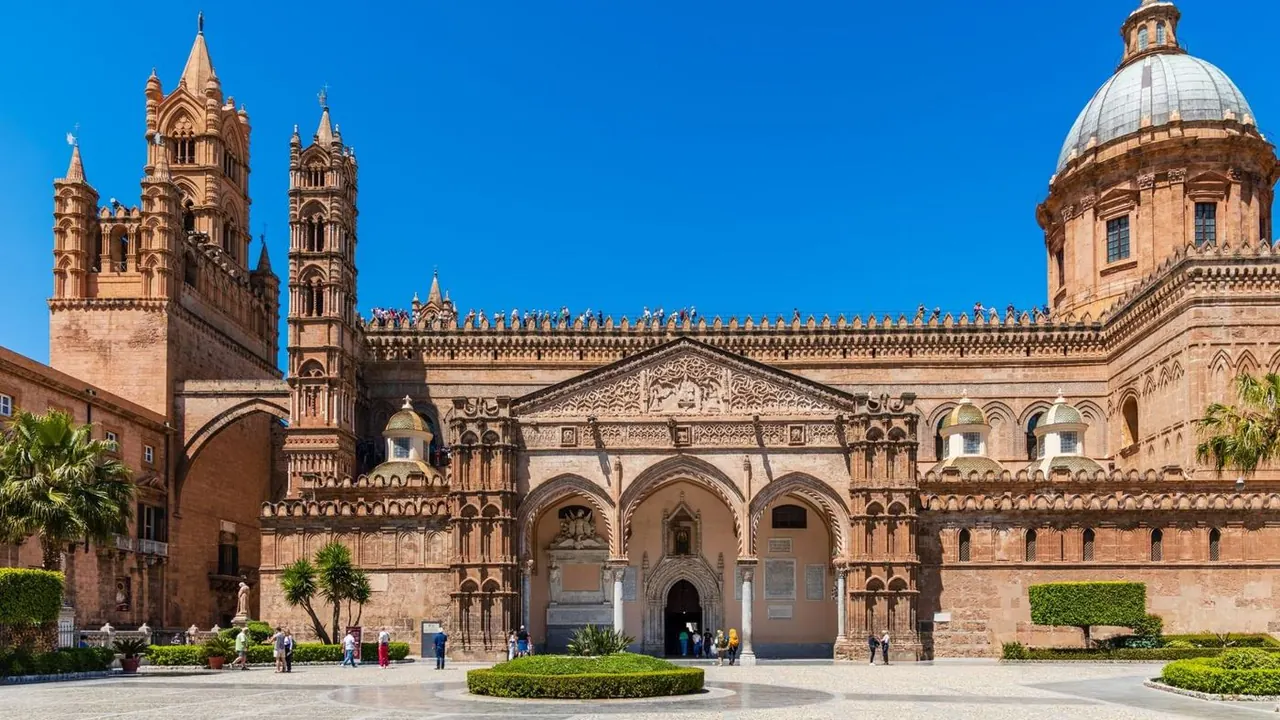
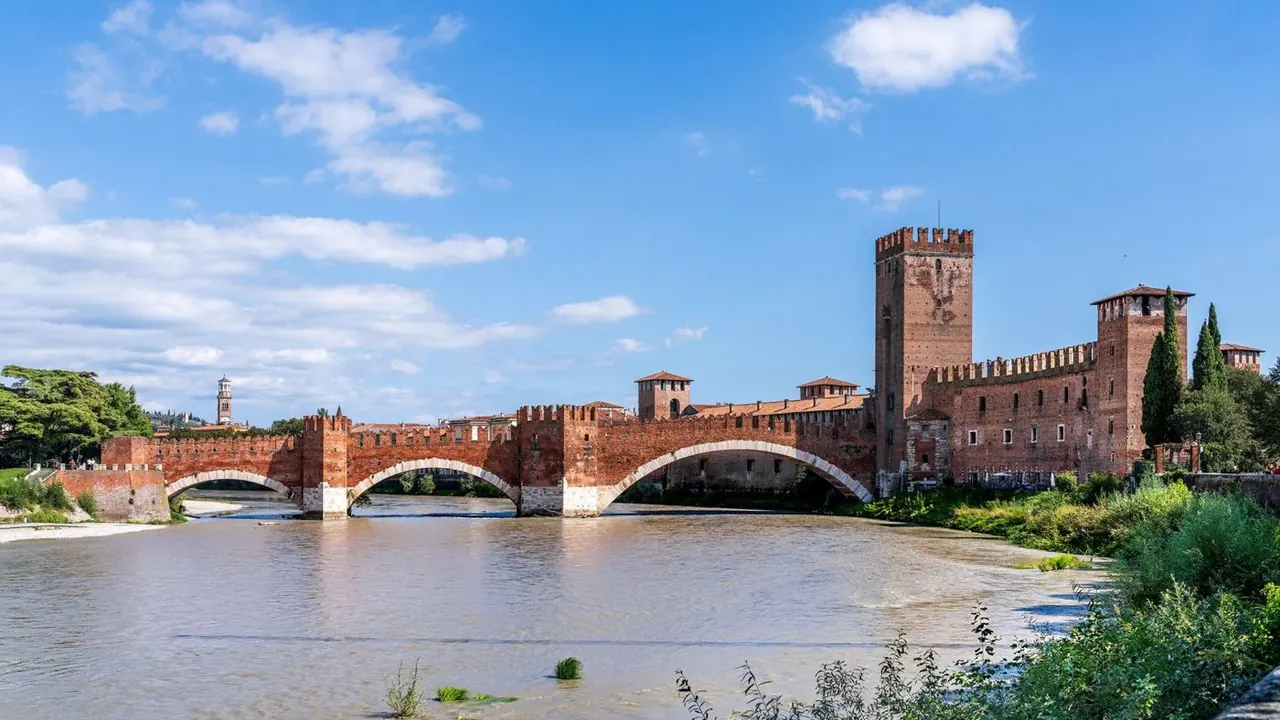
Photos: Palermo by Antonino Giangrasso, Pexels License; Verona by NorbertNagel, CC BY-SA 4.0, cropped.
Palermo or Verona?
Our verdict in twelve categories, each scored against the same fixed benchmark cities, and the climate month by month, so you can choose for your trip.
Choose Palermo for
- beaches
- nightlife
- prices
Palermo suits travellers who want heat, sea and appetite. It is the place for a summer of swimming at Mondello, eating your way through the street markets and staying out late on warm nights, all for less money, with Arab-Norman mosaics and wild coastline added. Expect some grit in the streets, and plan on a car for the best excursions.
Choose Verona for
- families
- getting around
- wellness
Choose Verona for a smoother, more organised trip built around days out. Venice, Padua and Lake Garda are an easy train ride away, the compact centre is a pleasure on foot, families have theme parks and calm lake water close by, and summer brings opera in the Roman Arena. It costs more, and its evenings end earlier.
Scoreboard
Twelve categories on one fixed scale from 0 to 100. The shaded stretch is the gap between the two.
Your match
Pick a travel style or drag the sliders, and both match scores follow your weighting.
Too close to call, 1 point apart
Wins on beaches and nightlife with your weighting.
Wins on families and getting around with your weighting.
What matters to you?
Category by category
What the scores mean for a trip.
Beaches & swimming
Palermo is the beach city of the two. Mondello's pale sand and shallow turquoise water are half an hour from the centre by bus, the rocks towards Sferracavallo and Capo Gallo give deeper swimming, and the sea stays warm from June into October.
In Verona, swimming means Lake Garda: calm, tideless water off lidos, lawns and small pebble beaches at Peschiera and Lazise, or Sirmione's flat limestone shelves. It makes a pleasant summer outing over a shorter season, but it is no reason to pick the city.
Food & drink
Palermo has the stronger table, and a very different one. People eat standing up in Ballarò, the Capo and the Vucciria, over panelle, arancine and spleen sandwiches. The Arab-tinged cooking gives dishes like pasta con le sarde, and the pastry tradition runs from cannoli to brioche with granita.
Verona is a sit-down city of osterie serving Amarone risotto, bigoli and bollito with pearà, and its real pride is the wine made a short drive away, from Valpolicella to Soave. It has little street food, and the tourist restaurants around the Arena drag the average down.
Culture & sights
Both are first-rank heritage cities, but their history comes in different layers. Palermo's treasure is the twelfth-century meeting of Norman, Byzantine and Arab art, from the gold mosaics of the Palatine Chapel to the red domes of San Giovanni degli Eremiti. On top of that come Serpotta's baroque oratories and strong museums, all in a centre that is partly crumbling.
Verona is Roman and medieval: the Arena, the Roman theatre, the Scaliger tombs and the Romanesque San Zeno, all inside a tidy loop of the river that you can see in two or three relaxed days. Palermo feels rawer and stranger, Verona more orderly and complete.
Nightlife
Palermo stays out later and louder. After dark the Vucciria turns into an open-air drinking spot, the Kalsa and the lanes off Via Maqueda fill up after late dinners, and in summer the dancing moves to the coast around Mondello.
Verona's evening is an aperitivo in Piazza delle Erbe, and then the streets empty early. Veronetta's student bars are the main exception, and the opera crowd adds a late burst in summer. Neither is a city for big clubs.
Nature & outdoors
Palermo has the wilder setting. Monte Pellegrino rises straight above the streets, Capo Gallo and the Zingaro reserve offer cliff paths and snorkelling in clear water, and inland the Madonie climbs to nearly 2,000m.
Verona's surroundings are gentler and more farmed: walking and cycling among the Valpolicella vineyards, the Adige cycle route and the Lessinia plateau, with Monte Baldo and the sailing winds of northern Garda about an hour away. A car helps in both, but Palermo's outdoors lie closer to the sea and feel more dramatic.
Day trips
Palermo's day trips are superb: Monreale's mosaics, Cefalù under its headland, Segesta's lone temple, hilltop Erice and, two hours away, the Valley of the Temples. Trains reach some of the towns, but the ancient sites are much easier with a hire car.
Verona wins on range and ease. The train puts Venice, Padua, Vicenza and Mantua within an hour or so, Milan and Bologna fit a longer day, and Peschiera on Lake Garda is a short ride. The art cities need no driving at all, but the Valpolicella cellars and Soave are best reached by car or on a tour.
Good for families
Palermo works best with older children. They tend to enjoy the puppet theatres' battles of knights and Saracens, and they cope with late dinners, where families are always welcome. With babies and toddlers it is harder going: lanes without pavements, uneven stone underfoot for a pushchair, scooters squeezing past and little built with children in mind. Many families stay by the sea outside the old town.
Verona is the gentler city for young families, and it has more to offer children who like history. The Arena and the Roman theatre are places a child can actually picture gladiators and crowds. The catch is that the big family attractions sit outside town, so plan on a car or transfers rather than walking to them.
Getting around
You can walk both centres, but Verona's is smaller, largely closed to traffic and easier underfoot. In Palermo's side lanes you are dodging scooters and parked cars where there are no pavements.
The bigger gap opens once you leave town. Verona's trains run fast and often to Venice, Milan and the lake, while Palermo relies on slow buses and a few regional trains, and a hire car covers the rest. Neither city is pleasant to drive into.
Shopping & style
Neither city is a place to come for shopping. Verona has the more polished main street, with Italian labels along marble-paved Via Mazzini and small jewellers and shoe shops off Corso Porta Borsari, and Milan is close for serious buyers.
Palermo is better for the odd and the handmade: moor's-head ceramics, puppet-workshop marionettes, coral jewellery, the flea market by the cathedral and pistachio pesto from the markets. Verona's best things to take home are a bottle of Amarone and a pandoro.
Affordability
Palermo is clearly the cheaper stay. You can make a meal out of market stalls, trattorie and local wine cost little, and apartments in the old centre are fairly priced outside July and August. The cost to plan for is a hire car for day trips.
In Verona the rooms are what hurt, especially inside the river loop on opera nights and trade-fair dates, and restaurants facing the Arena charge for the view. Eating in Veronetta's student osterie and sleeping across the river or near the station brings the bill down.
Live music & performing arts
These two are close, and the difference lies in when you go. Verona's draw is summer opera in the Roman Arena, Verdi and Puccini on a vast scale for thousands of people on the ancient stone, along with Shakespeare and jazz in the Roman theatre. Out of season it goes quieter.
Palermo is steadier through the year. It has full opera and ballet seasons at the Teatro Massimo, the symphony orchestra at the Politeama, and the Opera dei Pupi, whose family-run theatres put on hour-long battles of armoured puppets from the Charlemagne legends.
Wellness & relaxation
Verona is the calmer base, with better thermal water nearby: Sirmione's lakeside spa, the spring-fed lake near Lazise and the springs at Caldiero, used since Roman times. Life in town moves gently, with the riverside passeggiata and the terraces of the Giardino Giusti, except around the Arena in summer.
Palermo is noisy, and calm comes only in pockets: the Orto Botanico, the cloisters and the Foro Italico at dusk. The spa town of Termini Imerese is a short train ride east, and anyone who needs real quiet usually stays outside the city.
When should you go?
Pick your month. The climate figures are measured averages, not a forecast.
Palermo in July
Verona in July
Daytime high, °C
Rainfall in the month, mm
Where the figures come from
Palermo has no rain gauge within 25 km of the centre, so its rainfall comes from a gridded climate dataset read at the city rather than from a gauge further away.
Palermo's sunshine is measured 67 km from the centre, at Ustica.
Temperature and rainfall are climate normals, averaged over the years shown. Palermo: 1991-2020 (sunshine 1961-1990) normals, Palermo / Punta Raisi (24.1 km from centre). Verona: 1991-2020 normals, Verona / Villafranca (11.6 km from centre).
Palermo has the long, dry summer. June to August bring almost no rain and plenty of sun, and the sea warms to about 27°C by August, so swimming is good from June right through October. Showers return in September, and from October to December the rain is heavy, with Palermo a little wetter than Verona in midwinter, though much milder at around 14°C. October still has warm water and many bright days between the showers. April, May and early June are the easiest months for long walks before the real heat arrives.
Verona swings further between the seasons, and its rain is spread across the whole year rather than kept for winter. July and August reach about 30°C, which makes walking at midday hard going. January drops to around 7°C under short, grey days. From spring to autumn Verona is the wetter city, with regular showers and summer storms just when Palermo is dry, and September is its wettest month. May and June are the best compromise, warm, with long days and only some rain, and midsummer is the time for swimming in Lake Garda.
Which traveller are you?
On a beach and sun trip, Palermo is the clear choice. Mondello's shallow, sandy bay is a short bus ride away, the rocks at Capo Gallo give deeper water, and the sea stays warm far longer than Lake Garda's short summer.
On a family trip with children, Verona is easier. Gardaland, water parks and a safari zoo are about half an hour out, the lake offers calm swimming, and the flat pedestrian centre suits a pushchair far better than Palermo's narrow lanes.
For a food and nightlife trip, Palermo gives more. Evenings start at the market fryers of Ballarò and the Vucciria, move on to sweet-and-sour Sicilian dishes and cannoli, and end at street bars still full well after Verona's aperitivo crowd has gone home.
Before you go
| Measure | Palermo | Verona |
|---|---|---|
| Official language | Italian | Italian |
| Currency | Euro (EUR) | Euro (EUR) |
| Sockets | CFL230 V, 50 Hz | CFL230 V, 50 Hz |
| Driving side | Right | Right |
| Time zone | UTC+1, UTC+2 in summer | UTC+1, UTC+2 in summer |
| Emergency number | 112 | 112 |
| Elevation | 14 m | 59 m |
| Main airport | Falcone–Borsellino Airport (PMO)25 km from centre106 non-stop destinations | Verona Villafranca Valerio Catullo Airport (VRN)10 km from centre96 non-stop destinations |
| Public holidays this year | 13 days | 13 days |
By the numbers
| Measure | Palermo | Verona |
|---|---|---|
| City population | 630,167 | 255,588 |
| People per km² | 3,924 | 1,285 |
| Museums within 10 km | 42 | 18 |
| UNESCO World Heritage sites within 50 km | 1 | 5 |
| Swim season, months above 21 °C | 5 months | - |
Where else could you go?
Every comparison below shares a destination with this one, so you can follow Palermo or Verona somewhere new.