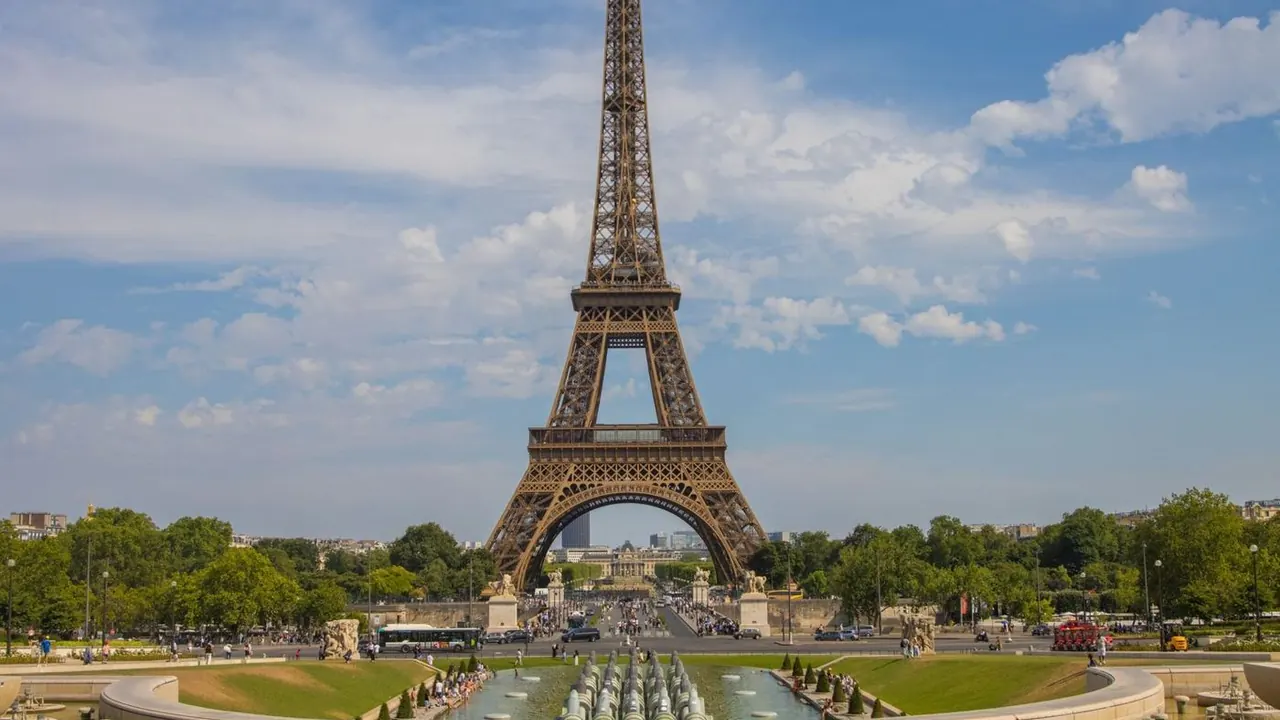
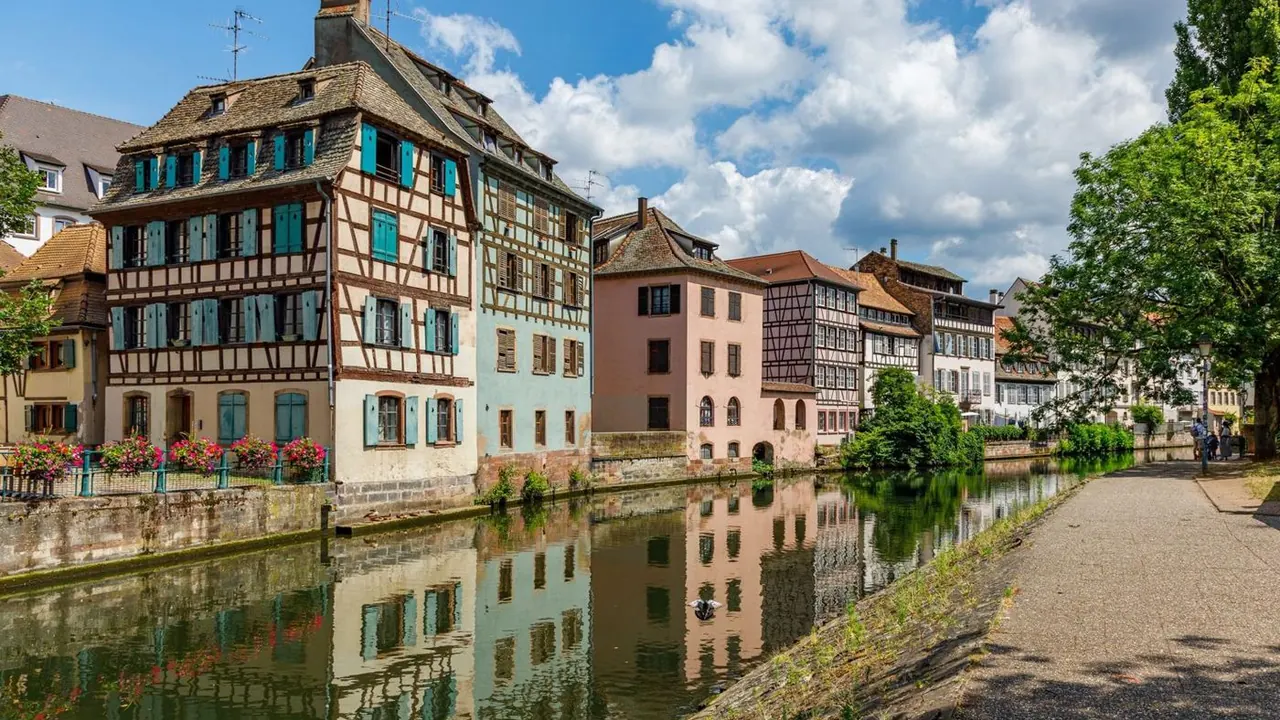
Photos: Paris by Efrem Efre, Pexels License; Strasbourg by Edoardo Colombo, Pexels License.
Paris or Strasbourg?
Our verdict in twelve categories, each scored against the same fixed benchmark cities, and the climate month by month, so you can choose for your trip.
Choose Paris for
- shopping
- nightlife
- live music and the arts
Paris suits travellers who want the most from every afternoon and every evening. In one place you get the Louvre and the Orsay, a neo-bistro table in the 11th, a late bar in Oberkampf and the shops of Saint-Germain and the Marais. A long stay pays off too, because Versailles, Chartres and Reims are all an easy train ride out. You need a budget that can carry a costly hotel and patience for the crowds at the big sights.
Choose Strasbourg for
- prices
- wellness
- nature and the outdoors
Choose Strasbourg for a slower, cheaper trip where the landscape matters as much as the museums. The cathedral, Petite France and the Neustadt fill two or three unhurried days. After that the Vosges, the Alsace wine villages and the Black Forest are close by, and Baden-Baden's thermal baths are under an hour away. Evenings end early and the shopping is modest, but the city is calmer, flatter and much kinder to the wallet than the capital.
Scoreboard
Twelve categories on one fixed scale from 0 to 100. The shaded stretch is the gap between the two.
Your match
Pick a travel style or drag the sliders, and both match scores follow your weighting.
Wins on shopping and nightlife with your weighting.
Wins on prices and wellness with your weighting.
What matters to you?
Category by category
What the scores mean for a trip.
Beaches & swimming
Neither city is a beach destination, and in summer both send swimmers to fresh water. Paris turns stretches of its riverbanks into sand beaches, has swimming spots on the Bassin de la Villette and keeps handsome Art Deco pools open the rest of the year. Strasbourg has lifeguarded gravel-pit lakes such as the Baggersee, which are grassier and quieter and reached by tram. The real difference is the sea: from Paris the Normandy coast is about two hours by train, while from Strasbourg it is out of reach.
Food & drink
Paris eats on a different scale. The range runs from neighbourhood boulangeries and zinc-counter bistros up to the haute cuisine tradition. In between are inventive neo-bistros in the 10th and 11th, natural wine bars, couscous in Belleville and Vietnamese pho on the Left Bank's south-eastern edge, so a week of meals need never repeat itself.
Strasbourg's strength is one regional cuisine done well: choucroute, baeckeoffe and tarte flambée in a wood-panelled winstub with a pichet of Riesling, plus foie gras and some fine dining in the nearby villages. It is excellent on its own terms, but there is little choice beyond Alsatian cooking, and the food is heavy for a summer visit.
Culture & sights
Paris has far more to see. The Louvre, the Orsay, the Pompidou and a string of smaller museums, any one of which would be the main draw elsewhere, sit along a UNESCO-listed river setting. Notre-Dame, the Sainte-Chapelle and the Eiffel Tower are within walking distance, and the queues at the biggest sights shape any itinerary.
Strasbourg offers one superb ensemble rather than an endless list. Its highlights are the pink sandstone cathedral with its astronomical clock, the timber-framed Grande Ile and Petite France, and the German-built Neustadt, with the three museums of the Palais Rohan alongside. You can see it properly in two or three days at an easy pace.
Nightlife
Paris nights run later and cover more ground. Bars in Oberkampf, along the Canal Saint-Martin and in Belleville spill onto the streets on warm evenings. South Pigalle has the cocktail bars and the Marais has its gay scene, and when the bars close around 2am the clubs carry on with house and techno until dawn.
A night out in Strasbourg means student bars and beer cellars in the Krutenau and around Place Saint-Étienne, with riverside terraces in summer and only a handful of clubs. It is pleasant for a drink after dinner, but on weeknights most of the city is quiet by midnight.
Nature & outdoors
Strasbourg has the better outdoors, mostly because of what lies around it. The forest trails and castle ruins of the Vosges and the higher fir-covered ridges of the Black Forest are both within about an hour. Level cycle routes run from the city along the Rhine into Germany, through riverside woods with storks and beavers.
Paris offers parks and woods rather than landscape: the cliffs and lake of the Buttes-Chaumont, the Bois de Boulogne and Vincennes, and the boulders and trails of Fontainebleau about forty minutes out. It is good for gentle walking and cycling, but there are no hills to climb.
Day trips
Both cities make good bases, but Paris has the longer and grander list. Versailles, Fontainebleau and Chantilly are each under an hour away, Chartres and Giverny are close behind, and fast trains put the Champagne houses of Reims, Rouen and the Loire châteaux within an easy day.
Strasbourg's trips are more rural, and they lead into two countries. Colmar, wine villages such as Riquewihr and Eguisheim, and Haut-Koenigsbourg on its ridge lie to the south, with Baden-Baden, Freiburg and Heidelberg across the Rhine. The wine route is easiest by car or bike, whereas the Paris trips work almost entirely by train.
Good for families
Paris has more to fill a family week. Disneyland Paris and Parc Astérix are each about forty minutes out, and the city has the huge Cité des Sciences, the Jardin d'Acclimatation, the Vincennes zoo and toy sailboats on the Luxembourg pond. The price is daily friction: stairs at metro stations, crowded trains and small hotel rooms.
Strasbourg is easier but has less in it. Its flat, mostly car-free centre, boat trips, the storks and rowing boats of the Orangerie and the Le Vaisseau science centre make for gentle days. Europa-Park is about an hour away across the border, but most of the city's museums are aimed at adults.
Getting around
Paris is one of the great walking cities. For longer hops, its metro is dense enough that a station is never far away, and the RER runs out to the airports, Versailles and Disneyland. The catches are long corridors and stairs, packed lines at rush hour and pickpockets on the tourist routes.
Strasbourg is simpler. You can cross the centre on foot in twenty minutes, trams run to the station and the European quarter, and separated bike lanes often make cycling the quickest way about. It covers less ground, though, and reaching the wine villages and the hills is far easier with a car.
Shopping & style
This is where the two cities differ most. Paris has the luxury flagships of Avenue Montaigne and the Faubourg Saint-Honoré, the department stores Galeries Lafayette and Le Bon Marché, and independent designers and vintage shops in the Marais. Beyond fashion there are the covered passages, the Saint-Ouen flea market and the bouquinistes along the Seine.
Shopping in Strasbourg is regional and small-scale. There are chain stores around Place Kléber, and delicatessens and bookshops in the lanes near the cathedral. To take home there are Alsace wines, Soufflenheim pottery, printed linens and gingerbread. December brings the Christmas market, but there is little fashion of note.
Affordability
Strasbourg is noticeably easier on the budget, though it is not a cheap city. Winstub meals and wine by the pichet are reasonably priced, trams and bike hire cost little, and the cathedral and old town are free. Hotels are the main expense, and they climb during the Christmas market and the weeks when the European Parliament sits.
Paris is expensive almost everywhere you look, from small central hotel rooms to terrace drinks and full admission at the big museums. Bakeries, lunchtime set menus, the free collections of the city's own museums and a picnic by the river all help to soften the bill.
Live music & performing arts
Paris has the bigger stage. There is ballet at the Palais Garnier, opera at the Bastille, orchestral concerts at the Philharmonie and chamber music in the Sainte-Chapelle, plus jazz cellars around the rue des Lombards and cabaret in Pigalle. There is something to hear on almost any night, though most theatre is in French.
For a city of its size, Strasbourg has a serious calendar, with the Opéra national du Rhin, a full philharmonic season and the Théâtre National de Strasbourg. What sets it apart is the Musica festival of contemporary music each autumn and a respected jazz festival, so it pays to plan a visit around the season.
Wellness & relaxation
Strasbourg is the better place to slow down. The tiled Bains municipaux give it a bathhouse of its own, and the Friedrichsbad and Caracalla baths in Baden-Baden are under an hour away. Canal walks and long winstub lunches set an unhurried pace for most of the year, December apart.
Paris has the steam rooms and mint tea of the Grande Mosquée hammam, hotel spas and a few historic pools, but no thermal tradition. Its streets are loud and crowded, so rest comes in small pieces: an hour on a café terrace or a chair in the Luxembourg gardens.
When should you go?
Pick your month. The climate figures are measured averages, not a forecast.
Paris in July
Strasbourg in July
Daytime high, °C
Rainfall in the month, mm
Temperature and rainfall are climate normals, averaged over the years shown. Paris: 1991-2020 normals, Paris-Montsouris (4.6 km from centre). Strasbourg: 1991-2020 normals, Strasbourg (9.1 km from centre).
Paris and Strasbourg have much the same summer, with highs around 26°C in July and August, warm enough for the Paris riverbank beaches and Strasbourg's gravel-pit lakes. May, June and September are the most comfortable months for walking the streets in either city. The rain differs more than the heat. May is the wettest month in both, but Paris settles back to moderate rain through the summer, while Strasbourg stays noticeably wetter through June and July. Winter separates them too: January highs reach about 8°C in Paris against 5°C in Strasbourg.
Strasbourg's sunshine follows the seasons sharply. July brings about 230 hours of sun, but December gets only a small fraction of that, so a winter visit means short, dim days and cold walking. Paris winters are milder, though still grey and damp. In both cities the shoulder months are the best time for long days on foot.
Which traveller are you?
For a food and nightlife trip, Paris is the clear pick. You can go from market mornings and neo-bistro dinners to natural wine bars and couscous in Belleville, then on to Oberkampf and clubs that run until dawn. Strasbourg's hearty winstub evenings end in a city that is quiet by midnight.
On a tight budget, Strasbourg makes the money last longer. Tarte flambée, wine by the pichet, cheap trams and bike hire, and a free cathedral and old town all keep costs down. In Paris, small hotel rooms and full museum admission add up fast, even with picnics by the Seine.
On a relaxing and wellness trip, Strasbourg is the calmer base. Locals use the tiled Bains municipaux, Baden-Baden's thermal baths are under an hour away, and canal walks set the pace. Paris has the Grande Mosquée hammam and hotel spas, but its streets rarely let up.
Before you go
| Measure | Paris | Strasbourg |
|---|---|---|
| Official language | French | French |
| Currency | Euro (EUR) | Euro (EUR) |
| Sockets | CE230 V, 50 Hz | CE230 V, 50 Hz |
| Driving side | Right | Right |
| Time zone | UTC+1, UTC+2 in summer | UTC+1, UTC+2 in summer |
| Emergency number | 112 | 112 |
| Elevation | 27 m | 132 m |
| Main airport | Charles de Gaulle International Airport (CDG)22 km from centre277 non-stop destinations | Strasbourg Airport (SXB)10 km from centre43 non-stop destinations |
| Public holidays this year | 11 days | 11 days |
By the numbers
| Measure | Paris | Strasbourg |
|---|---|---|
| City population | 2,103,778 | 293,771 |
| People per km² | 19,960 | 3,752 |
| Museums within 10 km | 251 | 21 |
| UNESCO World Heritage sites within 50 km | 4 | 1 |
Where else could you go?
Every comparison below shares a destination with this one, so you can follow Paris or Strasbourg somewhere new.