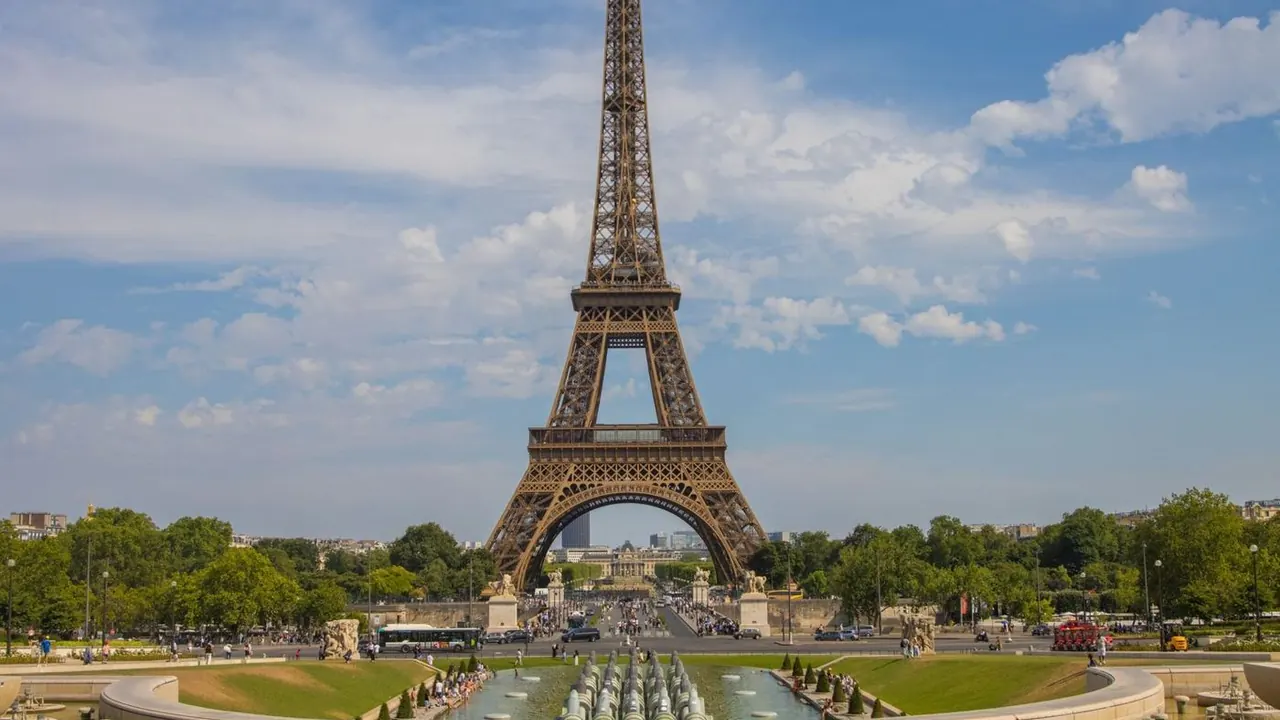
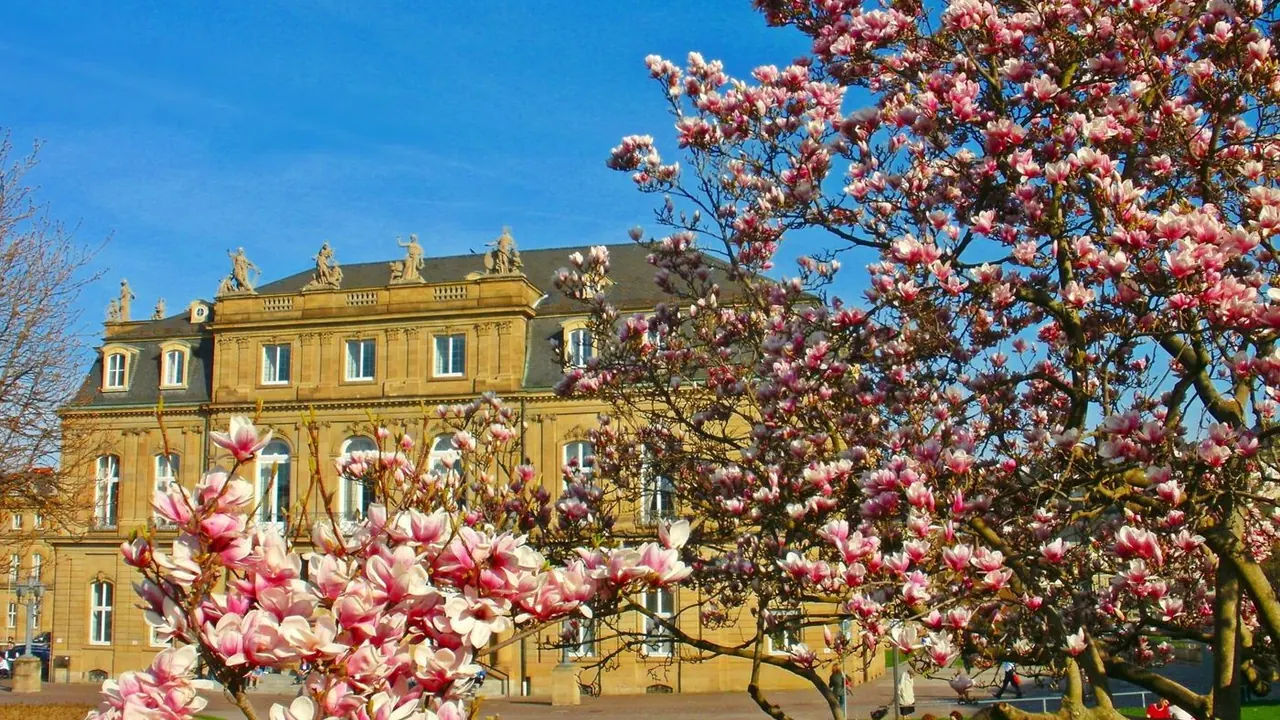
Photos: Paris by Efrem Efre, Pexels License; Stuttgart by Baden de, CC BY 3.0, cropped.
Paris or Stuttgart?
Our verdict in twelve categories, each scored against the same fixed benchmark cities, and the climate month by month, so you can choose for your trip.
Choose Paris for
- shopping
- food and drink
- nightlife
Paris is the stronger choice for a first big European city trip, or for anyone who wants to fill every day. Its museums, food, shopping and nights out are on a different scale, and the walkable centre ties them together. It suits travellers who want great collections, long meals, late evenings and boutiques, and who will accept high prices and crowds in return.
Choose Stuttgart for
- wellness
- prices
- nature and the outdoors
Stuttgart is better for a calmer, cheaper stay with the countryside close by. Vineyard slopes and forest begin at the edge of the centre, the mineral baths make an easy afternoon off, and the Swabian Jura and Black Forest are within reach. Choose it for walking, regional wine and cooking, world-class ballet and car museums, in a city that feels orderly rather than overwhelming.
Scoreboard
Twelve categories on one fixed scale from 0 to 100. The shaded stretch is the gap between the two.
Your match
Pick a travel style or drag the sliders, and both match scores follow your weighting.
Wins on shopping and food and drink with your weighting.
Wins on wellness and prices with your weighting.
What matters to you?
Category by category
What the scores mean for a trip.
Beaches & swimming
Neither city is a beach destination, and swimming in both comes in improvised forms. Paris dresses its riverbanks with sand and deckchairs in summer and has open-air swimming in the Bassin de la Villette and the Seine, as well as some handsome Art Deco public pools. Its nearest real coast is the cool Channel at Deauville and Trouville, about two hours by train.
In Stuttgart, people swim in outdoor pools, some of them fed by the city's mineral springs, because the Neckar is a working river with barges and locks. The nearest open water worth the trip is Lake Constance, more than two hours away.
Food & drink
Paris is one of the world's great food cities. Neighbourhood boulangeries, cheese shops and street markets such as the Marché d'Aligre are part of daily life. Eating out runs from zinc-counter bistros to haute cuisine, and the immigrant kitchens add couscous in Belleville and pho in the 13th. The range and depth are far beyond what Stuttgart offers.
Stuttgart's strength is a distinct regional table: Maultaschen, Käsespätzle and Zwiebelrostbraten, eaten with Trollinger or Riesling from vineyards inside the city limits. Its seasonal Besen taverns are a real local treat. Outside these, there is less variety and very little cheap street food.
Culture & sights
Paris is far ahead here. The Louvre, the Musée d'Orsay, the Gothic glass of the Sainte-Chapelle and the Haussmann boulevards could fill a week before you reach the smaller museums, and the Seine embankments themselves are UNESCO-listed.
Stuttgart's sights are mostly modern. The Mercedes-Benz and Porsche museums, the postmodern Staatsgalerie and the Le Corbusier houses on the Weissenhof Estate are its highlights. Bombing left the old core in fragments around Schlossplatz, so two or three days covers it well.
Nightlife
A night out in Paris has more choice and goes on much longer. The bars of Oberkampf, Belleville and the Canal Saint-Martin fill the streets on warm evenings, Pigalle has its cocktail bars and the Marais its gay scene, and after the bars close the clubs and summer barges run until dawn.
Stuttgart is sociable but limited. It has the bar strip on Theodor-Heuss-Strasse at weekends, basement clubs with a loyal electronic crowd, and its liveliest weeks during the Cannstatter Volksfest and the wine village.
Nature & outdoors
Stuttgart has the edge for outdoor time. The city sits in a basin ringed by vineyards and woods, so wine trails, the deer forests of the Rotwildpark and the Schönbuch can be reached on foot or by tram. Within about an hour you can be on the cliff-edge paths of the Swabian Jura or the fir-covered ridges of the northern Black Forest.
Outdoors in Paris mostly means parks: the formal Luxembourg, the hilly Buttes-Chaumont and the big woods of Boulogne and Vincennes. The forest of Fontainebleau, with its famous climbing boulders, is the main escape and gives gentler walking.
Day trips
Both make good bases, but Paris has the longer and grander list. Versailles, Chartres cathedral, Monet's garden at Giverny and the Champagne houses of Reims are all easy trips, and fast trains bring the Loire châteaux and Brussels within a day.
From Stuttgart, the trips are smaller in scale but varied. You can reach the baroque palace at Ludwigsburg, the riverside lanes of Tübingen, Heidelberg's castle, Hohenzollern on its hilltop and the abbey at Maulbronn, with Strasbourg for a longer day.
Good for families
Paris has more to offer children: Disneyland and Parc Astérix close by, the hands-on Cité des Sciences, and puppet shows and toy sailboats in the Luxembourg gardens. Day-to-day life is harder, with metro stairs, crowded trains and small hotel rooms.
Stuttgart is the easier city with a pushchair, apart from its hills. Wilhelma, with its zoo and Moorish-style pavilions, fills a day, and Killesberg's miniature railway and the little rack railway delight younger children. For a big theme park, though, you would have to travel.
Getting around
Paris is the better city on foot. Its central walks along the Seine are often the best part of the day, and the dense metro puts a station a few minutes away almost everywhere. The weak points are long corridors without lifts and packed trains at rush hour.
Stuttgart's centre is flat but small. Beyond it the city climbs its basin, and a single ticket covers the Stadtbahn, the S-Bahn, the rack railway and a funicular. Steep public stairways called Stäffele make walking shortcuts up the hillsides.
Shopping & style
This is one of the widest gaps between the two. Paris has the couture houses of Avenue Montaigne, the domed Galeries Lafayette and Le Bon Marché, designers in the Marais, the covered passages and the vast Saint-Ouen flea market.
Stuttgart is mainly for brand shopping. Königstrasse has the familiar chains, Breuninger covers designer fashion, and the outlet town of Metzingen is half an hour away. Its antiques, markets and browsing are modest.
Affordability
Neither is cheap, but Stuttgart costs noticeably less. Its hotel prices are set by business travel, so rooms are much cheaper at weekends and outside trade fairs, and beer gardens and taverns give generous portions for the money.
Paris is expensive almost everywhere, with small, costly rooms and expensive drinks on terraces. Free permanent collections in the city's own museums, lunchtime set menus and picnics by the river help keep costs down.
Live music & performing arts
Paris has the bigger and broader stage. It has two opera houses with the Palais Garnier's ballet, the Philharmonie, candlelit concerts in the Sainte-Chapelle, jazz cellars in Saint-Germain and cabaret in Pigalle, though most of its theatre is in French.
Stuttgart punches well above its size. The Stuttgart Ballet is one of Europe's most respected companies and is reason enough for a visit, and the Staatsoper is known for bold productions. The Liederhalle keeps a strong Bach tradition, and the musicals at Möhringen are a lighter option.
Wellness & relaxation
Stuttgart has a real bathing culture that Paris lacks. The springs of Bad Cannstatt and Berg are among the most productive mineral sources in Europe, and they fill the warm carbonated pools and saunas of the Mineralbad Cannstatt and Leuze.
In Paris, relaxing mostly means the tiled steam rooms and mint tea of the Grande Mosquée hammam, a hotel spa, or an unhurried hour in the Luxembourg gardens.
When should you go?
Pick your month. The climate figures are measured averages, not a forecast.
Paris in July
Stuttgart in July
Daytime high, °C
Rainfall in the month, mm
Temperature and rainfall are climate normals, averaged over the years shown. Paris: 1991-2020 normals, Paris-Montsouris (4.6 km from centre). Stuttgart: 1991-2020 normals, Stuttgart / Neckartal (2.8 km from centre).
Paris and Stuttgart follow almost the same temperature curve. Both are pleasant for walking from May to September and peak at about 26°C in July and August. That is warm rather than hot, so a full day on foot stays comfortable even in high summer. Winters are cold in both. Stuttgart runs a couple of degrees colder, with highs near 6°C in December and January, so long walks in the streets are less pleasant there.
The main difference is when the rain falls. Paris spreads its rain fairly evenly through the year. February and March are the driest months, and May is the wettest at about 75mm. Stuttgart is driest in late winter and wettest from May to July, reaching about 79mm in July. July is also its sunniest month, at around 240 hours, so a summer stay there brings both the most rain and the most sun. In both cities late spring is warm but comes with the wettest weeks. September is the better choice for either: still mild for walking, and drier than May and June.
Which traveller are you?
For a food and nightlife trip, Paris is the obvious pick. Days revolve around eating, from the morning croissant to a late dinner, then a walk between bars. Stuttgart offers hearty Swabian dinners with local wine, but weeknights end early.
On a relaxing and wellness trip, Stuttgart is the better fit. A slow day there means a morning in warm spring-fed pools, an easy vineyard walk and a quiet evening. In Paris, rest comes in short breaks between crowds and noise.
For a trip on a tight budget, Stuttgart goes further, and a day ticket turns Ludwigsburg or Esslingen into cheap outings. Paris charges full admission at the big sights, though EU residents under 26 get into many museums free.
Before you go
| Measure | Paris | Stuttgart |
|---|---|---|
| Official language | French | German |
| Currency | Euro (EUR) | Euro (EUR) |
| Sockets | CE230 V, 50 Hz | CF230 V, 50 Hz |
| Driving side | Right | Right |
| Time zone | UTC+1, UTC+2 in summer | UTC+1, UTC+2 in summer |
| Emergency number | 112 | 112 |
| Elevation | 27 m | 245 m |
| Main airport | Charles de Gaulle International Airport (CDG)22 km from centre277 non-stop destinations | Stuttgart Airport (STR)10 km from centre124 non-stop destinations |
| Public holidays this year | 11 days | 12 days |
By the numbers
| Measure | Paris | Stuttgart |
|---|---|---|
| City population | 2,103,778 | 609,365 |
| People per km² | 19,960 | 2,938 |
| Museums within 10 km | 251 | 42 |
| UNESCO World Heritage sites within 50 km | 4 | 3 |
Where else could you go?
Every comparison below shares a destination with this one, so you can follow Paris or Stuttgart somewhere new.