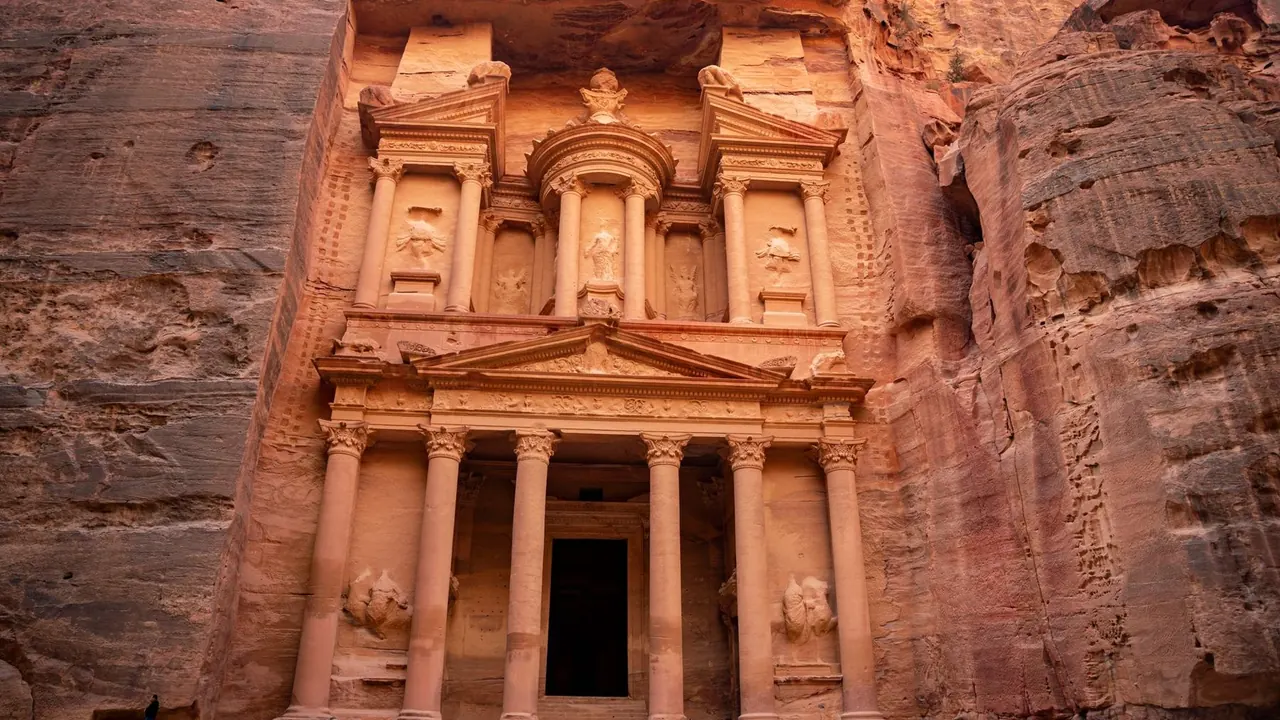
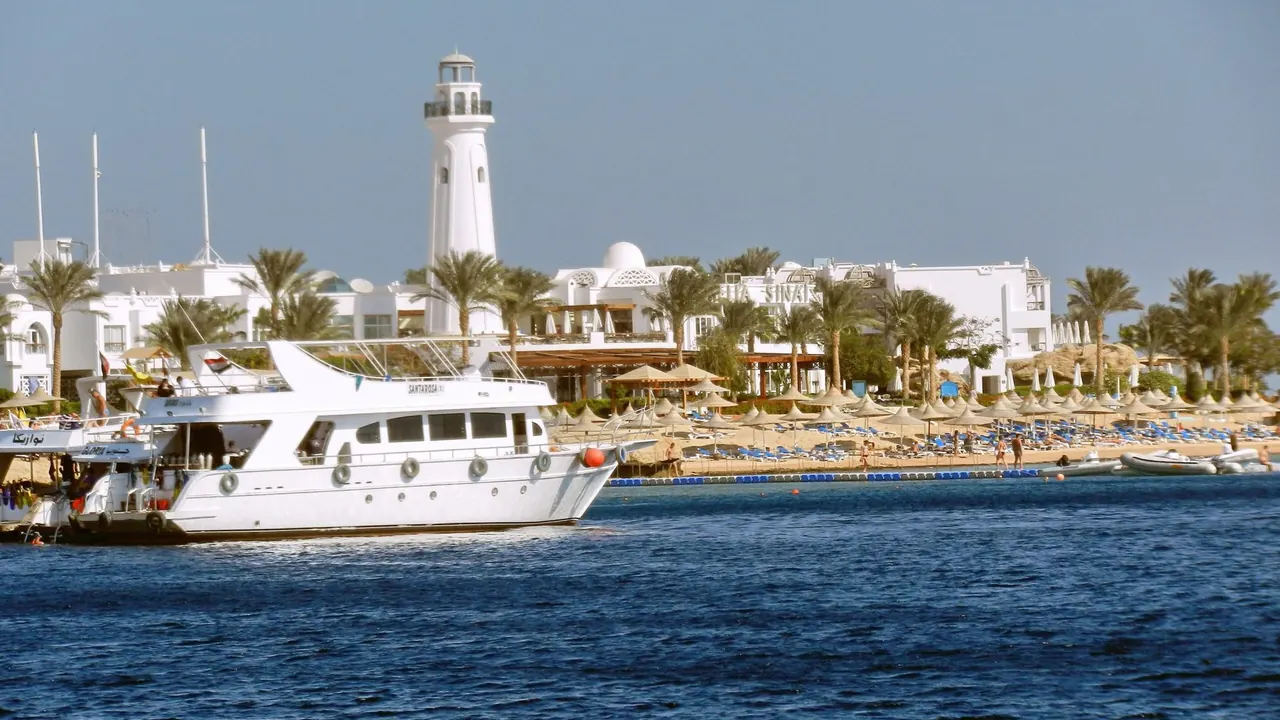
Photos: Petra by Yasir Gürbüz, Pexels License; Sharm el-Sheikh by Tanya Dedyukhina, CC BY 3.0, cropped.
Petra or Sharm el-Sheikh?
Our verdict in twelve categories, each scored against the same fixed benchmark cities, and the climate month by month, so you can choose for your trip.
Choose Petra for
- culture and sights
- getting around
Petra is for the traveller who will cross a continent to see one extraordinary place and is happy to walk for it. The Nabataean city and the sandstone mountains around it fill two or three demanding days, best fitted into a wider Jordan road trip with Wadi Rum, and the evenings are early and quiet.
Choose Sharm el-Sheikh for
- beaches
- nightlife
- families
Sharm el-Sheikh suits a week of sun, sea and very little effort. The reefs begin just off the beach, the resorts are built for families and for switching off, and an all-inclusive stay costs well under a Mediterranean equivalent. Anyone after history will find almost none in town, so this is a trip for rest, not sightseeing.
Scoreboard
Twelve categories on one fixed scale from 0 to 100. The shaded stretch is the gap between the two.
Your match
Pick a travel style or drag the sliders, and both match scores follow your weighting.
Wins on culture and sights and getting around with your weighting.
Wins on beaches and nightlife with your weighting.
What matters to you?
Category by category
What the scores mean for a trip.
Beaches & swimming
On this the two are far apart. Petra sits high in the mountains of southern Jordan, so swimming means a hotel pool if yours has one. The Red Sea at Aqaba is a separate stop on the trip, not an afternoon out.
Sharm el-Sheikh is built around the water. The reef starts within a few steps of the sand, wooden jetties at Sharks Bay and Ras Um Sid carry snorkellers out to the drop-off, and Naama Bay has the most ordinary sandy bay. Expect small beaches that mostly belong to hotels, and pack reef shoes.
Food & drink
Neither place is worth travelling to for the food, and in both most meals come from hotel buffets. Wadi Musa, the town at Petra, cooks the Jordanian standards competently, from mansaf to zarb cooked in an underground pit. Its best moments are sage tea at a stall on the trail or a Bedouin meal in the hills.
Sharm has a little more range. Naama Bay has international restaurants, and the Old Market is more rewarding, with grilled fish, koshari and taameya eaten late with mint tea. Drinking also has more of a place there, in its tourist bars as well as the hotels.
Culture & sights
Petra is one of the world's great archaeological sites, and Sharm cannot compare. The walk through the Siq to the Treasury and on past the Street of Facades and the Royal Tombs to the Monastery fills two or three days. Little Petra and the High Place of Sacrifice add more.
Sharm el-Sheikh is a modern resort with almost no history of its own. The Al Sahaba Mosque and the painted Heavenly Cathedral are worth an evening's wander around the Old Market. The rest of Egypt's heritage is a long excursion away.
Nightlife
Of the two, only Sharm el-Sheikh offers a real night out. Naama Bay's promenade of bars, shisha lounges and a few large clubs stays open late in peak season, and beach bars hold DJ nights, though everything is aimed at tourists.
In Petra an evening means dinner, a shisha on a terrace and an early night, because the trails start early. A hotel bar is about as lively as Wadi Musa gets.
Nature & outdoors
Both are superb for the outdoors, but in opposite ways. Petra is for walking. Trails run through the sandstone domes and wadis of the Sharah mountains to Jebel Haroun, and the back route goes from Little Petra to the Monastery. The ibex slopes of Dana and the red valleys of Wadi Rum are within reach by road.
Sharm el-Sheikh's best landscape is underwater. The reef walls of Ras Mohammed, the wreck of the Thistlegorm and the Tiran Strait put it among the world's great places to dive and snorkel. On land, the Sinai granite and desert are mostly for jeep, quad bike and camel trips.
Day trips
Both have only a few day trips, and in each the main outings mean long drives. From Petra the choices are the Crusader castles at Shobak and Kerak, the stone village of Dana and the desert of Wadi Rum, all easiest with a driver.
Sharm el-Sheikh has easygoing Dahab an hour up the coast, and St Catherine's Monastery below Mount Sinai, which many visitors combine with a night climb for sunrise. Petra itself is sold as a trip from Sharm, but it needs far more than a rushed day.
Good for families
Sharm el-Sheikh is much simpler with children. Resort kids' clubs, family pools with slides and shallow lagoons for a first look at the coral make for an easy week, as long as the hotel is chosen well and midsummer is avoided.
Petra can thrill older children who enjoy scrambling into tombs, but the walks are long, shade is scarce and strollers are of little use off the main path. Wadi Musa has no parks or play areas at all.
Getting around
Neither is easy to get around, though for different reasons. At Petra the hard part is the walking: the archaeological park can only be seen on foot, over long and steep distances, and the wider region needs a hired driver or a rental car.
Sharm el-Sheikh's problem is its size. The resort runs for around 30km of coast from the Old Market to Nabq, and only Naama Bay is pleasant to walk. Hotel shuttles, taxis with the fare agreed first and tour pick-ups do the work, and many guests barely leave the resort.
Shopping & style
In both places shopping means souvenirs, with Sharm el-Sheikh offering a bit more. Its Old Market and Naama Bay sell spices, perfume oils, alabaster and galabiyas, with plenty of haggling, and a few modern shopping centres stock beachwear and familiar brands.
Petra's stalls sell Bedouin silver, old coins of doubtful age and bottles of coloured sand. The cooperative shops selling embroidery made by local women are the best buys.
Affordability
Sharm el-Sheikh is clearly the cheaper stay, above all in its all-inclusive hotels, and guests who eat and drink on the package get the most for their money. Costs rise with diving, excursions and meals in Naama Bay.
Petra is moderately priced. Wadi Musa's guesthouses and falafel counters are cheap, but the entry fee for foreign visitors is among the steepest of any heritage site, so a multi-day ticket or a combined Jordan pass makes a real difference.
Live music & performing arts
Neither place has theatres or concert halls worth planning around, and in both the performances are put on for visitors. Petra has the more memorable evening in Petra by Night, when candles line the Siq and Bedouin musicians play the rababa below the Treasury.
Sharm el-Sheikh offers hotel entertainment teams, belly dancing and tanoura dancers at dinner shows. These are fun enough, but they have little to do with the place.
Wellness & relaxation
Sharm el-Sheikh is the more restful choice. Nearly every large resort has a spa with steam rooms, hammam-style scrubs and massage, but the real cure is the slow rhythm of pool, sea and winter sun.
Petra is a tiring stay rather than a soothing one. Wadi Musa's Turkish-style bathhouses, built for visitors, are a welcome end to a day on the trails, and the desert evenings are calm.
When should you go?
Pick your month. The climate figures are measured averages, not a forecast.
Petra in July
Sharm el-Sheikh in July
Daytime high, °C
Rainfall in the month, mm
Where the figures come from
Petra's temperatures are measured 34 km from the centre, at Ma'An.
Petra's station stands 219 m above the city centre, so the centre is likely a little warmer than the figures say.
Petra has no rain gauge within 25 km of the centre, so its rainfall comes from a gridded climate dataset read at the city rather than from a gauge further away.
Sharm el-Sheikh has no weather station within reach, so its figures come from a gridded climate model rather than a measured record, and read a broad area rather than the city itself.
Temperature and rainfall are climate normals, averaged over the years shown. Petra: 1991-2020 normals, Ma'An (33.9 km from centre). Sharm el-Sheikh: 2001-2020 normals, NASA POWER reanalysis grid, no weather station within 90 km.
Petra is at its best in April and October, and nearly as good in March and November. These months are mild, mostly dry and right for long days walking through the site. From June to September there is no rain at all, but highs reach around 35°C and there is little shade on the trails, so walking is comfortable only early and late in the day. Winter is the hard season, with January highs near 14°C, most of the year's rain and cold, sometimes frosty nights, though the days are still often sunny.
Sharm el-Sheikh shares the same best seasons in spring and late autumn, when the air is warm without being fierce and the sea is pleasant for hours of snorkelling. The two part ways in winter. While Petra is cold and wet, Sharm stays almost rainless, with January highs around 21°C and a sea that holds at 23°C, though afternoons on the beach can be breezy. Summer is the opposite extreme, reaching 38°C on land, so in those months you are comfortable only in the water or out early and late, with almost no rain in any month.
Which traveller are you?
For a beach and sun trip, book Sharm el-Sheikh, unpack once and let the days run from breakfast to the reef and back to a sunbed. It works even in winter, when home is grey. From Petra, the sea is a separate leg of the journey.
On a culture and arts trip, Petra is worth the long journey on its own. Plan two or three full days, start at dawn and expect to end each one on tired legs. From Sharm, history means long hours on a coach to somewhere else.
On a family trip with young children, Sharm el-Sheikh lets parents choose one good resort and leave the week to look after itself, with the sea close by. Petra asks small legs to walk and climb all day in the sun, which only older, keen children enjoy.
Before you go
| Measure | Petra | Sharm el-Sheikh |
|---|---|---|
| Official language | Arabic | Arabic |
| Currency | Jordanian Dinar (JOD) | Egyptian Pound (EGP) |
| Sockets | BCFGJ230 V, 50 Hz | CF220 V, 50 Hz |
| Driving side | Right | Right |
| Time zone | UTC+3 | UTC+2, UTC+3 in summer |
| Emergency number | 911 | Police 122, ambulance 123, fire 180 |
| Elevation | 850 m | 1 m |
| Main airport | King Hussein International Airport (AQJ)90 km from centre5 non-stop destinations | Sharm El Sheikh International Airport (SSH)16 km from centre112 non-stop destinations |
| Public holidays this year | - | 15 days |
By the numbers
| Measure | Petra | Sharm el-Sheikh |
|---|---|---|
| City population | - | 73,000 |
| Museums within 10 km | 2 | 1 |
| UNESCO World Heritage sites within 50 km | 1 | 0 |
| Swim season, months above 21 °C | - | 12 months |
Where else could you go?
Every comparison below shares a destination with this one, so you can follow Petra or Sharm el-Sheikh somewhere new.