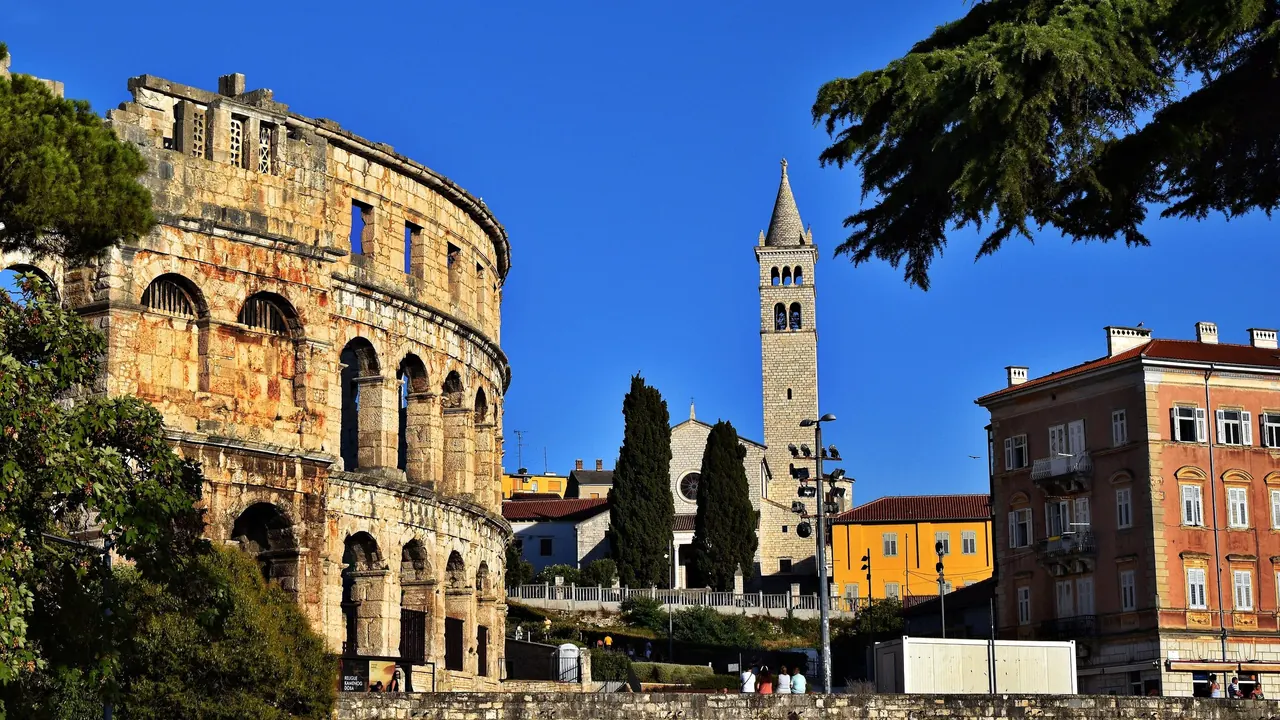
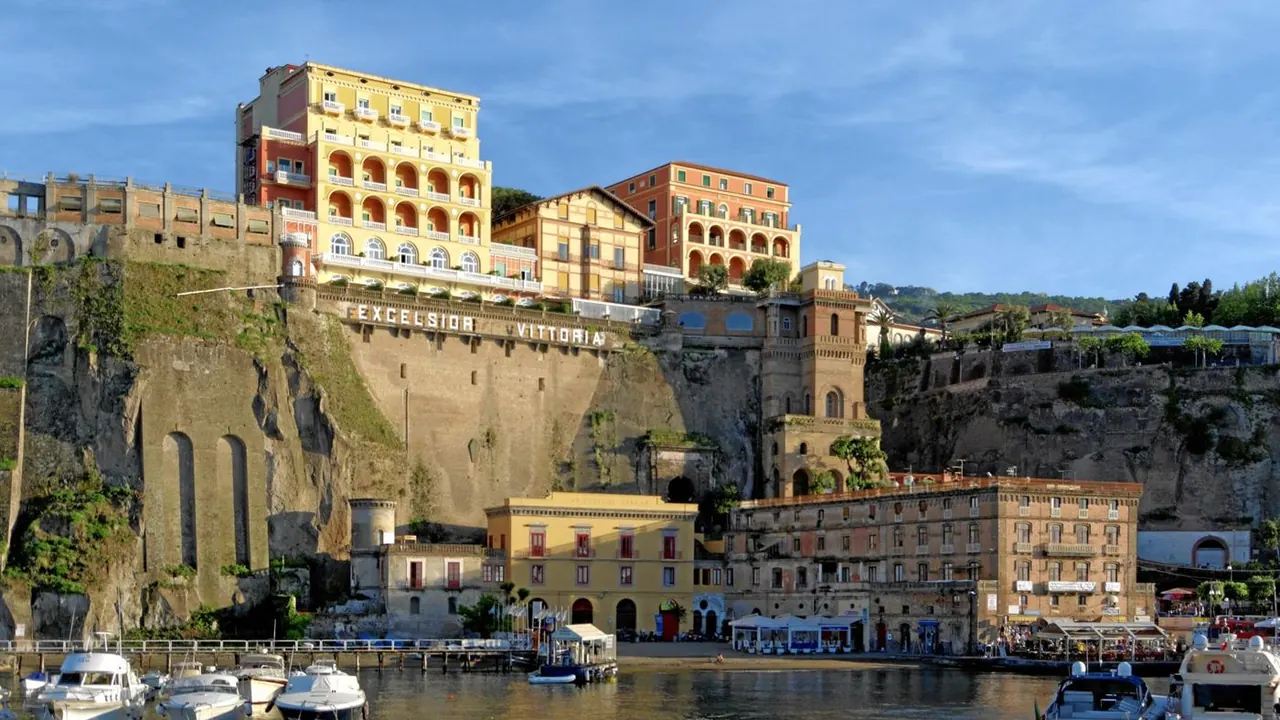
Photos: Pula by Miroslav.vajdic, CC BY-SA 4.0, cropped; Sorrento by Berthold Werner, CC BY-SA 3.0, cropped.
Pula or Sorrento?
Our verdict in twelve categories, each scored against the same fixed benchmark cities, and the climate month by month, so you can choose for your trip.
Choose Pula for
- culture and sights
- families
- prices
Pula suits travellers who want the sea and the sights in the same place. The Roman Arena and Forum sit in the town itself, the coves of Verudela and Kamenjak offer far more free, natural shoreline than Sorrento's piers, and families find calm, shallow water around Medulin. It also costs less, and with a hire car Istria's hill towns and wine estates make an easy second week.
Choose Sorrento for
- day trips
- wellness
- nature and the outdoors
Sorrento is the better choice if the trip is really about the region around it. Pompeii, Herculaneum, Capri, the Amalfi Coast and Naples are all within a train ride or a ferry crossing, the hiking on the peninsula is dramatic, and you can manage the whole stay without a car. It is pricier and its swimming is cramped, but for a slow, scenic stay of terraces, lemon groves and boat trips it has no real equal here.
Scoreboard
Twelve categories on one fixed scale from 0 to 100. The shaded stretch is the gap between the two.
Your match
Pick a travel style or drag the sliders, and both match scores follow your weighting.
Wins on culture and sights and families with your weighting.
Wins on day trips and wellness with your weighting.
What matters to you?
Category by category
What the scores mean for a trip.
Beaches & swimming
Pula has much more coastline to swim from. Its pine-shaded rocks, platforms and pebble coves wrap around the Verudela and Stoja peninsulas, and Kamenjak adds dozens of wild inlets where you can always find a ledge to yourself. Bring water shoes for the urchins.
Sorrento sits on a cliff, so swimming mostly means climbing down a ladder from a wooden lido pier at Marina Piccola or Marina Grande into deep, clear water. Much of the space is paid and crowded in high summer. The rocks at Bagni della Regina Giovanna are the natural alternative, and for a real pebble beach you need a bus or a boat.
Food & drink
The two eat equally well, but they are very different kitchens. Pula's is Istrian: truffle-sauced fuži and pljukanci, scampi buzara, pršut, and Malvazija or Teran from estates just inland. Its best meals tend to be in hinterland village taverns rather than in town.
Sorrento cooks Campanian classics such as gnocchi alla sorrentina, fish all'acqua pazza, fresh fior di latte and pizza from the Naples tradition, with lemons in almost everything. The hill villages on the peninsula also offer some celebrated fine dining, which Pula does not match. Both centres have plenty of tourist menus.
Culture & sights
Pula has the bigger draw within the town itself. The Arena still stands with its full three-storey outer ring, the Temple of Augustus survives intact on the Forum, and the Arch of the Sergii, the hilltop fortress and the Habsburg naval forts add further layers. Together they make a solid day or two of sightseeing.
Sorrento's own sights are quieter: the cloister of San Francesco, the Museo Correale's Neapolitan collections and the ruined mill at the bottom of the Vallone dei Mulini. Most of the area's great heritage sites lie outside the town.
Nightlife
Neither is a place for a big night out, but Pula has a little more going on in summer. Beach bars and cocktail bars on Verudela and around Medulin stay open late at weekends, and a few small clubs attract young Croatians.
Sorrento's evenings are older and gentler, with the passeggiata on Corso Italia, a drink on a terrace over the bay and piano bars playing Neapolitan songs. A livelier night in Naples or on Capri means staying over, because the last trains and ferries leave early.
Nature & outdoors
Sorrento's landscape is far more dramatic. The peninsula is a steep limestone ridge of lemon and olive terraces facing Vesuvius, and its trails reach Punta Campanella and the protected bay of Ieranto. The Path of the Gods, the beech woods of Monte Faito and the crater rim of Vesuvius are all within a day out.
Pula's southern Istria is low, stony and gentle. Kamenjak is good for walking and cycling, and it adds windsurfing, kayaking and wreck diving. The nearest proper hiking is in the Učka range, about an hour and a half away.
Day trips
Both are good touring bases, but Sorrento's surroundings are in another league. Pompeii is about half an hour away on the Circumvesuviana, Capri is under an hour by ferry, and Naples, Herculaneum, Positano, Amalfi and Ravello are all easy to reach without a car.
From Pula the highlights are Venetian Rovinj, the Byzantine mosaics of Poreč, the hill towns of Motovun and Hum, and the Brijuni islands. Because buses are sparse, most of these work best with a car.
Good for families
Pula is easier with children because the sea suits them. The bays around Medulin are shallow and sheltered, the aquarium sits in a fort on Verudela, and climbing around the Arena makes Roman history fun. Within an hour there are also a dinosaur park and a water park.
In Sorrento the welcome is warm, but swimming is off piers into deep water and many hotels sit on steep lanes without pavements. Boat trips to Capri and Pompeii's ruins appeal to older children more than to toddlers.
Getting around
Both centres are small and flat enough to walk. Sorrento has the edge once you leave town, because the Circumvesuviana and the ferries let you skip a car altogether, crowded and delay-prone as the trains can be.
In Pula, the city buses cover Verudela and the road towards Premantura, but Kamenjak, the hill towns and most of the coast really call for a car or a scooter.
Shopping & style
Neither is a shopping destination, but Sorrento has more local craft to browse. On Via San Cesareo you will find intarsia boxes and trays, sandals made to measure while you wait, linen and cameo jewellery alongside all the limoncello.
Pula's best buys are things to eat and drink: Istrian olive oil, truffle products, honey and rakija from the market hall or straight from the producers. Its main street is otherwise high-street chains and souvenirs.
Affordability
Pula is the cheaper stay in every season. In July and August its rooms rise towards Western European coastal rates, but Sorrento's summer peak is steeper still, with a sea view, a lido sunbed and a terrace table each adding to the day. Away from midsummer, both towns ease off, and a private apartment and a simple konoba in Pula leave more of the budget free than a quiet-season room in Sorrento.
The two bills also grow in different places. In Pula, car hire and boat trips to Brijuni or round Kamenjak make up much of the spending. In Sorrento, trains and buses are the cheap part, and the money goes on where you sleep, where you lie by the sea and on a private boat to Capri.
Live music & performing arts
Pula has the more memorable stage. In summer the Roman Arena hosts touring concerts, classical galas and the Pula Film Festival screenings, and the Istrian National Theatre carries on through the rest of the year in Croatian.
Sorrento offers tarantella and Neapolitan song shows put on for visitors, plus chamber concerts in the cloister of San Francesco. For opera you go to the Teatro di San Carlo in Naples.
Wellness & relaxation
Sorrento is the more restful choice. Clifftop hotel spas look over the bay, lemon groves and villa gardens set a slow pace, and the thermal gardens of Ischia are a ferry ride away.
Pula's options are mostly the spa areas of large resort hotels on Verudela and in Medulin. Its calm comes instead from pine-shaded coastal paths and quiet days in the countryside outside high summer.
When should you go?
Pick your month. The climate figures are measured averages, not a forecast.
Pula in July
Sorrento in July
Daytime high, °C
Rainfall in the month, mm
Where the figures come from
Pula's temperatures are measured 87 km from the centre, at Trieste.
Pula has no rain gauge within 25 km of the centre, so its rainfall comes from a gridded climate dataset read at the city rather than from a gauge further away.
Sorrento has no rain gauge within 25 km of the centre, so its rainfall comes from a gridded climate dataset read at the city rather than from a gauge further away.
Sorrento's sunshine is measured 54 km from the centre, at Grazzanise.
Temperature and rainfall are climate normals, averaged over the years shown. Pula: 1991-2020 normals, Trieste (87 km from centre). Sorrento: 2005-2025 (sunshine 1991-2020, rainfall 1991-2020) normals, Capri (17 km from centre).
Both cities are swimming destinations from June to September, when afternoons reach the high 20s and the sea is warm. Pula's water peaks at about 25°C in August. Sorrento's runs slightly warmer all year and is still around 22°C in October, so it is the better pick for a late swim. Summer is also where the two differ most in rain. Sorrento is almost dry and sunnier from June to August, while Pula has some rain spread through the summer. Both can feel hot at midday for walking in July and August.
Spring and autumn are good for sightseeing and walking in both, though Sorrento's autumn turns wet sooner and harder, with about 151mm in November against Pula's milder downpours. Winter is cooler in Pula, with highs near 9°C in January against Sorrento's 13°C, and both are grey and quiet then. May and late September are the most comfortable months in either city.
Which traveller are you?
On a family trip with young children, Pula is the easier choice. The sheltered bays at Medulin and Premantura shelve gently, the aquarium in an old fort and the Arena's tunnels fill an afternoon, and there are dinosaur and water parks within reach.
For a trip on a tight budget, Pula again comes out ahead. Private apartments and simple konobas keep costs moderate, and its rocky coves are free to swim from. Sorrento's sea-view rooms, terrace restaurants and lido sunbeds make every day noticeably more expensive.
On an outdoors trip, Sorrento is the stronger base. Trails run along cliffs and through terraced groves to Punta Campanella and the bay of Ieranto, the Path of the Gods and Vesuvius are close by, and boats explore Capri's grottoes. Southern Istria is gentler and flatter.
Before you go
| Measure | Pula | Sorrento |
|---|---|---|
| Official language | Croatian | Italian |
| Currency | Euro (EUR) | Euro (EUR) |
| Sockets | CF230 V, 50 Hz | CFL230 V, 50 Hz |
| Driving side | Right | Right |
| Time zone | UTC+1, UTC+2 in summer | UTC+1, UTC+2 in summer |
| Emergency number | 112 | 112 |
| Elevation | 5 m | 50 m |
| Main airport | Pula Airport (PUY)7 km from centre34 non-stop destinations | Naples International Airport (NAP)30 km from centre131 non-stop destinations |
| Public holidays this year | 14 days | 13 days |
By the numbers
| Measure | Pula | Sorrento |
|---|---|---|
| City population | 52,220 | 15,407 |
| People per km² | 971 | 1,541 |
| Museums within 10 km | 4 | 6 |
| UNESCO World Heritage sites within 50 km | 1 | 5 |
| Swim season, months above 21 °C | 4 months | 5 months |
Where else could you go?
Every comparison below shares a destination with this one, so you can follow Pula or Sorrento somewhere new.