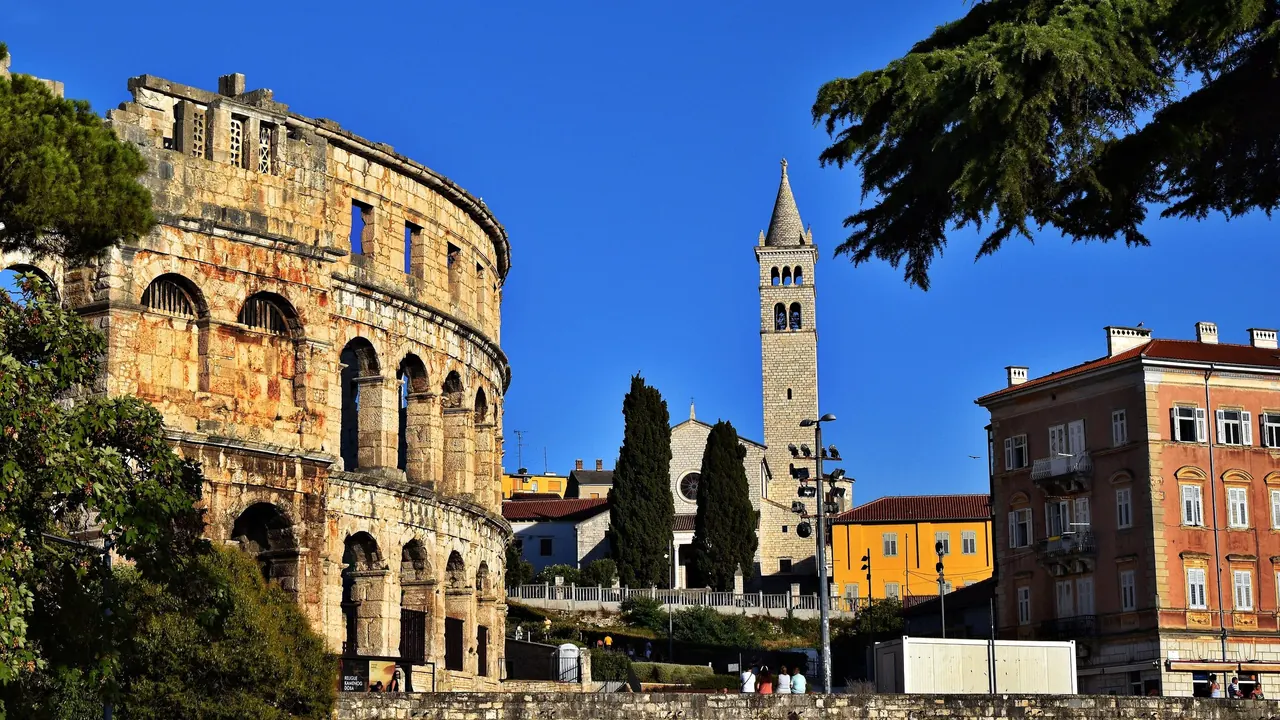
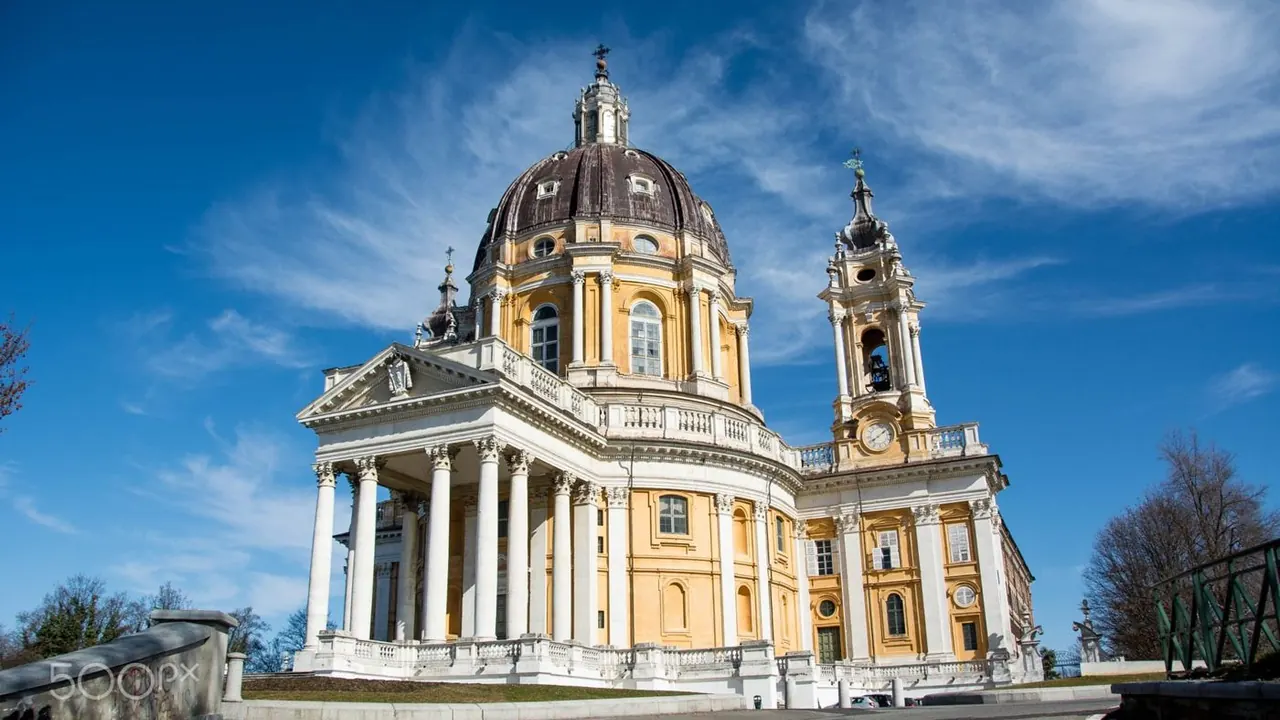
Photos: Pula by Miroslav.vajdic, CC BY-SA 4.0, cropped; Turin by Konstantin Dacosta, CC BY 3.0, cropped.
Pula or Turin?
Our verdict in twelve categories, each scored against the same fixed benchmark cities, and the climate month by month, so you can choose for your trip.
Choose Pula for
- beaches
- families
Pula suits a summer trip built around the sea. You get clear water off rocks and pine-shaded coves, the Roman Arena above the harbour and a hire car for touring Istria's hill towns, Rovinj and the Brijuni islands. It is a smaller, slower place. Its sights fill a day or two, and evenings usually mean a glass of Malvazija by the water rather than a night out.
Choose Turin for
- live music and the arts
- shopping
- food and drink
Turin is the better choice for a city trip with more to it, at any time of year. It has the Museo Egizio, the Savoy palaces and an opera season at the Teatro Regio, and Piedmontese cooking runs from agnolotti to Barolo. The Alps and the Langhe wine hills are close enough for day trips. There is no sea, though, and a swim means a long day out to the Riviera.
Scoreboard
Twelve categories on one fixed scale from 0 to 100. The shaded stretch is the gap between the two.
Your match
Pick a travel style or drag the sliders, and both match scores follow your weighting.
Wins on beaches and families with your weighting.
Wins on live music and the arts and shopping with your weighting.
What matters to you?
Category by category
What the scores mean for a trip.
Beaches & swimming
This is the one area where Pula clearly wins. Its indented coast south of the centre has pebble coves, rock ledges and concrete platforms above very clear water, with pine shade down to the shore. Cape Kamenjak has dozens of wild inlets, and the bays at Medulin have shallow water for small children.
Turin has no beach of its own. The Ligurian coast is close to two hours away, and in summer locals make do with small lakes such as Avigliana. If swimming matters to your trip, Turin can't provide it.
Food & drink
Both regions are known for truffles, but Turin is the better city to eat in. Piedmontese cooking is rich and precise: vitello tonnato, tajarin with butter, bollito misto, plus Barolo and Barbaresco on every wine list. The city invented vermouth and the aperitivo. Add gianduiotti, bicerin in the arcade cafés and the huge Porta Palazzo market.
Pula has Istrian cooking: fuži with truffle, scampi buzara, pršut, Malvazija and Teran. In town, though, the choice is small, and the tables around the Forum lean towards tourist menus. The best meals are in konobas in the inland villages or by the small harbours.
Culture & sights
Pula's sights are almost all Roman, and they are impressive. The Arena still stands three storeys high above the harbour, and nearby are the Temple of Augustus on the Forum and the Arch of the Sergii. Add the Venetian fortress and the Austro-Hungarian naval forts, and two days is enough.
Turin needs much longer. The Museo Egizio alone fills a morning, and then come the Royal Palace and its armoury, Palazzo Madama, the cathedral with the Shroud and the UNESCO-listed Savoy residences out to Venaria. The Mole's cinema museum, the car museum and the Lingotto cover its industrial past, and Rivoli adds contemporary art.
Nightlife
Turin has the busier and more varied evenings. The aperitivo runs on into wine bars in the Quadrilatero Romano, street crowds in San Salvario, a more alternative scene in Vanchiglia and, in summer, the riverside Murazzi. There are also clubs in old industrial buildings, and it all carries on through the academic year.
Pula only really goes out in summer, and gently even then. Evenings start on terraces by the Forum and move on to beach bars on Verudela and around Medulin. After September most nights end early.
Nature & outdoors
Turin has mountains within reach. The Susa valley, the ibex and high trails of Gran Paradiso and the ski slopes around Sestriere are an hour or so away, which means skiing in winter and hut-to-hut hiking in summer. The Superga hills and the Mandria forest are closer to town.
Pula's outdoors is low and coastal. Kamenjak is good for walking and cycling among wild flowers and dinosaur footprints, and you can kayak among the islets or dive on old naval wrecks. The nearest real hiking is in the Učka range, about an hour and a half away.
Day trips
Both are excellent bases for day trips, and Turin's are a little richer and easier to reach. The Langhe wine villages, Alba and Barolo are about an hour south, and Milan is an hour away by fast train. The Sacra di San Michele, Aosta and Genoa all make full days out.
Pula covers Istria well: Rovinj on its peninsula, the Byzantine mosaics at Poreč, the hilltop towns of Motovun and Hum, and the boat to Brijuni. Buses are infrequent, though, so nearly all of it works best by car.
Good for families
Both cities are about equally good for families, but the days look very different. In Pula children spend most of their time by the sea, and the sheltered bays at Medulin and Premantura suit them better than the rocks near town. The aquarium in an old fort on Verudela, the passages under the Arena and the safari animals on Brijuni fill the rest, though the summer heat and the need for a car make it harder work.
Turin is better for older children who like museums: the glass lift up the Mole, the cars at the Museo dell'Automobile, the Egyptian mummies and the rack railway to Superga. Its flat arcades are easy with a pushchair. There is no beach or lake in the city, though, so a summer swim means a drive to the lakes or to the bathing pools at the Zoom park.
Getting around
Turin is the easier city to manage without a car. Its centre is a flat grid with kilometres of arcades, so most sights are a walk apart. A metro line, trams and good rail links to the rest of Italy cover the rest, and you only need a car for the wine hills and the Alps.
Pula's old centre is just as walkable, but it is small. Kamenjak, the hill towns and most of the coastline are hard to reach without your own car or scooter, and parking near the centre is tight in summer.
Shopping & style
Turin is a real shopping city. Via Roma's arcades have the big fashion labels, and there are boutiques around the Quadrilatero and antique dealers along Via Maria Vittoria. On Saturdays the Balon flea market sets up behind Porta Palazzo.
In Pula, the things worth buying are food and drink: olive oil, truffle products, rakija and pršut from the market hall or straight from the farms. Food is also Turin's most distinctive buy, with gianduja and Piedmontese wine.
Affordability
Turin goes a little further on a modest budget. A generous aperitivo can replace dinner, and trattorie and market food are good value. Public transport is cheap, and you hardly need it in the centre. Hotels cost more only during big trade fairs.
Pula is reasonable in spring and autumn, but in July and August rooms cost about as much as on Western Europe's coasts. Restaurants near the Arena charge tourist prices, and car hire and boat trips soon add up.
Live music & performing arts
Turin has a full year-round programme. The Teatro Regio stages opera and ballet, the RAI National Symphony Orchestra has its own hall, the Lingotto auditorium hosts more concerts, and there are jazz clubs and music festivals throughout the year.
Pula has one memorable venue: the Arena on a summer night, used for pop concerts, classical galas and film festival screenings. Outside summer there is little beyond Croatian-language theatre.
Wellness & relaxation
Neither city has a bathing tradition, but Turin is a little better for unwinding. It has spa day centres as well as hotel spas, slow afternoons in the historic cafés and Valentino park, and real thermal baths at Acqui Terme or in the Aosta valley if you are willing to travel about two hours.
In Pula, spa treatments mean the large resort hotels on Verudela and in Medulin. Otherwise relaxing comes from long coffees on the Forum and evening walks under the pines along the coast.
When should you go?
Pick your month. The climate figures are measured averages, not a forecast.
Pula in July
Turin in July
Daytime high, °C
Rainfall in the month, mm
Where the figures come from
Pula's temperatures are measured 87 km from the centre, at Trieste.
Pula has no rain gauge within 25 km of the centre, so its rainfall comes from a gridded climate dataset read at the city rather than from a gauge further away.
Turin has no rain gauge within 25 km of the centre, so its rainfall comes from a gridded climate dataset read at the city rather than from a gauge further away.
Temperature and rainfall are climate normals, averaged over the years shown. Pula: 1991-2020 normals, Trieste (87 km from centre). Turin: 1991-2020 normals, Torino / Caselle (15.4 km from centre).
Pula is at its best from June to September. Days are hot, the sun shines long and the sea is warm enough for easy swimming, reaching about 25°C in August. September is still very good. After that the rain builds through autumn to a peak of 107mm in November, and winter is mild but grey. April, May and October are pleasant for walking the Roman sights and the Kamenjak headland without the midsummer heat.
Turin follows a different pattern. Its wettest stretch is late spring, with May the rainiest month at around 115mm. July and August reach 29°C on the Po plain and can feel sticky. Winters are cold but fairly dry, which suits the arcaded streets and the ski slopes. For walking the city, September and October are the most dependable months. Pula has the clear advantage from June to September, while Turin holds up better from late autumn to early spring.
Which traveller are you?
For a beach and sun trip, Pula is the obvious choice. It has warm, clear water, coves all round Verudela and Medulin, and Kamenjak's wild headland for swimming off the rocks. From Turin the nearest sea is a long day's journey to the Ligurian Riviera.
On a culture and arts trip, Turin offers far more. You can see the Museo Egizio, the Royal Palace, the Reggia di Venaria and the cinema museum in the Mole, then spend evenings at the opera or the symphony. Pula's Roman monuments are superb but take a day or two.
For a food and nightlife trip, Turin is the stronger base. It has the aperitivo ritual, vermouth and bicerin, Barolo and agnolotti, and bar streets in San Salvario and the Quadrilatero all year. In Pula the best meals are out in the villages, and the evenings are quiet and mainly in summer.
Before you go
| Measure | Pula | Turin |
|---|---|---|
| Official language | Croatian | Italian |
| Currency | Euro (EUR) | Euro (EUR) |
| Sockets | CF230 V, 50 Hz | CFL230 V, 50 Hz |
| Driving side | Right | Right |
| Time zone | UTC+1, UTC+2 in summer | UTC+1, UTC+2 in summer |
| Emergency number | 112 | 112 |
| Elevation | 5 m | 239 m |
| Main airport | Pula Airport (PUY)7 km from centre34 non-stop destinations | Turin Airport (TRN)14 km from centre65 non-stop destinations |
| Public holidays this year | 14 days | 13 days |
By the numbers
| Measure | Pula | Turin |
|---|---|---|
| City population | 52,220 | 841,600 |
| People per km² | 971 | 6,474 |
| Museums within 10 km | 4 | 72 |
| UNESCO World Heritage sites within 50 km | 1 | 4 |
| Swim season, months above 21 °C | 4 months | - |
Where else could you go?
Every comparison below shares a destination with this one, so you can follow Pula or Turin somewhere new.