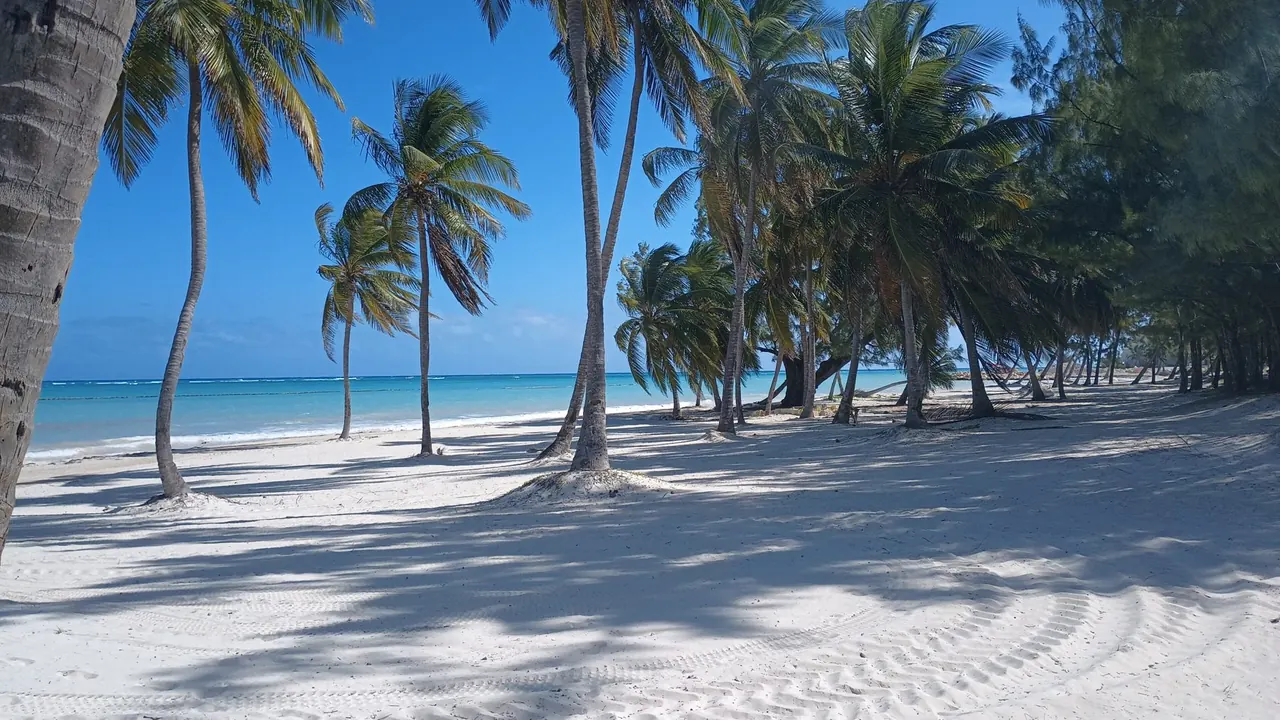
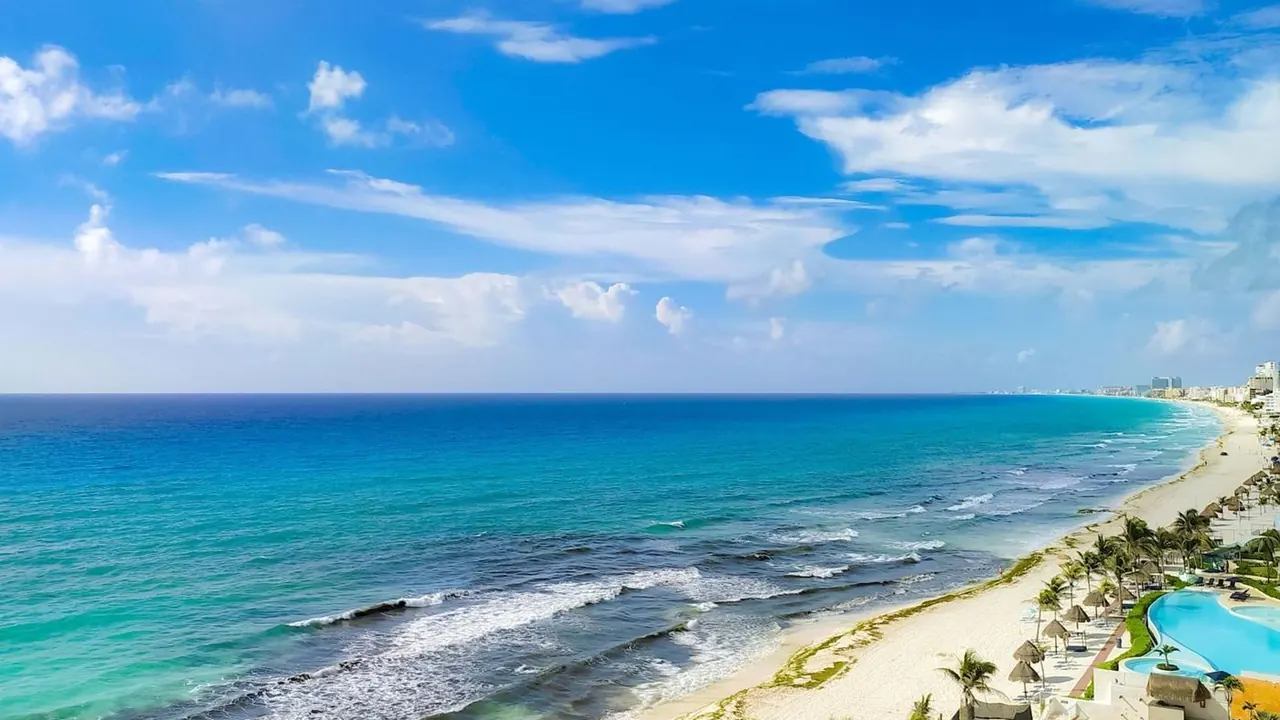
Photos: Punta Cana by Mary Mark Ockerbloom, CC0; Cancun by Tellez Erik, Pexels License.
Punta Cana or Cancun?
Our verdict in twelve categories, each scored against the same fixed benchmark cities, and the climate month by month, so you can choose for your trip.
Choose Punta Cana for
Punta Cana does not lead in any category we score.
Choose Punta Cana for a vacation where getting off the sunbed is optional. Its reef-sheltered sand runs much further, the resorts are self-contained, and with little nearby to see, nothing pulls you away. Couples after a quiet week, or anyone happy to let an all-inclusive handle everything, will find the slower pace a strength. The colonial quarter of Santo Domingo is the one outing worth a long day on the road.
Choose Cancun for
- nightlife
- day trips
- food and drink
Cancun suits travellers who want the beach and plenty to do away from it: a loud late night in the Party Center, Yucatecan cooking downtown, cenotes and the reef, and the great Maya sites within a long day's reach. It is also the easier of the two with children, with calm bay beaches, an aquarium, eco-parks and buses running the length of the Hotel Zone.
Scoreboard
Twelve categories on one fixed scale from 0 to 100. The shaded stretch is the gap between the two.
Your match
Pick a travel style or drag the sliders, and both match scores follow your weighting.
Has no clear advantage with the weighting you have chosen.
Wins on nightlife and day trips with your weighting.
What matters to you?
Category by category
What the scores mean for a trip.
Beaches & swimming
Both are first-class beach destinations, and the difference is in layout. Cancun's 22km of sand is split by the bend of its seven-shaped strip. The bay side towards Isla Mujeres is calm and shallow, while the long eastern shore faces the open Caribbean with real waves and currents. Playa Norte on Isla Mujeres is a short ferry ride away.
Punta Cana has more than twice the length of sand, and offshore reefs keep most of it gentle. You choose a mood instead of a side: lively Bávaro, polished Juanillo or wild, surfy Macao, plus boat trips to Saona. Sargassum can arrive in summer at both. In Cancun you move to the bay, and in Punta Cana the resorts rake it away.
Food & drink
Cancun eats better, but only if you take the short bus ride downtown. That is where you find late-night taco stands, the stalls around Parque de las Palapas, the halls of Mercado 28 and Mercado 23, and a distinct regional cooking of cochinita pibil, sopa de lima and habanero salsas.
Punta Cana has no equivalent district or market culture. Meals revolve around resort buffets and themed dining rooms, and local food means hunting out workers' comedores for la bandera, sancocho and mangú. The lobster grills at Bávaro and Cap Cana marina are pleasant, but they are aimed at tourists.
Culture & sights
Both are resort coasts built from the 1970s with almost no history of their own, so neither works for a culture-led stay. Cancun at least has a worthwhile afternoon in the Maya Museum, with San Miguelito's small ruins in its grounds, and the minor sites of El Rey and El Meco. Punta Cana has nothing comparable, only cigar displays and resort chapels, so any interest in heritage means leaving town.
Nightlife
Cancun is built for big nights out. Its clubs are packed into the Party Center at the bend of the Hotel Zone, so you can walk between huge venues with open-bar wristbands, and the crowds stay until four or five. Downtown, around Avenida Tulum, has cheaper bars where residents drink.
Punta Cana's evenings mostly end at the resort disco around midnight. Bávaro does have later options, including a club set in a limestone cave and colmados playing bachata and reggaeton, but the venues are spread out and need a taxi between them. It suits one or two big nights, not a week of them.
Nature & outdoors
Both coasts are flat, with no hiking, and the outdoors happens mainly on the water. Cancun offers more variety. It has the cenote sinkholes and caverns along the Ruta de los Cenotes, swimming with whale sharks from June to September, MUSA's underwater sculptures, kayaking in the mangrove channels of the Nichupte lagoon, and the bird island of Isla Contoy.
Punta Cana's highlights are the starfish pool on the way to Saona, the Hoyo Azul sinkhole in the Cap Cana cliffs, short lagoon trails in the Indigenous Eyes reserve, and deep-sea fishing for marlin. For keen kitesurfers the two are fairly even.
Day trips
Cancun has far more within reach. Chichen Itza is a long but manageable day, often combined with Valladolid and a cenote, and Coba and Ek Balam bring jungle ruins. Closer to hand are Isla Mujeres by ferry, Playa del Carmen and Tulum's clifftop ruins down the coast.
Punta Cana has fewer outings. Nearby are the basilica at Higüey, the stone village of Altos de Chavón above the Chavón River, and Bayahibe for the Saona boats. The big reward is Santo Domingo's Zona Colonial, the oldest European city in the Americas, but it is a tiring round trip of about five hours on the road.
Good for families
Both rely on family resorts with kids' clubs, but Cancun gives you more to do beyond them. It has an aquarium in the Hotel Zone, eco-parks built around underground rivers that can fill whole days, easy first snorkelling in the lagoon, and calm bay beaches. You will need to keep children off the rougher eastern shore.
In Punta Cana the resort is most of the trip, with splash parks, waterslides and gentle reef-sheltered beaches at Bávaro and Juanillo. Outside them, zip lines, dolphin encounters and the Saona catamaran are the main outings. There are no zoos, aquariums or theme parks, and every trip needs a taxi or tour.
Getting around
Neither is a place to walk around, but Cancun is easier to manage without a car. Frequent buses run the length of Boulevard Kukulcan and on into downtown, comfortable ADO coaches reach Playa del Carmen, Tulum and Valladolid, and the peninsula's straight roads are easy if you hire a car.
Punta Cana has no centre at all. Its resorts sit behind gates along about 50km of coast, so you rely on hotel taxis, transfers and tour pickups, or on guaguas along the main road to Higüey. The one pleasant walk is along the sand itself.
Shopping & style
Cancun offers more choice. The large air-conditioned malls in the Hotel Zone carry international fashion, luxury labels and duty-free, and Mercado 28 downtown sells huipiles, hammocks, silver and ceramics, though much of the stock is the same from stall to stall.
Punta Cana has less overall but more that belongs to the place. You can buy larimar, a blue stone found only on this island, along with amber, hand-rolled cigars, aged rum and cacao from the stalls on Bávaro beach. Beyond that there are only a couple of open-air malls.
Affordability
Cancun has a cheaper city right behind the beach. A short bus ride inland, downtown's small hotels, taco stands, market food, local buses and ADO coaches cost a fraction of Hotel Zone prices, so you can stay on the sand for part of the trip and spend less for the rest. Rates also drop outside the winter peak.
Punta Cana has no downtown to fall back on, so the all-inclusive package does the saving, especially when booked with flights. The costs build up outside it, through fixed-fare hotel taxis, boat trips to Saona and beachfront restaurants. Comedores, guaguas and the small apartment hotels around Los Corales are the budget route, while Cap Cana sits firmly at the top end. Overall, a stay costs much the same in either.
Live music & performing arts
Neither has theatre, opera or a concert season, and evening shows in both are staged for visitors. Cancun leans towards Mexican folklore, with mariachi dinner shows, large music-and-dance spectacles at the eco-parks and occasional music in the downtown squares. Punta Cana's best offering is live merengue and bachata at beach bars and resort parties, which is genuine Dominican music.
Wellness & relaxation
Cancun has the one real wellness tradition of the pair: the temazcal, a guided Maya sweat lodge of herbs, steam and chanting, offered by resort spas and eco-retreats along the coast. Its big hotel spas are extensive too, but boulevard traffic and Party Center noise mean those after quiet move to the far southern end of the strip, Isla Mujeres or Puerto Morelos.
Punta Cana offers calm rather than ritual. Its spas are reliable, if much alike, with treatments using local cacao, coffee and coconut, and masseurs working under palm shelters along Bávaro. With the resorts spread far apart along the coast, the pace stays unhurried, especially at a quieter resort.
When should you go?
Pick your month. The climate figures are measured averages, not a forecast.
Punta Cana in July
Cancun in July
Daytime high, °C
Rainfall in the month, mm
Where the figures come from
Cancun has no weather station within reach, so its figures come from a gridded climate model rather than a measured record, and read a broad area rather than one spot.
Temperature and rainfall are climate normals, averaged over the years shown. Punta Cana: 1993-2020 (rainfall 1991-2020) normals, Punta Cana (0.9 km from centre). Cancun: 2001-2020 normals, NASA POWER reanalysis grid, no weather station within 90 km.
The sea in both is warm enough to swim every month, staying between 26°C and 29°C all year, so the real difference is on land. Cancun is the milder of the two in winter, with January highs around 26°C, pleasant for exploring downtown or walking round ruins, and February to April is its driest stretch. Rain builds from June and peaks in autumn, when October can bring 224mm, the wettest month of either place.
Punta Cana is a few degrees hotter all year and reaches 32°C from June to October, which makes the middle of the day hard going away from the water. Its rain is spread more evenly and never gets as heavy as Cancun's autumn. Late winter and early spring are the best time in both: dry, sunny and warm without the summer heat.
Which traveller are you?
On a food and nightlife trip, Cancun is the clear pick. The Party Center clubs run until dawn, and downtown taco stands, Mercado 28 and Yucatecan dishes like cochinita pibil beat the resort buffets and roadside comedores that make up most eating in Punta Cana.
For a culture and arts trip, Cancun makes the better base, with the Maya Museum in town and Chichen Itza, Coba, Ek Balam and Valladolid all within a day. From Punta Cana the main historic draw is Santo Domingo, a long way away.
For a relaxing and wellness trip, Punta Cana has the edge in mood. Its resorts are spread out along calm, reef-sheltered sand, there is little to tempt you out, and quieter adults-only places are easy to find, whereas Cancun's Hotel Zone has traffic and Party Center noise.
Before you go
| Measure | Punta Cana | Cancun |
|---|---|---|
| Official language | Spanish | Spanish, Nahuatl, Yucatec Maya |
| Currency | Dominican Peso (DOP) | Mexican Peso (MXN) |
| Sockets | AB110 V, 60 Hz | AB127 V, 60 Hz |
| Driving side | Right | Right |
| Time zone | UTC-4 | UTC-5 |
| Emergency number | 911 | 911 |
| Elevation | 28 m | 5 m |
| Main airport | Punta Cana International Airport (PUJ)1 km from centre93 non-stop destinations | Cancún International Airport (CUN)14 km from centre136 non-stop destinations |
| Public holidays this year | 13 days | 9 days |
By the numbers
| Measure | Punta Cana | Cancun |
|---|---|---|
| Population | 138,919 | 888,797 |
| People per km² | 292 | - |
| Museums within 10 km | 0 | 1 |
| UNESCO World Heritage sites within 50 km | 0 | 0 |
| Swim season, months above 21 °C | 12 months | 12 months |
Where else could you go?
Every comparison below shares a destination with this one, so you can follow Punta Cana or Cancun somewhere new.
- Isla Mujeresvs Cancun
- Playa del Carmenvs Cancun
- Riviera Mayavs Cancun
- La Romanavs Punta Cana
- Cozumelvs Cancun
- Akumalvs Cancun