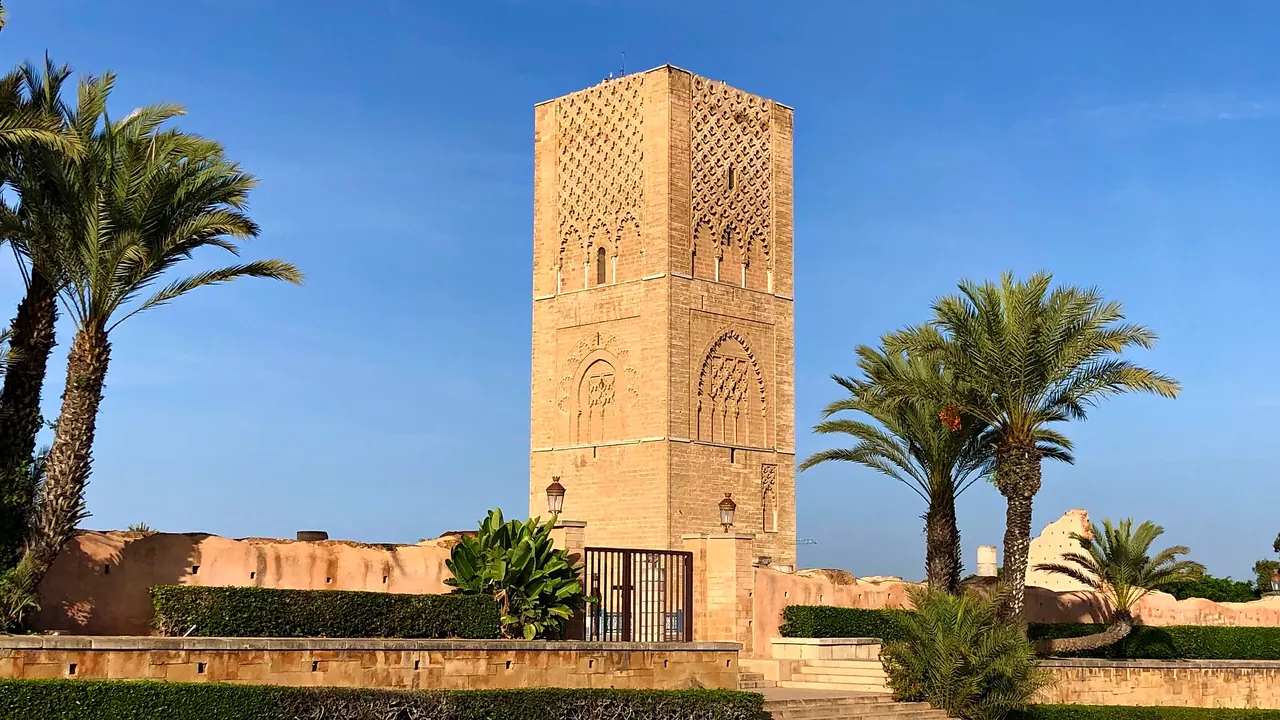
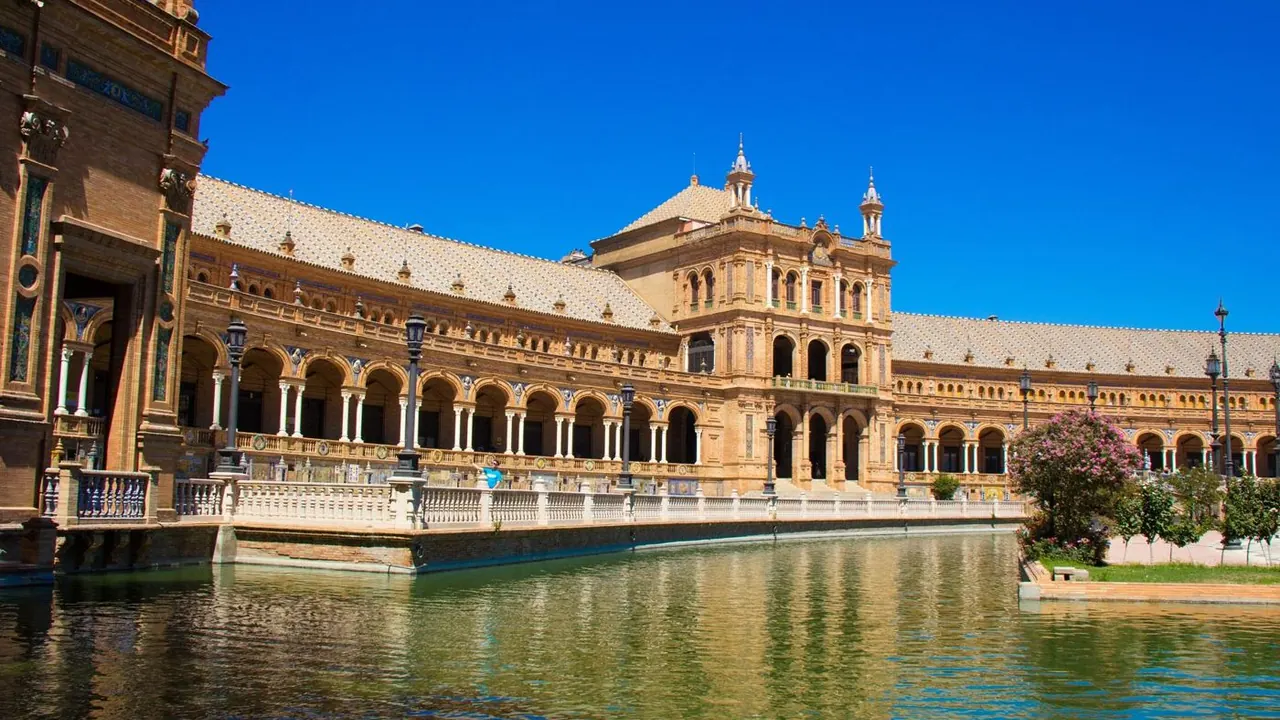
Photos: Rabat by Aemazy, CC BY-SA 4.0, cropped; Seville by Tibor Kovacs, CC BY 2.0, cropped.
Rabat or Seville?
Our verdict in twelve categories, each scored against the same fixed benchmark cities, and the climate month by month, so you can choose for your trip.
Choose Rabat for
- beaches
- wellness
- prices
Rabat suits a traveller who wants Morocco at its most unhurried: a calm medina, a walled kasbah above the Atlantic, neighbourhood hammams and long evening walks by the river, with little hassle and low day-to-day costs. It also has the sea, and its mild summers make it the easier of the two in July and August. Choose it for a restful, gently cultural trip rather than for food or late nights.
Choose Seville for
- nightlife
- live music and the arts
- day trips
Seville is the richer destination for almost everything else. The Alcázar and the cathedral are monuments of European rank, tapas bars and terraces fill the evenings until the early hours, flamenco is on every night, and Córdoba, Cádiz and the white villages are all within easy reach. Pick it for a sociable city trip in spring or autumn, and avoid its fierce midsummer heat.
Scoreboard
Twelve categories on one fixed scale from 0 to 100. The shaded stretch is the gap between the two.
Your match
Pick a travel style or drag the sliders, and both match scores follow your weighting.
Wins on beaches and wellness with your weighting.
Wins on nightlife and live music and the arts with your weighting.
What matters to you?
Category by category
What the scores mean for a trip.
Beaches & swimming
Rabat at least has the ocean on its doorstep. The city beach below the Kasbah of the Udayas is a lively local spot for football and surfing, and quieter sand lies a short taxi ride south at Temara, Harhoura and Skhirat. The swell and currents keep swimmers close to shore, and the water stays cool for much of the year.
Seville has no beach of its own. Matalascañas and Mazagón on the Huelva coast are over an hour away by car, so a swim in the sea costs a full day, and in town cooling off means a rooftop or municipal pool.
Food & drink
Rabat serves honest Moroccan home cooking: tagines, couscous on Fridays, harira, grilled sardines near the port and snail broth from evening stalls, with mint tea on the Ville Nouvelle terraces. It is good, plain food, but alcohol is discreet and the range is limited for anyone who travels to eat.
Seville is the stronger table. Tapas are a way of life here, taken a few plates at a time at the counters of Triana, El Arenal and Santa Cruz, washed down with manzanilla or orange-blossom vermouth, with more inventive kitchens around the Alameda. Only international and top-end cooking are thin.
Culture & sights
Rabat's UNESCO-listed sights make a calm, well-kept set: the blue-and-white Kasbah of the Udayas, the unfinished Hassan Tower beside the Mausoleum of Mohammed V, and the Chellah, where Roman and Marinid ruins sit among fig trees and storks. Two or three days cover them comfortably.
Seville plays in a higher league. The Real Alcázar's Mudéjar courtyards, the vast Gothic cathedral with the Giralda, and the Archivo de Indias form one of Europe's great historic cores, and Plaza de España, Casa de Pilatos and the Murillos in the Museo de Bellas Artes easily fill three or four days.
Nightlife
After dark Rabat belongs to families on the riverside promenade and men in cafés, with drinks confined to hotel bars and a few lounges in Agdal and Hassan. Anyone after a big night out goes to Casablanca.
Seville's evenings are long and largely outdoors. Dinner starts around ten, then the crowd drifts between the Alameda de Hércules, the Plaza de la Alfalfa and Triana, with riverside bars busy on summer nights. Clubbing is modest, but as a city of late, sociable nights it is far ahead.
Nature & outdoors
Rabat's outdoors is coastal and gentle: surf schools at the river mouth, paddling on the Bou Regreg estuary, easy walks and rides in the Maamora cork oak forest and birdwatching at Sidi Boughaba. Its mild climate allows time outdoors in any month, but mountains are several hours away.
Seville has the bigger prize in Doñana, one of Europe's great wetlands, with flamingos, migrating birds and a slim chance of the Iberian lynx, plus gentle hiking in the Sierra de Aracena. The catch is the summer heat, which limits outdoor plans to spring and autumn.
Day trips
Rabat is a practical rail base: Casablanca's Hassan II Mosque is about an hour away, the high-speed line puts Tangier and Asilah within easy reach, Meknes is two hours by train, and Salé's old medina is a tram ride across the river.
Seville has more to choose from, and much of it closer. Córdoba's Great Mosque is under an hour by fast train, Itálica and Carmona are on the doorstep, and Jerez, Cádiz and the white villages around Arcos de la Frontera fill further days, making it one of the best bases in Spain.
Good for families
Rabat is easy and relaxed with children, with a calm medina, the tram, a large modern zoo and the Jardin d'Essais for running around. Beyond these there is little aimed at children, and the city beaches need close watching.
Seville offers a little more: rowing boats at Plaza de España, the maze in the Alcázar gardens, and a theme park, summer water park and aquarium on and near La Cartuja, in a culture where children stay up late in the squares. The drawback is July and August, when temperatures pass 40°C and Rabat's milder summer is easier.
Getting around
In Rabat the medina, kasbah, Hassan Tower and Ville Nouvelle sit close together on flat streets, and the tram and cheap blue petit taxis cover the Chellah, Agdal and Salé. Rabat Ville station in the centre handles day trips without a car.
Seville is easier still on foot. Its flat, compact centre puts the cathedral, Triana and Plaza de España within a half-hour walk along shaded, often pedestrianised streets, and an extensive network of bike lanes makes cycling a real option. Only the midday summer heat gets in the way.
Shopping & style
Both cities shop for crafts rather than fashion. Rabat's best is along Rue des Consuls in the medina, with its own dense, deep-coloured carpets, leather and brass, gentle haggling, and pottery across the river in Salé.
Seville has more variety: hand-painted tiles from Triana's old pottery workshops, flamenco dresses, shawls, fans and guitars around Calle Sierpes and Calle Cuna, high-street chains on Tetuán and the Thursday flea market on Calle Feria.
Affordability
Rabat is the cheaper place to spend each day: medina meals, café terraces, the tram and petit taxis cost little, and the main sights are cheap or free. The exceptions are hotels, which run pricier than in Morocco's tourist cities, and alcohol.
Seville is reasonable for Western Europe, with tapas and drinks the big saving and a walkable centre, but the Alcázar and cathedral charge for entry and hotel rates climb steeply during Holy Week and the April Fair.
Live music & performing arts
Rabat's high point is the Mawazine festival, which fills open-air stages with international stars and Gnawa, Arab and African musicians. Otherwise the national theatres run irregular programmes, mostly in Arabic and French, and Andalusian or chaabi concerts have to be sought out.
Seville has live performance on any night of the year, above all flamenco in the tablaos of Santa Cruz and Triana and the peñas where local fans gather. The Teatro de la Maestranza adds opera in the city where Carmen and The Barber of Seville are set.
Wellness & relaxation
Rabat has a living bathing culture: neighbourhood hammams in the medina and Salé offer steam and a vigorous black-soap scrub, and hotel spas add argan oil massages for first-timers. Combine that with the calmest pace of any major Moroccan city and it makes a genuinely restful stay.
Seville's version is a few Arab-style bath houses in old mansions plus hotel spas. Its shady courtyards and long lunches slow the day down, but noisy streets at night and festival crowds make it less of a place to recharge.
When should you go?
Pick your month. The climate figures are measured averages, not a forecast.
Rabat in July
Seville in July
Daytime high, °C
Rainfall in the month, mm
Temperature and rainfall are climate normals, averaged over the years shown. Rabat: 1991-2020 normals, Rabat-Sale (7.6 km from centre). Seville: 1991-2020 (sunshine 1981-2010, rainfall 1981-2010) normals, Sevilla / San Pablo (8.1 km from centre).
Rabat stays mild all year. Summer highs sit around 28°C, June to September are almost completely dry and very sunny, and the sea is warmest in August at about 23°C, the best time for a swim, though it stays cool for much of the year. Rain returns in October and is heaviest in November and December. Winter days of around 18°C are cool and fairly wet, but still pleasant for walking and sunnier than Seville's.
Seville runs much hotter. March to May and October are its best months for sightseeing, warm without being oppressive. July and August reach about 36°C, which makes walking the streets in the afternoon hard work, and June and September are not far behind. Winter is cool and fairly wet here too, with November the rainiest month and December the dullest. In midsummer, Rabat is far more comfortable for walking. In spring, Seville's extra warmth makes it the better city for long days outdoors.
Which traveller are you?
For a food and nightlife trip, Seville is the clear choice. Evenings move from tapas counters in Triana and Santa Cruz to terraces on the Alameda de Hércules, with sherry and cold beer, while Rabat's nights mostly end in cafés.
On a beach and sun trip, Rabat is the better of the two. The Atlantic is right below the kasbah, with calmer sand a short taxi ride south, while Seville's nearest beaches are over an hour's drive and its summers are scorching.
On a relaxing and wellness trip, Rabat fits better. Its everyday hammams offer a proper steam and black-soap scrub, the medina lanes and kasbah garden are quiet, and the city moves at a gentler pace than Seville's noisy, crowded festival seasons.
Before you go
| Measure | Rabat | Seville |
|---|---|---|
| Official language | Arabic, Standard Moroccan Tamazight | Spanish |
| Currency | Moroccan Dirham (MAD) | Euro (EUR) |
| Sockets | CE50 Hz | CF230 V, 50 Hz |
| Driving side | Right | Right |
| Time zone | UTC+1 | UTC+1, UTC+2 in summer |
| Emergency number | Police 19/112, ambulance 15, fire 15 | 112 |
| Elevation | 87 m | 18 m |
| Main airport | Rabat-Salé Airport (RBA)9 km from centre45 non-stop destinations | Seville Airport (SVQ)9 km from centre96 non-stop destinations |
| Public holidays this year | 11 days | 12 days |
By the numbers
| Measure | Rabat | Seville |
|---|---|---|
| City population | 515,619 | 689,423 |
| People per km² | 4,370 | 4,896 |
| Museums within 10 km | 7 | 24 |
| UNESCO World Heritage sites within 50 km | 1 | 1 |
| Swim season, months above 21 °C | 4 months | - |
Where else could you go?
Every comparison below shares a destination with this one, so you can follow Rabat or Seville somewhere new.