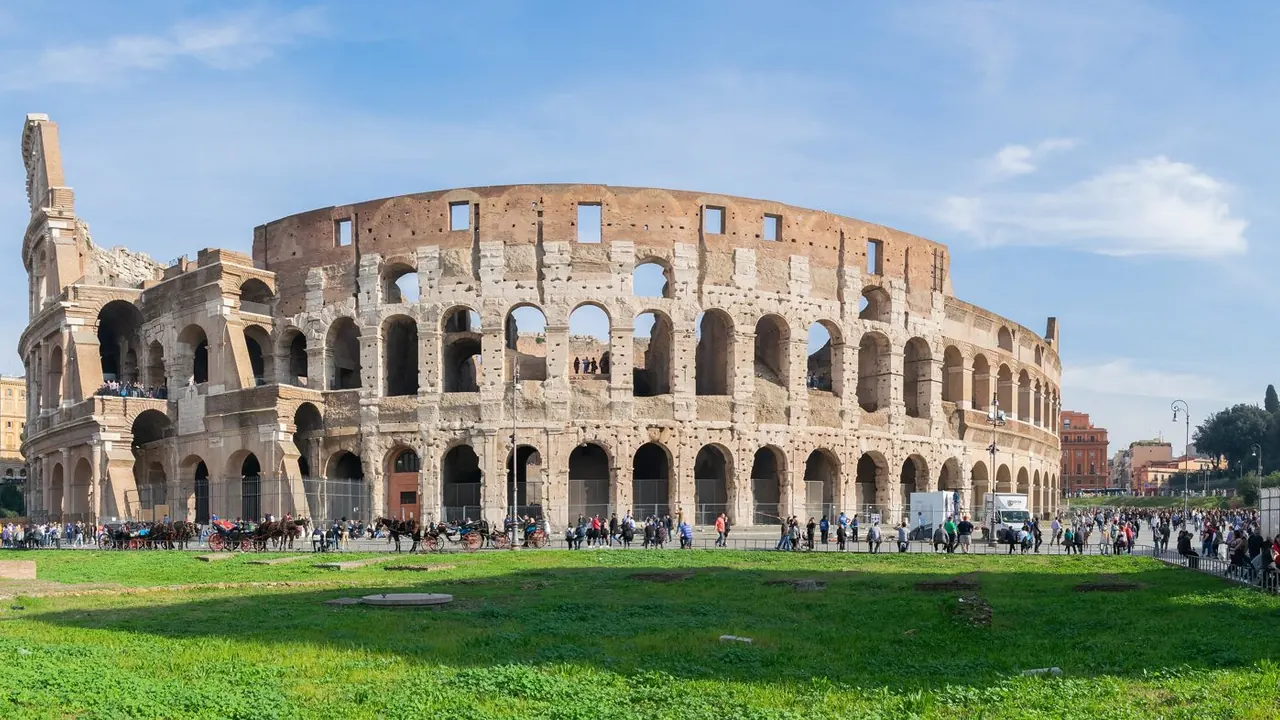
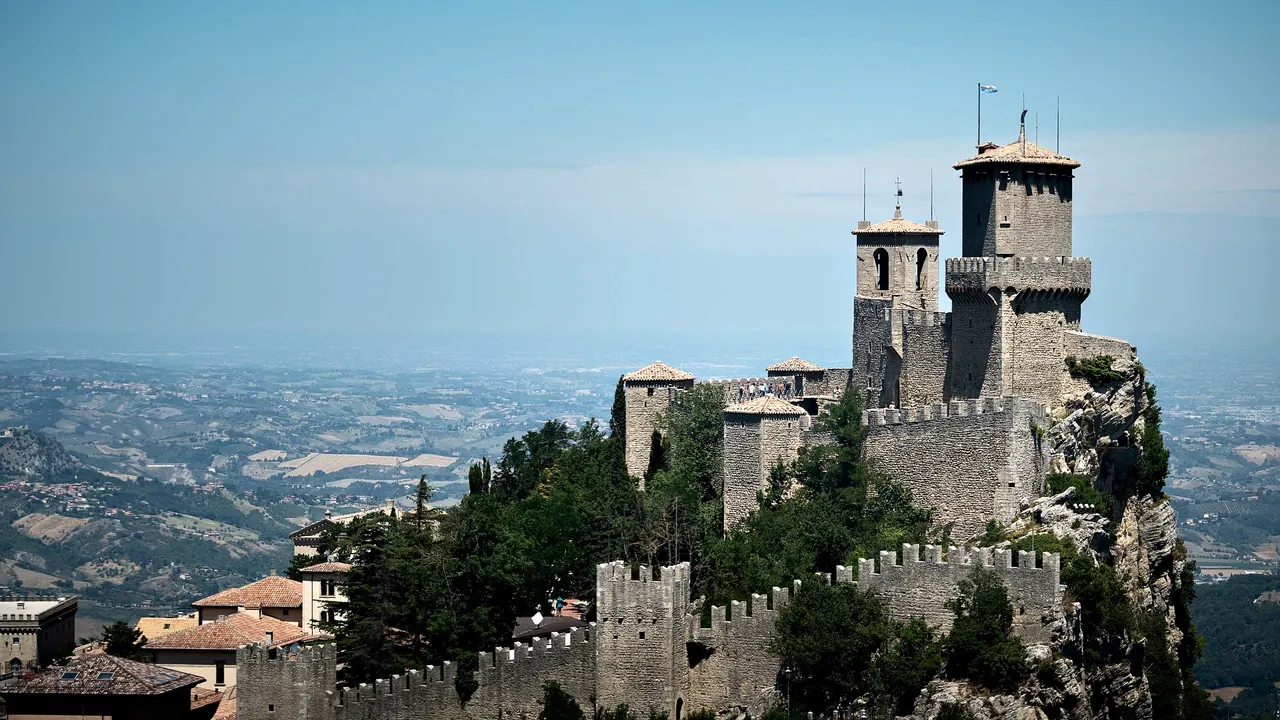
Photos: Rome by Tournasol7, CC BY-SA 4.0, cropped; San Marino by Tibor Szabo, Pexels License.
Rome or San Marino?
Our verdict in twelve categories, each scored against the same fixed benchmark cities, and the climate month by month, so you can choose for your trip.
Choose Rome for
- live music and the arts
- culture and sights
- nightlife
Rome is the choice for a full city vacation where every day is busy. The Forum, the Vatican and the Baroque churches would fill a week on their own, and then come proper trattoria cooking, evenings out in the piazzas of Trastevere and opera among ancient ruins. Fast trains reach Florence and Naples for the day. You pay more for a room, and the heat and noise can wear you down.
Choose San Marino for
- prices
San Marino is better as a short, quieter stop, or as a fairly priced base for a driving trip through Romagna and the Montefeltro hills. Half a day covers the towers and the republic's old institutions on the ridge. After that the appeal is calm evenings on the walls once the coaches leave, and trips out to San Leo, Urbino, Ravenna and the beaches below. Don't come for the food, the nightlife or the museums.
Scoreboard
Twelve categories on one fixed scale from 0 to 100. The shaded stretch is the gap between the two.
Your match
Pick a travel style or drag the sliders, and both match scores follow your weighting.
Wins on live music and the arts and culture and sights with your weighting.
Wins on prices with your weighting.
What matters to you?
Category by category
What the scores mean for a trip.
Beaches & swimming
Both cities are about half an hour from sand, and neither puts you on the shore. The beaches are similar, too: long, flat strips mostly divided into paid lidos with numbered umbrellas.
The difference is in the details. From Rome, a suburban train takes you to the dark volcanic sand of Ostia, where the water is warm but rarely clear and there is a free stretch towards Castel Porziano. From San Marino, you go by car or bus to the Romagna shore at Rimini and Riccione. The water there is shallow and safe for children, and there are beach clubs, but almost no wild coast.
Food & drink
Rome has a cuisine of its own and eats it seriously. You can have the four classic pastas in plain trattorias, artichokes fried the Jewish way in the Ghetto, offal dishes in Testaccio and pizza al taglio sold by weight. The trick is to walk away from the big sights to Trastevere, Monti or Testaccio.
San Marino serves honest Romagna hill cooking: passatelli in broth, piadina and the cassone, and the layered Tre Monti cake. On the summit, though, the view matters more than the cooking. The better meals are down in Borgo Maggiore or over the border, and they are not a reason to make the trip.
Culture & sights
This is the widest gap between the two. In Rome, the Colosseum, the Pantheon, the early Christian mosaics and the Baroque piazzas of Bernini and Borromini are all within walking distance of each other. The Vatican, the Borghese Gallery and Palazzo Massimo would each justify a trip on their own.
San Marino's draw is its setting and its story. The three towers on the cliffs of Monte Titano, the Palazzo Pubblico and the basilica belong to one of the world's oldest surviving republics. It is atmospheric, but it fills half a day, where Rome fills weeks.
Nightlife
Rome's evenings happen mostly outdoors: aperitivo, then wine bars in Trastevere's lanes, cocktails in Monti, cheap student bars in San Lorenzo and an arty crowd in Pigneto. Clubbing is a sideshow down in Testaccio and Ostiense.
San Marino has essentially none of this. After the coaches leave, a terrace dinner looking down on the coast lights is about all there is. Anyone who wants a late night has to drive down to the Riviera clubs of Rimini and Riccione.
Nature & outdoors
Rome has more green space and wider reach than you might expect. You can cycle the cobbled Appian Way past tombs and aqueducts, wander the great villa parks or visit the crater lakes of Albano and Nemi in the Alban Hills. The Apennines are about ninety minutes away, with hiking in summer and skiing at Terminillo in winter.
San Marino gives you one fine limestone ridge with cliff paths between the towers, woodland walks down to Borgo Maggiore and quiet cycling roads in the Marecchia valley. The views reach the Adriatic, but there is nothing beyond gentle morning outings.
Day trips
Rome wins on both range and ease. Fast trains reach Florence and Naples in about ninety minutes, so you can see a whole other city in a day without a car. Ostia Antica is a short ride on the suburban train. Tivoli's two villas, the Etruscan tombs at Tarquinia and Cerveteri, and Orvieto and Assisi further out mean you could fill a fortnight without repeating a theme.
From San Marino, nearly every outing starts with the bus down the mountain to Rimini. From there, Ravenna's mosaics and Bologna are easy by train. The rock fortress of San Leo, Urbino, the castle at Gradara and hill towns such as Verucchio are harder to reach without a car, so they really suit visitors who hire one.
Good for families
Neither city is built around children, but they work for families in different ways. In Rome, gladiators, catacombs and the Mouth of Truth help keep children interested, and Villa Borghese has the Bioparco zoo and rowing boats. Long queues, heat and cobbles make sightseeing tiring.
San Marino offers towers, battlements and a cable car ride, all on a small, safe summit. The real family attractions are down on the coast, such as Italia in Miniatura, Fiabilandia and the waterparks, so a family with a car can spend mornings on the mountain and afternoons on the beach.
Getting around
Rome is easier for a visitor without a car. The walk from the Colosseum past the Pantheon and Piazza Navona to Trastevere is short. The metro skirts the core but still reaches the Vatican, Termini and the Colosseum, and buses and trams fill the gaps, though they get stuck in traffic.
San Marino's car-free centre takes under half an hour to cross, but nearly every street is a climb or a flight of steps. The cable car helps, the bus to Rimini links you to Italian trains, and almost everything beyond the republic needs your own wheels.
Shopping & style
Rome is the place to shop. The Italian fashion houses line Via Condotti and the streets fanning out from the Spanish Steps, Monti has independent designers and vintage, and Via Margutta has artisan workshops. Porta Portese adds a huge Sunday flea market.
San Marino's shops are mainly about lower taxes. Perfume, watches, spirits and leather draw Italian day visitors, and there is an outlet centre on the valley floor. Beyond that, it is souvenir crossbows, ceramics and the stamps and coins collectors look for.
Affordability
San Marino is the cheaper stay, but not by a dramatic margin, and the two cities spend your money in different ways. In Rome, most of it goes on where you sleep and the sights you pay to enter. Eating and walking cost very little: a slice of pizza al taglio, a drink from a street fountain and a free church with Caravaggios on the walls hardly add to the bill.
San Marino's costs are more even, with nothing especially cheap or especially dear. The one thing to watch is height: the closer you sleep or eat to the summit views, the more you pay, so staying a few kilometres down the slope goes further. Lower taxes also make fuel cheaper than across the Italian border, which helps if you are driving round the region.
Live music & performing arts
Rome has a real programme. The Teatro dell'Opera stages opera and ballet in winter and moves out to the Baths of Caracalla in summer. The Santa Cecilia orchestra plays at Renzo Piano's Auditorium, and there are frequent sacred concerts in churches.
San Marino offers a small theatre, occasional local concerts and summer music in the squares. Its one highlight is the Medieval Days festival, with costumed musicians, crossbow contests and flag-throwers. For a proper concert season, you would go to Bologna or Pesaro.
Wellness & relaxation
Neither has a bathing culture of its own, but Rome has real thermal water nearby. There are the sulphurous outdoor pools at Bagni di Tivoli and free open-air hot springs around Viterbo, and you can find calm in the villa gardens and on the Aventine away from the scooters.
San Marino's appeal is quiet rather than treatment. Once the day visitors have gone, the walls are peaceful for an evening stroll, but there are only a few hotel spas, and the thermal spas lie well away in the Apennine valleys or down on the coast.
When should you go?
Pick your month. The climate figures are measured averages, not a forecast.
Rome in July
San Marino in July
Daytime high, °C
Rainfall in the month, mm
Where the figures come from
Rome's sunshine is measured 31 km from the centre, at Vigna Di Valle.
San Marino's temperatures are measured 52 km from the centre, at Frontone.
San Marino has no rain gauge within 25 km of the centre, so its rainfall comes from a gridded climate dataset read at the city rather than from a gauge further away.
Temperature and rainfall are climate normals, averaged over the years shown. Rome: 1991-2020 normals, Roma / Ciampino (15.1 km from centre). San Marino: 1991-2020 normals, Frontone (51.5 km from centre).
Rome is the warmer of the two for most of the year. The best months for walking the sights are April to early June and late September into October. July and August reach about 31°C with long, sunny days. That is too hot for sightseeing at midday, but good for swimming at Ostia, where the sea stays warm into September. The rain sets in from October and is heaviest in November at about 114mm, though winter days stay mild enough to be out on foot.
San Marino stands high on its ridge and is clearly colder in winter, with January highs around 7°C that feel raw on the exposed walls. May and June are pleasant for the paths around the mountain, but the Adriatic below is only warm enough to swim in from July, reaching about 26°C in August. July is also the driest month, so July and August are the time to mix mountain mornings with afternoons on the beach. From September the rain picks up and stays heavy through November.
Which traveller are you?
On a culture and arts trip, Rome is far ahead. It has ancient Rome standing in the middle of town, the Vatican Museums, Caravaggios in parish churches and opera at the Baths of Caracalla. San Marino's medieval ridge and small museums take an afternoon.
For a food and nightlife trip, choose Rome without hesitation. You get carbonara and fried artichokes in Testaccio and the old Ghetto, then aperitivo and late wine bars in Trastevere, Monti or Pigneto. San Marino's summit town goes quiet after dark, and a night out means driving down to Rimini.
On a tight budget, San Marino goes easier on your money. Hotels are moderate outside August, sights cost little and the trattorias in the lower villages are fairly priced. Rome's small, costly central rooms and high museum fees add up fast.
Before you go
| Measure | Rome | San Marino |
|---|---|---|
| Official language | Italian | Italian |
| Currency | Euro (EUR) | Euro (EUR) |
| Sockets | CFL230 V, 50 Hz | CFL230 V, 50 Hz |
| Driving side | Right | Right |
| Time zone | UTC+1, UTC+2 in summer | UTC+1, UTC+2 in summer |
| Emergency number | 112 | 112 |
| Elevation | 21 m | 675 m |
| Main airport | Rome–Fiumicino Leonardo da Vinci International Airport (FCO)23 km from centre242 non-stop destinations | Bologna Guglielmo Marconi Airport (BLQ)114 km from centre98 non-stop destinations |
| Public holidays this year | 13 days | 18 days |
By the numbers
| Measure | Rome | San Marino |
|---|---|---|
| City population | 2,748,109 | 4,040 |
| People per km² | 2,135 | 569 |
| Museums within 10 km | 178 | 19 |
| UNESCO World Heritage sites within 50 km | 8 | 2 |
| Swim season, months above 21 °C | 5 months | 4 months |
Where else could you go?
Every comparison below shares a destination with this one, so you can follow Rome or San Marino somewhere new.
- Assisivs San Marino
- Florencevs San Marino
- Bolognavs San Marino
- Sienavs San Marino
- Assisivs Rome
- Pulavs San Marino