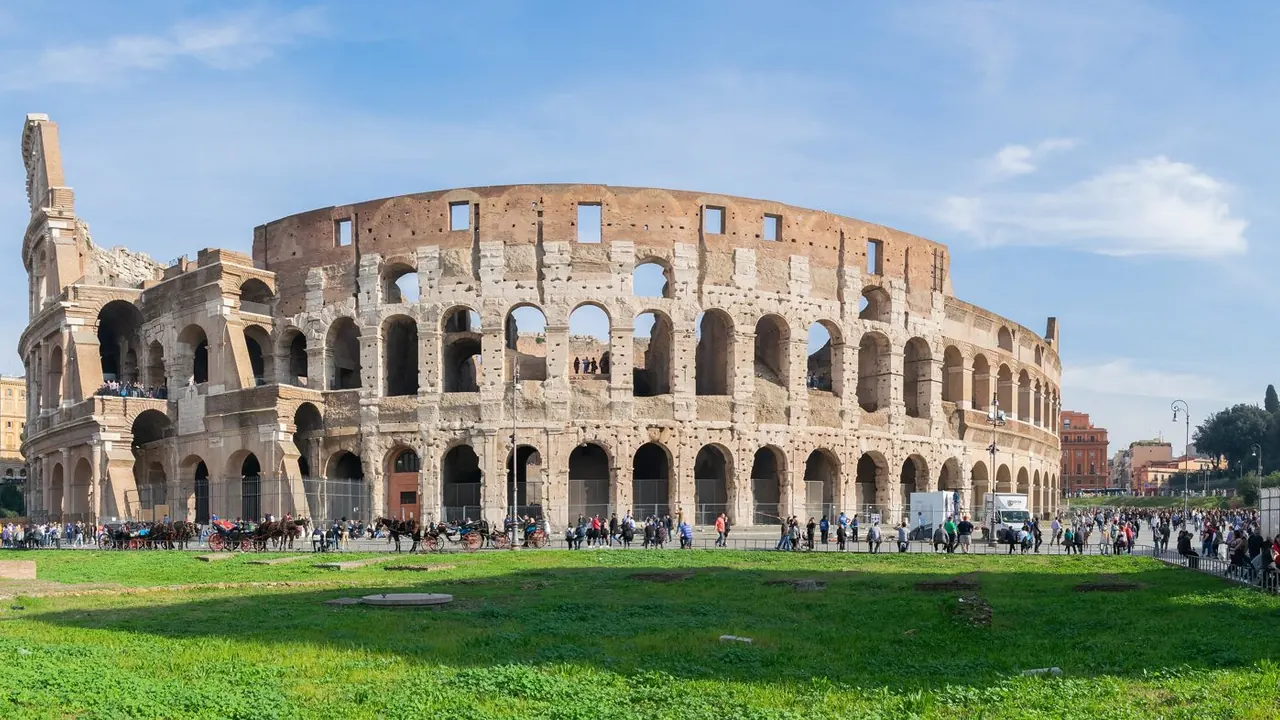
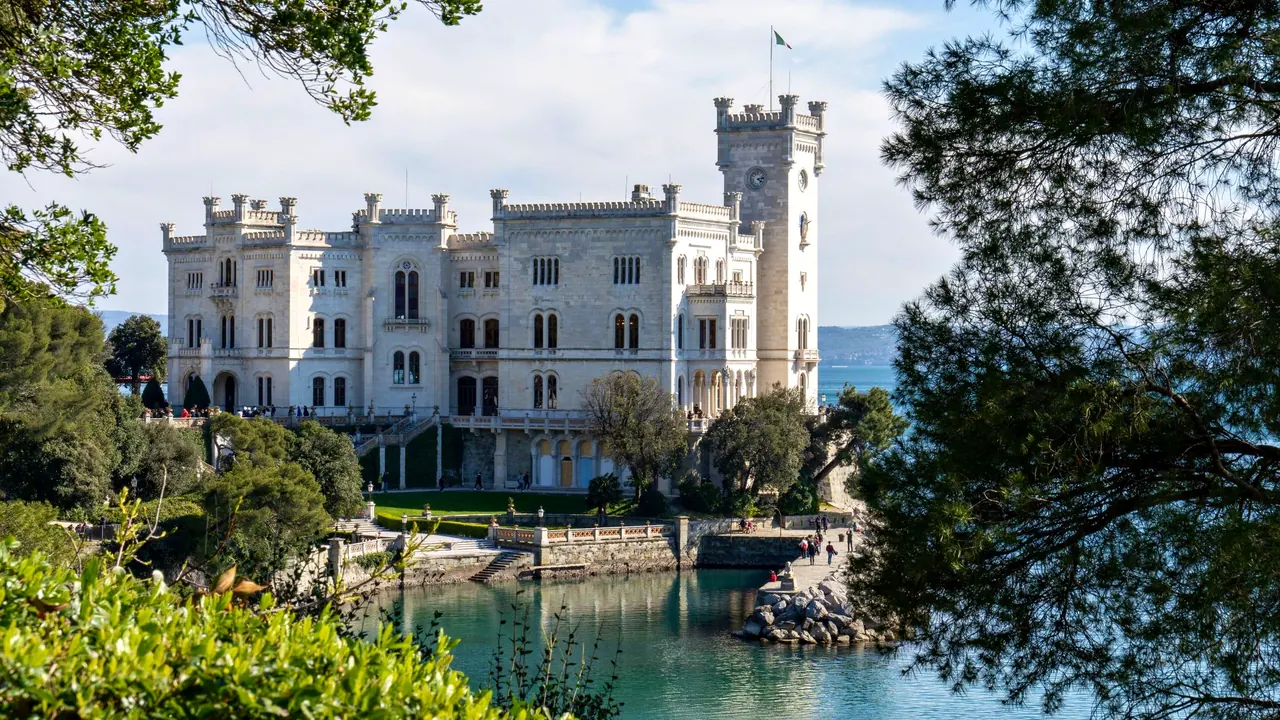
Photos: Rome by Tournasol7, CC BY-SA 4.0, cropped; Trieste by Tibor Szabo, Pexels License.
Rome or Trieste?
Our verdict in twelve categories, each scored against the same fixed benchmark cities, and the climate month by month, so you can choose for your trip.
Choose Rome for
- culture and sights
- shopping
- nightlife
Rome is the choice for travellers who want a city full of things to see and eat. Ancient ruins, Vatican treasures and Baroque piazzas share the centre with some of Italy's best everyday cooking. Evenings are livelier, the shopping goes up to the big fashion houses, and fast trains put Florence and Naples within a day's reach. It suits a first visit to Italy, a culture-heavy itinerary or anyone happy to trade calm and some money for sheer depth.
Choose Trieste for
- prices
- beaches
- nature and the outdoors
Trieste is better for a slower, cheaper trip where the sea and the hills matter as much as the sights. You can swim in clear water off the Barcola promenade, walk on the Karst above the gulf and drink coffee in Habsburg-era cafés, with Slovenia and Friuli close enough for easy outings. It suits a repeat visitor to Italy, a couple who want quiet evenings, or anyone who would rather swim and hike than queue for museums.
Scoreboard
Twelve categories on one fixed scale from 0 to 100. The shaded stretch is the gap between the two.
Your match
Pick a travel style or drag the sliders, and both match scores follow your weighting.
Wins on culture and sights and shopping with your weighting.
Wins on prices and beaches with your weighting.
What matters to you?
Category by category
What the scores mean for a trip.
Beaches & swimming
Trieste uses its sea far more easily. Locals swim straight from the Barcola promenade, climbing down ladders from concrete platforms and pine-shaded lawns into clear Adriatic water. The prettier pebble coves at Sistiana and Duino are close by. There is almost no sand, though.
Rome does have sand, the dark volcanic stretches of Ostia and Fregene, but they are mostly rows of paid lidos and the water is rarely clear. That makes the sea a half-hour train trip on a hot day rather than part of everyday life, and for clean water you have to go further south.
Food & drink
Rome is the stronger food city, with a cuisine all its own. Carbonara, cacio e pepe, amatriciana and gricia are made in plain trattorias. Add artichokes fried in the old Ghetto, offal dishes in Testaccio and pizza al taglio for lunch, and the eating is a big part of any stay, as long as you avoid the menus near the big sights.
Trieste eats differently. Its food is a Central European mix of boiled pork carved at buffet counters, jota soup, fried sardoni and Austrian cakes, and its coffee culture is unusually serious. On the Karst, osmize farmhouses add local wine and cured meats, but the city's range of restaurants is narrower than Rome's.
Culture & sights
There is no real contest here. Rome has the Colosseum, the Pantheon, the Vatican Museums and the Sistine Chapel. Its basilicas have gold mosaics and Caravaggios hang above the altars. You could spend weeks there and still leave things out.
Trieste's appeal is different and smaller in scale. It is a Habsburg port city, with the sea-facing Piazza Unità, the canal-side Borgo Teresiano, San Giusto's mosaics and the white Miramare Castle. Its sights fill two or three days, and much of its charm comes from the atmosphere of its literary past.
Nightlife
Rome has more going on after dark. Trastevere's lanes stay busy with wine bars until late, and Monti, San Lorenzo and Pigneto each draw a different crowd. Most of the night is spent outdoors in piazzas rather than in clubs.
Trieste's evenings are shorter and quieter. People drink spritz around Piazza Unità and the Canal Grande, and in summer the crowd moves to the kiosks along the Barcola seafront. On a winter weeknight the streets are quiet by midnight.
Nature & outdoors
Trieste has the outdoors right on its doorstep. The Karst plateau rises straight behind the streets, with clifftop walks on the Strada Napoleonica and the Rilke Path, climbing in Val Rosandra and huge caves such as the Grotta Gigante. The gulf adds sailing, and you can snorkel and kayak in the Miramare marine reserve.
Rome's green space is mostly in its villa parks and along the Appian Way, a superb bike ride past tombs and aqueduct ruins. For hills you need a trip out, to the crater lakes of the Alban Hills or to the Apennines about ninety minutes away.
Day trips
Both cities are good bases, but Rome has the stronger list. Ostia Antica and Tivoli's Villa d'Este and Hadrian's Villa are close by, with Etruscan tombs, Orvieto and Assisi further out. Fast trains also bring Florence and Naples within a day trip.
Trieste's strength is variety across borders. Aquileia's mosaic floor, star-shaped Palmanova and the Collio wine country lie in Friuli, while Piran, Ljubljana and the Postojna cave are across the line in Slovenia. Venice is a long but realistic day.
Good for families
Neither city is built for children, and the problems differ. In Rome, gladiators, catacombs and daily gelato keep children interested, and Villa Borghese has a zoo and rowing boats. But queues, crowds, summer heat and cobbles that are hard on pushchairs make the days tiring.
Trieste is calmer and safer, with a giant cave, a small aquarium and a science centre. Its drawbacks are steep, stepped streets and swimming off rocks rather than from sand. It works better for older children than for toddlers.
Getting around
Trieste is the easier city to get around. Its main sights lie close together on flat ground by the sea, and buses and bay ferries reach Barcola, Miramare, the Karst and Muggia. The only hard work is the stepped climb up San Giusto.
Rome's centre is also best seen on foot, and the walks between sights are part of the pleasure. Outside the centre it is harder. The metro barely reaches the historic core, buses get stuck in traffic, and cobbles, scooters and heat wear you out.
Shopping & style
Rome is the place for shopping. The big Italian fashion houses line Via Condotti and the streets around the Spanish Steps. Monti has independent boutiques and vintage shops, and Porta Portese holds a huge Sunday flea market.
Trieste has ordinary clothing shops and some antique and second-hand shops in the old town. Its best buys are edible: locally roasted coffee, Karst wine and honey, and presnitz pastries.
Affordability
Trieste is easier on the budget. Rooms are reasonably priced most of the year, buses are cheap, and swimming, the waterfront and walks on the Karst cost nothing.
Rome costs more, mainly for accommodation: central rooms are expensive and small, and the big museums charge substantial entry fees. Standing espresso, pizza al taglio, free drinking fountains and free churches full of art help keep daily spending down.
Live music & performing arts
Rome has more to offer for an evening out. The Teatro dell'Opera moves outdoors to the Baths of Caracalla each summer. The Santa Cecilia orchestra plays at Renzo Piano's Auditorium, and churches and jazz clubs fill the other nights.
Trieste is a serious opera town on a smaller scale. The waterfront Teatro Verdi has a proper season and the city keeps a rare taste for operetta. Beyond that the options thin out, so you won't find something on most nights.
Wellness & relaxation
Neither city has a bathing culture of its own, and both rely on hotel and day spas. Rome is better placed for thermal water, with the Acque Albule pools at Tivoli and free hot springs near Viterbo. From Trieste you have to travel further for a proper spa.
Trieste wins on pace. Long hours in old coffee houses and sunset walks along the Molo Audace are quieter than anything in Rome's noisy centre, where calm means the villa gardens or the Aventine.
When should you go?
Pick your month. The climate figures are measured averages, not a forecast.
Rome in July
Trieste in July
Daytime high, °C
Rainfall in the month, mm
Where the figures come from
Rome's sunshine is measured 31 km from the centre, at Vigna Di Valle.
Temperature and rainfall are climate normals, averaged over the years shown. Rome: 1991-2020 normals, Roma / Ciampino (15.1 km from centre). Trieste: 1991-2020 normals, Trieste (1.6 km from centre).
Rome is at its best for walking in April and May, and again from late September into early October, when the days are warm but not hot. July and August reach about 31°C and are almost dry, so midday sightseeing is hard work, though the long, sunny days suit a trip to the coast. The sea is warm enough for swimming from June to September, at about 25°C in high summer. Rain builds through October and is heaviest in November and December, but winter days stay mild and fairly bright.
Trieste's best months come earlier in the year. May and June are good for walking the waterfront and the Karst, though showers are common, and from June to September the sea is as warm as Rome's while the air stays a couple of degrees cooler. Autumn is its wettest season, with about 114mm in September and similar amounts in October and November, so Rome is the better choice then. Winter is colder too, with January highs near 9°C and the Bora blowing on some days, which leaves Rome the better of the two from November to March.
Which traveller are you?
For a culture and arts trip, Rome wins easily. The Colosseum, the Forum, the Vatican Museums and the Borghese Gallery fill a week on their own, and opera at the Baths of Caracalla adds a summer night that Trieste's Teatro Verdi season can't match.
On a trip on a tight budget, Trieste is the easier city. Rooms cost less than in Rome's centre, a buffet lunch and a coffee at the bar cost little, and many of its best days are free: swimming at Barcola, walking the waterfront and hiking on the Karst.
For an outdoors trip, choose Trieste. The Karst plateau starts right behind the city, with the Strada Napoleonica, the Val Rosandra gorge and the Grotta Gigante cave. You can also sail and snorkel off Miramare, while Rome's real hills are a train ride or drive away.
Before you go
| Measure | Rome | Trieste |
|---|---|---|
| Official language | Italian | Italian |
| Currency | Euro (EUR) | Euro (EUR) |
| Sockets | CFL230 V, 50 Hz | CFL230 V, 50 Hz |
| Driving side | Right | Right |
| Time zone | UTC+1, UTC+2 in summer | UTC+1, UTC+2 in summer |
| Emergency number | 112 | 112 |
| Elevation | 21 m | 2 m |
| Main airport | Rome–Fiumicino Leonardo da Vinci International Airport (FCO)23 km from centre242 non-stop destinations | Trieste Airport (TRS)31 km from centre32 non-stop destinations |
| Public holidays this year | 13 days | 13 days |
By the numbers
| Measure | Rome | Trieste |
|---|---|---|
| City population | 2,748,109 | 198,417 |
| People per km² | 2,135 | 2,332 |
| Museums within 10 km | 178 | 33 |
| UNESCO World Heritage sites within 50 km | 8 | 5 |
| Swim season, months above 21 °C | 5 months | 4 months |
Where else could you go?
Every comparison below shares a destination with this one, so you can follow Rome or Trieste somewhere new.
- Rovinjvs Trieste
- Ljubljanavs Trieste
- Bledvs Trieste
- Venicevs Trieste
- Cortina d'Ampezzovs Trieste
- Zagrebvs Trieste