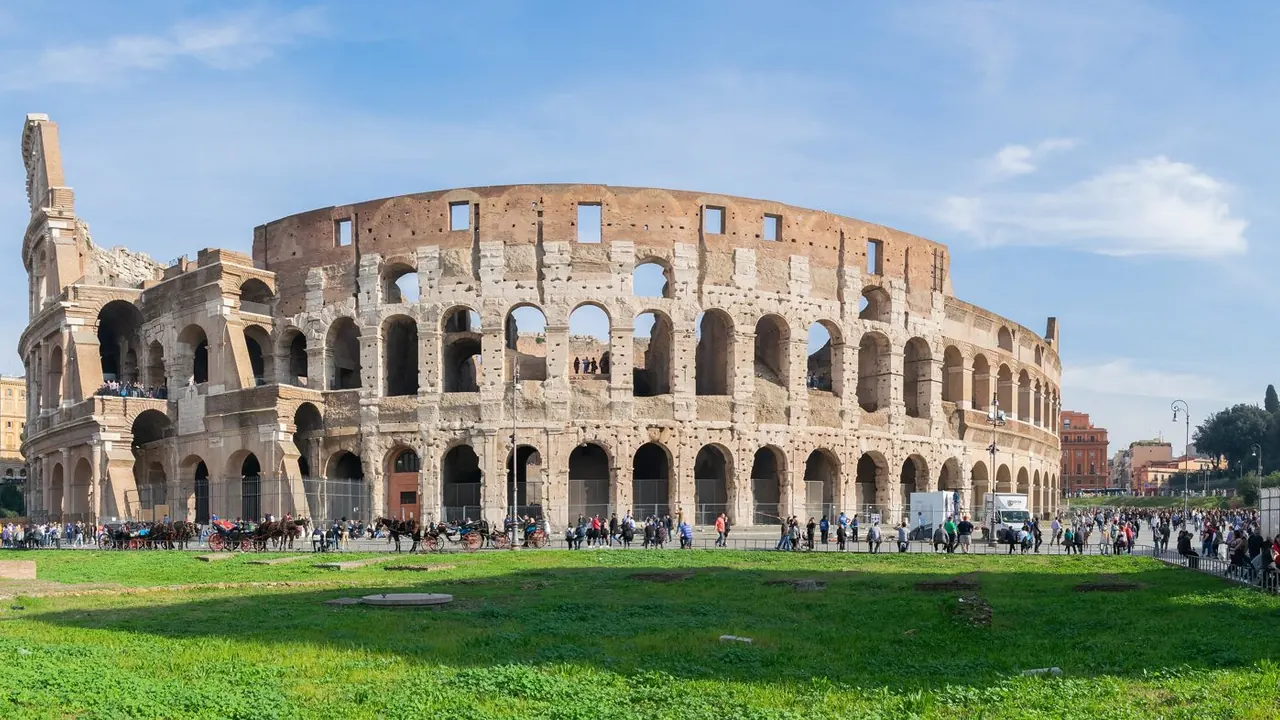
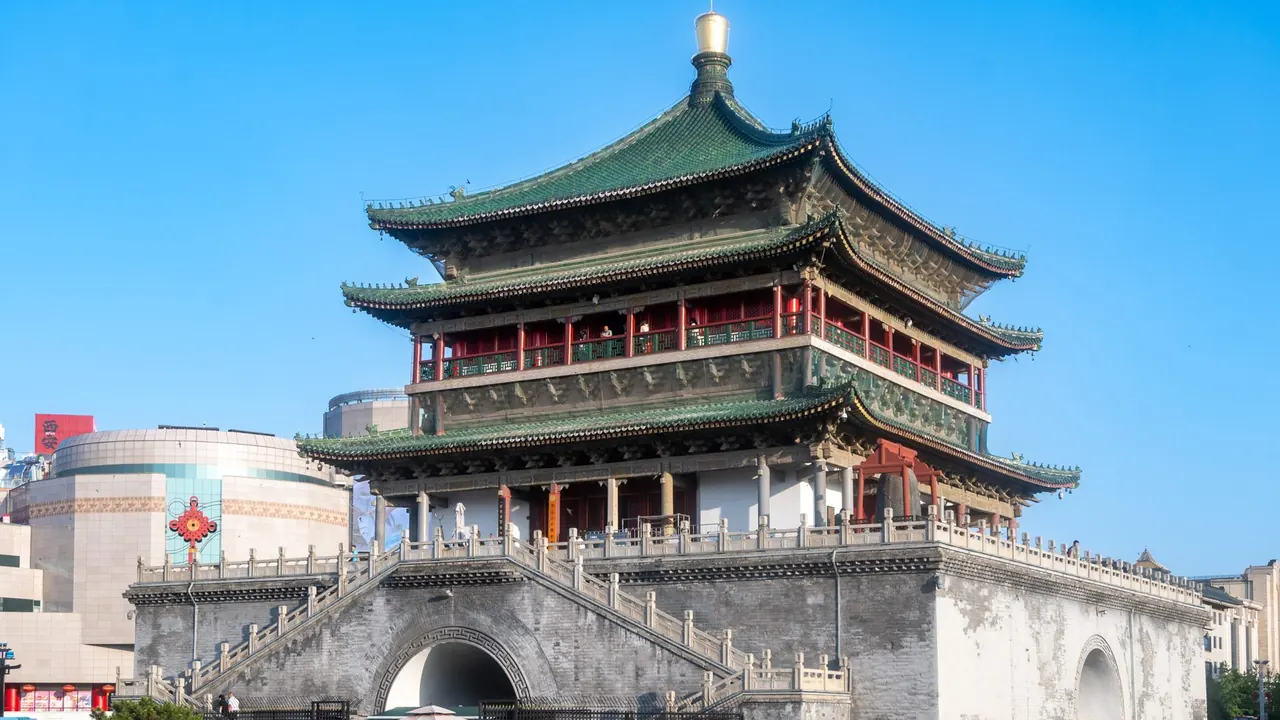
Photos: Rome by Tournasol7, CC BY-SA 4.0, cropped; Xi'an by xiquinhosilva, CC BY 2.0, cropped.
Rome or Xi'an?
Our verdict in twelve categories, each scored against the same fixed benchmark cities, and the climate month by month, so you can choose for your trip.
Choose Rome for
- beaches
- live music and the arts
- shopping
Rome is the pick for travellers who want art and history in dense layers: the Forum and the Pantheon, Bernini's piazzas and the Vatican, with Roman pasta in neighbourhood trattorias, opera at the Baths of Caracalla and easy day trips to Tivoli, Orvieto or Florence. It costs more, mainly for a room in the centre, and it suits people who enjoy long dinners and late walks through the piazzas.
Choose Xi'an for
- prices
- getting around
- nature and the outdoors
Anyone drawn to ancient China rather than ancient Europe will be better served by Xi'an. It has the Terracotta Army, a complete Ming wall to cycle along, Tang pagodas and the Silk Road street food of the Muslim Quarter. Day-to-day costs are far lower and the metro reaches the main sights. It also fits well into a longer route through China, though the evenings are quieter and there is no sea at all.
Scoreboard
Twelve categories on one fixed scale from 0 to 100. The shaded stretch is the gap between the two.
Your match
Pick a travel style or drag the sliders, and both match scores follow your weighting.
Wins on beaches and live music and the arts with your weighting.
Wins on prices and getting around with your weighting.
What matters to you?
Category by category
What the scores mean for a trip.
Beaches & swimming
Rome at least has the sea within reach. Ostia's dark volcanic sand is about half an hour away by suburban train, Fregene is calmer, and the water is warm enough to swim in high summer. For clear water and prettier coves you have to travel further south, to Sperlonga or Sabaudia.
Xi'an lies deep in the interior with no coast anywhere near, so swimming means a hotel pool or a hot-spring resort in Lintong. If you want sand as well, add a stop in one of China's coastal cities.
Food & drink
Both cities have a strong local cuisine, built on pasta in Rome and on wheat noodles and flatbread in Xi'an. Rome's range goes deeper: the classic pastas in trattorias in Trastevere and Testaccio, Jewish-style artichokes in the Ghetto, pizza al taglio, espresso at the counter, artisan gelato and Frascati wine from the hills.
Xi'an is at its best at the evening stalls of the Muslim Quarter, with biangbiang noodles, roujiamo, lamb skewers and yangrou paomo. Beyond street food the choice narrows, with little wine, coffee or fine dining, so it suits cheap, hearty eating more than a long, varied food trip.
Culture & sights
Both are old imperial capitals, and either could fill a week, but Rome has more, packed more densely. The Colosseum, the Forum and the Pantheon stand in the middle of town, alongside early Christian mosaics and Caravaggios above side altars. The Vatican Museums and the Borghese Gallery are among the great collections of the world.
Xi'an shows you a different civilisation rather than a lesser one. Its highlights are the complete Ming wall, the bronzes and Tang gold of the Shaanxi History Museum, the Forest of Steles and the Wild Goose Pagodas. Its historic core is smaller, though, with modern districts outside the wall and some rebuilt streets that feel staged.
Nightlife
Roman evenings go on later and happen mostly outdoors. Aperitivo turns into a long night in the crowded lanes of Trastevere, with smaller wine and cocktail bars in Monti, cheap student drinking in San Lorenzo and a more arty crowd in Pigneto. There are clubs around Testaccio and Ostiense, but the real pleasure is a glass in a piazza after dinner.
Xi'an's evenings start earlier and are spent walking and eating. Crowds fill the floodlit boulevard below the Big Wild Goose Pagoda, the Muslim Quarter and the lit-up wall gates. Defu Xiang near the South Gate has a cluster of bars, and the big clubs mostly play to local crowds, so most visitors call it a night sooner than they would in Rome.
Nature & outdoors
For the outdoors the two are broadly level, but the landscapes are very different. Rome's green spaces are gentle and close at hand: villa parks such as Villa Borghese and Villa Pamphili, a bike ride down the Appian Way past tombs and aqueducts, and the crater lakes of Albano and Nemi in the Alban Hills.
Xi'an has little green inside the city, but the Qinling Mountains rise steeply to the south. There are Taoist valleys in the Zhongnan foothills, and the sheer granite ridges and cliff paths of Mount Hua are a short fast-train ride away. Xi'an is the better choice for a hard mountain day, and Rome for easy time outdoors between sights.
Day trips
From Rome the day trips cover a wide range: ancient ruins, Renaissance gardens, Etruscan tombs, hill towns and whole other cities. Ostia Antica, Villa d'Este and Hadrian's Villa are close in. Further north are the painted tombs of Tarquinia, cliff-top Orvieto and Civita di Bagnoregio, and fast trains reach Florence and Naples in about ninety minutes.
Xi'an has the single most famous excursion of the two. The Terracotta Army is about an hour east, and most visitors see it on the same day as Huaqing Palace. After that, the list is mostly imperial tombs and Buddhist sites: Qianling, Hanyangling, Famen Temple and, by high-speed train, the Longmen Grottoes at Luoyang. Each is worth seeing, but they offer less variety than Rome's.
Good for families
Neither city is built around children. Both have sights aimed at adults, summer heat and streets that are hard work with a pushchair. In Rome, children's interest comes from gladiators, catacombs, the Mouth of Truth, the Bioparco and the rowing boats in Villa Borghese, plus pizza and gelato every day.
In Xi'an, cycling along the top of the city wall is the favourite, along with the pandas and golden monkeys at the Qinling wildlife park and the lit-up pagodas after dark. Crowds during China's national vacation weeks can be too much for young children.
Getting around
Rome is a walking city first. The route from the Colosseum past the Pantheon to Trastevere is short and full of interest, but the metro barely enters the historic core, buses get stuck in traffic, and cobbles and scooters are hard on the feet.
Xi'an is the easier of the two to get around. Its walled centre is a compact grid, and a large metro with English signs reaches the pagodas, the stations, the airport and Lintong. Cheap taxis and ride-hailing fill the gaps, although away from the metro most signs are only in Chinese.
Shopping & style
Rome is far stronger for shopping, especially at the luxury end. The Italian fashion houses line Via Condotti near the Spanish Steps, Monti has independent and vintage boutiques, antique dealers cluster around Via dei Coronari, and the Sunday flea market at Porta Portese is huge. Handmade shoes and leather are worth buying.
In Xi'an, shopping means crafts and keepsakes: calligraphy brushes, ink stones and seals on Shuyuanmen inside the South Gate, and tea, dried fruit and shadow puppets in the Muslim Quarter. The malls around the Bell Tower carry international labels, but they are no reason to visit.
Affordability
Rome costs a lot more. The biggest expense is a small, costly room in the historic centre, and the tickets for the Vatican Museums, the Colosseum and the Borghese Gallery add to it. Standing espresso, pizza al taglio, free water from the street fountains and free entry to churches help with daily costs.
Xi'an is much cheaper. Noodles and dumplings cost very little, metro and taxi fares are low, and comfortable hotels even inside the wall are good value. The one cost that adds up is the entry fees at the Terracotta Army, the wall and the tomb sites.
Live music & performing arts
Rome has the much fuller programme. The Teatro dell'Opera stages opera and ballet, moving outdoors to the ruins of the Baths of Caracalla in summer. The Santa Cecilia orchestra plays at Renzo Piano's Auditorium Parco della Musica, and there are also church concerts and a long-running jazz scene.
Most visitors to Xi'an see shows staged for tourists: Tang music-and-dance dinners and the hillside spectacle at Huaqing Palace. For something more local, look for Qinqiang, Shaanxi's loud local opera, performed in small theatres and parks, or for shadow puppetry. Beyond that, the concert and theatre scene is modest.
Wellness & relaxation
In Rome, wellness mostly means hotel spas and a few hammam-style day spas. For real thermal water you have to leave the city, either for the sulphurous pools at Bagni di Tivoli or the free open-air springs around Viterbo. In town, the calm comes from a long lunch, the evening passeggiata, the villa gardens and the Aventine.
In Xi'an, bathing is an everyday local habit. Chinese bathhouses with saunas and rest halls, and foot-massage parlours, are common and cheap all over town. Out at Lintong, resort hotels pipe the hot springs once used by the Tang emperors into their pools. For quiet in the city, go to the temple courtyards or walk the wall early in the morning.
When should you go?
Pick your month. The climate figures are measured averages, not a forecast.
Rome in July
Xi'an in July
Daytime high, °C
Rainfall in the month, mm
Where the figures come from
Rome's sunshine is measured 31 km from the centre, at Vigna Di Valle.
Temperature and rainfall are climate normals, averaged over the years shown. Rome: 1991-2020 normals, Roma / Ciampino (15.1 km from centre). Xi'an: 1991-2020 normals, Xi'An (4.4 km from centre).
Rome has mild winters, but October to December is its wettest stretch, with rain peaking at about 114mm in November. Summers are long, dry and very sunny, with highs of 31°C in July and August that make midday sightseeing hard work. In high summer the sea at Ostia reaches about 25°C, which is warm enough for a proper swim. April, May, late September and October are the best months for walking the streets.
Xi'an swings more sharply through the year. Winters are dry and cold, with January highs near 5°C. Summers are hot and also the wettest part of the year, reaching 33°C in July, which is the rainiest month. Xi'an gets clearly less sunshine than Rome in every season. April to May and September to October are the comfortable months for the wall, the tombs and the Qinling hills.
Which traveller are you?
On a beach and sun trip, Rome is the only real choice of the two. Ostia and Fregene are a short train ride away and the water is warm in summer, while landlocked Xi'an can offer only hotel pools and the hot springs at Lintong.
For a trip on a tight budget, your money goes much further in Xi'an. Hotels inside the wall, noodle and dumpling meals, the metro and taxis all cost little. In Rome, central rooms and the big museum tickets quickly push up the total.
On a shopping trip, Rome is clearly ahead. It has the fashion houses around the Spanish Steps, Monti's independent and vintage boutiques, artisan workshops and handmade leather and shoes. In Xi'an the best buys are calligraphy brushes, seals and tea, and the choice ends there.
Before you go
| Measure | Rome | Xi'an |
|---|---|---|
| Official language | Italian | Putonghua |
| Currency | Euro (EUR) | Yuan Renminbi (CNY) |
| Sockets | CFL230 V, 50 Hz | ACI220 V, 50 Hz |
| Driving side | Right | Right |
| Time zone | UTC+1, UTC+2 in summer | UTC+8 |
| Emergency number | 112 | Police 110, ambulance 120, fire 119 |
| Elevation | 21 m | 405 m |
| Main airport | Rome–Fiumicino Leonardo da Vinci International Airport (FCO)23 km from centre242 non-stop destinations | Xi'an Xianyang International Airport (XIY)26 km from centre178 non-stop destinations |
| Public holidays this year | 13 days | 6 days |
By the numbers
| Measure | Rome | Xi'an |
|---|---|---|
| City population | 2,748,109 | 12,952,907 |
| People per km² | 2,135 | 1,283 |
| Museums within 10 km | 178 | 9 |
| UNESCO World Heritage sites within 50 km | 7 | 2 |
| Swim season, months above 21 °C | 5 months | - |
Where else could you go?
Every comparison below shares a destination with this one, so you can follow Rome or Xi'an somewhere new.