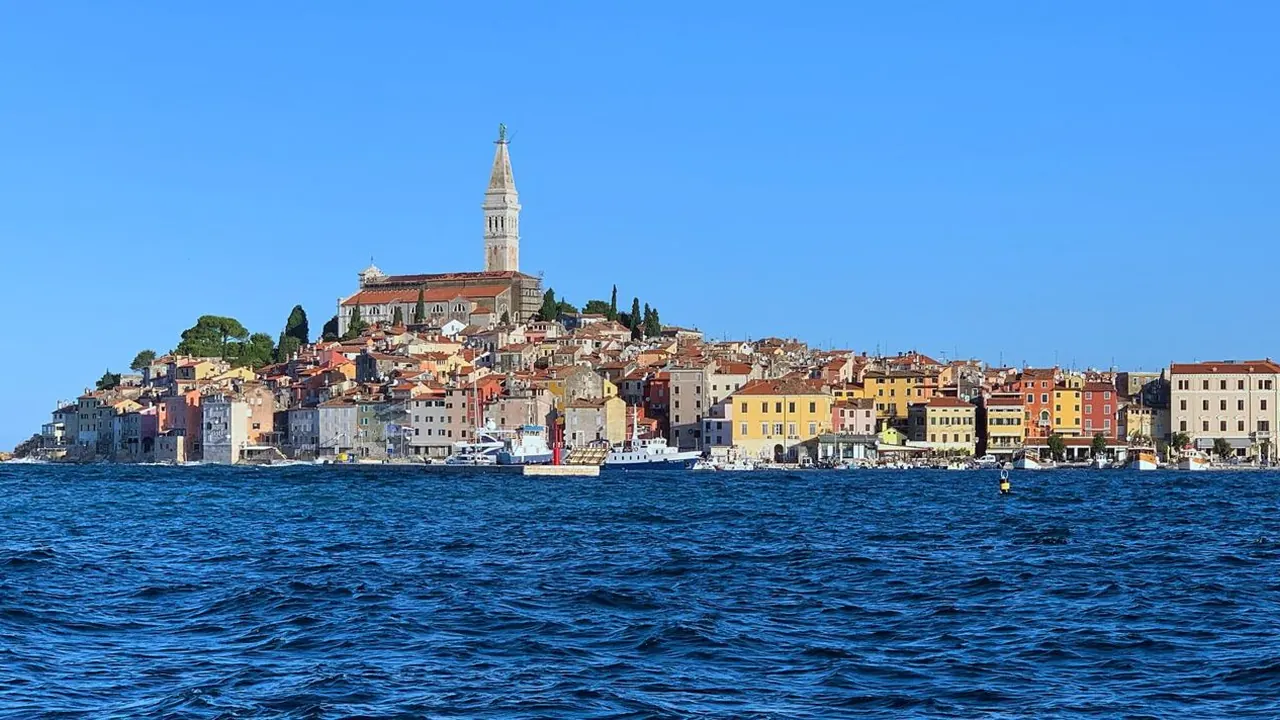
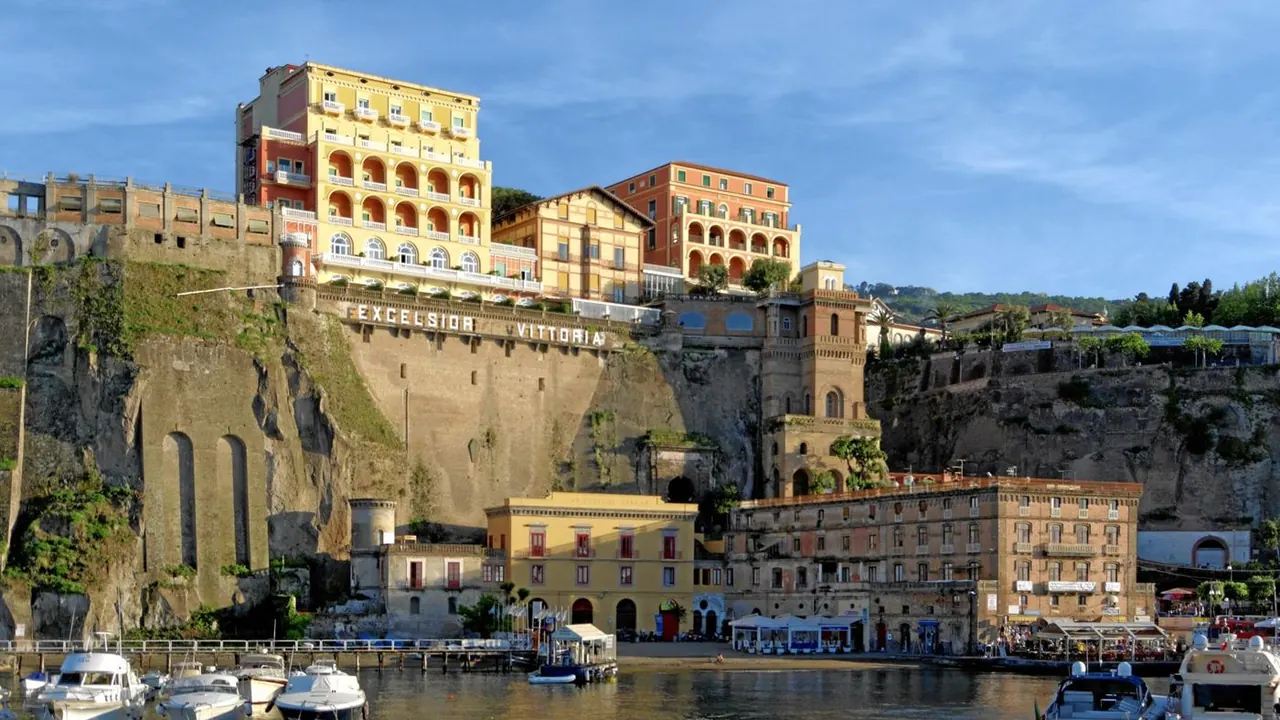
Photos: Rovinj by Vyacheslav Bukharov, CC BY-SA 4.0, cropped; Sorrento by Berthold Werner, CC BY-SA 3.0, cropped.
Rovinj or Sorrento?
Our verdict in twelve categories, each scored against the same fixed benchmark cities, and the climate month by month, so you can choose for your trip.
Choose Rovinj for
- beaches
- families
- culture and sights
Rovinj suits a slower, self-contained week by the water. Its shore runs for kilometres of pine-shaded rock and coves you can walk to from your room, the Golden Cape park gives children shade and flat paths, and the Venetian old town on its former island is a pleasure to wander at dusk. It works best for couples and families who want to swim, eat well and stay put, with a hire car for the Roman sites of Pula and the Istrian hill towns.
Choose Sorrento for
- day trips
- nature and the outdoors
- food and drink
Choose Sorrento if you want a base to range out from. Pompeii, Herculaneum, Vesuvius, Capri, the Amalfi Coast and Naples are all within a train or boat ride, and behind the town the peninsula's terraced ridge offers some of the finest coastal walking in Italy. The swimming is from piers rather than an open shore, but for active travellers who want a different famous place most days, nowhere in Istria compares.
Scoreboard
Twelve categories on one fixed scale from 0 to 100. The shaded stretch is the gap between the two.
Your match
Pick a travel style or drag the sliders, and both match scores follow your weighting.
Wins on beaches and families with your weighting.
Wins on day trips and nature and the outdoors with your weighting.
What matters to you?
Category by category
What the scores mean for a trip.
Beaches & swimming
Neither town has sand, but Rovinj gives you far more room to swim. Its shoreline of limestone ledges, small pebble coves and concrete platforms runs for kilometres into the Golden Cape forest, much of it shaded by pines and reached on foot, and taxi boats cross to St Catherine and Red Island for quieter spots.
Sorrento's swimming happens at the foot of its cliff, from the wooden lido piers of Marina Piccola and Marina Grande, with ladders down into deep water and most of the space taken by paid sunbeds. The Bagni della Regina Giovanna is a beautiful rocky alternative, but for a real pebble beach you need a bus or a boat.
Food & drink
Sorrento has the edge at the table. Gnocchi alla sorrentina, fish all'acqua pazza, dairy from the hills and Naples-style pizza make it easy to eat well every day, and the peninsula's hill villages are home to some of southern Italy's most celebrated fine dining.
Rovinj's strength is Istrian produce: truffle pasta, scampi buzara, peppery olive oil and Malvazija and Teran wines, best found in countryside konobas that you have to drive to. In town, the range is narrower and cheap everyday eating is harder to find. Both centres are full of menus written for passing tourists, so in either place the better meals are a few lanes back.
Culture & sights
Rovinj's old town is the better sight in itself. Built on a former island, it climbs in tall pastel Venetian houses and steep lanes such as Grisia to the hilltop church of St Euphemia, whose bell tower, copied from the campanile in Venice, gives a view over the roofs and islands. The whole quarter is intact and lovely to photograph, and the Batana House adds the story of the town's flat-bottomed fishing boats.
Sorrento's centre is less of a picture: a grid of lanes on the Roman street plan rather than a hill of Venetian facades. What it offers instead are a few separate sights, among them the cloister of San Francesco with its Arab-style arches, the Museo Correale's Neapolitan paintings and porcelain in a villa above the sea, and the ruined mill at the bottom of the Vallone dei Mulini ravine.
Nightlife
Both towns are quiet after dark, and the difference lies in the kind of evening. Rovinj's night is a long dinner, then a drink on the rocks below the walls at sunset, with a couple of waterfront bars and dance venues in high season. Sorrento's evening revolves around the passeggiata on Corso Italia, terrace cocktails over the bay and piano bars with Neapolitan songs. For a real night out you would have to stay over in Naples or on Capri, because the last trains and ferries leave early.
Nature & outdoors
Sorrento's setting is far more dramatic. A steep limestone ridge of lemon and olive terraces drops into sheer coast, with Vesuvius across the bay and Capri just offshore, and the walking ranges from Punta Campanella and the protected bay of Ieranto to the Path of the Gods and the beech woods of Monte Faito.
Rovinj's outdoors is gentler and flatter: gravel paths through the Golden Cape's planted forest, kayaking and diving among the low islands of the archipelago, and the green walls of the Lim Fjord a short drive north. It's lovely for easy cycling and paddling, but there are no mountains to climb.
Day trips
Sorrento is one of the great bases in the Mediterranean. Pompeii and Herculaneum are a short train ride away, Vesuvius can be added on the same day, Capri is under an hour by ferry, and boats run along the Amalfi Coast to Positano and Amalfi. Naples and its archaeological museum are also within an hour, all without needing a car.
Rovinj has a good choice of its own, including Pula's Roman amphitheatre, the mosaics of the Euphrasian Basilica in Porec, and hill towns such as Motovun above the truffle woods, with Trieste and Piran across the border. Most of it means driving, though, and none of it matches the fame of Sorrento's list.
Good for families
Rovinj is the more practical choice with children. The Golden Cape gives shade and flat paths for bikes and pushchairs, and the large resorts and campsites around town are built for families, with pools and playgrounds. The rocky shore and the steep cobbles of the old town are its real drawbacks.
Sorrento's flat centre is easy with a pushchair, and Italian warmth towards children helps, but swimming means deep water off piers and many hotels sit on lanes without pavements. Boat trips to Capri and a train ride to Pompeii are the treats, but long bus rides along the coast wear small children out.
Getting around
In both towns the centre is walkable and the challenge starts at the edge of town, but the way out is quite different. Rovinj has no railway, and its hill towns and wineries really need a car.
Sorrento works without one: the Circumvesuviana train, the coast buses and the ferries reach everything that matters, although the train is crowded and unreliable and the Amalfi road is clogged in summer. There, driving is usually more trouble than it is worth.
Shopping & style
Neither is a shopping destination, but Sorrento offers more to browse. Along Via San Cesareo, beyond the lemon-themed souvenirs, there are proper local crafts: intarsia boxes and furniture, sandals made to measure while you wait, linen, coral and cameos.
Rovinj's shopping is mostly regional food and drink, such as truffles, olive oil, wine and brandy, plus the galleries and artists' studios on Grisia, which give the lane some character. Its range thins out once summer ends.
Affordability
Both are expensive resorts in summer, and costs are broadly similar. In Rovinj, the easiest savings come from private apartments and the big campsites, while harbour restaurants and fish sold by weight are where the money goes. Sorrento keeps transport cheap, thanks to its trains and buses, and its back-lane trattorias are fair, but lido sunbeds, sea-view rooms and private boat trips quickly add up. In both towns the shoulder seasons are clearly kinder to the budget.
Live music & performing arts
The real difference is the repertoire. Rovinj's local sound is the bitinada, an unaccompanied singing tradition tied to the batana boats and sometimes performed for visitors, alongside occasional classical concerts in St Euphemia and open-air music by the harbour. Sorrento's is Neapolitan: tarantella and song shows staged for visitors, pianists in hotel bars with 'Torna a Surriento' always close at hand, and chamber concerts in the cloister of San Francesco.
Both towns are mostly summer stages, and for anything bigger you go to a neighbour: big open-air concerts in Pula's Roman arena from Rovinj, or opera at Naples' Teatro di San Carlo, about an hour from Sorrento.
Wellness & relaxation
Rovinj's calm comes from the outdoors: a swim off the limestone ledges, a shaded walk through the Golden Cape pines and an unhurried lunch, with pools, saunas and treatments left to the bigger resort hotels along the shore. The town has no spa culture of its own, so the rest here is quiet and simple rather than pampering.
Sorrento offers more if you want to be looked after. Its cliff-top hotels pair spas with terraces looking across the bay to Vesuvius, and the lemon groves and old villa gardens set a slow mood. Ischia's terraced thermal gardens, fed by hot springs by the sea, are about an hour away by ferry and give it a real bathing outing that Rovinj cannot match. In both towns the centre is too crowded in July and August for real calm.
When should you go?
Pick your month. The climate figures are measured averages, not a forecast.
Rovinj in July
Sorrento in July
Daytime high, °C
Rainfall in the month, mm
Where the figures come from
Rovinj's temperatures are measured 64 km from the centre, at Trieste.
Rovinj has no rain gauge within 25 km of the centre, so its rainfall comes from a gridded climate dataset read at the city rather than from a gauge further away.
Sorrento has no rain gauge within 25 km of the centre, so its rainfall comes from a gridded climate dataset read at the city rather than from a gauge further away.
Sorrento's sunshine is measured 54 km from the centre, at Grazzanise.
Temperature and rainfall are climate normals, averaged over the years shown. Rovinj: 1991-2020 normals, Trieste (63.7 km from centre). Sorrento: 2005-2025 (sunshine 1991-2020, rainfall 1991-2020) normals, Capri (17 km from centre).
Both towns are at their best for swimming from late June to mid-September, when the sea is warm in both and peaks around 26°C in August. Sorrento runs hotter and far drier in high summer, with July highs near 29°C and barely any rain, which makes midday walking and the exposed trails hard work. Rovinj's summer is a little gentler, though with the occasional thundery day.
The shoulder seasons differ more. Sorrento's sea stays pleasant well into October and its winters are noticeably milder, so spring and autumn there suit hiking and day trips. Rovinj cools faster, and its rain sets in from September, with autumn the wettest stretch of the year; May and early June are its best months for walking and cycling before the heat. Both get their heaviest rain in November, Sorrento most of all at around 151mm.
Which traveller are you?
On a beach and sun trip, Rovinj gives you more shore to choose from: rock ledges, pebble coves and bathing platforms stretching through the Golden Cape forest, plus islands by taxi boat. In Sorrento, swimming is mostly squeezed onto paid lido piers.
On a family trip with young children, Rovinj is the easier fit. The Golden Cape's flat, shaded paths suit pushchairs and bikes, and the big campsites and resorts come with pools and playgrounds. Sorrento's hillside hotels and deep-water piers ask more of parents.
For an outdoors trip, Sorrento is the clear pick. Trails run along the peninsula to Punta Campanella and Ieranto, the Path of the Gods and Vesuvius's crater rim are close by, and boats circle Capri's grottoes. Rovinj's gentle forest paths and vineyard lanes can't match that.
Before you go
| Measure | Rovinj | Sorrento |
|---|---|---|
| Official language | Croatian | Italian |
| Currency | Euro (EUR) | Euro (EUR) |
| Sockets | CF230 V, 50 Hz | CFL230 V, 50 Hz |
| Driving side | Right | Right |
| Time zone | UTC+1, UTC+2 in summer | UTC+1, UTC+2 in summer |
| Emergency number | 112 | 112 |
| Elevation | 0 m | 50 m |
| Main airport | Pula Airport (PUY)31 km from centre34 non-stop destinations | Naples International Airport (NAP)30 km from centre131 non-stop destinations |
| Public holidays this year | 14 days | 13 days |
By the numbers
| Measure | Rovinj | Sorrento |
|---|---|---|
| City population | 12,968 | 15,407 |
| People per km² | - | 1,541 |
| Museums within 10 km | 1 | 6 |
| UNESCO World Heritage sites within 50 km | 1 | 5 |
| Swim season, months above 21 °C | 4 months | 5 months |
Where else could you go?
Every comparison below shares a destination with this one, so you can follow Rovinj or Sorrento somewhere new.