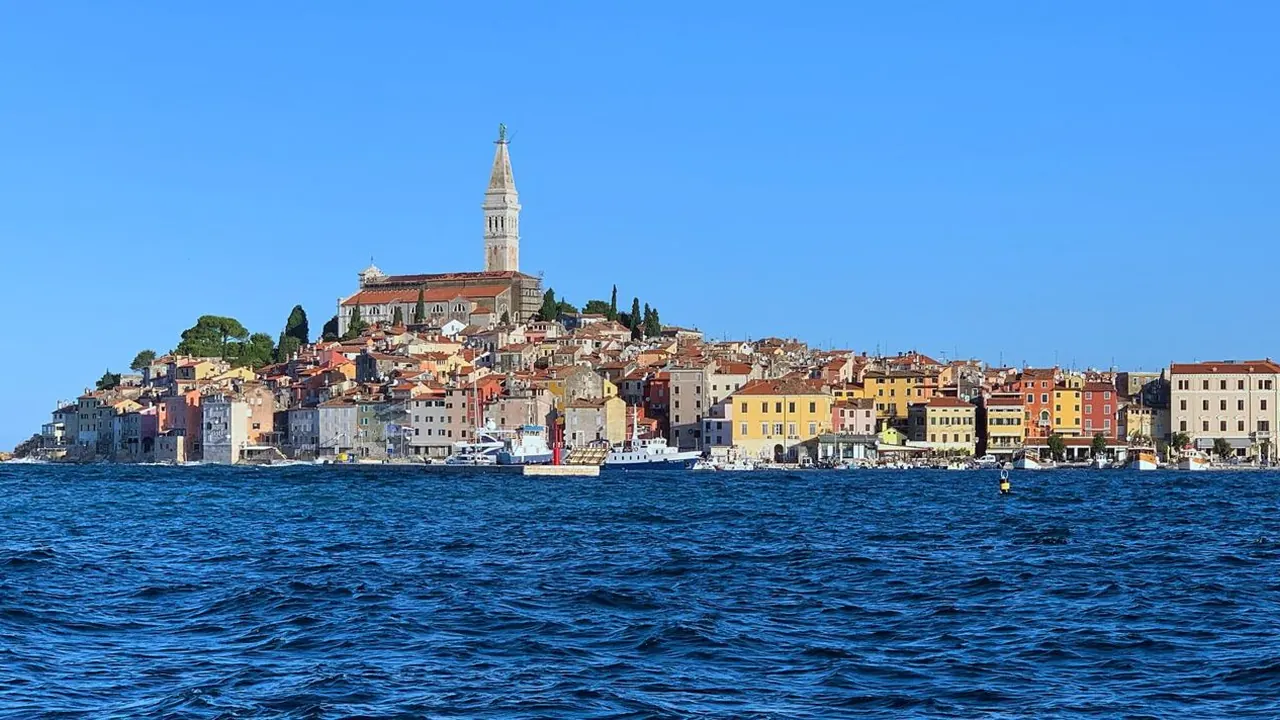
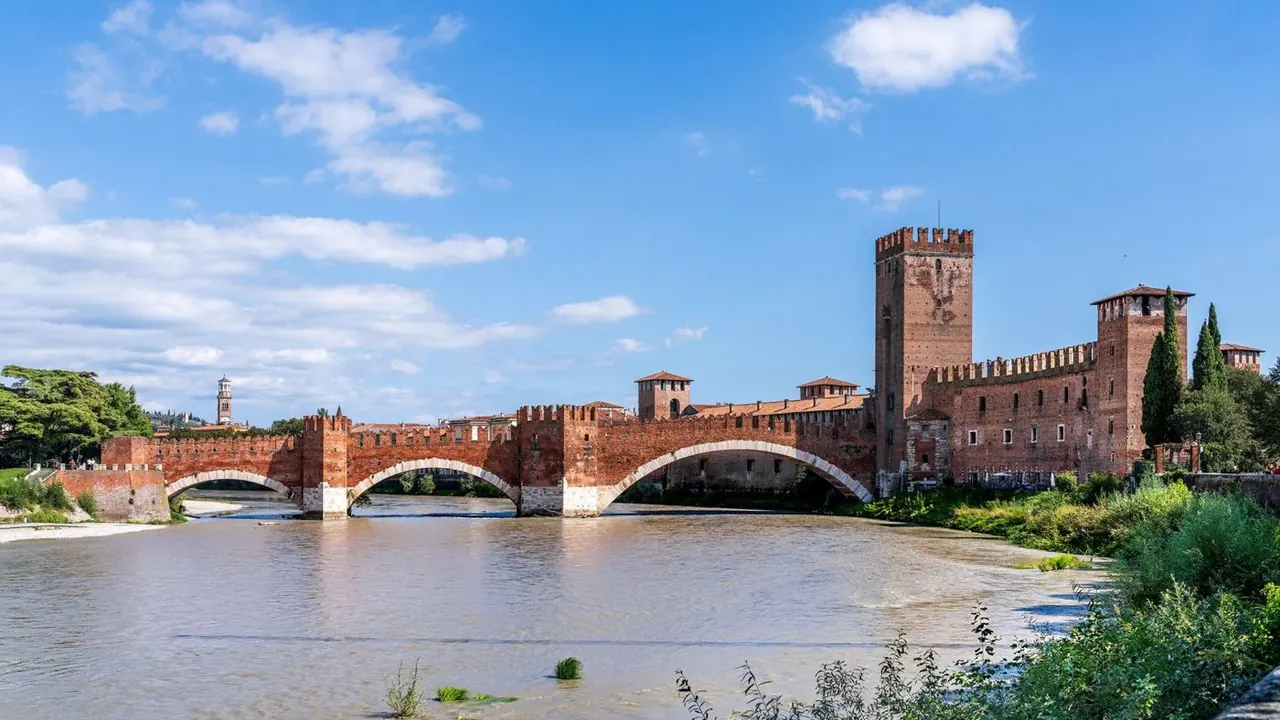
Photos: Rovinj by Vyacheslav Bukharov, CC BY-SA 4.0, cropped; Verona by NorbertNagel, CC BY-SA 4.0, cropped.
Rovinj or Verona?
Our verdict in twelve categories, each scored against the same fixed benchmark cities, and the climate month by month, so you can choose for your trip.
Choose Rovinj for
- beaches
Rovinj is the choice for a slow summer by the sea: swimming off limestone ledges under the pines, long fish dinners on the harbour and evenings that end early. It suits couples, and anyone happy to drive out to Pula, Porec and the hill towns of inland Istria, who needs little more from a town than its own lovely old quarter.
Choose Verona for
- live music and the arts
- culture and sights
- day trips
For a trip built around sights, music and days out, Verona gives far more. The Roman Arena, Romanesque churches and Scarpa's Castelvecchio fill two or three days, summer opera under the stars is a reason to go in itself, and the railway puts Venice, Padua, Vicenza and Lake Garda within easy reach. Swimming there means a trip to the lake rather than the centre of the stay.
Scoreboard
Twelve categories on one fixed scale from 0 to 100. The shaded stretch is the gap between the two.
Your match
Pick a travel style or drag the sliders, and both match scores follow your weighting.
Wins on beaches with your weighting.
Wins on live music and the arts and culture and sights with your weighting.
What matters to you?
Category by category
What the scores mean for a trip.
Beaches & swimming
Rovinj has the sea at its door: clear Adriatic water off flat limestone ledges, pebble coves and concrete platforms running for kilometres into the Golden Cape park, with taxi boats out to St Catherine and Red Island. It is rock rather than sand, so pack water shoes.
Verona's swimming is Lake Garda, about half an hour away at Peschiera, Lazise or Sirmione's limestone shelves, where the water is calm and there are lidos and grassy lawns. It makes a good day out, but in Rovinj you can swim before breakfast and again at sunset.
Food & drink
Both sit in serious wine country, with Malvazija and Teran in Istria and Amarone, Valpolicella and Soave around Verona, but Verona's food goes deeper. Its wood-panelled osterie around Piazza delle Erbe and in Veronetta serve a distinctive local repertoire of Amarone risotto, bigoli and bollito with pearà, and a glass with snacks at a wine counter is an everyday ritual.
Rovinj's strengths are fish, scampi buzara and truffle pasta, and the best meals are often in country konobas a drive away. Its harbourfront leans heavily on menus written for visitors, so eating well there takes more care than in Verona.
Culture & sights
Rovinj's main sight is the town itself: pastel Venetian houses packed onto a former island, with lanes such as Grisia climbing to St Euphemia, whose bell tower you can climb for a view over the roofs and islands. Add the Batana House and the small museum in a baroque palace, and an afternoon covers it. For the region's Roman past, Pula is a day trip.
Verona has far more to see and needs two or three days. Its UNESCO-listed centre brings together the Roman Arena, the Roman theatre below Castel San Pietro, the della Scala tombs by Piazza dei Signori, the Romanesque Basilica of San Zeno with its bronze doors, and the art collection in Scarpa's Castelvecchio.
Nightlife
Neither is a clubbing town, but Verona has more going on. There are aperitivo crowds in Piazza delle Erbe, younger and later wine bars and pubs across the river in Veronetta, and in summer the opera audience leaving the Arena near midnight.
A Rovinj evening means a long dinner and a drink on the rocks as the sun sets, then a few waterfront bars and quiet lanes by midnight. Outside summer there is very little.
Nature & outdoors
Both offer gentle rather than wild country, and the difference is sea against hills. Rovinj's outdoors is about the water: the pine and cedar paths of the Golden Cape, kayaking and diving among the islets of the archipelago, and boat trips up the Lim Fjord to the mussel farms.
Verona looks towards the Alpine foothills. There are vineyard walks in Valpolicella, the Adige cycle route, pastures and gorges on the Lessinia plateau, and Monte Baldo's ridges and reliable sailing wind at the northern end of Garda.
Day trips
Rovinj has a good small circuit, from Pula's amphitheatre and Porec's Byzantine mosaics to the hill towns of Motovun and Groznjan, with Piran and Trieste across the border. Almost all of it needs a car.
Verona is a far stronger base. Venice, Padua, Vicenza and Mantua are easy train rides, the Garda lake towns and the cellars of Valpolicella and Soave are on the doorstep, and Milan and Bologna fit into a longer day.
Good for families
Verona has the bigger draws for children, though they lie outside town: Gardaland, the water parks along Garda and the drive-through safari at Parco Natura Viva, with calm, shallow lake water for swimming. Its flat, pedestrian centre is also kinder to pushchairs.
Rovinj offers easy resort life, with boat trips, gelato, shady park paths, and campsites built around pools and playgrounds. Its rocky shore and steep, polished cobbles are hard going with small children, though.
Getting around
Both are best explored on foot, with car-free centres and short distances. Verona's centre is flat and close to a station with fast trains to Venice, Milan and the lake. Rovinj has no railway, steep and slippery lanes, and buses only to the bigger towns, so a car becomes close to essential once you leave, although bikes on the coast paths and taxi boats to the islands are pleasant extras.
Shopping & style
Verona has a real shopping street in marble-paved Via Mazzini, lined with Italian fashion labels, and Corso Porta Borsari adds boutiques and jewellers. It is smart, if provincial. Rovinj has no fashion shopping, and its charm lies in the galleries and artists' studios along Grisia. In both towns the best things to take home are edible: truffles, oil and Teran from Rovinj, Amarone and pandoro from Verona.
Affordability
Rovinj is the dearer of the two, and the gap is widest in high summer. In July and August a room in or near its old town costs more than a comparable one in Verona, and a harbour dinner of fresh fish, charged by the weight of what you pick, soon goes beyond a meal in a Veronese osteria. To save money in Rovinj, rent a private apartment or stay at one of the large campsites, and go in late spring or September instead of at the peak.
Verona's expensive moments are different: rooms in the historic centre cost a lot for a city its size, and they get scarce and dear on summer opera nights and during the big trade fairs, so it pays to sleep near the station or across the river. Day to day it is the easier of the two. A glass of local wine with a snack at a counter, the student osterie of Veronetta and a centre you can cross on foot keep spending lower than on the Istrian coast.
Live music & performing arts
Verona wins this outright. Summer opera in the Roman Arena, with Verdi and Puccini staged on a vast scale for thousands sitting on the stone tiers, is worth planning a trip around. The Roman theatre's festival of Shakespeare, dance and jazz and the Teatro Filarmonico's winter season add depth.
Rovinj has occasional concerts in St Euphemia, music on the harbour and the local bitinada singing, almost all of it in summer. For a big show, people go to Pula's arena.
Wellness & relaxation
Spa life in Rovinj means the pools, saunas and treatments of the larger resort hotels on the Golden Cape, since the town has no bathing tradition of its own. What really helps you unwind is the pace in May, June and September: late swims off the rocks and evening walks under the pines.
Verona has the edge because warm springs rise all around it. Sirmione's thermal pools look out over Lake Garda, a spring-fed lake near Lazise sits in an old villa garden, and the springs at Caldiero have been used since Roman times. In town, the riverside passeggiata and the terraces of the Giardino Giusti are calm, away from the crowds at the Arena.
When should you go?
Pick your month. The climate figures are measured averages, not a forecast.
Rovinj in July
Verona in July
Daytime high, °C
Rainfall in the month, mm
Where the figures come from
Rovinj's temperatures are measured 64 km from the centre, at Trieste.
Rovinj has no rain gauge within 25 km of the centre, so its rainfall comes from a gridded climate dataset read at the city rather than from a gauge further away.
Temperature and rainfall are climate normals, averaged over the years shown. Rovinj: 1991-2020 normals, Trieste (63.7 km from centre). Verona: 1991-2020 normals, Verona / Villafranca (11.6 km from centre).
The two warm up on much the same schedule, with April and May mild enough for long days on foot in both. Rovinj's sea makes the difference in summer. It is warm enough for swimming from June, peaks at about 26°C in August and stays pleasant well into September. Verona, inland, gets hotter, reaching around 30°C in July and August, which makes midday sightseeing heavy going. Late spring and September are its best months for the streets.
Autumn separates them. From September Rovinj turns noticeably wet, and November is its rainiest month at 102mm. Verona's rain is spread more evenly and is lighter. Both are cool in winter, Verona slightly colder at 7°C in January, and both get their most sunshine in July.
Which traveller are you?
For a beach and sun trip, Rovinj is the clear pick. The clear Adriatic is at its warmest in August, and you can swim from the rocks below the old town walls or take a taxi boat to island coves. Verona's nearest swimming is Lake Garda.
On a culture and arts trip, Verona gives far more: the Arena, San Zeno, the Scaliger tombs and Castelvecchio, opera on summer nights, and Venice, Padua and Vicenza by train. Rovinj's beautiful old town can be seen in an afternoon.
On a family trip with children, Verona comes out ahead thanks to Gardaland, the Garda water parks and the safari zoo, and its centre is flat enough for pushchairs. Rovinj suits older children who swim confidently, since its shore is rock and its lanes are steep.
Before you go
| Measure | Rovinj | Verona |
|---|---|---|
| Official language | Croatian | Italian |
| Currency | Euro (EUR) | Euro (EUR) |
| Sockets | CF230 V, 50 Hz | CFL230 V, 50 Hz |
| Driving side | Right | Right |
| Time zone | UTC+1, UTC+2 in summer | UTC+1, UTC+2 in summer |
| Emergency number | 112 | 112 |
| Elevation | 0 m | 59 m |
| Main airport | Pula Airport (PUY)31 km from centre34 non-stop destinations | Verona Villafranca Valerio Catullo Airport (VRN)10 km from centre96 non-stop destinations |
| Public holidays this year | 14 days | 13 days |
By the numbers
| Measure | Rovinj | Verona |
|---|---|---|
| City population | 12,968 | 255,588 |
| People per km² | - | 1,285 |
| Museums within 10 km | 1 | 18 |
| UNESCO World Heritage sites within 50 km | 1 | 5 |
| Swim season, months above 21 °C | 4 months | - |
Where else could you go?
Every comparison below shares a destination with this one, so you can follow Rovinj or Verona somewhere new.