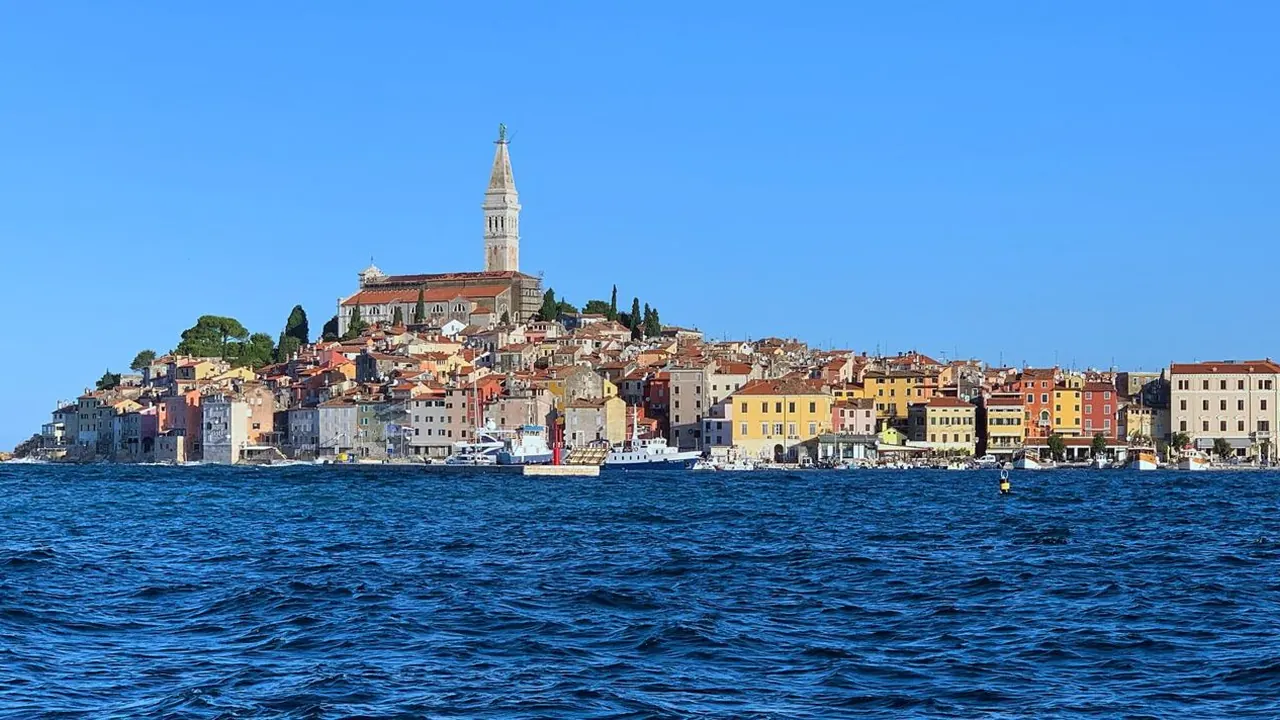
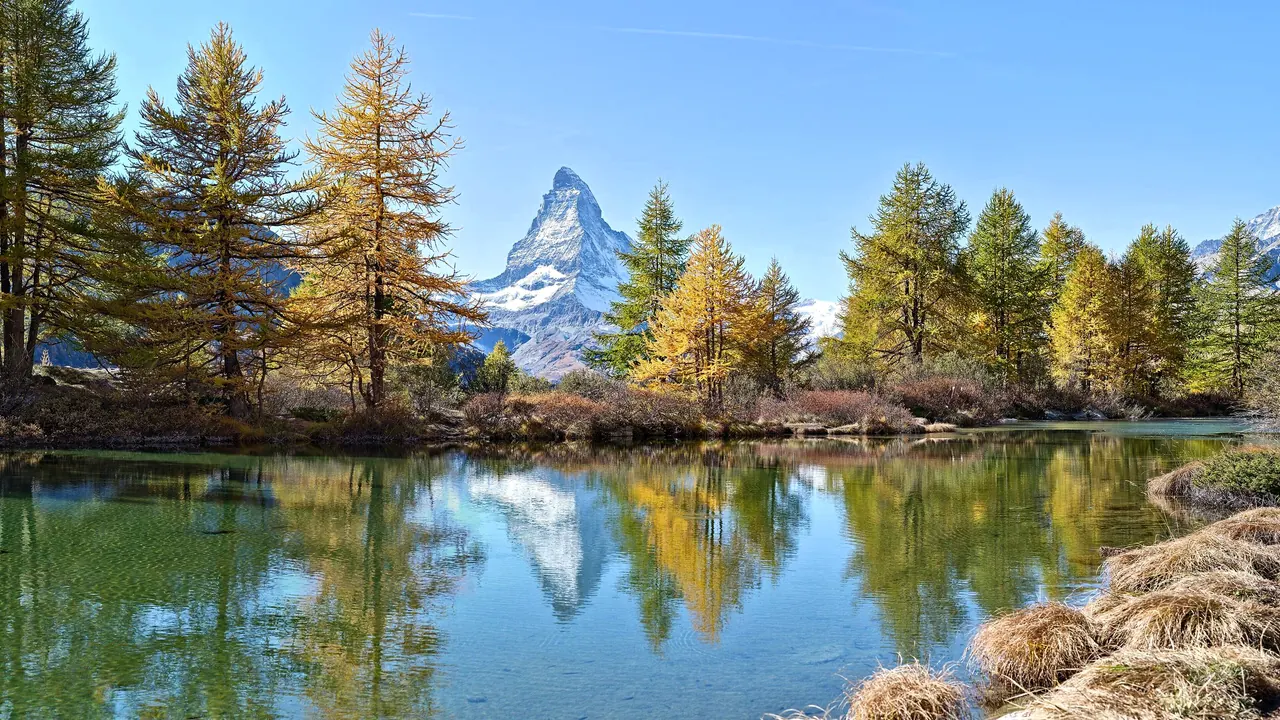
Photos: Rovinj by Vyacheslav Bukharov, CC BY-SA 4.0, cropped; Zermatt by Roy Egloff, CC BY-SA 4.0, cropped.
Rovinj or Zermatt?
Our verdict in twelve categories, each scored against the same fixed benchmark cities, and the climate month by month, so you can choose for your trip.
Choose Rovinj for
- beaches
- day trips
- prices
Rovinj suits a warm-weather trip by the sea. You swim off limestone ledges below a Venetian old town, eat Istrian truffle pasta and fish, and drive out to Roman Pula, the mosaics at Porec and the hill towns inland. It is the more varied and better-value choice for a relaxed summer week, and it works best for couples and for anyone who wants sun, water and some sightseeing in one place.
Choose Zermatt for
- nature and the outdoors
- getting around
- wellness
Zermatt is a different kind of trip altogether. It is for people who came for the mountains: skiing under the Matterhorn in winter, high trails and glacier lifts in summer, and a car-free village with very good hotel spas for the evenings. Come for the skiing, walking or climbing and very little rivals it. Come for anything else, or on a modest budget, and it has little to offer.
Scoreboard
Twelve categories on one fixed scale from 0 to 100. The shaded stretch is the gap between the two.
Your match
Pick a travel style or drag the sliders, and both match scores follow your weighting.
Wins on beaches and day trips with your weighting.
Wins on nature and the outdoors and getting around with your weighting.
What matters to you?
Category by category
What the scores mean for a trip.
Beaches & swimming
Rovinj has a real swimming shore. It is rock rather than sand, with limestone ledges, pebble coves and bathing platforms running for kilometres into the Golden Cape forest park, and the Adriatic is very clear. Bring water shoes and use the taxi boats to reach the island coves.
Zermatt has nothing comparable. It is an Alpine village with no sea or bathing lake, and swimming means a hotel pool.
Food & drink
Rovinj's cooking comes from the sea and the Istrian hinterland: scampi buzara, fuži with truffle, peppery olive oil, Malvazija and Teran. The countryside konobas are worth the drive, although the harbourfront menus are aimed at passing visitors.
Zermatt's best meals are on the mountain, at long lunches in the chalets around Findeln and Furi, with raclette, air-dried beef and Valais wine. The range is narrower and cheap eating harder to find, so Rovinj gives a week of more varied meals.
Culture & sights
Neither town is a museum destination, but Rovinj has more to look at. Its whole old town is the sight: pastel Venetian houses climbing to St Euphemia, whose bell tower you can climb, the lanes of Grisia and the Batana House on local boats and songs.
Zermatt's heritage is about mountaineering: the underground Matterhorn Museum, the climbers' cemetery and the old larch barns of the Hinterdorf. It is moving, but a morning is enough to see it.
Nightlife
Both are quiet after dark, and they are quiet in different ways. Rovinj's evenings are a long dinner and a drink on the rocks at sunset, with a few waterfront bars and not much after midnight. Zermatt's nights centre on winter après-ski, loud and cheerful in the slope-side bars, with a few small clubs on the main street. In summer the hikers turn in early.
Nature & outdoors
This is where Zermatt stands apart. The Matterhorn rises straight above the village, a ring of four-thousanders and the Gorner Glacier surround it, and lifts carry you to the Gornergrat and beyond for skiing in winter, and even in summer. In the warm months the trails, the Europaweg suspension bridge and the marmots and ibex fill whole weeks.
Rovinj's outdoors is gentler: forest paths on the Golden Cape, kayaking and diving among the islands, and the green Lim Fjord nearby. It is pleasant, but there are no mountains.
Day trips
Rovinj sits in the middle of a region full of places to visit. Pula's Roman amphitheatre and the mosaics of Porec's Euphrasian Basilica are each well under an hour away, and the hill towns of Motovun and Hum, the Brijuni islands, Piran and Trieste are all within reach by car.
From Zermatt, every outing starts with a long train ride down the valley. Sion, with its castle hills, is the pick, and Brig and Saas-Fee are good too, but most visitors spend their spare days in the mountains instead.
Good for families
Families do about equally well in both, though the trips are very different. Rovinj offers island boat trips, gelato, shady flat paths and campsites with pools, but the rocky shore needs water shoes and the steep cobbles are hard with a pushchair.
Zermatt's car-free streets feel safe, with nursery slopes and ski schools in winter and marmot-spotting walks in summer. Rainy days are hard to fill, and the thin air at the top viewpoints can be too much for small children.
Getting around
Both centres are walkable and largely free of cars. Zermatt goes further, because the mountain is part of its transport. The cog railway, the funicular to Sunnegga and the gondolas all leave from the village, and trains link smoothly into the Swiss network, though leaving the valley takes over an hour.
Rovinj is easy on foot and by bike, but there is no railway, and the hill towns, wineries and much of the coast really need a car.
Shopping & style
Rovinj's shops sell the region itself: truffle products, Istrian olive oil, Malvazija and Teran, lavender and local brandies. The steep lane of Grisia adds small galleries and artists' studios, which makes for good gifts and an unhurried hour of browsing.
Zermatt's one main street sells Swiss watches and jewellery to well-off skiers, along with ski and mountaineering outfitters that are worth a visit if you arrive short of gear. Neither town has fashion streets or a design scene, so a serious shopping trip belongs somewhere else.
Affordability
Rovinj is pricey for the Croatian coast, especially harbour dining and rooms in high summer. Still, campsites, private apartments and the cheaper shoulder months keep a trip within reach.
Zermatt is far more expensive, among the most costly places in the Alps. Rooms, terrace meals and the lifts every visitor uses all add up. Self-catering or sleeping down the valley in Täsch helps, but it remains a costly trip.
Live music & performing arts
Neither has a theatre or a year-round concert life, so it comes down to timing. Rovinj's live music is a summer affair: classical concerts in St Euphemia, music on the squares and the occasional bitinada singing, with Pula's arena nearby for big shows. Zermatt's highlights are two festivals, acoustic sets on mountain stages in spring and chamber music in the church in late summer.
Wellness & relaxation
Zermatt has the better spas. Many of its hotels have excellent pools, saunas and treatment rooms with mountain views, and the car-free quiet is restful, even if the overall mood is active.
Rovinj relies on a few resort hotel spas on the Golden Cape. Its real draw is the pace: long lunches and late swims in May, June or September, though the centre gets crowded in high summer.
When should you go?
Pick your month. The climate figures are measured averages, not a forecast.
Rovinj in July
Zermatt in July
Daytime high, °C
Rainfall in the month, mm
Where the figures come from
Rovinj's temperatures are measured 64 km from the centre, at Trieste.
Rovinj has no rain gauge within 25 km of the centre, so its rainfall comes from a gridded climate dataset read at the city rather than from a gauge further away.
Zermatt has no weather station within reach, so its figures come from a gridded climate model rather than a measured record, and read a broad area rather than the city itself.
Temperature and rainfall are climate normals, averaged over the years shown. Rovinj: 1991-2020 normals, Trieste (63.7 km from centre). Zermatt: 1991-2020 normals, TerraClimate 4 km grid at the town, no weather station within 90 km.
Rovinj is a summer and shoulder-season town. From June to September days are warm, peaking at around 29°C in July and August, and the sea is warm enough for long swims, reaching about 26°C in August. These are also the sunniest months. May and late September are gentler and better for walking and cycling. Rain builds through autumn to a wet November, and winter is cool and quiet.
Zermatt follows the opposite calendar. Winter highs sit below freezing, and those cold months are the skiing season. July and August are the warmest months, with highs only around 14°C, and that is when the hiking trails are at their best. Rain is spread through the year with no dry season. The two fit together neatly: Rovinj for the heat of summer, Zermatt for snow or for cool mountain air when the coast is hot.
Which traveller are you?
For a beach and sun trip, Rovinj is the only real option. It has clear Adriatic water, pine-shaded rocky coves along the Golden Cape and taxi boats to the islands. Zermatt has no sea or lake to swim in, and its tarns stay icy even in August.
On an outdoors trip, Zermatt is in a different league. Lifts climb above 3,800m, there are hundreds of kilometres of marked trails, glacier skiing links into Italy and guides lead four-thousand-metre ascents. Rovinj's kayaking and forest paths are pleasant but low-key.
On a tight budget, Rovinj is far easier. Campsites, private apartments, bakeries and markets keep costs down, especially in late spring and September. Zermatt is expensive across the board, from beds to lift passes, and even a picnic only softens the bill.
Before you go
| Measure | Rovinj | Zermatt |
|---|---|---|
| Official language | Croatian | French, German, Italian, Romansh |
| Currency | Euro (EUR) | Swiss Franc (CHF) |
| Sockets | CF230 V, 50 Hz | CJ230 V, 50 Hz |
| Driving side | Right | Right |
| Time zone | UTC+1, UTC+2 in summer | UTC+1, UTC+2 in summer |
| Emergency number | 112 | 112 |
| Elevation | 0 m | 1,624 m |
| Main airport | Pula Airport (PUY)31 km from centre34 non-stop destinations | Geneva International Airport (GVA)128 km from centre150 non-stop destinations |
| Public holidays this year | 14 days | 9 days |
By the numbers
| Measure | Rovinj | Zermatt |
|---|---|---|
| City population | 12,968 | 6,023 |
| People per km² | - | 25 |
| Museums within 10 km | 1 | 2 |
| UNESCO World Heritage sites within 50 km | 1 | 2 |
| Swim season, months above 21 °C | 4 months | - |
Where else could you go?
Every comparison below shares a destination with this one, so you can follow Rovinj or Zermatt somewhere new.