Photos: Samarkand by Yaşar Başkurt, Pexels License; Tbilisi by ArtHouse Studio, Pexels License.
Samarkand or Tbilisi?
Our verdict in twelve categories, each scored against the same fixed benchmark cities, and the climate month by month, so you can choose for your trip.
Choose Samarkand for
- culture and sights
- getting around
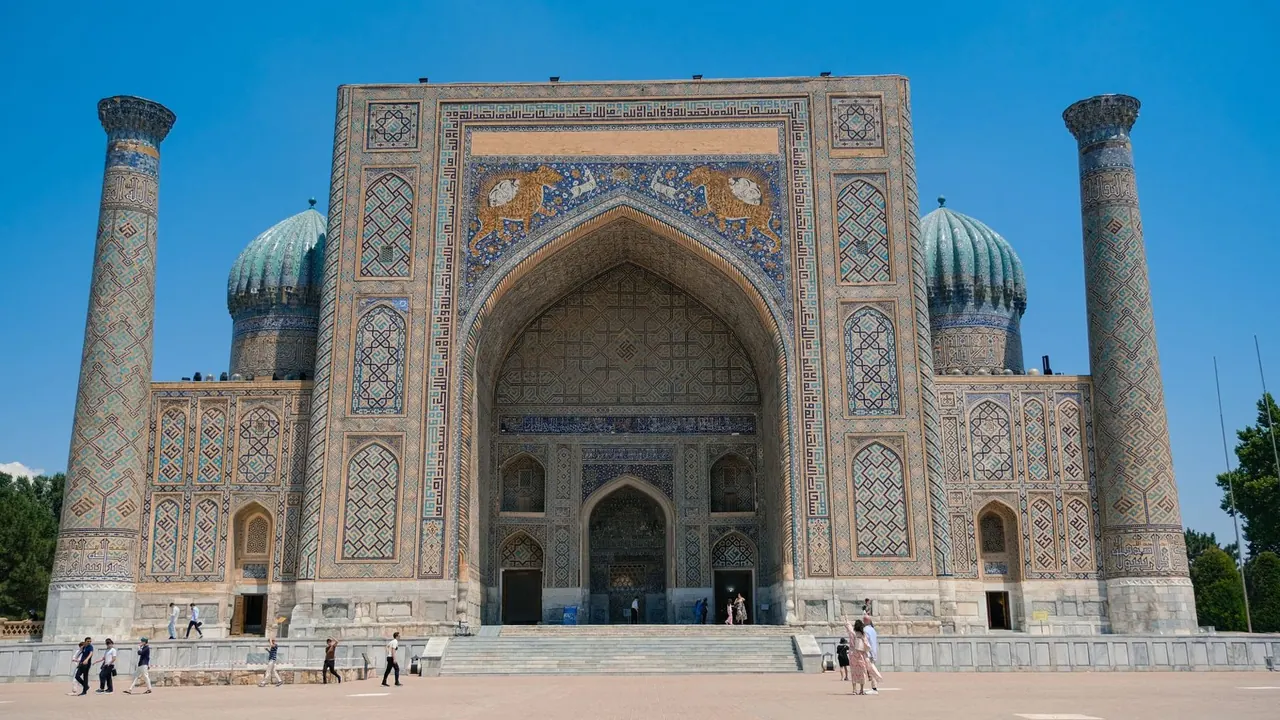
Samarkand is the choice for travellers who come to look. The Registan, Shah-i-Zinda and Gur-e-Amir make up some of the finest Islamic architecture anywhere, and three or four unhurried days among tiled portals and turquoise domes, with an easy train to Bukhara, is the reason to come. It suits a quiet, early-to-bed trip built around monuments, bazaars and long lunches of plov, and asks little of your evenings.
Choose Tbilisi for
- nightlife
- wellness
- live music and the arts
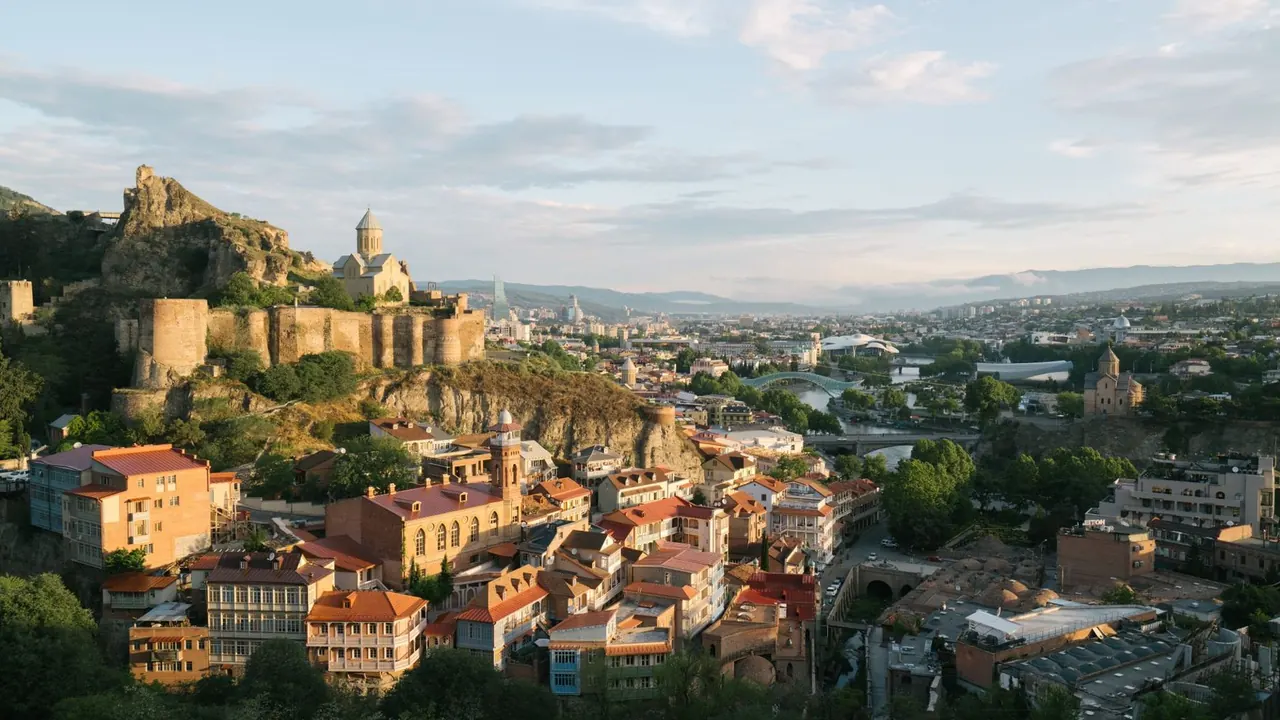
Tbilisi rewards those who want the city to keep going after dark. Georgian food and qvevri wine, a serious techno scene, sulphur baths in Abanotubani and the Caucasus within a couple of hours make it a fuller and more sociable trip. Its sights are charming rather than world-famous, so pick it if eating, drinking, bathing and getting into the mountains matter more to you than great architecture.
Scoreboard
Twelve categories on one fixed scale from 0 to 100. The shaded stretch is the gap between the two.
Your match
Pick a travel style or drag the sliders, and both match scores follow your weighting.
Wins on culture and sights and getting around with your weighting.
Wins on nightlife and wellness with your weighting.
What matters to you?
Category by category
What the scores mean for a trip.
Beaches & swimming
Neither city is a swimming destination. Samarkand sits in a doubly landlocked country with nothing better than the shallow Zarafshan river, so a hotel pool is the only real plan. Tbilisi has a little more to offer locals in July, with the Tbilisi Sea reservoir, Lisi Lake and Turtle Lake on the hills, though the Black Sea is a separate trip.
Food & drink
Tbilisi is the better place to eat. Khinkali, cheese-filled khachapuri, walnut and pomegranate sauces and shoti bread from clay ovens give real variety, and qvevri wine from Kakheti turns dinners in Sololaki into an event.
Samarkand's cooking is satisfying but narrow: its own layered plov at lunchtime, the famous glazed non from Siab Bazaar, shashlik and somsa. You will eat well for a few days, then notice menus repeating, and wine here is a curiosity rather than a culture.
Culture & sights
Samarkand is on another level for sights. The Registan's three facing madrasas, the tilework of Shah-i-Zinda and the gilded interior of Gur-e-Amir are among the great achievements of Islamic architecture, backed by Ulugh Beg's observatory and the Afrasiyab murals.
Tbilisi's appeal is in walking rather than landmarks: carved wooden balconies in the old city, sixth-century Anchiskhati, Art Nouveau halls in Sololaki and the Colchian gold of the National Museum. It is a pleasant few days, but nothing in it stops you the way the Registan does.
Nightlife
This is the widest gap between the two. Tbilisi has a techno scene known across Europe, clubs in industrial spaces running past dawn, plus wine bars in Sololaki and courtyard bars near Marjanishvili.
Samarkand's evenings end with a long dinner, perhaps beside a wedding band, and a stroll past the lit Registan. A few hotel bars aside, there is nowhere to go late.
Nature & outdoors
Tbilisi has the better outdoors, starting in town with the funicular to Mtatsminda and trails from Turtle Lake into Tbilisi National Park. The Greater Caucasus is the real prize, with Gudauri, the Jvari Pass and Kazbegi offering skiing, paragliding and high hiking.
Samarkand's countryside is gentler: juniper and walnut woods in the Aman-Kutan valley and above Urgut about an hour out, and homestay treks in the Nuratau. Pleasant in spring, but without high mountains on hand.
Day trips
Both make good bases, with different kinds of outing. From Samarkand the draw is more Silk Road architecture: Bukhara by fast train, Shakhrisabz over a mountain pass, plus the Urgut Sunday bazaar and the paper-makers of Konigil, after which the options run out.
Tbilisi gives more variety: Mtskheta half an hour away, the rock-cut town of Uplistsikhe, wine villages and monasteries in Kakheti, the cave monastery of David Gareja and the Military Road into the mountains.
Good for families
Tbilisi is easier with children, mainly because there is more for them to do: the Mtatsminda amusement park and its Ferris wheel, the cable car, the zoo and Turtle Lake. Steep cobbles and stepped underpasses make pushchairs a struggle, though.
Samarkand is flat and calm around the Registan, but its sights are mausoleums and madrasas, and summer afternoons are too hot to be outside. It suits older children who are curious about history.
Getting around
Samarkand is the slightly simpler of the two, because its main monuments sit along one pedestrian street from the Registan to Shah-i-Zinda, with app taxis for the observatory and station. Tbilisi's centre is walkable too, but hilly and broken underfoot, with heavy traffic. In return it has a two-line metro, and ride-hailing covers the hillsides.
Shopping & style
The two are evenly matched, and both are about crafts rather than fashion. Samarkand sells suzani embroidery, ikat silk, ceramics and hand-knotted carpets from workshops in old madrasa cells, plus mulberry paper from Konigil.
Tbilisi's finds are more eclectic: Soviet badges and old silver at the Dry Bridge market, cloisonné enamel, qvevri wine and chacha to take home, and a handful of local designers in Vera and Sololaki.
Affordability
Both are easy on the budget, so the difference lies in where the money goes. In Samarkand, bazaar food, taxis and family guesthouses cost little, and costs climb only at upmarket hotels near the Registan. In Tbilisi, generous Georgian meals with wine and free churches keep spending down, while boutique hotels and cocktail bars run closer to European levels.
Live music & performing arts
Tbilisi has far more to see on stage. There is a full opera and ballet season at the Moorish-style theatre on Rustaveli Avenue, athletic national dance ensembles, UNESCO-recognised polyphonic singing in church services, and the Gabriadze marionette theatre, which needs no translation.
Samarkand offers mostly folk-costume shows and sound-and-light at the Registan. The Sharq Taronalari festival is the exception, held in some years only.
Wellness & relaxation
Tbilisi is built on its warm springs, and an hour in a private sulphur pool under the brick domes of Abanotubani, with a kisi scrub, is one of the city's defining experiences. Samarkand has a single old domed hammam near Bibi-Khanym and some hotel spas, so its calm comes more from slow chaikhana afternoons than from any bathing tradition.
When should you go?
Pick your month. The climate figures are measured averages, not a forecast.
Samarkand in July
Tbilisi in July
Daytime high, °C
Rainfall in the month, mm
Temperature and rainfall are climate normals, averaged over the years shown. Samarkand: 1991-2020 normals, Samarkand (10 km from centre). Tbilisi: 1991-2020 normals, Tbilisi (13.8 km from centre).
Samarkand has a sharply divided year. Rain comes from late autumn through spring and is heaviest in March and April, then it all but stops from June to September. Those months bring long sunny days and highs of around 34°C, so walking between monuments is only comfortable early and late in the day. May is warm and bright, though a few showers are still about. Late September into October is the best spell of all: dry, sunny and warm without the summer heat.
Tbilisi is a little cooler at its peak, around 32°C in July and August, but June is its wettest month at about 74mm. Early summer there brings showers just as Samarkand dries out. September and October are its best months for the steep lanes and the hills above town, and late spring comes a close second, if a showery one. November and March are cool but fine for sightseeing in both cities. December and January sit near 7°C by day, which is too cold for long days outdoors in either.
Which traveller are you?
On a culture and arts trip built around great buildings, Samarkand wins. The Registan, Shah-i-Zinda and Timur's tomb are world-class, and Bukhara is a train ride away. Tbilisi has more on stage, but nothing to match those monuments.
For a food and nightlife trip, Tbilisi is the clear pick. Khinkali, khachapuri and amber qvevri wine fill long evenings in Sololaki, and the techno clubs run until dawn, while Samarkand's menus repeat and its streets empty before midnight.
On a relaxing and wellness trip, Tbilisi gives you a real ritual: a private room with a hot sulphur pool and a kisi scrub in Abanotubani. Samarkand offers one old hammam and shaded chaikhana afternoons, restful but slight.
Before you go
| Measure | Samarkand | Tbilisi |
|---|---|---|
| Official language | Uzbek | Georgian |
| Currency | Uzbekistan Sum (UZS) | Lari (GEL) |
| Sockets | CFI220 V, 50 Hz | CF220 V, 50 Hz |
| Driving side | Right | Right |
| Time zone | UTC+5 | UTC+4 |
| Emergency number | 112 | 112 |
| Elevation | 702 m | 575 m |
| Main airport | Samarkand International Airport (SKD)5 km from centre29 non-stop destinations | Tbilisi International Airport (TBS)15 km from centre64 non-stop destinations |
| Public holidays this year | - | 17 days |
By the numbers
| Measure | Samarkand | Tbilisi |
|---|---|---|
| City population | 546,303 | 1,331,485 |
| People per km² | 5,058 | 1,849 |
| Museums within 10 km | 11 | 29 |
| UNESCO World Heritage sites within 50 km | 1 | 1 |
Where else could you go?
Every comparison below shares a destination with this one, so you can follow Samarkand or Tbilisi somewhere new.