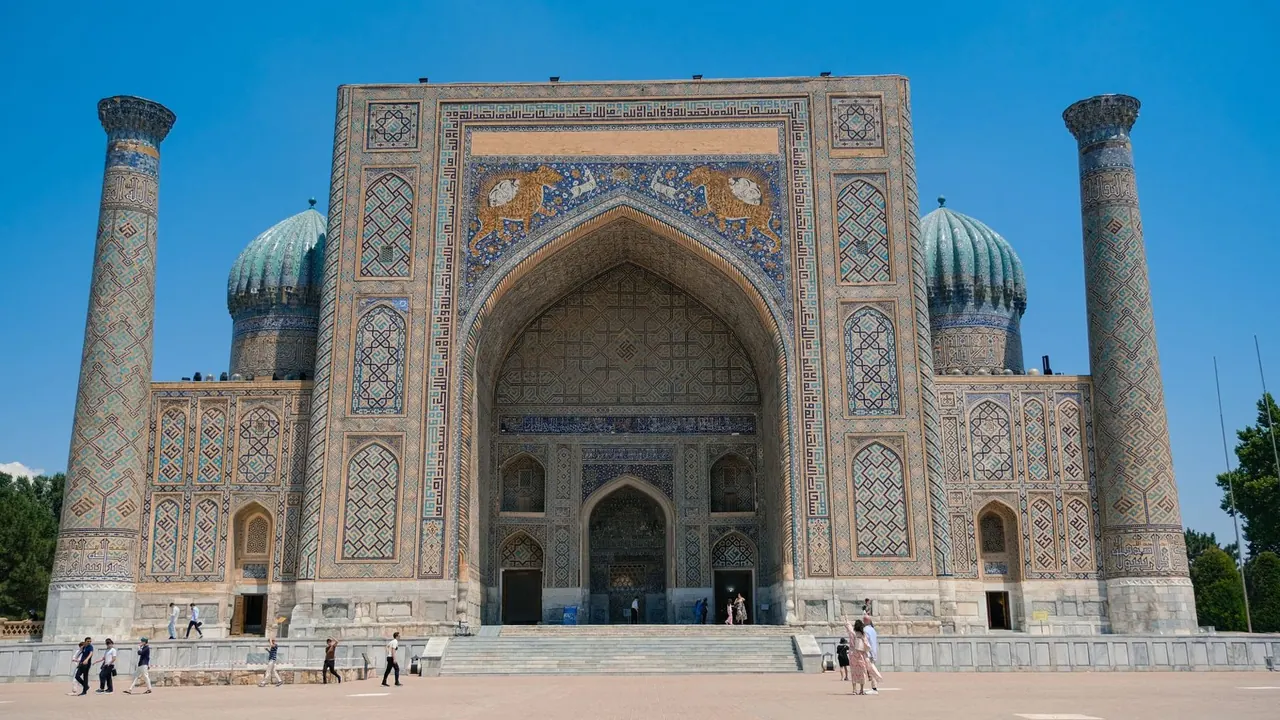
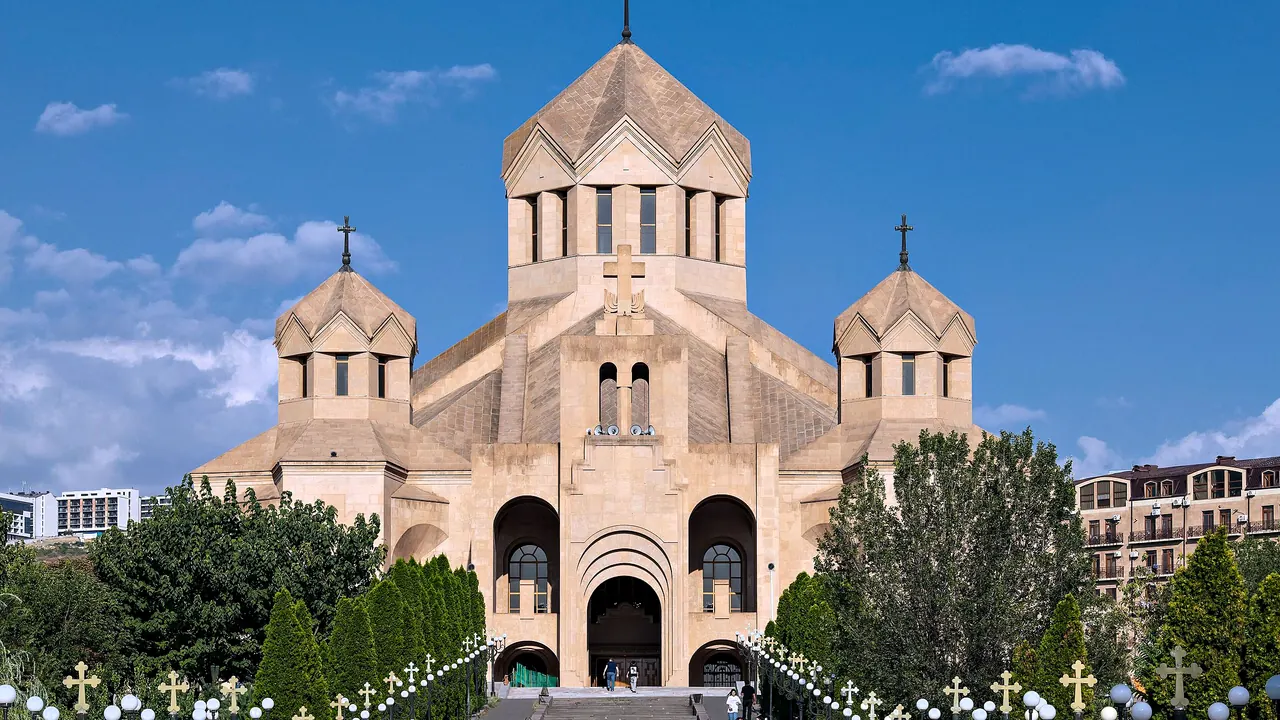
Photos: Samarkand by Yaşar Başkurt, Pexels License; Yerevan by Petar Milošević, CC BY-SA 4.0, cropped.
Samarkand or Yerevan?
Our verdict in twelve categories, each scored against the same fixed benchmark cities, and the climate month by month, so you can choose for your trip.
Choose Samarkand for
- culture and sights
- prices
- wellness
Samarkand is the choice for travellers who come to look. The Registan, Shah-i-Zinda and Gur-e-Amir make it one of the great places to see Islamic architecture. A few days walking between them, with plov at lunch and Bukhara a train ride away, makes a rich trip on a modest budget. Evenings are quiet and end early, so it suits people who are happy with a long dinner and a walk past the lit square.
Choose Yerevan for
- nightlife
- live music and the arts
- nature and the outdoors
Yerevan suits a trip with more variety in each day. Its sights are fewer and its townscape younger. In return, wine-bar terraces, a night at the round opera house and live jazz give it the social life Samarkand lacks. Mountains, gorges and Lake Sevan are all within an hour or so for walking or a swim. Pick it if you want monasteries by day and a long table in the evening.
Scoreboard
Twelve categories on one fixed scale from 0 to 100. The shaded stretch is the gap between the two.
Your match
Pick a travel style or drag the sliders, and both match scores follow your weighting.
Wins on culture and sights and prices with your weighting.
Wins on nightlife and live music and the arts with your weighting.
What matters to you?
Category by category
What the scores mean for a trip.
Beaches & swimming
You would not plan swimming around either city, but Yerevan at least has an option. Samarkand lies deep in doubly landlocked Uzbekistan, and all it offers is hotel pools and the shallow Zarafshan river that locals use.
From Yerevan, Lake Sevan is about an hour's drive away, with sand and pebble beaches below Sevanavank and fish restaurants along the shore. The water stays cool even in high summer, so treat it as a day out rather than a beach stay. Closer to home, the large park pools are good for a dip.
Food & drink
Both cities eat well within a narrow range, and in both the choice thins out quickly beyond the local cooking. In Samarkand, meals mean layered plov eaten at lunchtime, glazed non bread and shashlik, with Siab Bazaar for apricots, nuts and halva.
Yerevan is a little ahead because of what comes with the food. Khorovats is grilled over vine cuttings and served under heaps of herbs and lavash. There is a long brandy tradition, wine bars pour Areni reds and amber wines from clay karas, and meals on the terraces stretch into the evening. In Samarkand, wine is a curiosity to taste. In Yerevan, drinking is part of the trip.
Culture & sights
Here Samarkand is in a different league. The three tiled madrasas of the Registan, the mausoleums climbing Shah-i-Zinda and the gilded interior of Gur-e-Amir are among the finest Islamic buildings anywhere. Ulugh Beg's observatory and the Afrasiyab murals are enough to fill a third day.
Yerevan is a different kind of city to explore. It is a twentieth-century townscape of pink tuff avenues, and its strength lies in its institutions, above all the illuminated manuscripts of the Matenadaran and the Genocide Memorial at Tsitsernakaberd. It is rewarding, but Armenia's most striking buildings lie outside the city.
Nightlife
Yerevan is the clear pick for evenings out. Wine bars, cocktail bars and terraces around Saryan Street, Northern Avenue and the Cascade stay full past midnight in summer, though dancing plays only a small part.
In Samarkand, an evening means a long dinner, perhaps alongside a wedding band, then a walk past the illuminated Registan. A hotel bar is about as far as it goes before the streets fall quiet.
Nature & outdoors
Yerevan has the stronger landscape on its doorstep. Within about an hour you reach the slopes of Mount Aragats, just over 4,000m high, the hexagonal basalt columns of the Garni gorge and the Khosrov Forest. Further out are the wooded hills of Dilijan, and Ararat fills the horizon as scenery.
Samarkand's walking is gentler, through the juniper and walnut woods of the Aman-Kutan valley and the hills above Urgut. If you have more time, there are homestay treks in the Nuratau mountains. In both places, spring and autumn are the seasons for it.
Day trips
Samarkand's excursions lead to other historic cities, while Yerevan's lead to churches set in the landscape. From Samarkand, the fast train reaches Bukhara's intact old town of madrasas and trading domes in about an hour and a half. A road over a mountain pass leads to Timur's birthplace at Shakhrisabz, and on Sundays the bazaar at Urgut sells old suzani among the produce.
Around Yerevan the trips are closer together and there are more of them: Echmiadzin, Geghard, Khor Virap beneath Ararat and Noravank among red cliffs. The temple at Garni and Lake Sevan add some variety. Even so, churches and monasteries are the common thread, so the days start to resemble one another.
Good for families
Yerevan is the easier city with children, though neither is built for them. The singing fountains, the Cascade's steps and sculptures, the park rides, a zoo and a children's railway give younger children more to do. On summer evenings the squares fill with families, which helps children feel at home.
Samarkand has calm pedestrian streets and simple park rides. But days there revolve around mausoleums and madrasas spread far apart in the heat, which suits older children keen on history better than toddlers.
Getting around
In Samarkand, seeing the sights is mostly one long walk. The main monuments line up along a pedestrian street from the Registan past Bibi-Khanym towards Shah-i-Zinda, and Gur-e-Amir is a short stroll the other way. App taxis cover the observatory, Afrasiyab and the station.
Yerevan's centre is a compact circle of avenues inside a ring of parks, with the Opera, the Cascade and Republic Square close together. A single metro line and cheap ride-hailing fill the gaps, though assertive drivers make crossing the road tense. The bigger difference shows once you leave town: Samarkand connects to Bukhara and Tashkent by train, while most of Yerevan's monasteries need a car, a driver or a tour.
Shopping & style
In both cities shopping is about crafts and food, and neither is worth visiting for fashion. In Samarkand, stalls in former madrasa cells at the Registan and Shah-i-Zinda sell suzani, ikat silk, ceramics and hand-knotted carpets, and Konigil makes mulberry paper. The best pieces take some finding among the souvenirs.
Yerevan gathers its crafts in one place, the open-air Vernissage, with carved backgammon boards, obsidian jewellery, carpets and Soviet oddments. It also has brandy and wine to carry home, and chain stores along Northern Avenue.
Affordability
Both cities are inexpensive, but your money goes further in Samarkand. Plov, bazaar food, taxis and family-run guesthouses cost very little, and only the upper-end hotels near the Registan push costs up.
Yerevan is cheap for eating, wine and taxis. However, central rooms in summer and anything imported are priced closer to European levels, so accommodation takes a bigger share of the budget.
Live music & performing arts
Yerevan has a proper programme to plan an evening around. The round Opera and Ballet Theatre stages Khachaturian's Gayane and Spartacus, the Philharmonic plays in the same building, and small jazz clubs and duduk ensembles fill the other nights.
Samarkand's performances are mostly put on for visitors: folk-dance and costume shows, and sound-and-light displays at the Registan. The Sharq Taronalari festival is the highlight, but it is held only in some years.
Wellness & relaxation
Neither city suits a spa vacation, and in both you relax through the pace rather than treatments. Samarkand has a slight edge in tradition, with an old domed bathhouse near Bibi-Khanym offering steam and massage, and long afternoons with green tea on a shaded topchan.
In Yerevan, relaxing means a long coffee on a terrace and an evening walk through the ring of parks. For proper bathing, the spa town of Jermuk is too far for a day trip.
When should you go?
Pick your month. The climate figures are measured averages, not a forecast.
Samarkand in July
Yerevan in July
Daytime high, °C
Rainfall in the month, mm
Temperature and rainfall are climate normals, averaged over the years shown. Samarkand: 1991-2020 normals, Samarkand (10 km from centre). Yerevan: 1991-2020 normals, Yerevan (6.7 km from centre).
Samarkand warms up sooner and stays warm longer into autumn. By late April it is pleasantly mild, though March and April bring its heaviest rain. From June to September it is sunny and almost completely dry, with July highs around 34°C that make midday walks between the monuments hard work. Late April, May, late September and October are the comfortable months, and its winters are cool and grey rather than harsh.
Yerevan sits higher and runs a few degrees cooler through spring and autumn, and its winters are properly cold, with January highs of about 1°C. April and May are its wettest months. Its summers are not as dry as Samarkand's, and showers still come through June and July, though July and August are just as hot. May and the stretch from late September into October are the best times for walking the centre and heading into the mountains.
Which traveller are you?
On a culture and arts trip, Samarkand is the stronger choice. The Registan, the tiled avenue of Shah-i-Zinda and Timur's tomb are architecture of world rank, and Bukhara is close by train. Yerevan has manuscripts, museums and opera, but on a smaller scale.
For a food and nightlife trip, Yerevan is the clear winner. Khorovats with herbs and lavash, brandy tastings and Areni wine lead on to terraces around Saryan Street that stay full past midnight in summer. Samarkand's streets empty early after the plov and green tea.
On an outdoors trip, Yerevan has more within reach: hikes on Mount Aragats from the lake at Kari, the basalt columns of the Garni gorge, the Khosrov Forest and the wooded hills of Dilijan. Samarkand's Aman-Kutan valley and the Urgut hills are pleasant but gentler, and there is less of them.
Before you go
| Measure | Samarkand | Yerevan |
|---|---|---|
| Official language | Uzbek | Armenian |
| Currency | Uzbekistan Sum (UZS) | Armenian Dram (AMD) |
| Sockets | CFI220 V, 50 Hz | CF220 V, 50 Hz |
| Driving side | Right | Right |
| Time zone | UTC+5 | UTC+4 |
| Emergency number | 112 | 112 |
| Elevation | 702 m | 987 m |
| Main airport | Samarkand International Airport (SKD)5 km from centre29 non-stop destinations | Zvartnots International Airport (EVN)11 km from centre82 non-stop destinations |
| Public holidays this year | - | 14 days |
By the numbers
| Measure | Samarkand | Yerevan |
|---|---|---|
| City population | 546,303 | 1,106,300 |
| People per km² | 5,058 | 4,874 |
| Museums within 10 km | 11 | 69 |
| UNESCO World Heritage sites within 50 km | 1 | 2 |
Where else could you go?
Every comparison below shares a destination with this one, so you can follow Samarkand or Yerevan somewhere new.