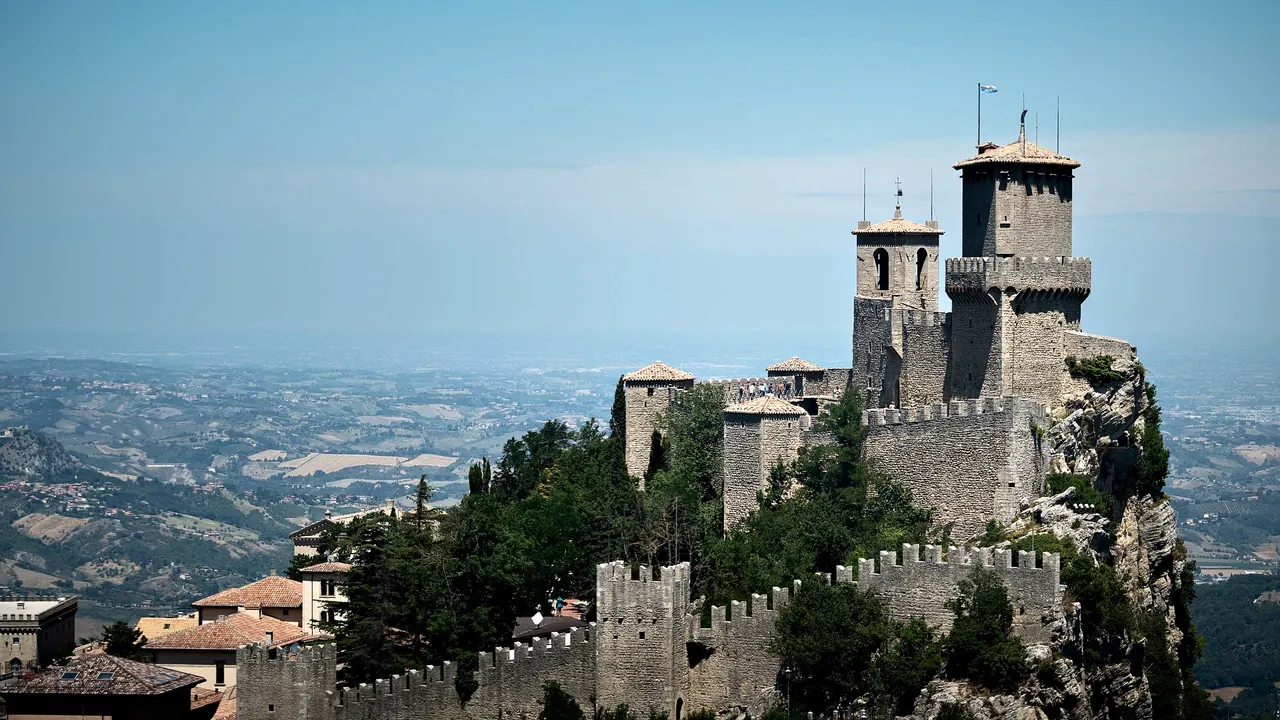
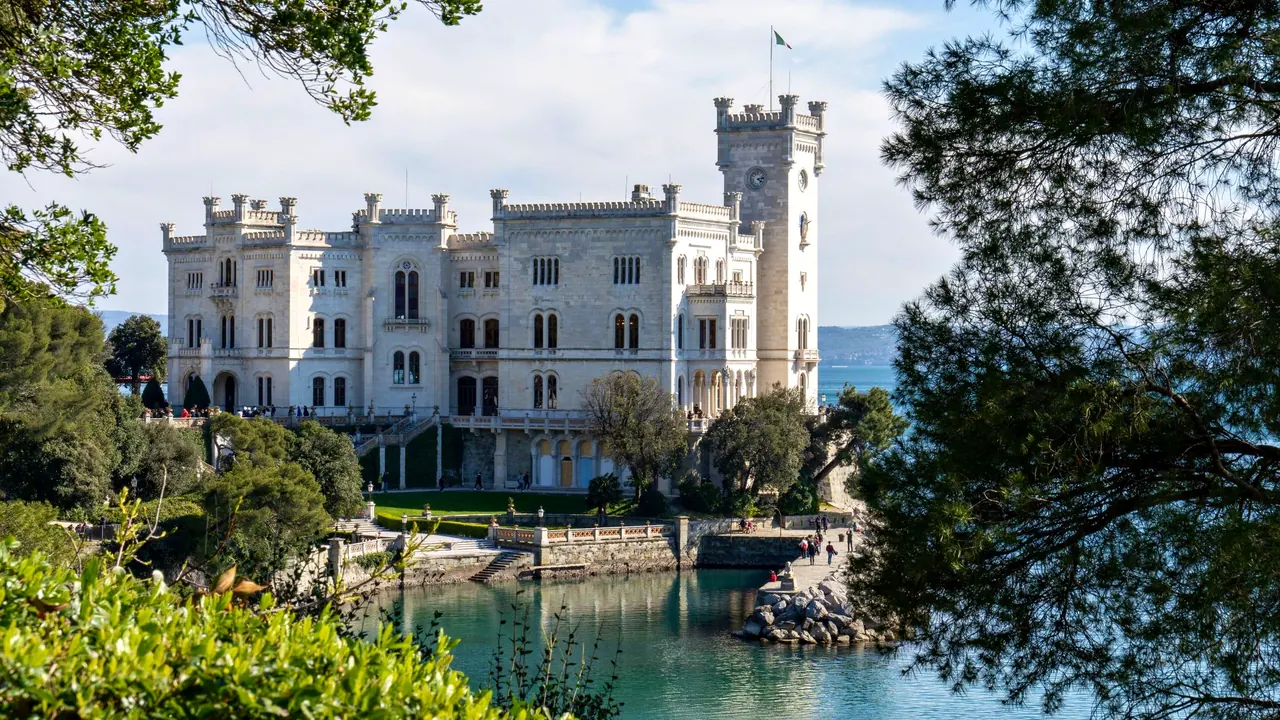
Photos: San Marino by Tibor Szabo, Pexels License; Trieste by Tibor Szabo, Pexels License.
San Marino or Trieste?
Our verdict in twelve categories, each scored against the same fixed benchmark cities, and the climate month by month, so you can choose for your trip.
Choose San Marino for
San Marino does not lead in any category we score.
San Marino works best as a short stop or as a quiet hilltop base for travellers with a car. The walled town on Monte Titano and its three towers make a memorable half day. The real reward is in the surroundings: San Leo, Urbino, Gradara and the Montefeltro hill towns, with the sandy Romagna shore below for afternoons by the sea. Expect calm evenings rather than a night out, and plan on driving.
Choose Trieste for
- live music and the arts
- food and drink
- nature and the outdoors
Trieste is the stronger choice for almost any trip longer than a couple of days. It is a real port city with Habsburg squares, opera at the Teatro Verdi, buffets and old coffee houses, swimming at Barcola and the Karst plateau right behind the houses. It is easy to get around without a car, and Slovenia, Friuli and Venice are all within a day's reach. Pick it if you want a place to live in for a week, not just a view to look at.
Scoreboard
Twelve categories on one fixed scale from 0 to 100. The shaded stretch is the gap between the two.
Your match
Pick a travel style or drag the sliders, and both match scores follow your weighting.
Has no clear advantage with the weighting you have chosen.
Wins on live music and the arts and food and drink with your weighting.
What matters to you?
Category by category
What the scores mean for a trip.
Beaches & swimming
In Trieste the sea is part of the city. People swim every day from Barcola's concrete platforms and pine lawns, from the old bathing establishments and from the pebble coves at Sistiana and Duino. San Marino has no shore of its own, so swimming means a trip of about half an hour down to Rimini or Riccione.
What you find at the bottom differs in kind. The Romagna shore is soft sand, rows of umbrellas and shallow water that toddlers enjoy. Trieste means climbing down ladders into clear water off rocks. For regular swimming Trieste wins, though families who want sand will find it on San Marino's side.
Food & drink
Trieste gives you far more to eat. Its buffets serve boiled meats with horseradish and sauerkraut, and you also find jota, sardoni and Central European cakes, plus a coffee culture with its own vocabulary and Karst farmhouses pouring Vitovska and Terrano.
San Marino's Romagna cooking of piadina, passatelli and hand-rolled pasta is honest. However, the summit restaurants live off day visitors, so the better meals mean heading down to Borgo Maggiore or over the border. Trieste is the place to plan meals around, though even there fine dining is thin.
Culture & sights
San Marino is a single striking sight: a walled ridge town with climbable towers, the Palazzo Pubblico and the story of an ancient republic, all seen in half a day. Trieste needs several days. It has the Habsburg grandeur of Piazza Unità and the Borgo Teresiano, the cathedral and castle on San Giusto, a Roman theatre, Miramare and a major synagogue.
Trieste also offers sombre history at the Risiera di San Sabba and the literary memory of Joyce and Svevo. San Marino has nothing of comparable range, so Trieste is the clear choice for a sightseeing trip.
Nightlife
Neither is a party town, but Trieste at least has evenings worth going out for. There is spritz on Piazza Unità, wine bars in Cavana kept busy by students, and summer kiosks along Barcola open late into warm nights.
On San Marino's summit, a glass of wine with the coast lights below is about all there is. Anyone wanting clubs has to drive down to the Riviera.
Nature & outdoors
San Marino's landscape is one limestone ridge with cliff views and gentle paths through woods, plus rolling Montefeltro farmland for drives and cycling. It is lovely for a morning but soon walked.
Trieste reaches much further. The Karst rises straight from the city, with the Strada Napoleonica, the Rilke Path at Duino and climbing in Val Rosandra. There are enormous caves at Grotta Gigante and Škocjan, a marine reserve for kayaking and serious sailing water in the gulf, and the Julian Alps for full mountain days.
Day trips
Both are good bases, but they open onto different worlds. From San Marino you reach the Italian Renaissance and medieval heartland: Urbino, San Leo, Gradara, Ravenna's mosaics and Rimini, with most hill towns needing a car.
Trieste has the edge in range and ease. It offers three countries: Aquileia, Cividale and star-shaped Palmanova in Friuli, then Piran, Ljubljana and Postojna in Slovenia, and Istria beyond. Venice is a long but realistic day by train.
Good for families
Trieste is a little easier with children. The flat waterfront and buses make days simple, and it has an aquarium, a science centre, Miramare's gardens and the giant cave. The catch is that swimming is off rocks and steps, and the upper town is steep.
San Marino delights children with its battlements and cable car, but little on the summit is built for them, and the pushchair-unfriendly lanes get crowded. Its strength lies down the hill, in the theme parks, waterparks and sandy shallows around Rimini, which work best with a car.
Getting around
Trieste's centre is flat and compact along the sea, and a dense bus network and bay ferries cover Barcola, Miramare, the Karst and Muggia, so a car is optional. Only the walk up San Giusto involves real climbing.
San Marino is tiny but almost all slope and steps. Without a car you rely on one bus line from Rimini and infrequent village buses, which leaves the surrounding hill towns effectively out of reach.
Shopping & style
San Marino's shops are driven by lower taxes. The main streets sell perfume, watches, leather goods and spirits more cheaply than in Italy, and an outlet centre on the valley floor adds fashion brands. Souvenirs make up the rest: ceramics, decorative crossbows, and the republic's stamps and coins for collectors. It suits bargain hunting more than browsing.
Trieste is the more rewarding place to wander with a bag. The antique and second-hand shops in the old town lanes recall its merchant past, and the best things to carry home are edible: coffee from the city's roasters, Karst wine and honey, and presnitz. Neither is a fashion destination, but Trieste's finds have more character.
Affordability
The two cost much the same, and both are fairly priced for northern Italy without being cheap. The difference is where the money goes. In San Marino you pay extra for a view terrace or a summit hotel, while fuel and spirits are cheaper thanks to lower taxes. In Trieste the buffets, bar coffee, buses and free swimming at Barcola keep everyday spending low, and seafood restaurants charge normal city prices.
Live music & performing arts
Trieste has a real stage life. The waterfront Teatro Verdi runs a full opera and ballet season with a rare taste for operetta, and there is also the Politeama Rossetti, a Slovenian-language theatre and summer concerts in the San Giusto castle courtyard.
San Marino has a small theatre and the costumed Medieval Days festival. That is fun as a spectacle, but for opera you would have to travel to Bologna or Pesaro.
Wellness & relaxation
San Marino is only calm once the day is over. On summer days the lanes around the towers fill with day visitors. The quiet comes when the coaches leave, with evening walks along the walls and long views over the plain.
Trieste is unhurried from morning to night. You can spend long mornings in old coffee houses over a newspaper, swim off Barcola in the afternoon and end the day on the Molo Audace as the sun sets over the gulf. Neither city goes beyond hotel spas, and thermal baths mean a separate outing, so Trieste is the more restful place to stay.
When should you go?
Pick your month. The climate figures are measured averages, not a forecast.
San Marino in July
Trieste in July
Daytime high, °C
Rainfall in the month, mm
Where the figures come from
San Marino's temperatures are measured 52 km from the centre, at Frontone.
San Marino has no rain gauge within 25 km of the centre, so its rainfall comes from a gridded climate dataset read at the city rather than from a gauge further away.
Temperature and rainfall are climate normals, averaged over the years shown. San Marino: 1991-2020 normals, Frontone (51.5 km from centre). Trieste: 1991-2020 normals, Trieste (1.6 km from centre).
Both cities follow a similar northern Adriatic year, with summer highs around 30°C in July and August, warm enough for the beach from late June to early September. In both places the sea is at its warmest then, around 25°C. Spring and early autumn are the best months for walking the streets, May and late September especially. Midsummer afternoons can feel heavy on San Marino's steep lanes and on the stairs up to San Giusto.
Autumn is the wet season in both places but hits Trieste harder, with November bringing about 125mm against San Marino's lighter totals. Trieste's sunniest stretch runs from May to August, and its short winter days come with the cold Bora. San Marino is a little colder in winter on its ridge, with January highs near 7°C, so both are best kept for the warmer half of the year.
Which traveller are you?
For a culture and arts trip, Trieste is the clear pick. It has Piazza Unità, the Borgo Teresiano, Miramare Castle, the Revoltella museum and a proper season of opera and ballet. San Marino's medieval towers and republican history fill half a day, and its stages are mostly quiet.
On a food and nightlife trip, choose Trieste. It has buffets carving boiled pork, Habsburg coffee houses, Karst osmize and aperitivo along the Canal Grande. San Marino's summit trades on views more than cooking and empties after the coaches leave, so a night out means driving down to Rimini.
For an outdoors trip, Trieste has more on its doorstep: walks on the Karst edge, the Val Rosandra gorge, huge caves, sailing and snorkelling at Miramare, with the Julian Alps beyond. San Marino offers pleasant paths around Monte Titano and quiet Montefeltro cycling roads, but nothing longer or wilder.
Before you go
| Measure | San Marino | Trieste |
|---|---|---|
| Official language | Italian | Italian |
| Currency | Euro (EUR) | Euro (EUR) |
| Sockets | CFL230 V, 50 Hz | CFL230 V, 50 Hz |
| Driving side | Right | Right |
| Time zone | UTC+1, UTC+2 in summer | UTC+1, UTC+2 in summer |
| Emergency number | 112 | 112 |
| Elevation | 675 m | 2 m |
| Main airport | Bologna Guglielmo Marconi Airport (BLQ)114 km from centre98 non-stop destinations | Trieste Airport (TRS)31 km from centre32 non-stop destinations |
| Public holidays this year | 18 days | 13 days |
By the numbers
| Measure | San Marino | Trieste |
|---|---|---|
| City population | 4,040 | 198,417 |
| People per km² | 569 | 2,332 |
| Museums within 10 km | 19 | 33 |
| UNESCO World Heritage sites within 50 km | 2 | 5 |
| Swim season, months above 21 °C | 4 months | 4 months |
Where else could you go?
Every comparison below shares a destination with this one, so you can follow San Marino or Trieste somewhere new.