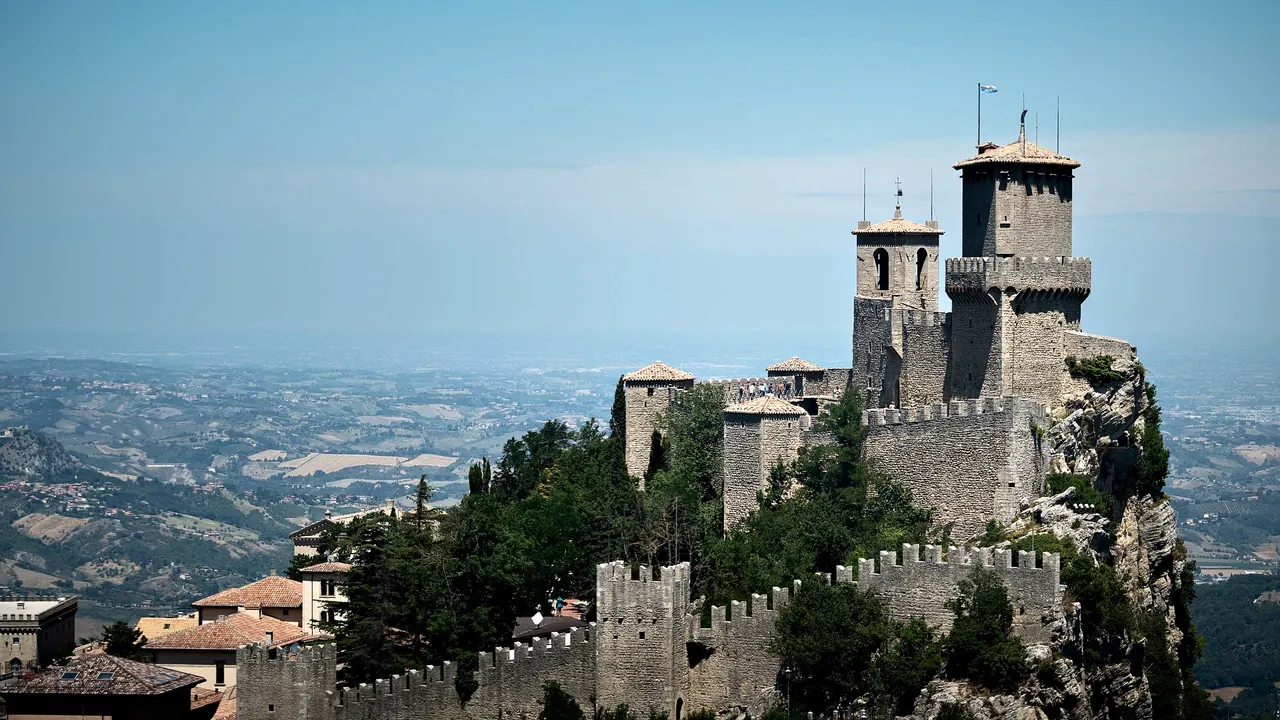
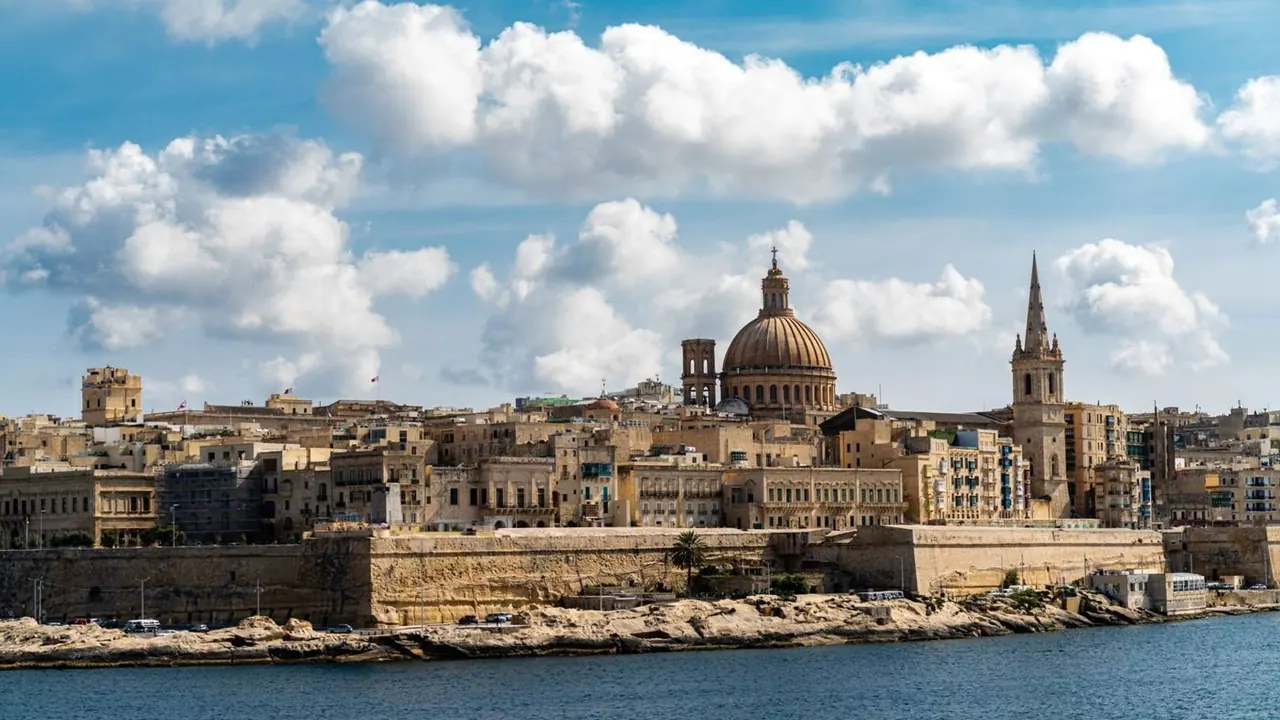
Photos: San Marino by Tibor Szabo, Pexels License; Valletta by Pho Tomass, Pexels License.
San Marino or Valletta?
Our verdict in twelve categories, each scored against the same fixed benchmark cities, and the climate month by month, so you can choose for your trip.
Choose San Marino for
- prices
San Marino suits a traveller touring the Italian hinterland by car. On its own the walled summit takes about half a day, but as a base it puts the Montefeltro within easy reach: San Leo's fortress, ducal Urbino, Ravenna's mosaics and the Romagna shore below. Choose it for quiet evenings on the walls and green hill country, not for a city to live in for a week.
Choose Valletta for
- nightlife
- live music and the arts
- culture and sights
Valletta is the stronger destination in its own right. The Knights' limestone city, with St John's Co-Cathedral and the Grand Harbour, fills two or three days. The clear sea is reached by ladders off the rocks, there are wine bars on Strait Street in the evening, and buses reach the whole island without a car. It is the better pick for culture, swimming and a livelier, more varied trip.
Scoreboard
Twelve categories on one fixed scale from 0 to 100. The shaded stretch is the gap between the two.
Your match
Pick a travel style or drag the sliders, and both match scores follow your weighting.
Wins on prices with your weighting.
Wins on nightlife and live music and the arts with your weighting.
What matters to you?
Category by category
What the scores mean for a trip.
Beaches & swimming
Valletta has the sea right at its feet. Locals swim off limestone ledges under the bastions and off the Sliema rocks, the water is unusually clear, and Golden Bay, Mellieha and the rock pool at St Peter's are easy bus trips.
San Marino has no shore of its own. The nearest swimming is on the sandy Riviera at Rimini and Riccione, half an hour down the mountain, among rows of umbrellas and beach clubs. That shore is shallow and good for small children, but a beach day there takes planning.
Food & drink
Valletta is the better place to eat. Inside the walls there are cheap pastizzi counters, small wine bars on the stepped streets and a few ambitious kitchens, and for fish you go to the harbour at Marsaxlokk. The cooking mixes Sicily, North Africa and Britain, with rabbit stew and lampuki pie as its signature dishes.
San Marino's cooking is honest Romagna fare: hand-rolled pasta, passatelli in broth and piadina. The trouble is the summit, where terraces sell the view more than the cooking. The good meals are down in Borgo Maggiore or over the border.
Culture & sights
The gap here is wide. Valletta itself is the monument: a planned Renaissance city of honey-coloured stone, with the gilded Co-Cathedral and its Caravaggio, the Grandmaster's Palace, Fort St Elmo and the MUZA art museum. The Three Cities and the Hypogeum add a second and third day.
San Marino's appeal is the setting and the story. Three towers stand on a cliff edge, and the Palazzo Pubblico speaks for one of the oldest republics in the world. It is memorable, but a half-day visit covers it.
Nightlife
Neither place parties inside its walls, but Valletta at least offers an evening. Strait Street, once the sailors' quarter, has wine bars and cocktail places with tables out on the steps, and Paceville's clubs run until dawn a short ride away. In San Marino, a few terraces stay open for a drink over the coast lights, and anything later means the Rimini seafront.
Nature & outdoors
The two offer different landscapes. San Marino is green and inland: wooded paths around Monte Titano, cliffs looking over the Romagna plain, and quiet cycling roads through the Marecchia valley and the Montefeltro farmland.
Valletta has the stronger outdoor offer, and most of it is at sea. Wrecks, caves and reefs close to shore make Malta a real diving destination, and the Blue Grotto and Gozo's Blue Hole are known well beyond the island. On land there is less: dry, built-up country, with good cliff walks at Dingli and spring wildflowers.
Day trips
Both make excellent bases, and the difference lies in the range of places and in how you reach them. From San Marino you get a cross-section of Italy: the fortress of San Leo, Renaissance Urbino, the Byzantine mosaics of Ravenna and Bologna further on. Without a car, though, most of the hill towns are hard to reach.
Valletta's outings are all on one island, with one shared character, but they reach much further back in time. There are temples older than the pyramids at Hagar Qim and Mnajdra, the silent walled town of Mdina, and Gozo by ferry. Buses and boats reach all of them.
Good for families
Valletta is easier with children. English is spoken everywhere and distances are short, and the noon cannon at the Upper Barrakka Gardens, the aquarium at Qawra and Popeye Village all go down well. Its steps and summer heat are hard on pushchairs, though, so many families stay in Sliema.
San Marino's towers, battlements and cable car thrill children for a morning. The real family attractions, Italia in Miniatura, Fiabilandia and the waterparks, are on the coast and need a car.
Getting around
Both old towns are walked on foot, and both have plenty of stairs. The difference is what lies beyond them. Valletta has a lift down to the harbour and ferries to Sliema and the Three Cities, and a bus network from the city gate reaches almost every corner of Malta. Those buses are slow, but you don't need a car.
San Marino has a cable car to Borgo Maggiore and a car-free core. Beyond that there is just the bus to Rimini, and for the surrounding hill towns you need a car.
Shopping & style
Lower taxes on one side and handmade crafts on the other sum up the difference. San Marino's main streets are lined with shops selling perfume, watches, leather goods and spirits for less than in Italy, alongside souvenir ceramics, decorative crossbows and the republic's stamps and coins for collectors. An outlet centre on the valley floor adds fashion brands, but there is little independent design or craft of any depth, and serious shoppers head to Bologna.
Valletta has more worth taking home. Small workshops sell silver filigree, Gozo bobbin lace and blown glass, and at Ta' Qali near Mdina you can watch them being made. Republic Street and Merchant Street have the chains and jewellers, with a street market at the lower end of Merchant Street, and Sliema across the harbour has the malls. Still, neither city is worth the trip for shopping alone.
Affordability
Overall costs are much the same, but the money goes on different things. In San Marino, rooms and view terraces on the summit cost extra. Lower taxes make fuel and spirits cheaper than in Italy. The real extra cost is the car you need to see the region.
In Valletta, rooms inside the walls are mostly boutique townhouses and cost more than across the harbour in Sliema or Gzira, though winter rates are kinder. Bus fares are low, so getting around the island costs little. Separately, pastizzi and other street snacks make a very cheap lunch.
Live music & performing arts
Valletta has a real stage. Its small, gilded Manoel Theatre dates from 1731 and hosts chamber music, drama and the Malta Philharmonic. There is also an open-air stage in the ruins of the Royal Opera House, a winter baroque festival and jazz on the Grand Harbour. On Gozo, two rival opera houses stage productions every autumn.
San Marino has a small theatre, and its main event is the costumed Medieval Days festival with crossbows and flag-throwers. For opera you head to Bologna or Rossini's Pesaro.
Wellness & relaxation
Neither has a bathing tradition, and their spas are ordinary hotel affairs. Both are calmest once the day visitors have left. Valletta is the more restful of the two: the Barrakka Gardens look over the harbour, the limestone turns gold in the evening, and mild springs and autumns slow the city down, with a swim nearby.
San Marino's quiet comes on summer evenings, walking the walls high above the plain. The thermal spas are a separate trip into the Apennine valleys.
When should you go?
Pick your month. The climate figures are measured averages, not a forecast.
San Marino in July
Valletta in July
Daytime high, °C
Rainfall in the month, mm
Where the figures come from
San Marino's temperatures are measured 52 km from the centre, at Frontone.
San Marino has no rain gauge within 25 km of the centre, so its rainfall comes from a gridded climate dataset read at the city rather than from a gauge further away.
Temperature and rainfall are climate normals, averaged over the years shown. San Marino: 1991-2020 normals, Frontone (51.5 km from centre). Valletta: 1991-2020 normals, Luqa (5.9 km from centre).
San Marino has a short, clear summer. June to August are warm, with highs around 30°C in July, and the sea down at Rimini is warm enough for swimming from late June to mid-September. May and September are the best months for walking the summit and the hill towns. Autumn is the wettest part of the year, with rain building to about 105mm in November, and winter is cold and grey on the ridge.
Valletta is hotter and much drier. Summer brings almost no rain and long sunny days, and July and August reach about 32°C, which makes midday sightseeing hard work. The sea peaks near 27°C in August and stays warm well into October, so the swimming season runs far longer than on the Adriatic. Spring and late autumn are ideal for exploring on foot. Winter is mild at around 16°C, though most of the year's rain falls between October and January.
Which traveller are you?
For a culture and arts trip, Valletta is the clear choice. A whole UNESCO city, a Caravaggio in the Co-Cathedral, the Three Cities across the harbour and the 18th-century Manoel Theatre fill several days. San Marino's towers and Palazzo Pubblico take a morning.
On a food and nightlife trip, Valletta again comes out ahead. It has pastizzi counters, Sunday fish at Marsaxlokk, wine bars along Strait Street and Paceville's clubs half an hour away. San Marino's summit goes quiet once the coaches leave, and a night out means driving down to Rimini.
For a beach and sun trip, choose Valletta. You can swim off the rocks below the bastions, sandy bays are an hour away by bus, and summers are sunnier, with the sea warm into autumn. From San Marino, the beach is a separate outing down the mountain.
Before you go
| Measure | San Marino | Valletta |
|---|---|---|
| Official language | Italian | English, Maltese |
| Currency | Euro (EUR) | Euro (EUR) |
| Sockets | CFL230 V, 50 Hz | G230 V, 50 Hz |
| Driving side | Right | Left |
| Time zone | UTC+1, UTC+2 in summer | UTC+1, UTC+2 in summer |
| Emergency number | 112 | 112 |
| Elevation | 675 m | 56 m |
| Main airport | Bologna Guglielmo Marconi Airport (BLQ)114 km from centre98 non-stop destinations | Malta International Airport (MLA)6 km from centre113 non-stop destinations |
| Public holidays this year | 18 days | 14 days |
By the numbers
| Measure | San Marino | Valletta |
|---|---|---|
| City population | 4,040 | 5,197 |
| People per km² | 569 | 6,496 |
| Museums within 10 km | 19 | 16 |
| UNESCO World Heritage sites within 50 km | 2 | 3 |
| Swim season, months above 21 °C | 4 months | 6 months |
Where else could you go?
Every comparison below shares a destination with this one, so you can follow San Marino or Valletta somewhere new.
- Assisivs San Marino
- Florencevs San Marino
- Bolognavs San Marino
- Sienavs San Marino
- Syracuse, Sicilyvs Valletta
- Pulavs San Marino