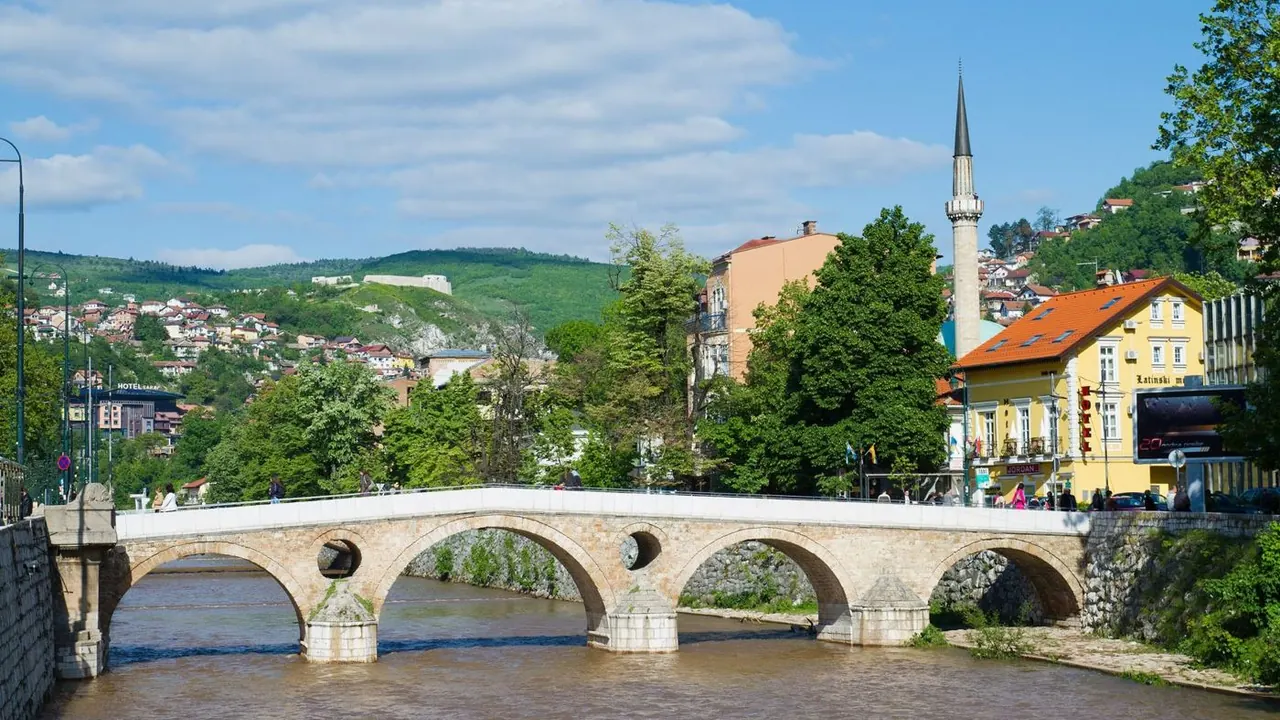
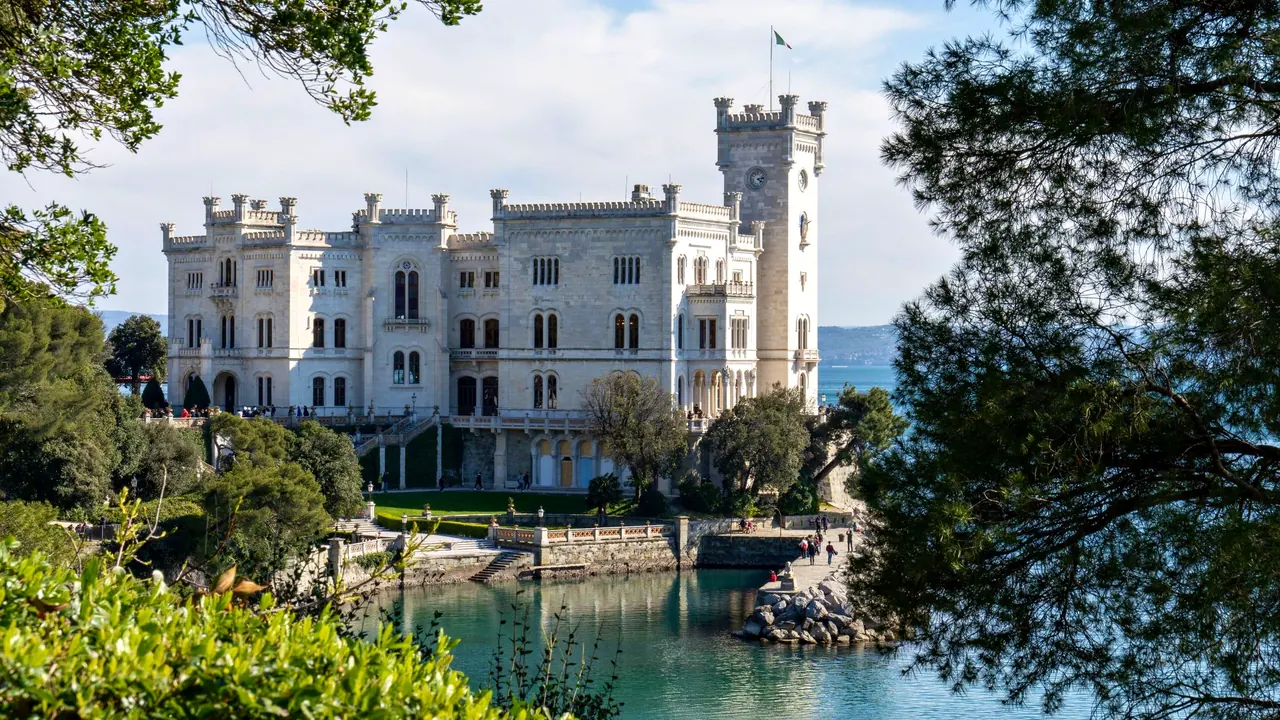
Photos: Sarajevo by Tumi-1983, CC0; Trieste by Tibor Szabo, Pexels License.
Sarajevo or Trieste?
Our verdict in twelve categories, each scored against the same fixed benchmark cities, and the climate month by month, so you can choose for your trip.
Choose Sarajevo for
- prices
- nightlife
- nature and the outdoors
Sarajevo suits a traveller who wants a lot for very little. An Ottoman bazaar and Habsburg avenues lie within one short walk, the story of the 1990s siege is told where it happened, and mountain trails and Olympic ski slopes are under an hour away. It is far cheaper to stay in than almost anywhere else in Europe, and its café-bars and student cellars make it the livelier of the two in the evening.
Choose Trieste for
- beaches
- day trips
- families
Choose Trieste for a trip with the sea in it. Swimming off the Barcola platforms is part of summer life, and Friuli, Slovenia and even Venice are all realistic day trips. The Teatro Verdi has an opera season worth planning a visit around. Families, and anyone who wants a calm waterfront that is easy to walk, will find it the more comfortable base, though at Italian prices.
Scoreboard
Twelve categories on one fixed scale from 0 to 100. The shaded stretch is the gap between the two.
Your match
Pick a travel style or drag the sliders, and both match scores follow your weighting.
Wins on prices and nightlife with your weighting.
Wins on beaches and day trips with your weighting.
What matters to you?
Category by category
What the scores mean for a trip.
Beaches & swimming
These two are not close. Sarajevo is a valley city about three hours from the Adriatic, so swimming there means cold mountain rivers, Jablanica lake or a pool.
Trieste has the sea on its doorstep, though not on sand. Locals lie on Barcola's concrete terraces and pine-shaded lawns and climb down ladders into clear water, and there are prettier pebble coves at Sistiana, Duino and Grignano. If you want soft sand and shallow water you will be disappointed, but if you are happy swimming off rocks it works from June to September.
Food & drink
Both cities cook a narrow range very well and both treat coffee as a ritual, but the flavours are different. Sarajevo's food is Ottoman-Balkan: ćevapi in somun bread from the Baščaršija grills, burek sold by weight, lamb slow-cooked under a metal lid, and Bosnian coffee from a copper džezva with rahat lokum.
Trieste's food is Central European and Adriatic at once. The old buffets carve boiled pork for you, and menus offer jota soup, sardoni and presnitz, with espresso ordered in the city's own coffee vocabulary. Wine lovers also get the Karst osmize, farmhouses that open for a few weeks to sell their own Vitovska and Terrano. Sarajevo offers rakija and local beer instead.
Culture & sights
Sarajevo is compact and intense. In a few flat streets you pass from the Ottoman bazaar of Baščaršija and the Gazi Husrev-beg Mosque to Austro-Hungarian avenues with the Orthodox and Catholic cathedrals and the Old Synagogue. The Latin Bridge, where the assassination of 1914 took place, and the memory of the siege at the Tunnel of Hope and the War Childhood Museum make it the more moving of the two. The medieval Sarajevo Haggadah in the National Museum is a rare treasure.
Trieste works on a grander scale, with Habsburg architecture set out along the sea. Piazza Unità opens onto the gulf, the Borgo Teresiano grid lines the Canal Grande, and San Giusto hill has its mosaics and castle, with a Roman theatre below. The white Miramare Castle on the coast is the set piece, and the Risiera di San Sabba is a sober counterweight.
Nightlife
Neither is a clubbing city, but Sarajevo has the livelier nights. Its café-bars fill from the afternoon and get louder after dark. The streets around Ferhadija stay busy on warm evenings, and students keep cellar bars and small clubs going past midnight at weekends, with cheap drinks.
An evening in Trieste is built around the aperitivo: spritz or local white wine around Piazza Unità, the Canal Grande and Cavana, moving out to the Barcola kiosks in summer. The population is older, and on a winter weeknight the streets are quiet by midnight. The city is better for a long dinner than a late night.
Nature & outdoors
Both have wild country just behind the houses, but Sarajevo's is bigger and higher. A cable car lifts you from the Old Town onto Trebević, and Jahorina and Bjelašnica offer skiing in winter and ridge hiking and biking in summer. The trail to Lukomir above the Rakitnica canyon and rafting on the Neretva give it real mountain depth, though the paths are only lightly marked.
Trieste's outdoors is gentler and mixes land with sea. There are cliff walks on the Strada Napoleonica and the Rilke Path, the Val Rosandra gorge and the huge Grotta Gigante cave. On the water you can sail the gulf or snorkel in the Miramare marine reserve.
Day trips
From Trieste, more places are within easy reach, and in more directions. In Friuli you have Aquileia's mosaic floor, star-shaped Palmanova, Cividale and the Collio wine villages. Piran and Ljubljana are across the Slovenian border, and Venice is a long but realistic day by train.
Sarajevo has one outstanding outing: Mostar's rebuilt bridge, reached by a scenic train through the Neretva gorge, with Konjic, Blagaj and Počitelj on the same route. Travnik and the Višegrad bridge are further away. Off the Mostar line the roads are slow and winding, and you usually need a car or a tour.
Good for families
Trieste is the easier city with children. It is calm and safe, and the Miramare gardens, the Grotta Gigante, the waterfront aquarium, the hands-on science centre and summer days at Barcola can fill several days. It suits older children best, since the swimming is off rocks.
Sarajevo welcomes children warmly and has the Trebević cable car, carriage rides to Vrelo Bosne and a small zoo. But its main sights are about war, the hillsides are steep, and grill smoke and winter smog are hard on small lungs.
Getting around
Both cities have a flat, walkable centre with steep, stepped hills behind it, and neither has a metro. Trieste's transport is the more useful to a visitor: a dense bus network reaches Barcola, Miramare and the Karst, and passenger boats cross the bay to Muggia.
Sarajevo's historic tram runs in a single line along the valley from Baščaršija to Ilidža, which is easy to understand. Away from it, the buses and minibuses are harder to follow, and you need a taxi or a tour for the Tunnel of Hope and the ski mountains. Taxis, at least, are plentiful and cheap.
Shopping & style
Neither city is a shopping destination, and the things worth buying are different. In Sarajevo it is crafts: copper coffee sets hammered on Kazandžiluk, and kilims, leather slippers and filigree jewellery in the Bezistan and the bazaar lanes, though you need to look closely past the souvenir stock. In Trieste the best finds are antiques in the old-town lanes and things to eat and drink: coffee from local roasters, Karst wine and honey, and presnitz.
Affordability
Sarajevo is by far the cheaper stay. Grilled meals, pastries and coffee cost very little, museums are cheap to enter, and comfortable guesthouses in the centre are priced well below Western Europe. Only the Old Town and the summer film festival push prices up a little.
Trieste is reasonable for northern Italy and cheaper than the famous Italian cities, and some of its best experiences, like Barcola, San Giusto and walks on the Karst, cost nothing. Seafood dinners and the better hotels still charge normal Italian city prices, and rooms get scarcer around the Barcolana regatta.
Live music & performing arts
Trieste has more to book. The Teatro Verdi on the waterfront runs a full season of opera and ballet and keeps up the Habsburg love of operetta, which is rare in Italy. The Politeama Rossetti adds theatre and musicals, and in summer there are concerts in the castle courtyard on San Giusto.
Sarajevo's National Theatre also stages drama, opera and ballet, but most plays are in the local language. Its highlights are festivals: MESS for theatre in autumn and the jazz festival in November. Its most distinctive sound is sevdah, which you can hear in traditional restaurants and small clubs.
Wellness & relaxation
Sarajevo has thermal water, while Trieste has sea air. At Ilidža, at the end of the tram line, sulphurous springs used since Roman times feed a spa with warm pools, and the shaded streams of Vrelo Bosne are close by for a quiet walk. Winter smog in the valley takes away some of the calm.
Trieste has no thermal baths of its own, only hotel spas and a few day spas. It relaxes you through its pace instead: long sittings over a newspaper in the old coffee houses, and walks along the Molo Audace as the sun sets over the gulf.
When should you go?
Pick your month. The climate figures are measured averages, not a forecast.
Sarajevo in July
Trieste in July
Daytime high, °C
Rainfall in the month, mm
Temperature and rainfall are climate normals, averaged over the years shown. Sarajevo: 1991-2020 (rainfall 1971-2000) normals, Sarajevo-Bejelave (2 km from centre). Trieste: 1991-2020 normals, Trieste (1.6 km from centre).
Sarajevo sits in a high valley, so its summers are warm without being heavy. Daytime highs reach about 28°C in July and August, and these are its sunniest months, so June to September is the easiest time for walking the streets and the mountain trails. Winters are properly cold, near 4°C by day. That is good for skiing on the peaks but grey down in the city. Rain is spread fairly evenly through the year, so no month is reliably dry.
Trieste is much milder in winter, around 9°C, and a little warmer and sunnier in high summer. From June to September the sea is warm enough for easy swimming, reaching about 25°C in July and August. Its wet season runs from September to November and is heaviest in November, at about 125mm. That leaves late spring and early summer as its best mix of sun, sea and walking weather.
Which traveller are you?
For a beach and sun trip, Trieste is the clear choice. Sarajevo is inland, about three hours from the coast. In Trieste you swim all summer off Barcola's stepped platforms and from the pebble coves at Sistiana and Duino, in clear Adriatic water.
On a trip on a tight budget, Sarajevo goes much further. Ćevapi, pastries and bazaar coffee cost very little, central guesthouses are priced well below Western Europe, and trams and taxis are cheap. Trieste charges ordinary Italian prices for seafood and the better hotels.
For a winter ski trip, Sarajevo is the one to pick. Jahorina and Bjelašnica, the 1984 Olympic mountains, are under an hour's drive away, with reliable snow and gentle slopes for beginners. Trieste's winter brings the cold Bora wind, not skiing.
Before you go
| Measure | Sarajevo | Trieste |
|---|---|---|
| Official language | Croatian, Serbian, Bosnian | Italian |
| Currency | Convertible Mark (BAM) | Euro (EUR) |
| Sockets | CF230 V, 50 Hz | CFL230 V, 50 Hz |
| Driving side | Right | Right |
| Time zone | UTC+1, UTC+2 in summer | UTC+1, UTC+2 in summer |
| Emergency number | 112 | 112 |
| Elevation | 518 m | 2 m |
| Main airport | Sarajevo International Airport (SJJ)7 km from centre38 non-stop destinations | Trieste Airport (TRS)31 km from centre32 non-stop destinations |
| Public holidays this year | 8 days | 13 days |
By the numbers
| Measure | Sarajevo | Trieste |
|---|---|---|
| City population | 275,524 | 198,417 |
| People per km² | 1,947 | 2,332 |
| Museums within 10 km | 26 | 33 |
| UNESCO World Heritage sites within 50 km | 1 | 5 |
| Swim season, months above 21 °C | - | 4 months |
Where else could you go?
Every comparison below shares a destination with this one, so you can follow Sarajevo or Trieste somewhere new.
- Rovinjvs Trieste
- Ljubljanavs Trieste
- Mostarvs Sarajevo
- Bledvs Trieste
- Venicevs Trieste
- Dubrovnikvs Sarajevo