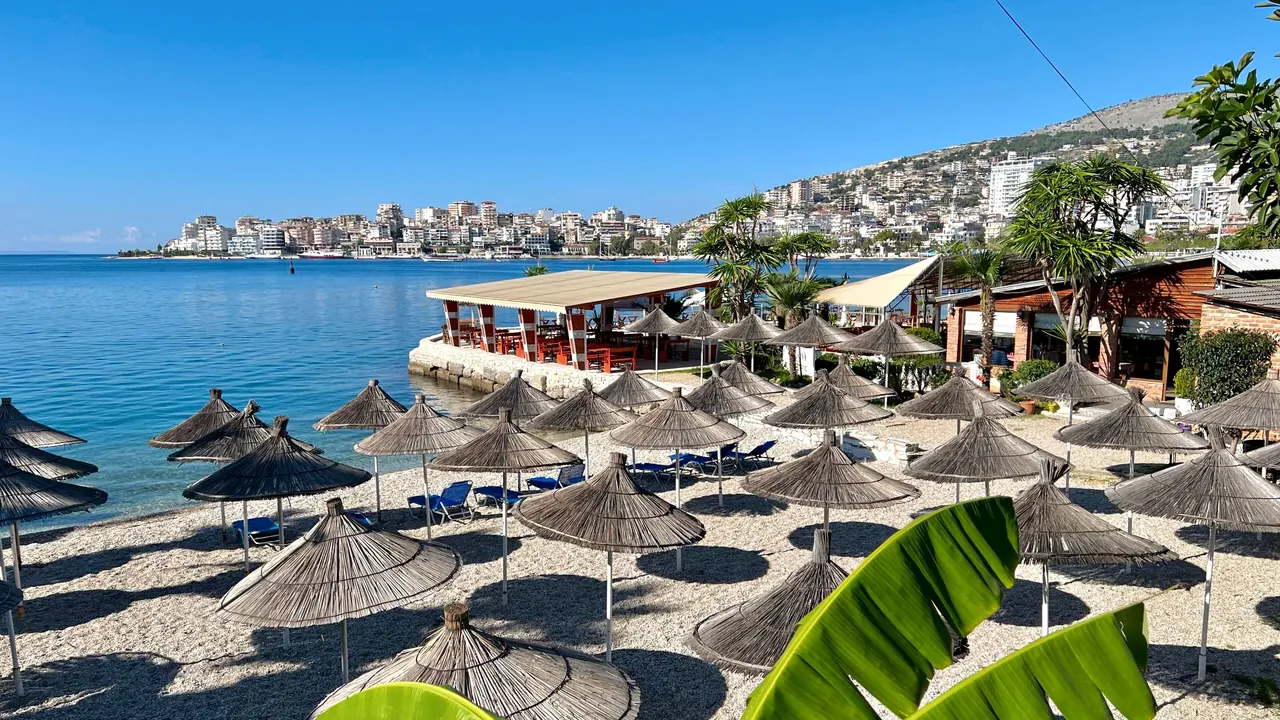
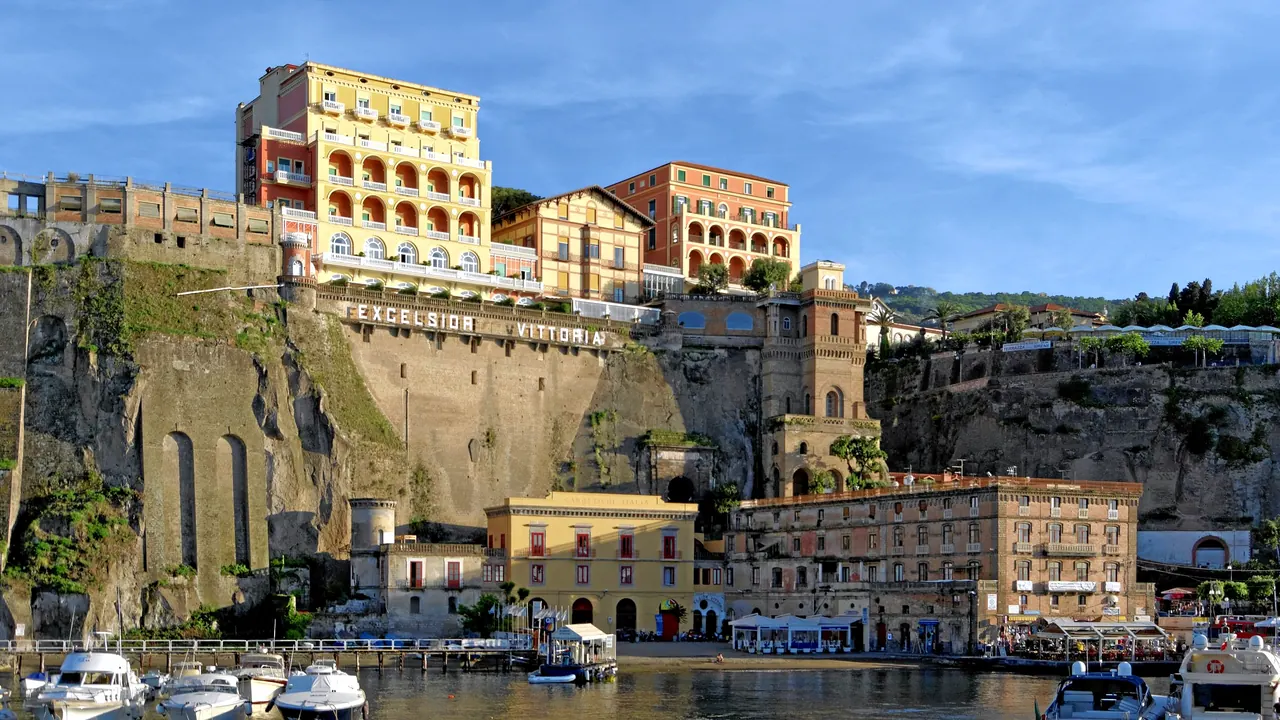
Photos: Saranda by Sharon Hahn Darlin, CC BY 2.0, cropped; Sorrento by Berthold Werner, CC BY-SA 3.0, cropped.
Saranda or Sorrento?
Our verdict in twelve categories, each scored against the same fixed benchmark cities, and the climate month by month, so you can choose for your trip.
Choose Saranda for
- prices
- beaches
- nightlife
Saranda suits travellers who want a sea vacation that costs little. The clear coves at Ksamil and the quieter Riviera bays to the north are the point of going, and the evenings bring a loud, young summer scene along the promenade. Butrint and a ferry to Corfu add variety, but plan the trip around swimming, not around eating out or the sights in town.
Choose Sorrento for
- day trips
- shopping
- wellness
Sorrento is the better pick for a trip spent out and about. From one easy base you can reach Pompeii, Capri, the Amalfi Coast and Naples, walk the terraced paths above the town and come back to proper Campanian cooking and a hotel terrace over the bay. Swimming from piers and rocks is the trade-off, and so is the summer bill.
Scoreboard
Twelve categories on one fixed scale from 0 to 100. The shaded stretch is the gap between the two.
Your match
Pick a travel style or drag the sliders, and both match scores follow your weighting.
Wins on prices and beaches with your weighting.
Wins on day trips and shopping with your weighting.
What matters to you?
Category by category
What the scores mean for a trip.
Beaches & swimming
Beaches are Saranda's strength. The town's own pebble strips are only for a quick dip, but twenty minutes south, Ksamil's pale coves and small islets sit in strikingly clear water. North along the Riviera, Lukova and Borsh give more room on long pebble bays backed by olive groves.
Sorrento has almost no beach in the usual sense. The town stands on a cliff, so people swim from wooden lido piers at Marina Piccola and Marina Grande or from the rocks at the Bagni della Regina Giovanna, straight into deep water. For a real pebble beach you take a bus or a boat.
Food & drink
Sorrento eats better, and it has more choice. You get gnocchi alla sorrentina, fish cooked all'acqua pazza, mozzarella and provolone from the hill dairies, pizza in the Naples tradition and lemons in everything. The villages of the peninsula also hold some highly regarded fine dining.
Saranda's cooking is good but narrow: Butrint lagoon mussels, grilled octopus, morning byrek and stuffed peppers in olive oil, best found in the back-street taverns. Beyond that there is little to choose from, and the wine and coffee culture is thin.
Culture & sights
Neither town has much to see within its own streets, but Sorrento has a little more. Its old centre keeps the Roman street grid, with the cathedral, the cloister of San Francesco with its mix of arches, the Museo Correale's Neapolitan collections and the odd sunken ravine of the Vallone dei Mulini. Saranda's town sights are a few scattered fragments: the mosaic floors of the old synagogue-church, sections of ancient wall among the apartment blocks, and Lekuresi Castle, which people climb mainly for the view across to Corfu.
Nightlife
If you want a night out, Saranda in high summer is the livelier of the two. Cocktail bars along the promenade play loud music until well after midnight, and a few beach clubs at Ksamil have DJs, with a young crowd of Albanians and Kosovars on vacation.
Sorrento's evenings are slower and older: the passeggiata along Corso Italia, wine on a terrace over the bay, and piano bars playing Neapolitan songs. The last trains and ferries leave early, so a big night in Naples means staying over.
Nature & outdoors
Sorrento is the better choice for walkers. Footpaths link the hill villages across the lemon terraces, with trails to Punta Campanella facing Capri and down to the protected bay of Ieranto. The Path of the Gods, the beech woods of Monte Faito and the crater of Vesuvius are all within reach.
Saranda's landscape is wilder and less organised. Its draws are the lagoon and reed beds of Butrint for birdwatching, the deep blue spring of the Blue Eye inland and sea kayaking along the Riviera cliffs. The mountain trails are mostly unmarked.
Day trips
Saranda's list is short but strong. Half an hour south are the layered ruins of Butrint in their lagoon woodland, inland are the stone tower houses of Gjirokaster, and the Venetian old town of Corfu is under an hour away by ferry.
Sorrento puts far more within easy reach. The train gets to Pompeii in about half an hour and to Herculaneum a little further on, and Vesuvius fits into the same day. Ferries cross to Capri, and in summer boats run along the Amalfi Coast to Positano and Amalfi, where buses climb up to Ravello. Naples and its archaeological museum are about an hour away, and Paestum's Greek temples make a longer day out.
Good for families
Both towns welcome children warmly, and neither has a zoo, aquarium or theme park, so the difference lies in the water and the streets. Saranda's sheltered, calm coves at Ksamil are kinder to young swimmers than Sorrento's ladders down into deep water.
On land, Sorrento wins the ground back. Its flat, largely pedestrian centre is easy with a pushchair, and a boat to Capri or the train to Pompeii makes a good outing for children. Saranda's steep lanes and chaotic summer traffic make getting about with small children harder work.
Getting around
Sorrento is the easier place to get around without a car. The flat centre is walkable, a lift drops you to the marinas, and the Circumvesuviana train and the ferries reach the main sights directly, though the trains are crowded and the coast buses slow.
In Saranda the promenade links most things on foot, but hotels up the slopes mean steep climbs. Buses run without printed timetables, and the Blue Eye, Gjirokaster and the Riviera beaches are much easier with a hire car or taxi.
Shopping & style
Sorrento has more worth buying, mostly local crafts: intarsia boxes and trays, leather sandals made to measure while you wait, painted ceramics, linen and cameo jewellery. Saranda has mostly beachwear and souvenirs. The best things to take home are olive oil, mountain honey and raki from the market stalls, and for craftwork you go to the bazaar in Gjirokaster.
Affordability
Your money goes much further in Saranda. Rooms in family hotels, simple fish suppers and local transport stay cheap for most of the year, and only Ksamil's sunbeds and seafront hotels rise steeply in July and August.
Sorrento sits on one of Italy's most sought-after coasts and charges for sea views, terrace dinners, lido sunbeds and boat trips. The cheap trains and fairly priced pizzerias help, but the stay itself costs much more.
Live music & performing arts
Neither is a place to go for performances, but Sorrento has a little more on. There are tarantella and Neapolitan song shows, summer chamber concerts in the cloister of San Francesco, and opera at the Teatro di San Carlo in Naples, about an hour away. In Saranda it comes down to the odd open-air concert or a summer performance in Butrint's ancient theatre. Albanian polyphonic singing is better sought inland.
Wellness & relaxation
Sorrento is the better place to unwind. The large cliff hotels have spas and pools above the bay, the old villa gardens and lemon groves set a slow pace, and Ischia's thermal gardens are a ferry ride away. Saranda offers a hotel spa or a beach-resort massage and not much more. It only really settles in May, June and late September, when long lunches and quiet terraces replace the noise of summer.
When should you go?
Pick your month. The climate figures are measured averages, not a forecast.
Saranda in July
Sorrento in July
Daytime high, °C
Rainfall in the month, mm
Where the figures come from
Saranda's temperatures are measured 30 km from the centre, at Kerkyra Airport.
Saranda has no rain gauge within 25 km of the centre, so its rainfall comes from a gridded climate dataset read at the destination rather than from a gauge further away.
Sorrento has no rain gauge within 25 km of the centre, so its rainfall comes from a gridded climate dataset read at the destination rather than from a gauge further away.
Sorrento's sunshine is measured 54 km from the centre, at Grazzanise.
Temperature and rainfall are climate normals, averaged over the years shown. Saranda: 1991-2020 normals, Kerkyra Airport (29.8 km from centre). Sorrento: 2005-2025 (sunshine 1991-2020, rainfall 1991-2020) normals, Capri (17 km from centre).
The two coasts follow much the same calendar. In both, the sea is warm enough for swimming from June into October and is warmest in August, at about 25°C off Saranda and a degree warmer off Sorrento. Saranda is hotter and sunnier in high summer. July and August reach 32°C there, which makes the climb to the castle or a walk through town hard going at midday. Sorrento peaks nearer 30°C, so a day at Pompeii or on the peninsula footpaths is a little easier.
May is pleasant in both places for walking and day trips, with warm, sunny days and little rain, but the sea is still cool at about 19°C, so the swimming season really starts in June. Rain returns in September and builds through autumn. Saranda's winters are much wetter, though, with November and December each bringing well over 200mm. Neither place is at its best from December to March.
Which traveller are you?
On a trip on a tight budget, Saranda lets the same money cover a much longer stay. You can take a room in a family hotel, eat byrek for breakfast and grilled fish for supper, and ride the local bus to the coast. In Sorrento a careful budget means counting every meal out.
For a beach and sun trip, Saranda is the one to book. You can spend whole days by the water, arriving early to claim a spot, taking a boat out to the islets or driving north for an emptier bay. In Sorrento a beach day usually means paying for a sunbed or catching a bus.
For a relaxing and wellness trip, Sorrento makes slowing down easier. You can plan unhurried mornings on a terrace above the bay and an afternoon in the hotel spa, with perhaps one gentle outing by boat, ideally in spring or autumn. In Saranda you have to avoid high summer to find any calm.
Before you go
| Measure | Saranda | Sorrento |
|---|---|---|
| Official language | Albanian | Italian |
| Currency | Lek (ALL) | Euro (EUR) |
| Sockets | CF220 V, 50 Hz | CFL230 V, 50 Hz |
| Driving side | Right | Right |
| Time zone | UTC+1, UTC+2 in summer | UTC+1, UTC+2 in summer |
| Emergency number | 112 | 112 |
| Elevation | 0 m | 50 m |
| Main airport | Corfu Ioannis Kapodistrias International Airport (CFU)32 km from centre88 non-stop destinations | Naples International Airport (NAP)30 km from centre131 non-stop destinations |
| Public holidays this year | 14 days | 13 days |
By the numbers
| Measure | Saranda | Sorrento |
|---|---|---|
| Population | 22,613 | 15,407 |
| People per km² | 383 | 1,541 |
| Museums within 10 km | 0 | 6 |
| UNESCO World Heritage sites within 50 km | 3 | 5 |
| Swim season, months above 21 °C | 5 months | 5 months |
Where else could you go?
Every comparison below shares a destination with this one, so you can follow Saranda or Sorrento somewhere new.
- Positanovs Sorrento
- Caprivs Sorrento
- Amalfivs Sorrento
- Amalfi Coastvs Sorrento
- Naplesvs Sorrento
- Corfuvs Saranda