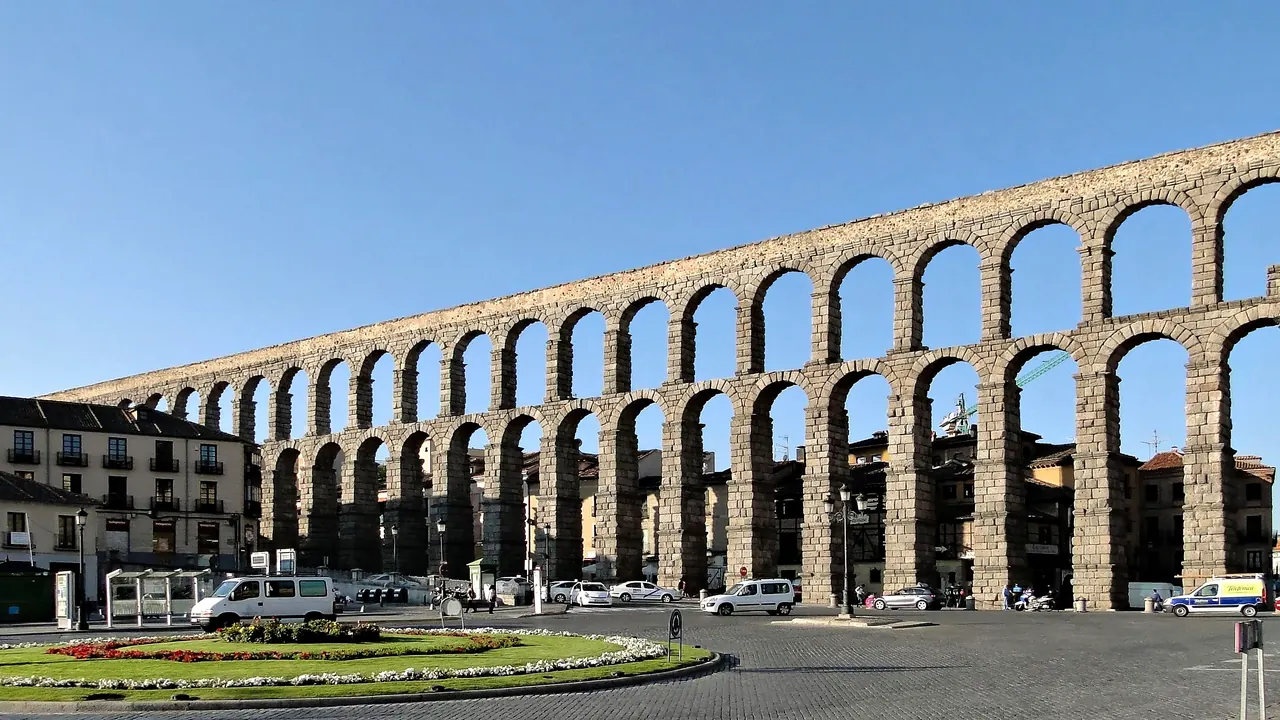
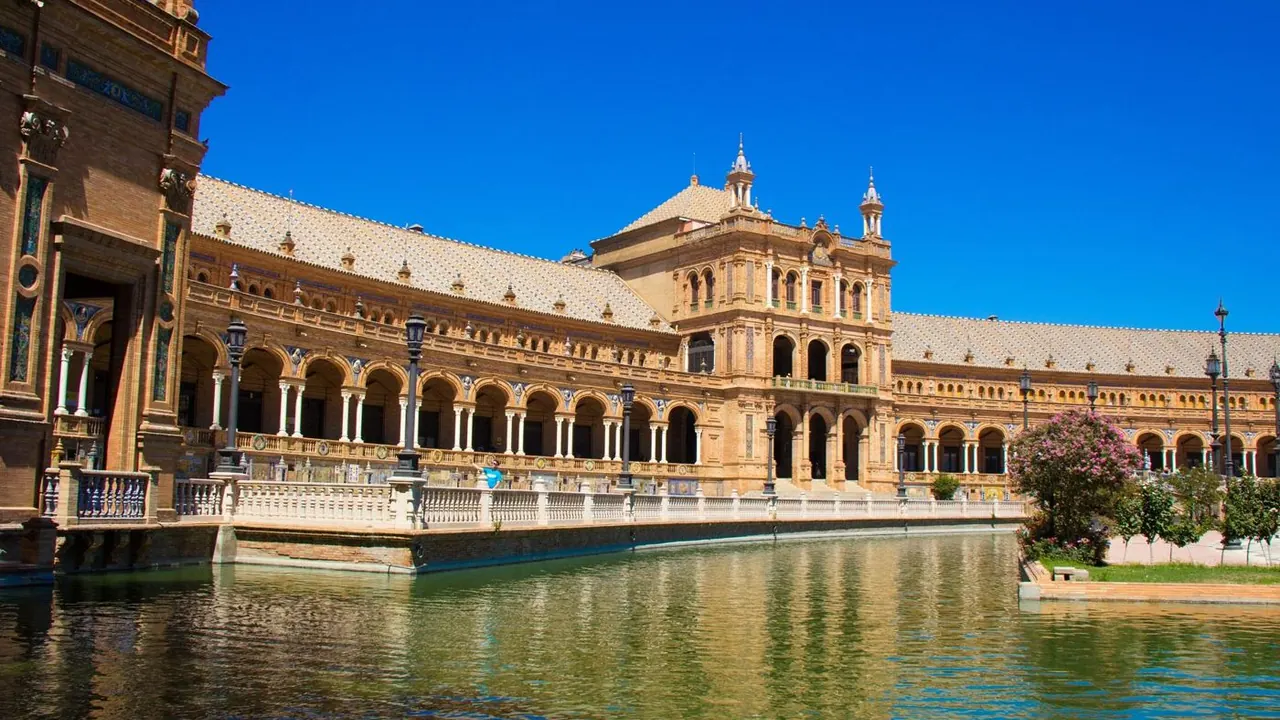
Photos: Segovia by Bernard Gagnon, CC BY-SA 3.0, cropped; Seville by Tibor Kovacs, CC BY 2.0, cropped.
Segovia or Seville?
Our verdict in twelve categories, each scored against the same fixed benchmark cities, and the climate month by month, so you can choose for your trip.
Choose Segovia for
- nature and the outdoors
- prices
Segovia suits a slower, smaller trip: one or two nights on a granite ridge between a Roman aqueduct and a cliff-top castle, with the Sierra de Guadarrama close enough for a morning's walk among the pines. It is the better pick for walkers, for anyone who wants cool evenings in high summer, and for travellers already in Madrid who want a slice of old Castile and a serious plate of roast suckling pig. Expect quiet nights and little to buy.
Choose Seville for
- live music and the arts
- nightlife
- shopping
Seville is the fuller city and repays a longer stay. Its monuments are grander and more numerous, the tapas bars run from Triana to the Alameda, flamenco is on every night, and the evenings carry on outdoors until late. Choose it if you want a week of eating, sightseeing and staying out, with Córdoba and the sherry towns within reach. Avoid the height of summer.
Scoreboard
Twelve categories on one fixed scale from 0 to 100. The shaded stretch is the gap between the two.
Your match
Pick a travel style or drag the sliders, and both match scores follow your weighting.
Wins on nature and the outdoors and prices with your weighting.
Wins on live music and the arts and nightlife with your weighting.
What matters to you?
Category by category
What the scores mean for a trip.
Beaches & swimming
Neither city is a beach destination, but Seville can at least manage a day by the sea. The Huelva coast at Matalascañas and Mazagón is about an hour and a quarter by car, and the long sands of Cádiz province lie further on, so a coastal day trip or a few extra nights on the coast is easy to arrange.
From Segovia the coast is a long day's drive, so summer swimming means a pool or a chilly reservoir in the Guadarrama foothills.
Food & drink
Segovia's cooking is built around the wood-fired oven: crisp-skinned cochinillo, roast milk-fed lamb, La Granja's big judiones beans and ponche segoviano for dessert. It is a destination meal rather than a varied food scene, and away from the roasts the choice narrows quickly.
Seville eats in small plates and on the move, from tile-fronted bars in Santa Cruz and Triana to more inventive kitchens around the Alameda, with fino and manzanilla from the nearby sherry towns. That gives a week of different evenings where Segovia offers one superb lunch. Both are thin on international cooking.
Culture & sights
Both cities have an Alcázar and a Gothic cathedral, but Seville's sights are on a larger scale. Its Alcázar is a working royal palace of Mudéjar courtyards, the cathedral is the largest Gothic church in the world and carries the Giralda, and beyond them come Plaza de España, Casa de Pilatos and a fine gallery of Murillo and Zurbarán. Three or four days fill easily.
Segovia is more concentrated: the mortarless Roman aqueduct, the castle on the tip of its ridge, and an unusual cluster of Romanesque churches with arcaded porches. Its museums are modest, and a day or two covers it well.
Nightlife
Seville is made for late nights. Dinner starts around ten, and the evening moves on to terraces in Triana, the Alfalfa squares and the mixed, LGBT-friendly bars of the Alameda de Hércules, with open-air bars along the river in summer. Clubbing is limited, but staying out until the early hours is normal.
Segovia's evenings are a tapas round near Plaza Mayor and a few student bars at weekends. On weeknights and in winter the old town goes quiet early.
Nature & outdoors
Segovia has the mountains on its doorstep. Within half an hour you can be in the Valsaín pine forests or at the Navacerrada and Cotos passes, with trails towards Peñalara's 2,428m summit, and the Eresma valley path gives an easy walk beneath the castle. The Hoces del Duratón gorge, with its vultures, adds a fuller day out.
Seville's surroundings are flat farmland and orchards. The Doñana wetlands are exceptional for birds, but they are best visited on a guided trip, and summer heat rules out most outdoor plans.
Day trips
Both make excellent bases, and the choice comes down to the region you want to see. Segovia opens up Castile: the palace gardens of La Granja, Madrid by fast train in under half an hour, walled Ávila, and with a car the medieval villages of Pedraza and Sepúlveda.
From Seville you reach Andalusia, with Córdoba's Great Mosque under an hour by train, Jerez for sherry, the old port of Cádiz and the white villages beyond Arcos. More of Seville's best trips work by rail, while Segovia's village circuit really needs a car.
Good for families
Seville gives children more to do. María Luisa Park has rowing boats on the canal at Plaza de España, the Alcázar gardens have a maze, and La Cartuja has a theme park with a summer water park as well as an aquarium. The flat centre is easy with a pushchair, though July and August are very hard going with small children.
Segovia's castle and giant arches thrill children for a day or two, but there is little built for them, and the steep cobbles are tiring for small legs.
Getting around
Seville is the easier city to move around. Its centre is flat, the old lanes are largely pedestrianised, and a public bike scheme on an extensive web of lanes makes cycling practical, backed by a tram, a metro line and buses. Midday walks in summer are the only real obstacle.
Segovia's sights fit along a single ridge that you can walk in a morning, but the climbs are steep and cobbled. The high-speed station is about fifteen minutes out by bus, and the villages and trailheads need a car.
Shopping & style
Seville has far more to browse, and much of it is genuinely local. The Triana workshops sell hand-painted tiles and pottery, the streets around Sierpes and Cuna sell flamenco dresses, shawls, fans and guitars, and there is a Thursday flea market on Calle Feria as well as the main chain stores.
In Segovia, shopping is mostly souvenirs along Calle Real, with some ceramics, embroidery and boxed ponche or beans to take home.
Affordability
The two cost about the same overall, but the expensive times differ. Segovia is cheapest midweek and in winter, and dearest at summer weekends when visitors arrive from Madrid. A roast suckling pig lunch by the aqueduct is the main expense.
In Seville, a tapas evening is the great saving, and rooms are good value through the summer heat. Holy Week and the April Fair send hotel rates sharply upwards, so time a trip around them if cost matters.
Live music & performing arts
Seville is the heartland of flamenco, with performances every night in the tablaos of Santa Cruz and Triana and in the peñas where local aficionados gather, plus the Bienal in even-numbered autumns. The Teatro de la Maestranza adds opera and a symphony orchestra in the city where Carmen is set.
Segovia's stage life comes in seasons: the Titirimundi puppet festival in spring, summer concerts in churches and gardens, and touring shows at Teatro Juan Bravo.
Wellness & relaxation
Seville has the edge thanks to its Arab-style bath houses, where warm, hot and cold pools sit under arched ceilings in old mansions, and its cool tiled courtyards make a good refuge from the afternoon heat. Its narrow streets can be noisy late at night, though.
Segovia has only a few hotel spas. What it offers instead is stillness, with quiet evenings once the coaches leave and pine-scented air from the sierra.
When should you go?
Pick your month. The climate figures are measured averages, not a forecast.
Segovia in July
Seville in July
Daytime high, °C
Rainfall in the month, mm
Temperature and rainfall are climate normals, averaged over the years shown. Segovia: 1991-2020 normals, Segovia (0.3 km from centre). Seville: 1991-2020 (sunshine 1981-2010, rainfall 1981-2010) normals, Sevilla / San Pablo (8.1 km from centre).
The two cities run on almost opposite calendars. Segovia sits high on the Castilian plateau, so its winters are properly cold, with daytime highs around 8°C in January and short grey days, while July and August reach about 30°C under long, dry sunshine. That makes high summer a comfortable time to walk the old town and the sierra trails. May, June and September are the sweet spot, and October and November bring the wetter, cooler weather back.
Seville is the warmer city in every month. In winter, highs of about 16°C make for pleasant sightseeing, though November is the wettest month at around 122mm. Spring, from March to May, and October are its best seasons. July and August reach about 36°C with almost no rain, and the afternoons are too hot for walking. For a summer trip, Segovia is the comfortable choice. From late autumn to early spring, Seville is far more pleasant.
Which traveller are you?
On a food and nightlife trip, Seville is the clear choice. Its tapas culture is broader, with sherry, fried fish and pork cheek across several neighbourhoods, and the evenings run late around the Alameda and Alfalfa. Segovia offers superb roasts but goes quiet early.
For an outdoors trip, choose Segovia. The pine forests of Valsaín, the high passes and the trails up to Peñalara's glacial lakes are all within half an hour, and summers stay walkable. Seville's flat farmland and fierce summers push serious outdoor days much further away.
On a culture and arts trip, Seville gives more to fill the days: the Alcázar, the cathedral and Giralda, Murillo at the Bellas Artes, and live flamenco every night, plus opera at the Maestranza. Segovia's monuments are memorable but take a day or two.
Before you go
| Measure | Segovia | Seville |
|---|---|---|
| Official language | Spanish | Spanish |
| Currency | Euro (EUR) | Euro (EUR) |
| Sockets | CF230 V, 50 Hz | CF230 V, 50 Hz |
| Driving side | Right | Right |
| Time zone | UTC+1, UTC+2 in summer | UTC+1, UTC+2 in summer |
| Emergency number | 112 | 112 |
| Elevation | 1,002 m | 18 m |
| Main airport | Adolfo Suárez Madrid–Barajas Airport (MAD)68 km from centre241 non-stop destinations | Seville Airport (SVQ)9 km from centre96 non-stop destinations |
| Public holidays this year | 12 days | 12 days |
By the numbers
| Measure | Segovia | Seville |
|---|---|---|
| City population | 52,375 | 689,423 |
| People per km² | 320 | 4,896 |
| Museums within 10 km | 11 | 24 |
| UNESCO World Heritage sites within 50 km | 2 | 1 |
Where else could you go?
Every comparison below shares a destination with this one, so you can follow Segovia or Seville somewhere new.
- Madridvs Segovia
- Jerez de la Fronteravs Seville
- Cadizvs Seville
- Rondavs Seville
- Cordobavs Seville
- Toledovs Segovia