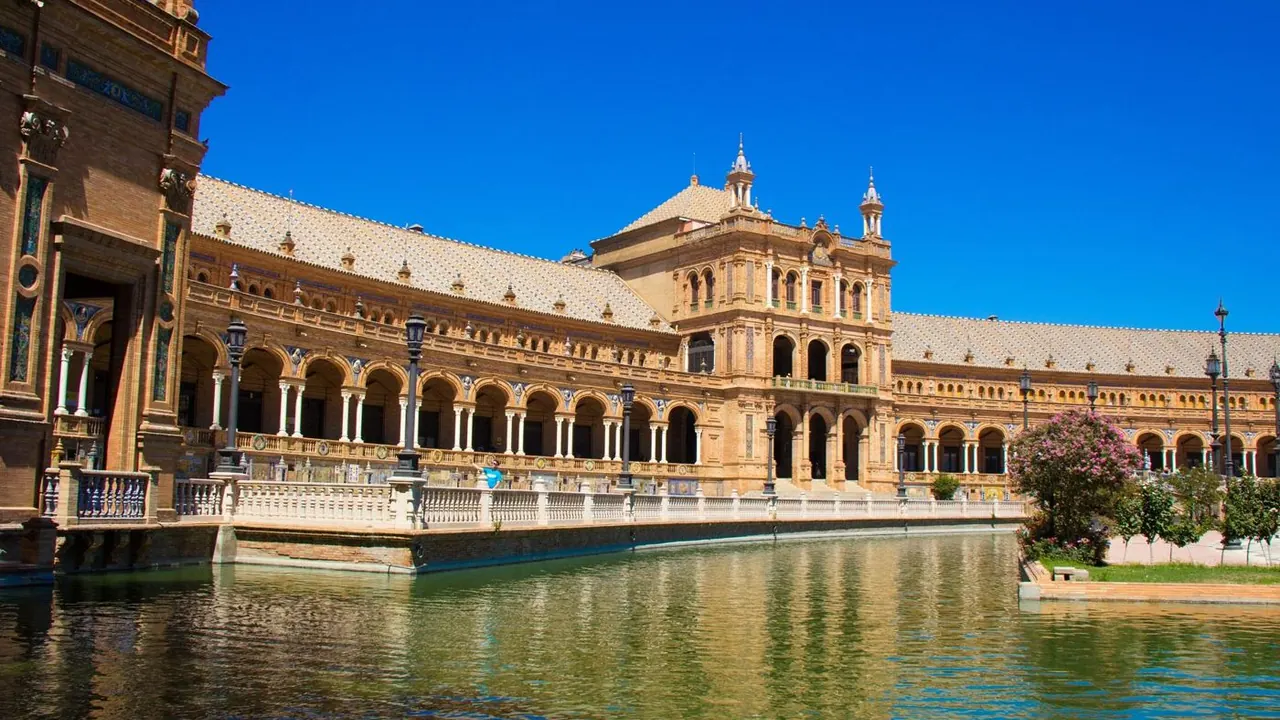
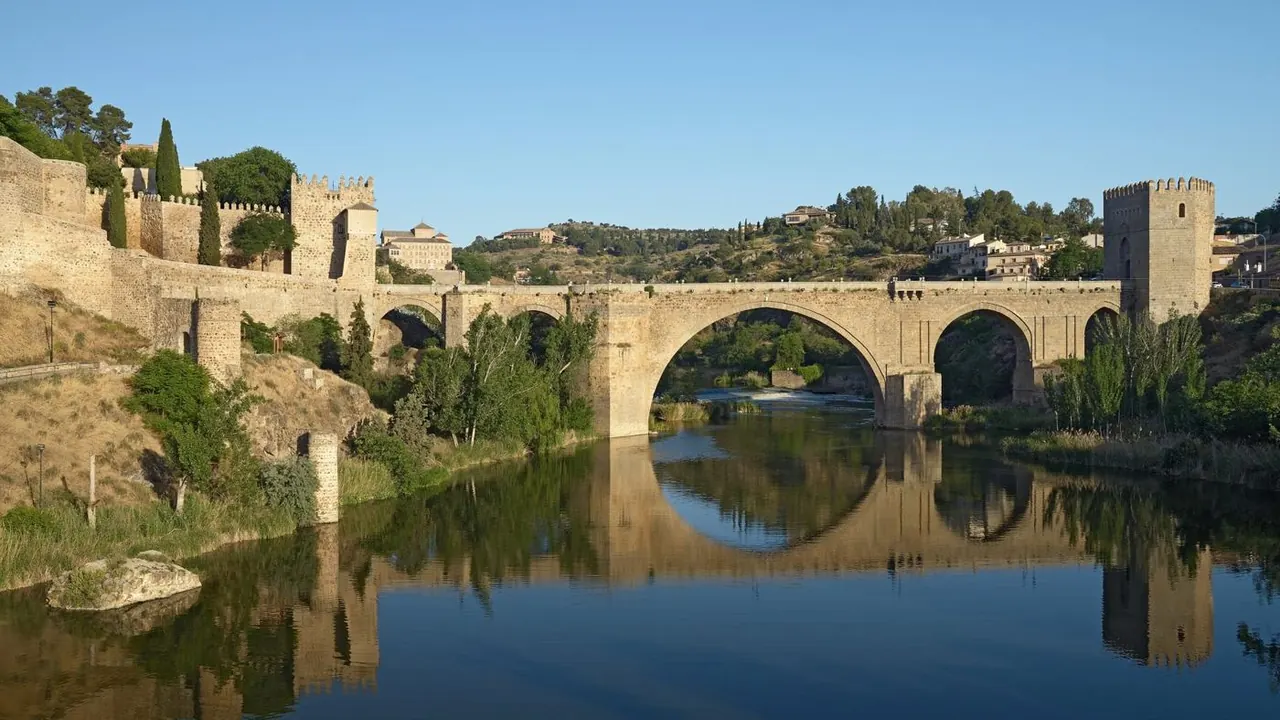
Photos: Seville by Tibor Kovacs, CC BY 2.0, cropped; Toledo by Ввласенко, CC BY-SA 3.0, cropped.
Seville or Toledo?
Our verdict in twelve categories, each scored against the same fixed benchmark cities, and the climate month by month, so you can choose for your trip.
Choose Seville for
- live music and the arts
- nightlife
- food and drink
Seville is for travellers who want the evenings to count as much as the days. Its historic centre is larger and fills three or four days, and it adds a real tapas culture, nightly flamenco and late terraces by the river. It also has an easy run of Andalusian towns by train. The flat streets make it the easier choice for families and for longer stays.
Choose Toledo for
Toledo does not lead in any category we score.
Toledo suits a shorter, quieter trip built around history and painting. The old town on its hill packs synagogues, a small mosque, a great cathedral and a whole circuit of El Greco into a couple of days. After the day-trippers leave, the lanes fall still. With Madrid half an hour away, it also works well as one leg of a wider trip through central Spain, for anyone who doesn't need much food, nightlife or live performance.
Scoreboard
Twelve categories on one fixed scale from 0 to 100. The shaded stretch is the gap between the two.
Your match
Pick a travel style or drag the sliders, and both match scores follow your weighting.
Wins on live music and the arts and nightlife with your weighting.
Has no clear advantage with the weighting you have chosen.
What matters to you?
Category by category
What the scores mean for a trip.
Beaches & swimming
Neither city is on the sea, but Seville is the one that can manage a beach day. The Atlantic sands of Huelva, at Matalascañas and Mazagón, are about an hour and a quarter by car, and the Cádiz coast is further on. Some visitors split their stay with a few nights there.
Toledo sits on the high plain several hours from any coast, and the Tagus in its gorge is not for swimming. In both cities, cooling off in the city itself means a hotel or municipal pool.
Food & drink
Seville is a real place to eat. Tapas are the whole rhythm of the day: salmorejo, spinach with chickpeas, pork cheek and fried fish, eaten standing at tiled counters, with manzanilla and fino from the nearby sherry towns. The kitchens around the Alameda add some invention.
Toledo's cooking is the heavier food of La Mancha: partridge, game from the Montes de Toledo, carcamusas and Manchego, with convent marzipan to finish. It is worth a few meals, but the choice is narrow. Near the cathedral, set menus for day-trippers dominate, so it pays to walk a few streets away.
Culture & sights
These are two of Spain's great historic cities, and the difference is one of scale and character. Seville's sights are grand and spacious: the Mudéjar courts and gardens of the Real Alcázar, the huge Gothic cathedral under the Giralda, the tiled curve of Plaza de España and Murillo and Zurbarán in the Bellas Artes. They are spread through a larger centre that needs three or four days.
Toledo is denser. On one granite hill you find a cathedral full of El Greco and Goya, the mosque of Cristo de la Luz and two medieval synagogues, layering Islamic, Jewish and Christian Spain within a few streets of each other. El Greco's own city is the draw, and two full days cover it.
Nightlife
Seville has proper nights out, mostly in the open air. People drift from tapas bars to squares, the Alameda de Hércules draws a young, mixed and LGBT-friendly crowd, Triana and Alfalfa stay busy until late, and in summer the bars along the river fill. Serious clubbing is limited.
Toledo ends the day with dinner and a few rounds of tapas around Zocodover. After that the old town goes quiet, which is part of its appeal. For anything more, you go to Madrid.
Nature & outdoors
Seville has more to offer because of Doñana, about an hour and a half away. These marshes and dunes are among Europe's great wetlands, with flamingos and migrating birds. Closer to town there are gentle walks in the cork-oak hills of Aracena, and you can row or kayak on the old river channel.
Toledo's best outdoor experience starts at its walls: a path around the Tagus gorge with views back from the cigarrales on the far bank. Beyond that come the low Montes de Toledo and, two hours away, the red deer of Cabañeros. In both cities, outdoor plans are best kept to spring and autumn.
Day trips
Both are excellent bases, and the choice depends on where you want to go. Seville opens up Andalusia, mostly by train: Córdoba's Great Mosque is under an hour away, Jerez's bodegas and the old port of Cádiz lie to the south, and Carmona and Itálica are close by.
Toledo's main asset is Madrid, half an hour away, which brings the Prado and the Reina Sofía within easy reach, along with Aranjuez and El Escorial. Its other trips, to the windmills of Consuegra, Almagro, Cuenca and Segovia, work far better with a car.
Good for families
Seville is the easier city with children. The centre is flat, María Luisa Park has boats and carriages, the Alcázar gardens have a maze and fountains, and La Cartuja adds a theme park, a summer water park and an aquarium by the river.
Toledo's walls, armour shops and castle-like Alcázar fire young imaginations, and a large theme park of historical shows sits just outside town. The steep cobbles wear out small legs and pushchairs, though, and most sights are churches and paintings. Both cities are punishing with children in high summer.
Getting around
Both centres are walkable, but Seville's is flat. You can reach the cathedral, Triana and Plaza de España on foot, and bike lanes and a public bike scheme make cycling easy, with a tram and metro line as backup.
Toledo's old town is smaller, but it sits on a steep hill of narrow, winding lanes, so walking it is tiring. Public escalators lift you from the car parks below the walls, and the station sits across the river at the bottom, a bus ride or a hard climb away.
Shopping & style
Seville gives you more to browse. Triana's potters sell hand-painted tiles, the shops around Sierpes and Cuna sell flamenco dresses, shawls and fans made for locals, there is a long-running Thursday flea market on Calle Feria, and the main Spanish chains are there too.
Toledo's crafts are more specialised: gold-inlaid damascene work, swords from its old blade-making tradition, convent marzipan and Talavera ceramics. Much of the stock near the cathedral is souvenirs, and for clothes people go to Madrid.
Affordability
Both cost about the same, and in both you save most by eating tapas. The difference is in when and where the bill rises. In Seville, hotel rates jump during Holy Week and the April Fair, and rooms are good value in the summer heat.
In Toledo, hotels with a view inside the walls cost more at weekends, and the separate entry charges for the cathedral, synagogues and El Greco sites add up. The free tapa with a drink helps balance that out.
Live music & performing arts
Seville is one of the main reasons to plan a trip around live performance. Flamenco is on every night, in tablaos around Santa Cruz and Triana and in local peñas, and the Bienal brings the leading performers in autumn of even-numbered years. The Teatro de la Maestranza stages opera in the city where Carmen is set.
Toledo has the Teatro de Rojas, with a regional programme, occasional organ and choral music in its churches and the processions of Corpus Christi. On most evenings little is on, and serious opera or theatre means the train to Madrid.
Wellness & relaxation
Seville is slightly better for slowing down. It has Arab-style baths in old mansions, cool tiled courtyards, the shade of the Alcázar gardens and long lunches in the slow afternoon heat, although its narrow streets are noisy at night.
Toledo has a few similar bath houses and hotel spas. Its real calm comes early and late, when the tour groups have gone and the terraces over the Tagus fall quiet. Neither is a place to come specifically to recharge.
When should you go?
Pick your month. The climate figures are measured averages, not a forecast.
Seville in July
Toledo in July
Daytime high, °C
Rainfall in the month, mm
Temperature and rainfall are climate normals, averaged over the years shown. Seville: 1991-2020 normals, Sevilla / San Pablo (8.1 km from centre). Toledo: 1991-2020 normals, Toledo (2.3 km from centre).
Seville warms up sooner. Its days are pleasant for walking from March, while Toledo, up on the plateau, stays cooler until April and has chilly winters, with highs of around 12°C. May is comfortable in both. By July and August both are very hot, about 36°C in Seville and barely less in Toledo, so midday sightseeing is hard work in either city. That long, very sunny and almost rainless stretch from June to September is also the time for a beach day on the coast from Seville.
Autumn pulls them apart. In September Seville is still hot, while Toledo is already cooler and easier for walking, and by October both are pleasant on foot. The rain differs in timing as well as amount. Seville's wet season starts in October and lasts through the winter, peaking in December at around 78mm, so a winter stay there brings some damp days. Toledo is drier all year, and its lighter rain comes in two short spells, one in April and May and one peaking in October at around 49mm.
Which traveller are you?
On a food and nightlife trip, choose Seville. Tapas bars in Triana, Santa Cruz and around the Alameda lead into terraces that stay full until the early hours. Toledo has a few good regional meals, then goes quiet, and anyone wanting a night out takes the train to Madrid.
On a family trip with children, Seville is easier. The centre is flat, María Luisa Park has rowing boats, the Alcázar gardens have a maze, and La Cartuja has a theme park and water park. In Toledo, steep cobbled lanes defeat pushchairs, although swords and castles do appeal.
For a short city break, Toledo is the neater fit. Its main sights fit into two full days inside a small walled town, the evenings are calm, and arriving is simple, with Madrid half an hour away by train. Seville needs more time to do it justice.
Before you go
| Measure | Seville | Toledo |
|---|---|---|
| Official language | Spanish | Spanish |
| Currency | Euro (EUR) | Euro (EUR) |
| Sockets | CF230 V, 50 Hz | CF230 V, 50 Hz |
| Driving side | Right | Right |
| Time zone | UTC+1, UTC+2 in summer | UTC+1, UTC+2 in summer |
| Emergency number | 112 | 112 |
| Elevation | 18 m | 523 m |
| Main airport | Seville Airport (SVQ)9 km from centre96 non-stop destinations | Adolfo Suárez Madrid–Barajas Airport (MAD)80 km from centre239 non-stop destinations |
| Public holidays this year | 12 days | 13 days |
By the numbers
| Measure | Seville | Toledo |
|---|---|---|
| City population | 689,423 | 87,216 |
| People per km² | 4,896 | 376 |
| Museums within 10 km | 24 | 13 |
| UNESCO World Heritage sites within 50 km | 1 | 2 |
Where else could you go?
Every comparison below shares a destination with this one, so you can follow Seville or Toledo somewhere new.