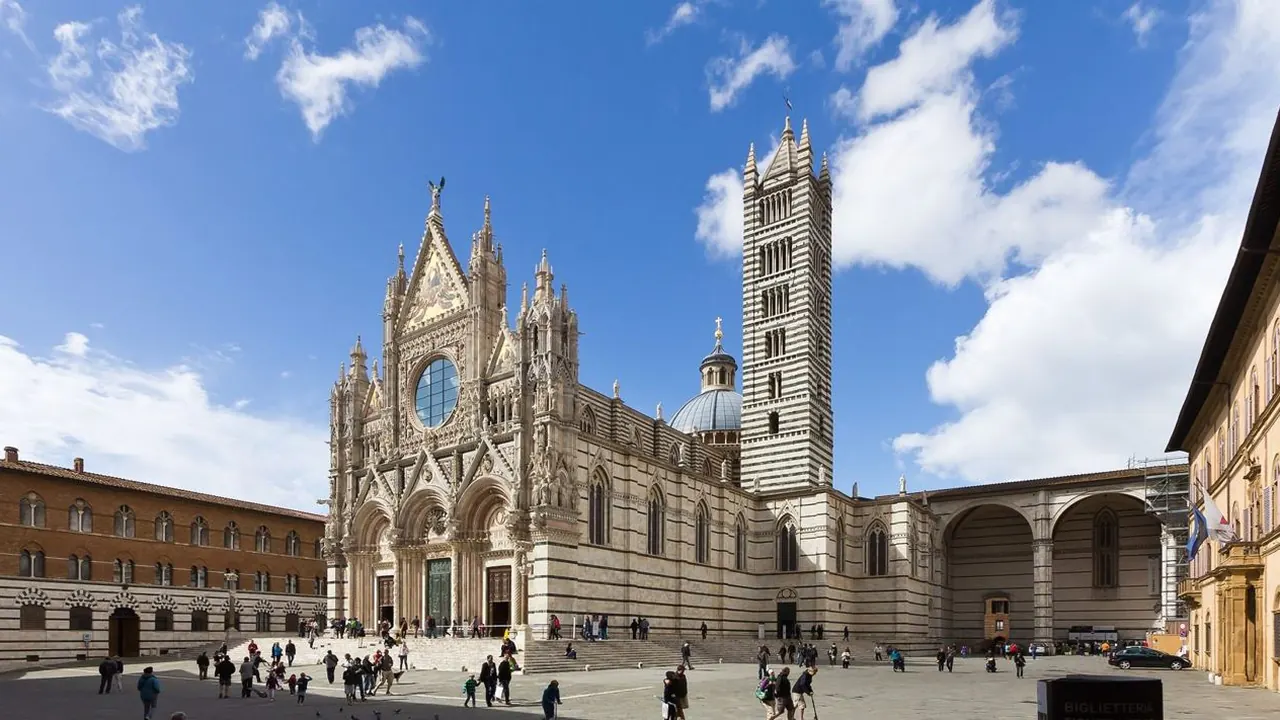
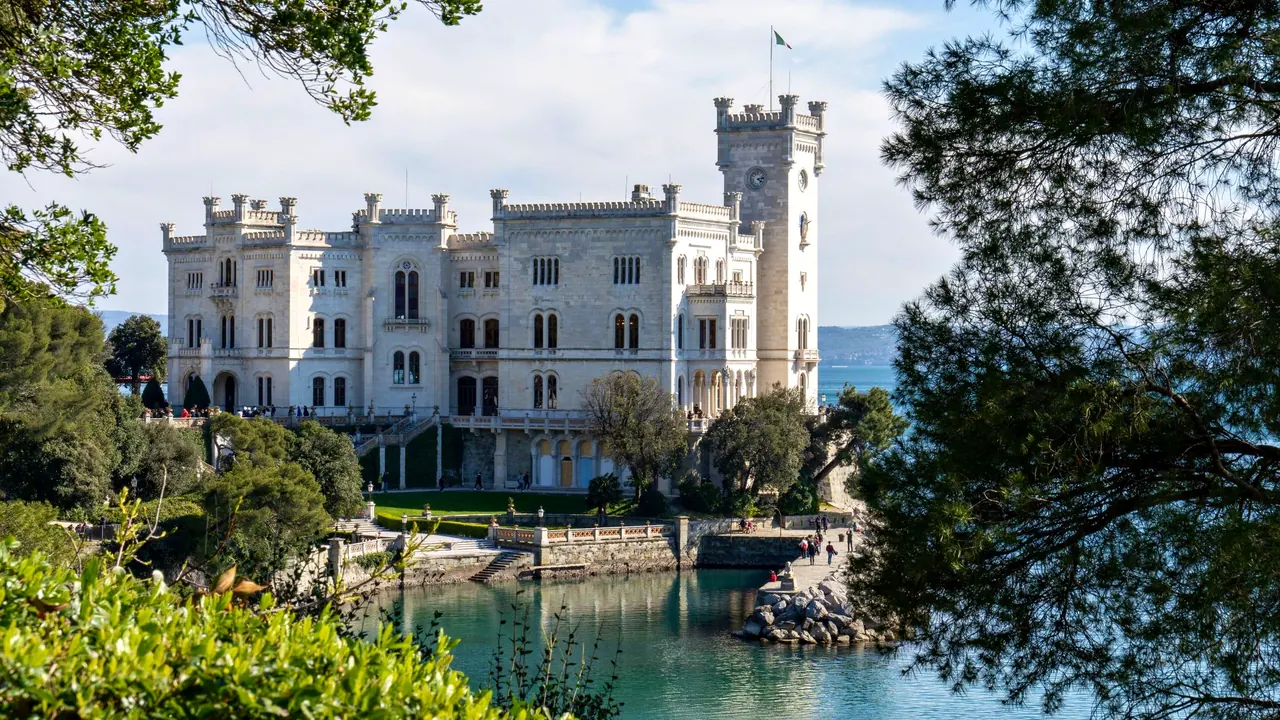
Photos: Siena by Raimond Spekking, CC BY-SA 4.0, cropped; Trieste by Tibor Szabo, Pexels License.
Siena or Trieste?
Our verdict in twelve categories, each scored against the same fixed benchmark cities, and the climate month by month, so you can choose for your trip.
Choose Siena for
- wellness
- culture and sights
- day trips
Siena is the choice for a trip built around medieval art and the Tuscan countryside. Its walled centre, with the Campo, the Duomo and the Sienese painters, is the stronger draw of the two. It also makes a superb base for hill towns, wine cellars, abbeys and warm spring pools, especially if you hire a car. Look elsewhere for swimming, a lively evening or easy days with small children.
Choose Trieste for
- beaches
- live music and the arts
- families
Trieste suits travellers who want the sea in daily life. You can swim off the Barcola promenade, sit over coffee in Habsburg cafés, catch an opera season at the Teatro Verdi and take trips across the border into Slovenia. It is cheaper and easier to get around, and it works better for families with older children, though its sights are less remarkable than Siena's.
Scoreboard
Twelve categories on one fixed scale from 0 to 100. The shaded stretch is the gap between the two.
Your match
Pick a travel style or drag the sliders, and both match scores follow your weighting.
Wins on wellness and culture and sights with your weighting.
Wins on beaches and live music and the arts with your weighting.
What matters to you?
Category by category
What the scores mean for a trip.
Beaches & swimming
Siena has no beach life at all. Swimming means a hotel or agriturismo pool, and the Maremma sand around Castiglione della Pescaia is well over an hour's drive away.
Trieste puts the sea within a short bus ride. Locals swim from the concrete platforms and lawns along Barcola, and prettier pebble coves lie below the cliffs at Sistiana, Duino and Grignano. There is almost no sand, so it suits confident swimmers more than toddlers wanting shallow water.
Food & drink
The food is equally good in both cities, but it comes from different worlds. Siena cooks pure Tuscan food: hand-rolled pici, ribollita, cinta senese pork and almond-rich panforte, with Chianti Classico and Brunello poured by the glass in its enoteche.
Trieste eats like a Central European port. You stand at a buffet counter for boiled pork with horseradish, order jota and fried sardoni, and drink coffee in a language of its own. Its farmhouse osmize on the Karst pour Vitovska and Terrano. Neither city offers much international food or fine dining.
Culture & sights
Siena is the richer place for sightseeing. The whole walled centre is a near-intact medieval city. The Palazzo Pubblico holds Lorenzetti's Good and Bad Government, and the Duomo, Museo dell'Opera, Santa Maria della Scala and Pinacoteca make up a dense, coherent group of masterpieces.
Trieste's appeal is grand rather than intense. There is the sea-facing Piazza Unità, the Habsburg grid along the Canal Grande, San Giusto's mosaics and Roman theatre, and Miramare Castle on the shore. The Risiera di San Sabba and the city's literary ghosts add depth, but there are fewer outstanding single works.
Nightlife
Both are early-to-bed cities with no real club scene. Siena's evenings are dinner, a glass of wine on the Campo and a stroll, and the town only stays up late in the Palio nights. Trieste is a little livelier thanks to its aperitivo habit around Piazza Unità and Cavana, and in summer the bars and kiosks along Barcola stay open late into warm nights by the water.
Nature & outdoors
Both have good outdoors close by, but of a different kind. Siena's is farmed landscape: the clay hills of the Crete Senesi and the Val d'Orcia, best seen by bike on the white gravel strade bianche or on foot along the Via Francigena.
Trieste has a little more variety, with rock and water side by side. There are cliff paths on the Karst edge, the Val Rosandra gorge, the Grotta Gigante and Škocjan caves, and snorkelling and sailing in the gulf, with the Julian Alps within reach. The winter Bora is its one harsh note.
Day trips
Siena is hard to beat for day trips. San Gimignano, Monteriggioni, the Chianti villages, Pienza, Montalcino and Montepulciano are all close, along with abbeys such as San Galgano and Sant'Antimo, and Florence is a straightforward bus ride. Most of this needs a car.
Trieste spreads its trips across three countries. Aquileia's mosaics, star-shaped Palmanova and the Collio wine villages are in Friuli, Piran and Ljubljana are in Slovenia, and the Istrian towns are in Croatia. Venice is a long day out by train. The choice is wide, but the places are further apart than Siena's.
Good for families
Trieste works better with children. It has a small aquarium, a hands-on science centre, the vast Grotta Gigante and the gardens at Miramare, and summer days on the Barcola promenade fill easily.
Siena is safe and mostly car-free, and older children enjoy climbing the Torre del Mangia, but nothing in town is aimed at them and the steep lanes are hard work with a pushchair. Families there usually stay on a farm with a pool and visit town for half days.
Getting around
Trieste is the easier city to move around. Its core is flat along the waterfront, buses run out to Barcola, Miramare and the Karst, and boats cross the bay to Muggia. Only the climb to San Giusto is hard work.
Siena is compact and closed to traffic, but its three ridges mean constant climbs, and escalators link the station to the upper town. Trains are slow, so most visitors exploring the countryside need a hired car.
Shopping & style
Neither city is a shopping destination, and what you take home from both is mostly food. Siena adds hand-painted majolica, contrada scarves and its big weekly market by the Fortezza Medicea. Trieste's best browsing is in the antique and second-hand shops of the old town, and its coffee roasters, Karst honey and presnitz pack well.
Affordability
Trieste goes further on a budget. Coffee at the bar and a buffet plate cost little, buses are cheap, and swimming at Barcola and walks on the Karst cost nothing.
Siena is pricier to stay in, because rooms inside the walls are scarce and climb steeply in summer and around the Palio. Paying for each museum and the cathedral complex also adds up. Osteria lunches are fair, and sleeping in an agriturismo outside town saves money.
Live music & performing arts
Trieste has the fuller stage. The waterfront Teatro Verdi runs a proper opera and ballet season, the city keeps a rare taste for operetta, and the Politeama Rossetti and a Slovenian-language theatre add drama.
Siena's strengths are specialist and seasonal: the Accademia Chigiana's summer concerts in palaces and churches, and performances from the Siena Jazz school. For opera you have to go to Florence.
Wellness & relaxation
For proper relaxation, Siena has the edge because of the warm springs around it. There are the travertine pools of Rapolano Terme half an hour away, the steaming medieval bath at Bagno Vignoni and the free limestone pools of Bagni San Filippo, all easy to pair with a rural spa or farmhouse stay.
Trieste has no thermal tradition and only hotel spas. Its calm comes instead from the slow pace: long sittings in old coffee houses and sunset walks along the Molo Audace.
When should you go?
Pick your month. The climate figures are measured averages, not a forecast.
Siena in July
Trieste in July
Daytime high, °C
Rainfall in the month, mm
Where the figures come from
Siena's temperatures are measured 45 km from the centre, at Arezzo.
Siena has no rain gauge within 25 km of the centre, so its rainfall comes from a gridded climate dataset read at the city rather than from a gauge further away.
Temperature and rainfall are climate normals, averaged over the years shown. Siena: 2006-2017 (rainfall 1991-2020) normals, Arezzo (45 km from centre). Trieste: 1991-2020 normals, Trieste (1.6 km from centre).
Siena is best for walking in spring and in September. April, May and early June are warm without being draining, and September feels much the same. July and August reach 31°C on its steep, sun-exposed streets, which makes midday sightseeing hard work, even though these are the driest months of the year. The rain comes in autumn. October is already wet, at 94mm, and November is the wettest month of all, so September is the better time for countryside walks. Winters are cold in both cities.
Trieste follows a similar curve but stays a little milder by the sea, with summer highs of 29°C. Its rain doesn't hold off in summer and falls fairly evenly, and it is wettest from September to November. The sea is warm enough for swimming from June to September and reaches about 25°C in July and August, which are also Trieste's sunniest months. Siena has no swimming beyond a pool, so its best months are spring and early autumn, while Trieste is at its best in high summer.
Which traveller are you?
On a beach and sun trip, Trieste is the clear pick. The Adriatic is right in town at Barcola, and there are pebble coves at Sistiana and Duino, though no sand. From Siena the coast is a full day out by car.
For a culture and arts trip, Siena wins on sights. You get a UNESCO-listed medieval centre, Lorenzetti's frescoes, Duccio's Maestà and the Duomo's inlaid floor. Trieste does have the better opera house, so pick it if live performance matters more than painting.
On a relaxing and wellness trip, Siena is better placed. Warm springs at Rapolano Terme, Bagno Vignoni and Bagni San Filippo are within easy reach, and farmhouse stays add quiet. Trieste offers a slow pace and the sea, but only hotel spas.
Before you go
| Measure | Siena | Trieste |
|---|---|---|
| Official language | Italian | Italian |
| Currency | Euro (EUR) | Euro (EUR) |
| Sockets | CFL230 V, 50 Hz | CFL230 V, 50 Hz |
| Driving side | Right | Right |
| Time zone | UTC+1, UTC+2 in summer | UTC+1, UTC+2 in summer |
| Emergency number | 112 | 112 |
| Elevation | 322 m | 2 m |
| Main airport | Florence Airport, Peretola (FLR)55 km from centre46 non-stop destinations | Trieste Airport (TRS)31 km from centre32 non-stop destinations |
| Public holidays this year | 13 days | 13 days |
By the numbers
| Measure | Siena | Trieste |
|---|---|---|
| City population | 52,812 | 198,417 |
| People per km² | 446 | 2,332 |
| Museums within 10 km | 30 | 33 |
| UNESCO World Heritage sites within 50 km | 5 | 5 |
| Swim season, months above 21 °C | - | 4 months |
Where else could you go?
Every comparison below shares a destination with this one, so you can follow Siena or Trieste somewhere new.