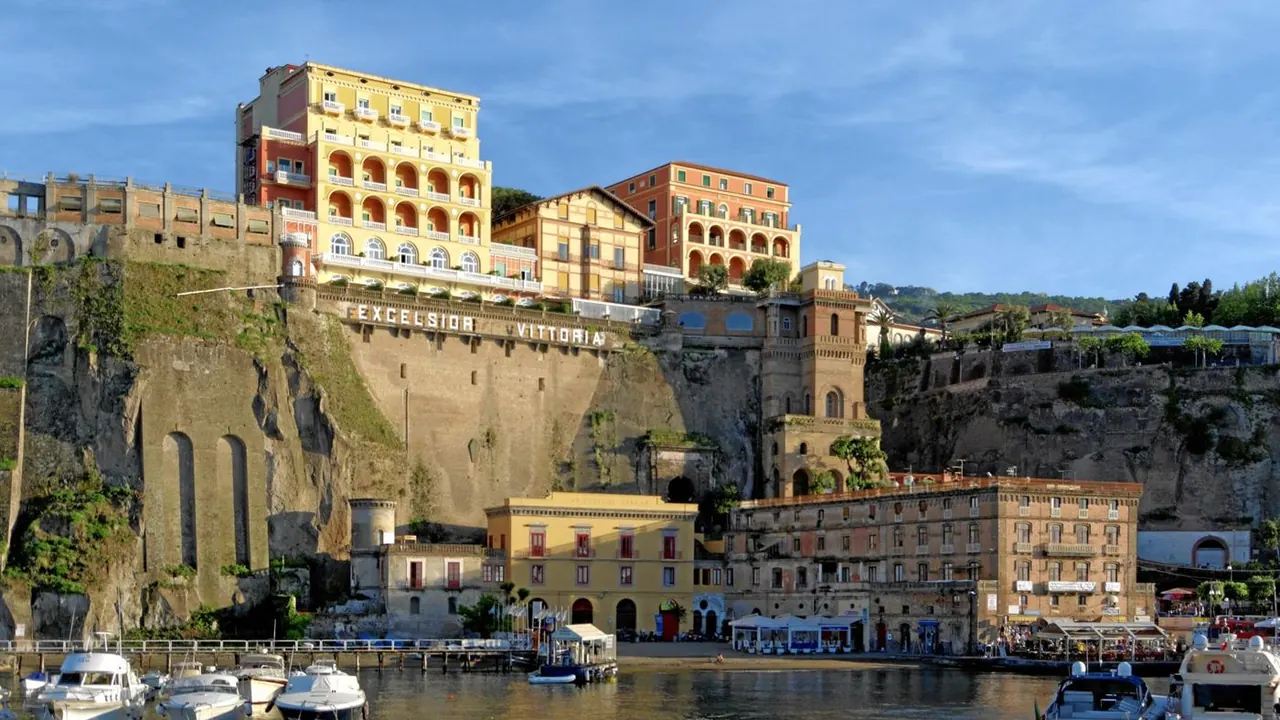
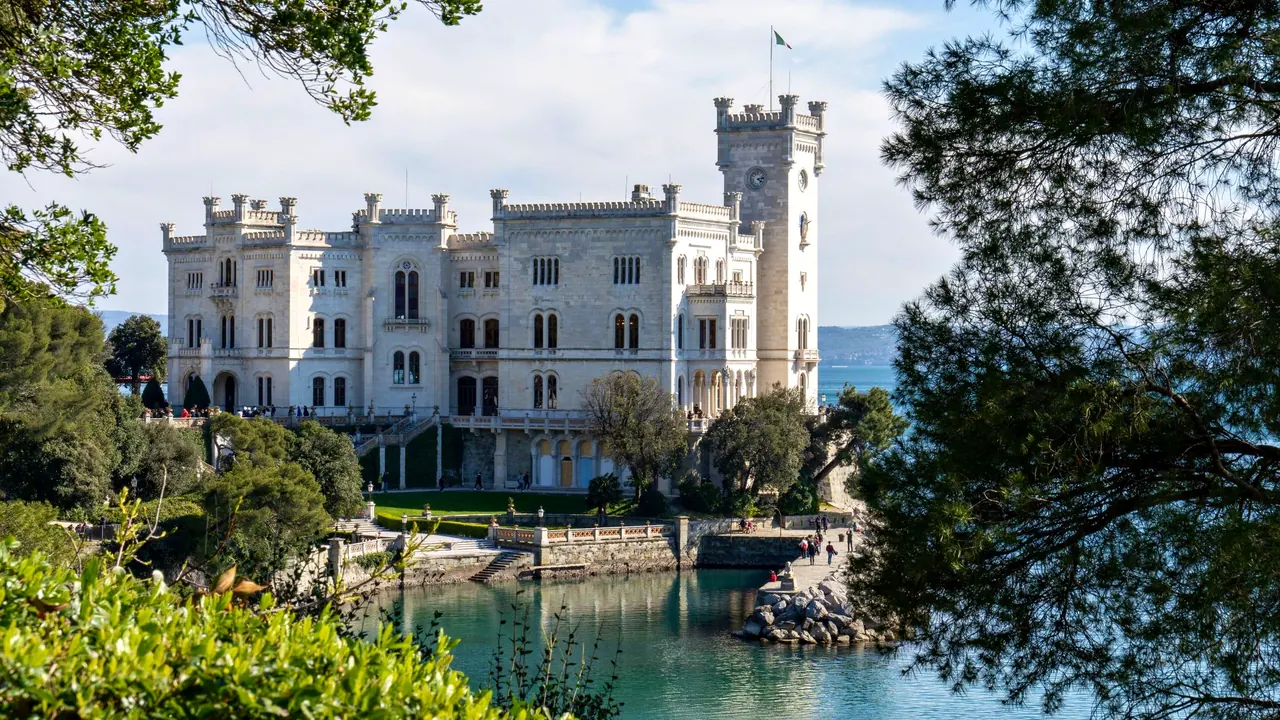
Photos: Sorrento by Berthold Werner, CC BY-SA 3.0, cropped; Trieste by Tibor Szabo, Pexels License.
Sorrento or Trieste?
Our verdict in twelve categories, each scored against the same fixed benchmark cities, and the climate month by month, so you can choose for your trip.
Choose Sorrento for
- day trips
- nature and the outdoors
- wellness
Sorrento suits the traveller who wants a base rather than a destination. The town itself is small and quickly seen. Its strength is what lies within a short train or boat ride: Pompeii, Capri, the Amalfi Coast and Naples, along with some of the finest coastal walking in Italy. Come for long sunny days, lemon groves and evenings on a terrace over the bay. You will pay resort prices in summer and find the nights quiet.
Choose Trieste for
- live music and the arts
- culture and sights
- prices
Trieste is the better choice if you want the city itself to be the reason for going. Habsburg squares, Miramare Castle, the San Giusto hill and a proper opera house fill several days, and coffee houses and buffet counters give it a character found nowhere else in Italy. It costs less, is easier to get around and is calmer with children. Its day trips spread out across Friuli, Slovenia and Istria rather than packing in famous names.
Scoreboard
Twelve categories on one fixed scale from 0 to 100. The shaded stretch is the gap between the two.
Your match
Pick a travel style or drag the sliders, and both match scores follow your weighting.
Wins on day trips and nature and the outdoors with your weighting.
Wins on live music and the arts and culture and sights with your weighting.
What matters to you?
Category by category
What the scores mean for a trip.
Beaches & swimming
Neither town has a sandy beach, and the sea is just as warm in high summer, so the difference is in how you get into it. In Sorrento you mostly swim from the wooden piers of the paid lidos at Marina Piccola and Marina Grande, straight into deep water. The free alternative is the rocks at the Bagni della Regina Giovanna, and both get very crowded in July and August.
Trieste's Barcola is an open public promenade of concrete steps and pine-shaded lawns where the whole city swims. For something prettier there are pebble coves at Sistiana, Duino and Grignano. Sorrento makes up for its cramped shore with boats to the coves of Capri and the Amalfi side.
Food & drink
Sorrento cooks the Italian south, and Trieste the old Habsburg borderland. In Sorrento that means gnocchi baked with tomato and fior di latte, fish in acqua pazza, mozzarella and provolone from the hill dairies, and lemon in everything from pastry cream to limoncello. Eat away from the tour-group menus of the centre, at Marina Grande or up in the peninsula's villages, where some of southern Italy's best-known fine dining is found.
Trieste's food comes closer to Vienna and Ljubljana than to Naples: pork carved from steaming pots at the buffet counters, jota soup, presnitz and a coffee vocabulary of its own. On the Karst, farmhouse osmize pour Vitovska and Terrano. Choose Sorrento for a special dinner and Trieste for flavours you will not meet anywhere else in Italy.
Culture & sights
Trieste has far more to see within the city. Piazza Unità opens onto the sea, the Borgo Teresiano lines the Canal Grande, and San Giusto hill has its mosaic cathedral, castle and Roman theatre. Beyond those come Miramare Castle, the Revoltella museum, the great synagogue and the Risiera di San Sabba memorial.
Sorrento's own sights fill a gentle day or two: the Roman street grid, the cloister of San Francesco, the Museo Correale and the ravine of the Vallone dei Mulini. The famous history of this area lies outside the town.
Nightlife
Both towns are for an evening drink rather than a night out. The crowd is what differs. Sorrento's evenings are shaped around visitors: the passeggiata on Corso Italia, cocktail terraces above the bay, piano bars playing Neapolitan songs and a few British-style pubs. Because the last trains and ferries run early, anything livelier means staying the night in Naples or on Capri.
Trieste's nights belong to residents. Aperitivo tables fill around Piazza Unità and Cavana, students keep a few streets of wine bars going, and in summer the kiosks along Barcola stay open late.
Nature & outdoors
Sorrento's setting is the more dramatic. Lemon and olive terraces climb a limestone ridge that drops into the sea, with Vesuvius across the bay. The walks run to Punta Campanella, down to Ieranto, along the Path of the Gods and over Monte Faito, and boats circle the grottoes of Capri.
Trieste has its wild country right at its back. The Karst plateau carries the Strada Napoleonica above the gulf, the Rilke Path follows the cliffs at Duino, and Val Rosandra offers climbing. There are also caves such as the Grotta Gigante, and the gulf is serious sailing water.
Day trips
Few places can match Sorrento here. Pompeii and Herculaneum are a short train ride away, Capri is less than an hour by ferry, and Positano, Amalfi, Ravello and Naples are all easy days, so a week can be full of famous names with very little travelling.
Trieste's range is wider but more scattered. Aquileia, Cividale and star-shaped Palmanova are in Friuli, Piran, Ljubljana and Postojna are across the Slovenian border, and Venice is about two hours by train. Several of these work best with a car.
Good for families
Trieste is the easier place to bring children. It is calm and safe, and it has outings children enjoy: the Grotta Gigante, the gardens at Miramare, a small aquarium, a hands-on science centre and summer days on Barcola. Its steep upper streets are a problem for pushchairs.
Sorrento's flat centre is friendly, and boats to Capri and gelato go down well. However, swimming is into deep water off piers, many hotels sit on lanes without pavements, and the coastal bus rides are long for small children.
Getting around
Trieste is simpler to move around. Its sights cluster on flat ground by the water, a dense bus network reaches Barcola, Miramare and the Karst, and boats cross the bay to Muggia. The only hard work is the climb to San Giusto.
Sorrento's centre is just as walkable, but leaving it is harder. The Circumvesuviana is crowded and prone to delays, and the Amalfi buses crawl round the hairpins in summer. Ferries are often the most comfortable way to travel, and a car is more trouble than it is worth.
Shopping & style
Neither is a shopping destination, but the things worth buying differ. Sorrento has real crafts. Intarsia boxes and trays are made from inlaid wood, sandals are cut to measure while you wait, and cameos and linen sit alongside a great deal of lemon-themed souvenirs. Trieste is better for antique and second-hand browsing in the old town lanes, and its best buys are things to eat and drink: freshly roasted coffee, Karst wine and presnitz.
Affordability
Trieste is clearly the easier of the two on the budget. Sorrento is a resort on one of Italy's most famous coasts and charges accordingly, while Trieste is a working port city with ordinary city prices. The gap is widest in summer, when a sea-view room, a terrace dinner or a day on a lido in Sorrento costs well above anything comparable in Trieste. In spring and late autumn Sorrento's hotel rates fall a long way and the difference narrows, though it never closes.
Trieste is fairly priced rather than cheap. Its seafood restaurants and smarter hotels charge what you would pay in any Italian city, and rooms tighten around the autumn regatta. It pulls ahead in the small daily costs: a coffee at a standing bar or a buffet lunch costs little, and swimming at Barcola is free, while most of Sorrento's shore belongs to the paid lidos.
Live music & performing arts
Trieste is the place for a night at the theatre. The Teatro Verdi on the waterfront runs a full season of opera and ballet and keeps the Habsburg taste for operetta alive. The Politeama Rossetti and a Slovenian-language theatre add drama, and in summer there are concerts in the castle courtyard.
Sorrento's performances are mostly tarantella and Neapolitan song shows staged for visitors, plus chamber music in the cloister of San Francesco. For real opera you go to the San Carlo in Naples.
Wellness & relaxation
Sorrento is slightly better for pampering. Its cliff-top hotels have spas, pools and terraces over the bay, and the thermal gardens of Ischia are a ferry ride away. To relax properly, avoid the crowded centre in high summer.
Trieste offers almost no spa culture but plenty of slowness: unhurried mornings in old coffee houses, sunset walks on the Molo Audace and a quiet, literary air. It suits travellers who find rest in the pace of a place rather than in treatments.
When should you go?
Pick your month. The climate figures are measured averages, not a forecast.
Sorrento in July
Trieste in July
Daytime high, °C
Rainfall in the month, mm
Where the figures come from
Sorrento has no rain gauge within 25 km of the centre, so its rainfall comes from a gridded climate dataset read at the city rather than from a gauge further away.
Sorrento's sunshine is measured 54 km from the centre, at Grazzanise.
Temperature and rainfall are climate normals, averaged over the years shown. Sorrento: 2005-2025 (sunshine 1991-2020, rainfall 1991-2020) normals, Capri (17 km from centre). Trieste: 1991-2020 normals, Trieste (1.6 km from centre).
Sorrento is the sunnier of the two in every month, and from autumn through winter it is also the milder: January afternoons reach about 13°C, against 9°C in Trieste. Its summers are almost dry, and the sea is warm enough for swimming from June into October, when it is still around 22°C. The rain arrives with autumn and peaks at about 151mm in November. April, May and October are the best months for the hill paths, before and after the summer heat.
From April to July the two run level, both reaching about 29°C in July, so midday walking in the streets is hard work in either town in high summer. Trieste's sea is good for swimming from June to September but cools sooner after that. Its rain is spread more evenly through the year, with summer showers rather than a dry spell, and the wettest weeks fall in autumn. June and September suit a mix of city walking and a swim at Barcola best.
Which traveller are you?
For an outdoors trip, Sorrento is worth planning around. Come in spring or autumn, walk the ridge paths in the cool of the morning and spend the afternoon on the water, all without a car. Trieste's Karst is closer to hand but gentler, more a half-day escape than the reason to come.
On a culture and arts trip, Trieste lets you stay put. You can fill the days with the city's own churches, palaces and museums and spend an evening at the opera, with no timetables to watch. In Sorrento the great sites mean a train each morning and the long evenings offer little to see.
On a tight budget, Trieste is the safer choice, because everyday life there is priced for residents rather than visitors and ordinary days stay cheap without much effort. In Sorrento, saving money tends to mean giving up the things you came for: the sea view, a sunbed and a seat on the boat.
Before you go
| Measure | Sorrento | Trieste |
|---|---|---|
| Official language | Italian | Italian |
| Currency | Euro (EUR) | Euro (EUR) |
| Sockets | CFL230 V, 50 Hz | CFL230 V, 50 Hz |
| Driving side | Right | Right |
| Time zone | UTC+1, UTC+2 in summer | UTC+1, UTC+2 in summer |
| Emergency number | 112 | 112 |
| Elevation | 50 m | 2 m |
| Main airport | Naples International Airport (NAP)30 km from centre131 non-stop destinations | Trieste Airport (TRS)31 km from centre32 non-stop destinations |
| Public holidays this year | 13 days | 13 days |
By the numbers
| Measure | Sorrento | Trieste |
|---|---|---|
| City population | 15,407 | 198,417 |
| People per km² | 1,541 | 2,332 |
| Museums within 10 km | 6 | 33 |
| UNESCO World Heritage sites within 50 km | 5 | 5 |
| Swim season, months above 21 °C | 5 months | 4 months |
Where else could you go?
Every comparison below shares a destination with this one, so you can follow Sorrento or Trieste somewhere new.
- Positanovs Sorrento
- Amalfivs Sorrento
- Naplesvs Sorrento
- Salernovs Sorrento
- Rovinjvs Trieste
- Ljubljanavs Trieste