Sri Lanka
Galle
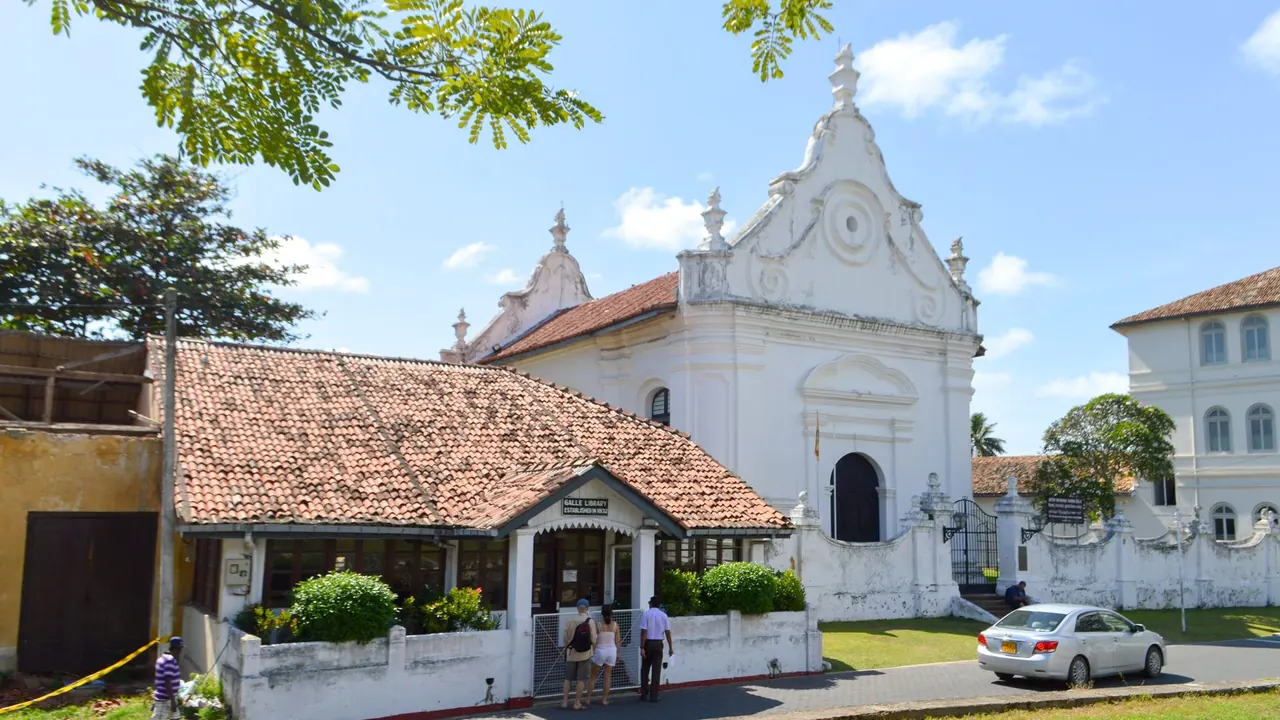
The Dutch Reformed Church in Galle Fort
- Beaches80
- Affordable cities72
- Wellness & relaxation70
Photo: Francisco Anzola, CC BY 2.0, cropped
Match
48
Every category weighted equally
- Beach & sun56
- Culture & arts43
- Food & nightlife41
- Family trip54
- Outdoors56
- Relax & unwind56
- Shopping & style43
- On a budget51
Galle in twelve categories
Our verdict on each, scored 0 to 100 against the same fixed benchmark cities, so a score means the same thing on every page.
Beaches & swimming. Scores 80 out of 100.
Food & drink. Scores 50 out of 100.
Culture & sights. Scores 55 out of 100.
Nightlife. Scores 18 out of 100.
Nature & outdoors. Scores 66 out of 100.
Day trips. Scores 50 out of 100.
Good for families. Scores 42 out of 100.
Getting around. Scores 35 out of 100.
Shopping & style. Scores 33 out of 100.
Affordability. Scores 72 out of 100.
Live music & performing arts. Scores 10 out of 100.
Wellness & relaxation. Scores 70 out of 100.
Galle category by category
Beaches & swimming
80Galle sits on a coast of warm, sandy bays, and most visitors split their time between the fort and the beach. Unawatuna, a few minutes south by tuk-tuk, is a sheltered curve of sand with calm water in season. Jungle Beach hides below the wooded Rumassala headland, and the reef pools at Dalawella and Thalpe are good for snorkelling among turtles. Further along, Mirissa and Weligama are within an hour, and Hikkaduwa's reef beaches lie to the north.
The sea is around 28°C all year, but the seasons decide everything. From December to April the water is mostly calm and clear. During the southwest monsoon, roughly May to September, heavy surf and strong currents make many beaches unsafe to swim. On the fort ramparts, locals jump into the sea at a few small sheltered spots, but the town's own shoreline is rock and harbour rather than beach.
Food & drink
50Sri Lankan cooking is the reason to eat well here: rice and curry with many small dishes, string hoppers and egg hoppers at breakfast, kottu chopped on a hot griddle, and fish curries sharp with goraka and coconut. Fishermen sell the morning catch on the seafront by the main bus station, and short eats such as fish buns and rolls are sold from bakery counters all over the new town.
Inside the fort, the old Dutch houses hold courtyard cafés, juice bars and restaurants aimed at visitors, with good coffee and seafood and some Western menus. Several heritage villas serve more ambitious dinners. Range is limited, though. A few days covers the scene, and the best curries are often in simple local places outside the walls rather than on the fort's prettiest lanes.
Culture & sights
55The heart of Galle is the fort, a walled town on a headland built by the Portuguese and rebuilt by the Dutch in the 17th century, and listed by UNESCO. Inside the ramparts the grid of lanes keeps its low colonial houses with deep verandas, the Dutch Reformed Church with its gravestone floor, the old Dutch Hospital, the warehouses that hold the National Maritime Museum, a white lighthouse, a mosque and Buddhist temples side by side. Walking the bastions at sunset is the classic Galle experience.
The strength is the whole townscape rather than single sights. Museums are small and the fort can be seen properly in a day or two. Beyond the walls, the new town is a busy commercial centre with a large cricket ground below the ramparts but little else to see.
Nightlife
18Evenings in Galle are mostly about a long dinner and a drink on a hotel veranda or rooftop inside the fort. The fort lanes are calm after dark and close up early. Unawatuna has a strip of beach bars with music and the odd party night in high season, and Hikkaduwa further up the coast is a little livelier. There are no clubs to speak of, and anyone wanting a real night out should not choose Galle.
Nature & outdoors
66The countryside around Galle is green and tropical. Rumassala, a wooded headland just across the bay, has short jungle paths down to the sea, and the coast south is a string of rocky points, reefs and lagoons. Snorkelling and diving over the reefs are good in the dry season, and the surf breaks at Weligama and Hikkaduwa suit both beginners and experienced surfers. Whale-watching boats leave Mirissa, about an hour away, for blue whales from December to April.
Inland, the Kanneliya rainforest reserve is roughly an hour's drive, and the Sinharaja rainforest, rich in endemic birds, is a long day. Koggala Lake has boat trips through mangroves and cinnamon islands, and stilt fishermen still perch off the shore near Koggala. Heat and humidity make walking hard work at midday, and the monsoon brings heavy rain.
Day trips
50The southern coast road and railway thread together a line of towns. Hikkaduwa and Ambalangoda, famous for its carved masks and mask workshops, lie north; Mirissa, Weligama and the old Dutch town of Matara lie south, with the Dondra Head lighthouse at the island's tip. Inland, small tea and cinnamon estates welcome visitors, and the Mulkirigala rock temple, with cave shrines climbing a cliff, is around two hours away.
Colombo is about an hour and a half by expressway or a scenic ride on the coastal train, giving a capital's temples, markets and colonial buildings for a day. The list is pleasant rather than remarkable: much of it is more beaches and more of the same coastal character, and the island's great ancient cities and hill country are too far for a day out.
Good for families
42Galle is relaxed with children rather than built for them. The fort is quiet, largely free of heavy traffic, and fun to explore along the ramparts, and Sri Lankans are warm and welcoming towards young visitors. Sheltered Unawatuna bay is good for paddling in the dry months, and turtle hatcheries along the coast and whale-watching trips from Mirissa make easy outings.
There are no theme parks, zoos or aquariums, and the heat and humidity wear small children down. The main coast road is fast and busy, pavements are patchy outside the fort, and monsoon seas are dangerous. It suits families who want a beach and villa stay rather than a programme of attractions.
Getting around
35Inside the fort everything is a short walk on flat, quiet lanes, and that is where most visitors spend their days. Beyond the walls, getting around means tuk-tuks, which are everywhere and the usual way to reach Unawatuna and the nearby beaches. Private drivers are the norm for longer outings.
The coastal railway and fast, crowded buses link Galle with Colombo and the southern towns, cheaply but without much comfort. The coast road is narrow and busy, with little room for pedestrians, so walking between beaches is not practical. Driving yourself is rarely worth it.
Shopping & style
33Shopping in Galle happens on a few lanes inside the fort. Old colonial houses hold design boutiques selling linen clothing, homeware and handloom textiles, alongside jewellers and gem dealers trading in Sri Lankan sapphires and moonstones, shops selling tea and spices, and stalls of beeralu lace, a craft brought by the Portuguese. Ambalangoda's carved masks are sold along the coast.
It is pleasant browsing rather than serious shopping. There are no department stores or fashion streets, the new town's markets serve local needs, and the gem trade calls for caution and some knowledge before buying anything valuable.
Affordability
72Galle has two price levels. Local rice-and-curry places, short eats, buses, trains and tuk-tuks are very cheap, and simple guesthouses in the new town and at Unawatuna cost little. Inside the fort, restored villas and boutique hotels, cafés and restaurants aimed at visitors charge prices much closer to a European resort, and the villas along the coast can be expensive. Imported alcohol is costly. Travellers who eat locally and stay outside the walls find it very good value. Those who stay and dine in the fort's best addresses spend much more.
Live music & performing arts
10There is very little live performance to attend in Galle. Hotels sometimes stage Kandyan or low-country dance and drumming shows for guests, and a few bars put on acoustic sets in high season. The coast's mask-dance tradition is best seen in Ambalangoda. There is no theatre or concert hall programme, and music lovers should plan for Colombo.
Wellness & relaxation
70Slowing down is much of the point of Galle. Ayurveda, Sri Lanka's traditional medicine, is offered everywhere along this coast, from simple oil massages in guesthouses to residential retreats with doctors' consultations, herbal treatments and prescribed diets lasting a week or more. Yoga studios and retreats cluster around Unawatuna and Thalpe, and many villa hotels have their own treatment rooms.
The fort itself moves at an easy pace, with shaded verandas and slow afternoons, and an evening walk on the ramparts is a ritual of its own. There is no bathing tradition of hot springs or bathhouses, though, and the heat, traffic and touts of the new town are a reminder to stay within the walls or at the coast to unwind.
When should you go?
Pick a month to see what it is like. The climate figures are measured averages, not a forecast.
Galle in July
Daytime high, °C
Rainfall in the month, mm
The whole year
Shaded against this city’s own year: the deepest cell is its best month for that figure and the palest its weakest.
Where the figures come from
Galle has no weather station within reach, so its figures come from a gridded climate model rather than a measured record, and read a broad area rather than the city itself.
Temperature and rainfall are climate normals, averaged over the years shown. Galle: 2001-2020 normals, NASA POWER reanalysis grid, no weather station within 90 km.
Before you go
| Measure | Galle |
|---|---|
| Official language | Tamil, Sinhala |
| Currency | Sri Lanka Rupee (LKR) |
| Sockets | GM230 V, 50 Hz |
| Driving side | Left |
| Time zone | UTC+5:30 |
| Emergency number | Police 119, ambulance 110, fire 110 |
| Elevation | 0 m |
| Main airport | Bandaranaike International Colombo Airport (CMB)133 km from centre56 non-stop destinations |
By the numbers
| Measure | Galle |
|---|---|
| City population | 93,118 |
| Museums within 10 km | 2 |
| UNESCO World Heritage sites within 50 km | 2 |
| Swim season, months above 21 °C | 12 months |
Compare Galle with
Every comparison with a written verdict behind it.