Sri Lanka
Kandy
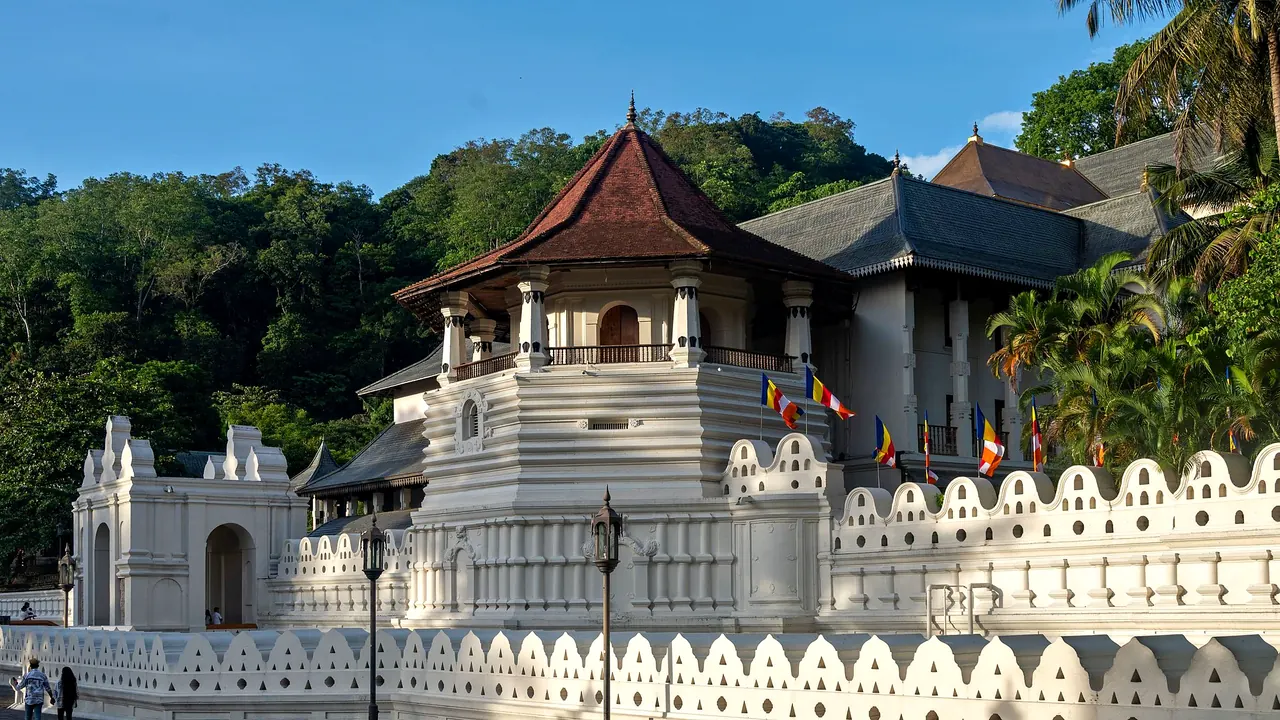
The Temple of the Tooth and its octagonal pavilion
- Affordable cities84
- Nature & outdoors70
- Day trips62
Photo: xiquinhosilva, CC BY 4.0, cropped
Match
42
Every category weighted equally
- Beach & sun40
- Culture & arts44
- Food & nightlife36
- Family trip45
- Outdoors50
- Relax & unwind44
- Shopping & style38
- On a budget46
Kandy in twelve categories
Our verdict on each, scored 0 to 100 against the same fixed benchmark cities, so a score means the same thing on every page.
Beaches & swimming. Scores 5 out of 100.
Food & drink. Scores 38 out of 100.
Culture & sights. Scores 58 out of 100.
Nightlife. Scores 8 out of 100.
Nature & outdoors. Scores 70 out of 100.
Day trips. Scores 62 out of 100.
Good for families. Scores 35 out of 100.
Getting around. Scores 32 out of 100.
Shopping & style. Scores 30 out of 100.
Affordability. Scores 84 out of 100.
Live music & performing arts. Scores 30 out of 100.
Wellness & relaxation. Scores 48 out of 100.
Kandy category by category
Beaches & swimming
5Kandy sits in the hills of central Sri Lanka, about three hours by road from the nearest coast, so a beach is a separate trip and not part of a stay here. The lake in the centre is ornamental and not for swimming, and the rivers around town are not safe bathing spots. For swimming, choose a hotel with a pool, several of which look out over the forested hills. If sea and sand matter, add a few nights on the south or east coast to the trip.
Food & drink
38Eating in Kandy means Sri Lankan home cooking: rice and curry with half a dozen small dishes of dhal, jackfruit, greens and fish or chicken, string hoppers and egg hoppers in the morning, and kottu chopped on a hot griddle at night. The best meals tend to come from plain local eating houses near the clock tower and the market, where lunch is served on the go. Short eats, the trays of patties, rolls and vadai in bakery windows, are good with a cup of sweet milk tea.
Tea is the town's real drink, and estates in the surrounding hills offer tastings. Beyond that the range is narrow. There are few restaurants of real ambition, many visitors end up eating in their hotel, and alcohol is less central here than in most travel cities.
Culture & sights
58Kandy was the last capital of the Sinhalese kings, and the whole old city is a UNESCO World Heritage Site. Its heart is the Temple of the Sacred Tooth Relic, the most revered Buddhist shrine in the country, with its gilded roof, moat and octagonal pavilion beside the lake. It is a working place of worship: drummers announce the daily offerings, pilgrims in white bring lotus flowers, and the experience of being there counts for as much as the architecture. The old palace buildings, the audience hall and small museums sit within the same compound.
Around it are the lake built by the last king, colonial buildings in the town centre, the British Garrison Cemetery and the large white Buddha on the hill above town. It is a half-day or full-day set rather than a city of many museums.
Nightlife
8Kandy goes to bed early. It is a sacred city and a town of families, and after dinner the streets around the lake empty quickly. Going out means a drink on a hotel terrace overlooking the hills or one of a few old-fashioned bars in the centre, and that is the whole of it. Visitors who want a night out are better off saving it for Colombo or the south coast.
Nature & outdoors
70Kandy lies in a bowl of green hills at about 500m, and the landscape is a large part of why people come. Udawatta Kele, a forest reserve directly above the temple, has shaded trails, monkeys and birdlife within walking distance of the centre. The Royal Botanic Gardens at Peradeniya, a short ride out of town, spread across a bend of the Mahaweli River with giant bamboo, an orchid house and huge old trees full of fruit bats.
Further out, the Knuckles Range offers serious hiking through cloud forest, villages and waterfalls, and the Hantana hills just south of town are covered in tea estates with walking paths. The climate is warm and humid, cooler than the coast, with heavy rain in the monsoon months making some trails slippery.
Day trips
62Kandy is the southern gateway to Sri Lanka's Cultural Triangle. The Dambulla cave temples, painted and filled with Buddha statues, are about two hours away, and the rock fortress of Sigiriya is a long but popular day out beyond them. Closer in, the medieval temples of Embekke, Lankatilaka and Gadaladeniya make a fine half-day circuit through village country, and the Aluvihare rock monastery at Matale lies on the road north.
Tea factories in the surrounding hills, spice gardens along the Matale road and the elephants at Pinnawala are other common outings. Roads are winding and slow, so distances on the map take longer than they look. Polonnaruwa and the hill town of Nuwara Eliya are better treated as overnight stops.
Good for families
35Sri Lankans are warm towards children, and families are welcome everywhere, but Kandy has little made for them. The Peradeniya gardens are the best outing, with wide lawns, monkeys and fruit bats, and the walk around the lake is pleasant in the early morning. Elephant visits and a ride on the scenic hill-country train are the trips children remember most. Against that, the town centre is congested, pavements are narrow or missing, and the temple asks for quiet and covered shoulders and knees. Families do best in a hotel with a pool and garden on the hills outside town.
Getting around
32The centre of Kandy is small: the temple, the lake, the market and the main streets lie within a short walk of each other. Walking is still hard work, with heavy traffic funnelled through a narrow valley, fumes at rush hour, broken pavements and steep climbs to many hotels on the hillsides. Tuk-tuks are the usual way around, and most day trips are done with a hired car and driver. Local buses are cheap but crowded and hard for visitors to read. The railway station links Kandy with Colombo and with the famous line up through the tea country to Ella.
Shopping & style
30Shopping in Kandy is about local products rather than style. Tea is the obvious buy, from estate shops in the hills or dealers in town, along with spices, batik, lacquerware, brass and carved wooden masks. Gem showrooms are common, often reached through drivers who earn a commission, so buy with care. The central market is lively for fruit, spices and everyday goods, and the government craft shop sells fixed-price handicrafts. Fashion, design and luxury shopping are essentially absent.
Affordability
84Kandy is a cheap place to stay for most visitors. Family-run guesthouses and simple hotels cost little, a rice and curry lunch at a local eating house costs very little, and tuk-tuks, buses and trains are inexpensive. Costs climb in two places: the separate, much higher entrance fees charged to foreign visitors at the temple, the botanical gardens and the major ancient sites further north, and the boutique hotels and resort-style properties on the surrounding hills. Hiring a car and driver for day trips is the other main expense. Rooms book up and cost more during the Esala Perahera festival.
Live music & performing arts
30Kandy is the home of Kandyan dance, the country's classical dance form, with its drummers, fire walkers and dancers in silver headdresses. Several cultural halls near the lake stage a short programme every evening, aimed at visitors but performed by trained troupes. Drumming at the temple during the daily offerings is worth hearing too.
The great event is the Esala Perahera, held over several nights in July or August, when processions of elephants, dancers, drummers and torch bearers carry the relic casket through the streets. Outside of these, there is little formal theatre, concert or live-music life.
Wellness & relaxation
48Ayurveda, Sri Lanka's traditional medicine, gives Kandy its wellness offer. Treatment centres in town and retreats on the surrounding hills offer oil massages, herbal steam baths and longer programmes with prescribed diets, and spice gardens on the Matale road sell the oils and remedies. Some hillside hotels pair this with yoga and views over forest and tea estates. The town itself is noisy and congested, with no bathing tradition, so rest is found out on the hills rather than in the centre. Early mornings by the lake, before the traffic builds, are the calmest time in town.
When should you go?
Pick a month to see what it is like. The climate figures are measured averages, not a forecast.
Kandy in July
Daytime high, °C
Rainfall in the month, mm
The whole year
Shaded against this city’s own year: the deepest cell is its best month for that figure and the palest its weakest.
Where the figures come from
Kandy has no weather station within reach, so its figures come from a gridded climate model rather than a measured record, and read a broad area rather than the city itself.
Temperature and rainfall are climate normals, averaged over the years shown. Kandy: 2001-2020 normals, NASA POWER reanalysis grid, no weather station within 90 km.
Before you go
| Measure | Kandy |
|---|---|
| Official language | Tamil, Sinhala |
| Currency | Sri Lanka Rupee (LKR) |
| Sockets | GM230 V, 50 Hz |
| Driving side | Left |
| Time zone | UTC+5:30 |
| Emergency number | Police 119, ambulance 110, fire 110 |
| Elevation | 500 m |
| Main airport | Bandaranaike International Colombo Airport (CMB)84 km from centre57 non-stop destinations |
By the numbers
| Measure | Kandy |
|---|---|
| City population | 120,087 |
| People per km² | 4,214 |
| Museums within 10 km | 6 |
| UNESCO World Heritage sites within 50 km | 2 |
Compare Kandy with
Every comparison with a written verdict behind it.