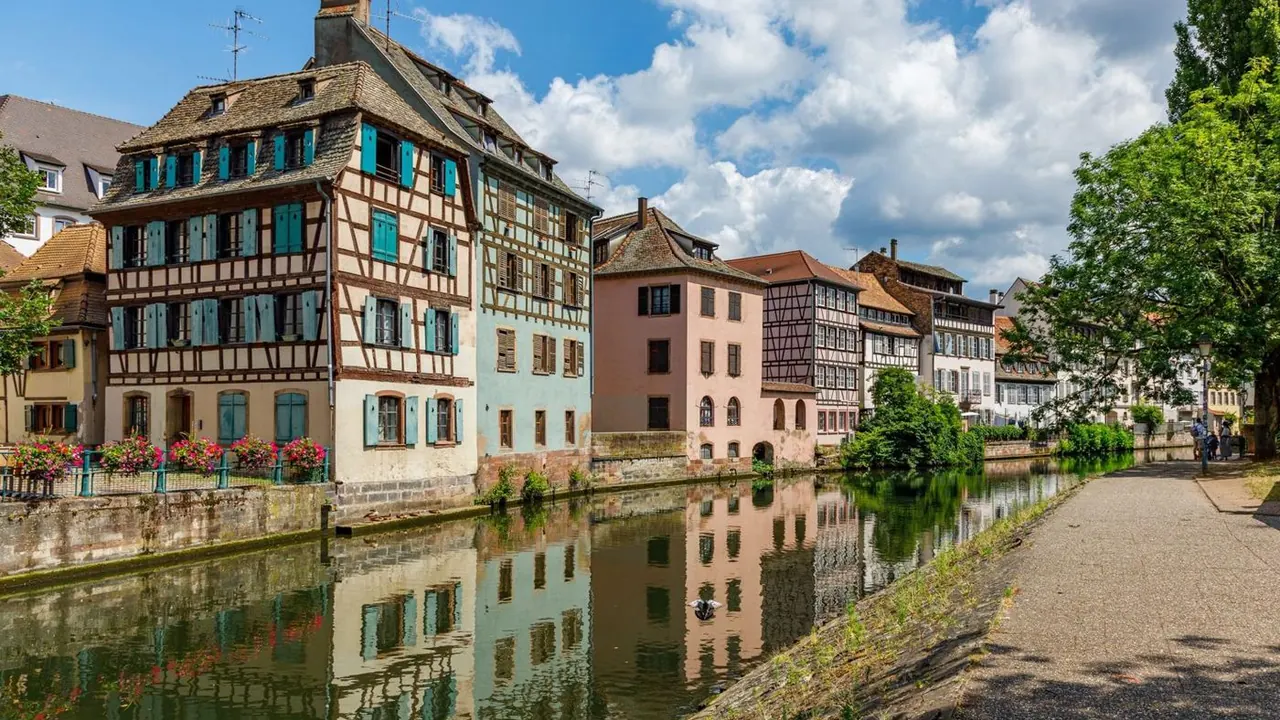
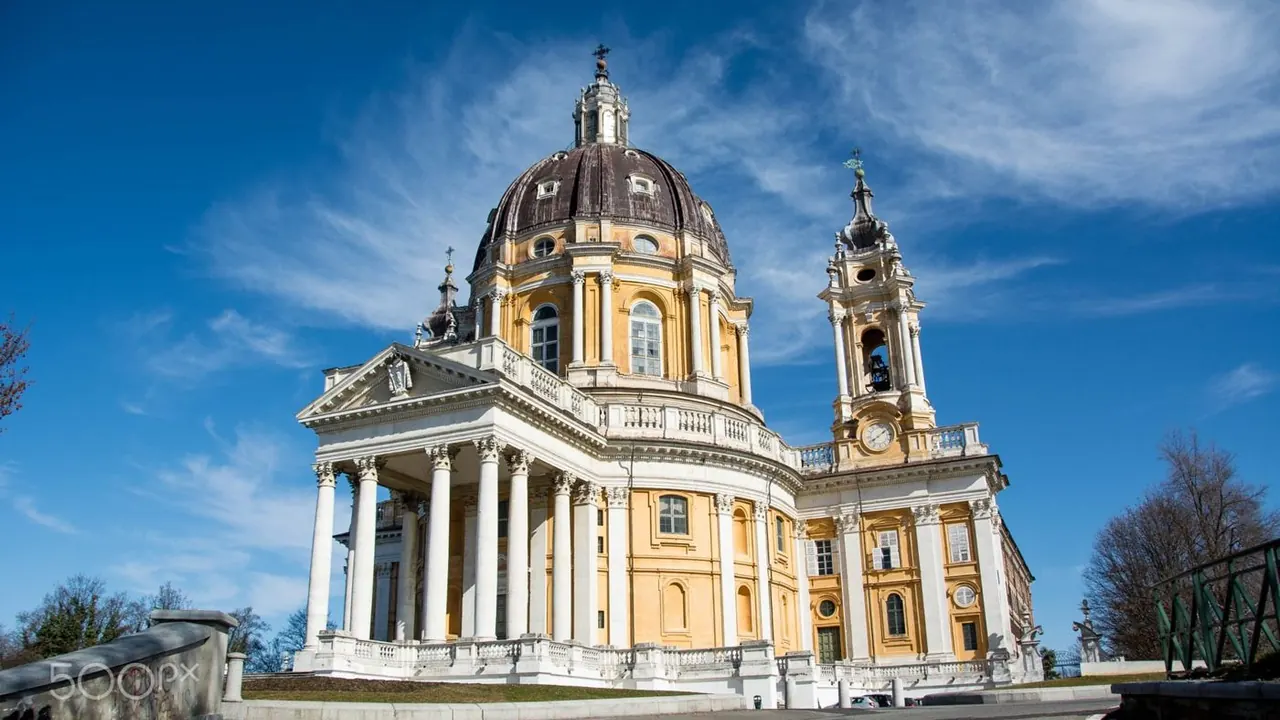
Photos: Strasbourg by Edoardo Colombo, Pexels License; Turin by Konstantin Dacosta, CC BY 3.0, cropped.
Strasbourg or Turin?
Our verdict in twelve categories, each scored against the same fixed benchmark cities, and the climate month by month, so you can choose for your trip.
Choose Strasbourg for
- wellness
- getting around
- families
Strasbourg suits a slower, simpler trip. Its old town is a compact island of timber-framed streets that you can walk or cycle across, trams cover the rest, and day trips cross the Rhine to Baden-Baden's baths or the Black Forest. Families with young children and travellers who want calm will find it easier to manage, especially outside December.
Choose Turin for
- nature and the outdoors
- food and drink
- prices
If you plan a trip around eating, Turin is the better pick. Piedmontese cooking, the aperitivo and the wines of the Langhe lead the way. The Museo Egizio and the Savoy palaces give you more to see, and the Alps are close enough for real hiking or skiing. The stay costs less, and evenings run later.
Scoreboard
Twelve categories on one fixed scale from 0 to 100. The shaded stretch is the gap between the two.
Your match
Pick a travel style or drag the sliders, and both match scores follow your weighting.
Wins on wellness and getting around with your weighting.
Wins on nature and the outdoors and food and drink with your weighting.
What matters to you?
Category by category
What the scores mean for a trip.
Beaches & swimming
Neither city is a place for sea swimming. What differs is how a summer afternoon works. Strasbourg's gravel-pit lakes, the Baggersee above all, are a tram ride away and have lifeguards in July and August, so you can fit a swim around sightseeing.
Turin's nearest lakes, such as Avigliana and Viverone, need more of a journey. The Ligurian coast is close to two hours away, which really means a separate stay.
Food & drink
Both cities serve rich northern food with wine country on the doorstep, but Turin eats better and with more variety. Agnolotti del plin, vitello tonnato, Langhe truffles in autumn and Barolo on the wine list, together with the aperitivo it invented and the bicerin served in arcaded cafés, give you more to explore meal by meal. Porta Palazzo is also a far bigger market.
Strasbourg's strength is the winstub, with choucroute, baeckeoffe and tarte flambée alongside a pichet of Riesling. This food is at its best in cold weather. The restaurants around the cathedral and Petite France lean towards tourist menus, and neither city offers much choice of other cuisines.
Culture & sights
Turin has more to see and a bigger headline sight. The Museo Egizio alone justifies the trip. Around it are the Royal Palace, Palazzo Madama, the Savoy residences out to Venaria, the cinema museum inside the Mole and the Fiat story at Lingotto, enough to fill more days than Strasbourg.
Strasbourg is more concentrated and, for many people, prettier. The pink sandstone cathedral with its astronomical clock, the leaning houses of Petite France and the Neustadt avenues form one walkable ensemble that takes two or three relaxed days. The Palais Rohan museums and the European institutions complete it.
Nightlife
Neither is a clubbing city, but Turin's evenings are longer and more sociable. The aperitivo starts things off. Then the crowd spreads through the Quadrilatero Romano, San Salvario and Vanchiglia, and in summer the Murazzi by the Po fill up.
Going out in Strasbourg means student bars and beer cellars in Krutenau and around Place Saint-Étienne, with riverside terraces in summer. Much of it winds down by midnight on weeknights.
Nature & outdoors
Turin has real mountains within reach. The Gran Paradiso, with its ibex and high trails, the Susa valley and the ski slopes of the Via Lattea are an hour or so away, for skiing in winter and hut-to-hut hiking in summer. Closer in, the Superga hills and the walled Mandria park make for a quicker escape.
Strasbourg's outdoors is gentler. The Vosges have forest trails and castle ruins, and the Black Forest adds tougher walks. The flat Rhine plain makes Strasbourg the better city for long, level bike rides, including rides across into Germany.
Day trips
Both are excellent bases with wine country about an hour away, so the choice comes down to character. From Strasbourg, the trips cross a border: Colmar and the half-timbered villages of the wine route on one side, and Baden-Baden, Freiburg and Heidelberg on the other, with Basel also reachable by train.
Turin's days out stay in Italy and cover more varied scenery. There are truffle towns and Barolo villages in the Langhe, Milan by fast train, the Sacra di San Michele abbey on its rock, and Genoa's port or Roman Aosta for a longer day. In both cities, a car makes the wine villages easier.
Good for families
Strasbourg is the easier family city. Its car-free island, trams and cycle paths keep the logistics simple. Boat trips, the storks and rowing boats in the Orangerie, and the hands-on Le Vaisseau science centre are all aimed at children, and Turin has nothing to match Europa-Park, about an hour away.
Turin works better for older children, who tend to enjoy the mummies, the glass lift up the Mole and the car museum, and the arcades shelter pushchairs. There is no zoo or theme park in the city, and summers are hotter and stickier.
Getting around
In Strasbourg a bike is often the quickest way about, thanks to its separated lanes and bike hire. The old town island is small and largely pedestrianised, and trams run to the station, the European quarter and even Kehl across the Rhine, so a visitor never has to think about how to get anywhere.
Turin is also flat and easy on foot, and most visitors walk its arcaded grid from Porta Nuova to the Po. Once you leave the centre it takes more effort. There is a single metro line, and the trams and buses are slower and take some learning.
Shopping & style
Turin has slightly more range. Via Roma's arcades carry the luxury labels Strasbourg lacks, and its food shops, with chocolate, gianduiotti, truffles and Piedmontese wine, are the best reason to bring an empty bag. The Balon flea market and the antique dealers of Via Maria Vittoria add good browsing.
Shopping in Strasbourg is smaller and more regional. There are chain stores around Place Kléber and independent shops near the cathedral, and Alsatian pottery, printed linens and kougelhopf moulds make good things to take home. December's Christmas market is its peak, though many of the stalls sell mass-produced goods.
Affordability
Turin is the cheaper stay. A generous aperitivo can replace dinner, the trattorie and the stalls at Porta Palazzo are good value, and central hotels are fairly priced for most of the year outside the big trade fairs.
Strasbourg costs more, mainly because of hotel rooms, which climb steeply during the Christmas market and the European Parliament's sitting weeks. Winstub meals, wine by the pichet and the free old town streets help, but timing your visit makes more difference here.
Live music & performing arts
Strasbourg's stage life rests on a few strong institutions: the Opéra national du Rhin on Place Broglie, the Théâtre National de Strasbourg and the Philharmonic, along with the autumn Musica festival, which draws people who follow contemporary music. Most of it follows a season, so check the programme and plan your evenings before you go.
Turin has more on offer, and its programme runs all year. The Teatro Regio stages opera and ballet, the RAI National Symphony Orchestra plays in its own auditorium, the Lingotto hall adds more concerts, and jazz clubs and small venues are scattered through the centre. The one drawback for visitors is that its theatre is almost entirely in Italian.
Wellness & relaxation
Strasbourg is the better choice for a restful stay. It has its own bathing tradition in the tiled Bains municipaux, with a hammam and saunas, and the thermal baths of Baden-Baden are under an hour away across the Rhine.
Turin has no bathing culture. Its spas are mainly in hotels, and real thermal waters at Acqui Terme or in the Aosta valley are close to two hours away. Its calm comes instead from historic cafés, walks under the arcades and Valentino park.
When should you go?
Pick your month. The climate figures are measured averages, not a forecast.
Strasbourg in July
Turin in July
Daytime high, °C
Rainfall in the month, mm
Where the figures come from
Turin has no rain gauge within 25 km of the centre, so its rainfall comes from a gridded climate dataset read at the city rather than from a gauge further away.
Temperature and rainfall are climate normals, averaged over the years shown. Strasbourg: 1991-2020 normals, Strasbourg (9.1 km from centre). Turin: 1991-2020 normals, Torino / Caselle (15.4 km from centre).
Strasbourg is the cooler of the two for most of the year. Winter days are cold, around 5°C in January, and there is very little sun. Summer is pleasant rather than hot and peaks at 26°C. Late May to September brings the longest and sunniest days and comfortable weather for walking. May to July is also the wettest stretch, with around 70mm a month. July and August are warm enough for a swim in the lakes outside the city.
Turin has the wider swing between seasons. Its winters are a little milder, the two cities are roughly level in April and May, and then Turin's summer runs hotter, reaching 29°C in July. That makes high summer sticky for walking the streets, though it is good weather for the lakes. Autumn is Turin's wet season, with more than 70mm of rain in each month from September to November, while Strasbourg stays fairly dry then. April and June are the best months for walking in Turin, and May is showery.
Which traveller are you?
For an outdoors trip, Turin is the stronger base. The Gran Paradiso, the Susa valley and the slopes around Sestriere are about an hour or so away, for skiing in winter and high hiking in summer. Strasbourg has the gentler Vosges and long, flat cycle routes.
On a relaxing and wellness trip, Strasbourg wins. The tiled Bains municipaux give it a bathing habit of its own, Baden-Baden's thermal baths are under an hour away, and canal walks and winstub lunches set a slow pace. Turin's spas are mostly in hotels.
On a family trip with young children, Strasbourg is easier. The compact, car-free centre, the trams, the boat trips, the Orangerie with its storks and the Le Vaisseau science centre keep days simple, and Europa-Park is about an hour away. Turin suits older children better than toddlers.
Before you go
| Measure | Strasbourg | Turin |
|---|---|---|
| Official language | French | Italian |
| Currency | Euro (EUR) | Euro (EUR) |
| Sockets | CE230 V, 50 Hz | CFL230 V, 50 Hz |
| Driving side | Right | Right |
| Time zone | UTC+1, UTC+2 in summer | UTC+1, UTC+2 in summer |
| Emergency number | 112 | 112 |
| Elevation | 132 m | 239 m |
| Main airport | Strasbourg Airport (SXB)10 km from centre43 non-stop destinations | Turin Airport (TRN)14 km from centre65 non-stop destinations |
| Public holidays this year | 11 days | 13 days |
By the numbers
| Measure | Strasbourg | Turin |
|---|---|---|
| City population | 293,771 | 841,600 |
| People per km² | 3,752 | 6,474 |
| Museums within 10 km | 21 | 72 |
| UNESCO World Heritage sites within 50 km | 1 | 4 |
Where else could you go?
Every comparison below shares a destination with this one, so you can follow Strasbourg or Turin somewhere new.