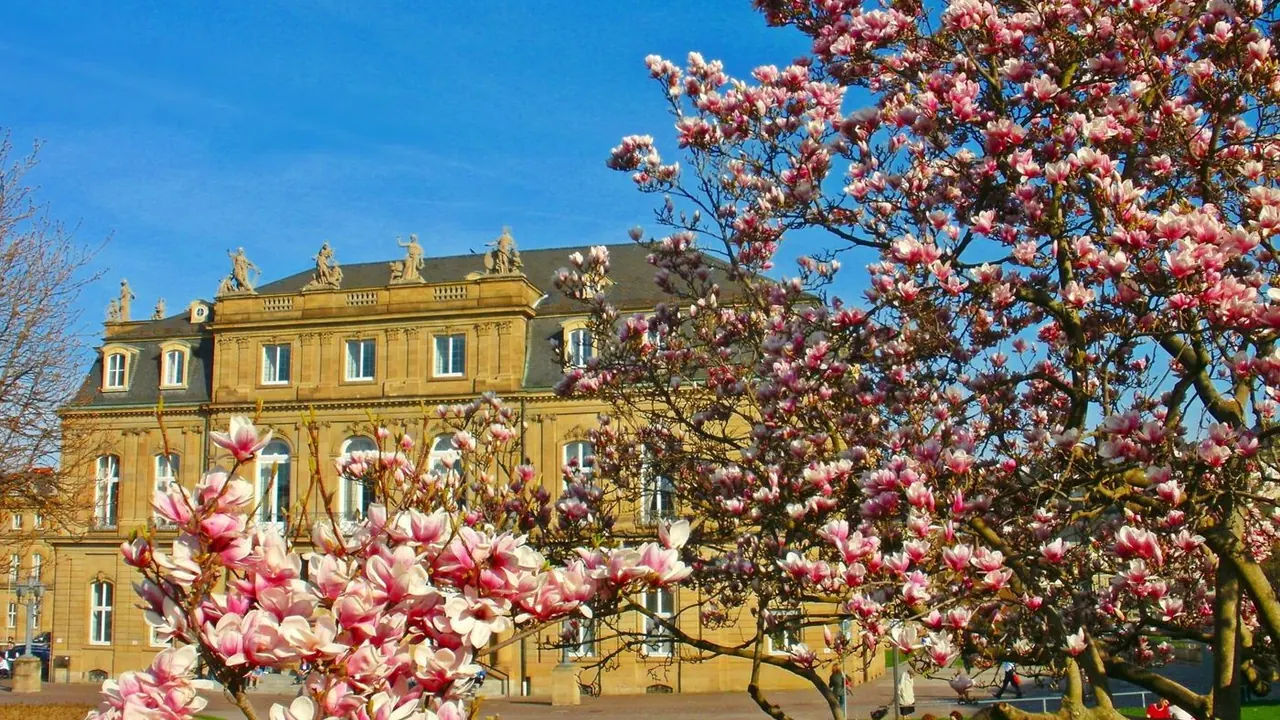
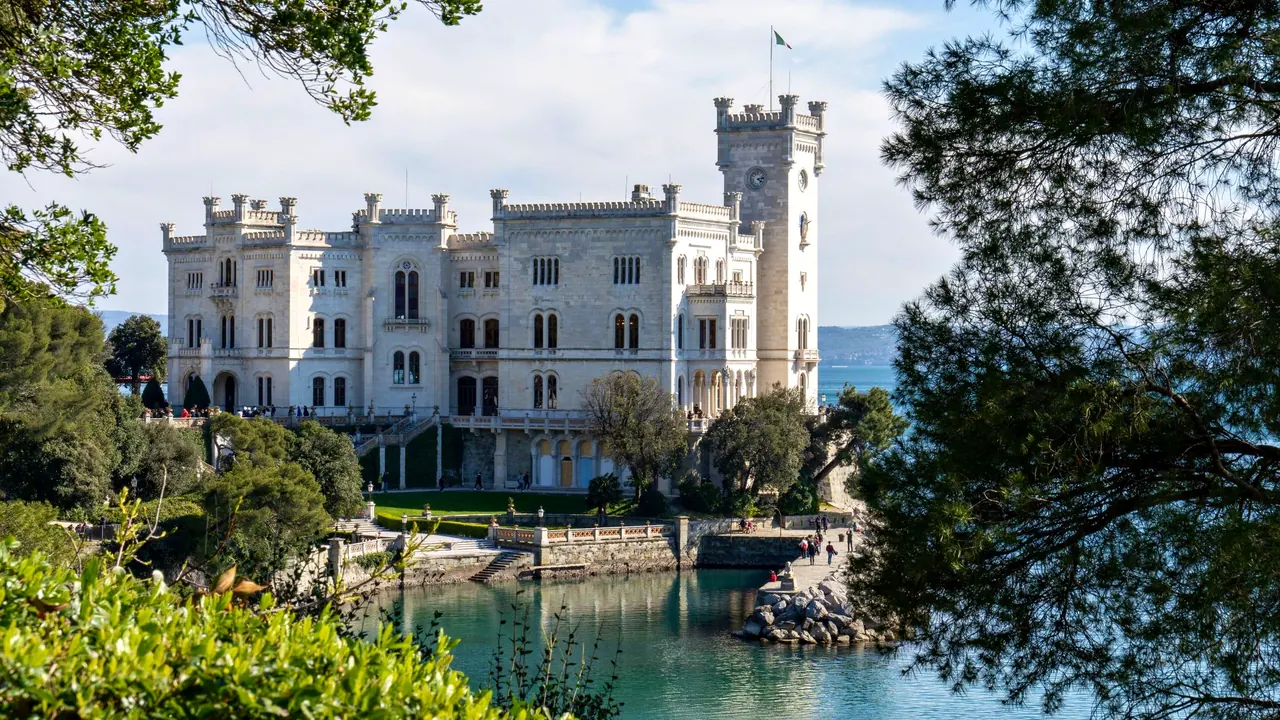
Photos: Stuttgart by Baden de, CC BY 3.0, cropped; Trieste by Tibor Szabo, Pexels License.
Stuttgart or Trieste?
Our verdict in twelve categories, each scored against the same fixed benchmark cities, and the climate month by month, so you can choose for your trip.
Choose Stuttgart for
- wellness
- shopping
- live music and the arts
Stuttgart suits travellers who want a well-run German city where the evenings belong to the stage rather than the bars. The ballet is among the most respected in Europe, the opera is known for bold productions and the Liederhalle adds orchestral and chamber concerts. By day the mineral baths make an unusual afternoon, shoppers have Königstrasse and the Metzingen outlets, and families do well with Wilhelma and easy trains. There is no sea, though, so it is the wrong choice for a sun-and-swim trip.
Choose Trieste for
- beaches
- prices
- nature and the outdoors
If you want the sea to be part of every day, and a slower pace to go with it, Trieste is the better pick. A stay here is made of swimming off the Barcola promenade, coffee in Habsburg-era cafés and walks on the Karst above the gulf. It costs less than Stuttgart, and its outdoors begin at the edge of town. Nights end early, the shops are modest and young children get less out of it, so it rewards adults who are happy to wander.
Scoreboard
Twelve categories on one fixed scale from 0 to 100. The shaded stretch is the gap between the two.
Your match
Pick a travel style or drag the sliders, and both match scores follow your weighting.
Too close to call, level with your weighting
Wins on wellness and shopping with your weighting.
Wins on beaches and prices with your weighting.
What matters to you?
Category by category
What the scores mean for a trip.
Beaches & swimming
This is where the two cities are furthest apart. Stuttgart has no swimmable river or sea, so summer bathing means outdoor pools, some fed by the mineral springs. The nearest open water worth the trip is Lake Constance, more than two hours away.
In Trieste the Adriatic is part of everyday life. Locals lay out towels on the concrete steps and lawns at Barcola and climb down ladders into clear water, and there are pebble coves further along the coast towards Duino. Do not expect sand, but anyone happy to swim off rocks will be in the sea most summer days.
Food & drink
For food the two are about level, and in both the growers run their own seasonal wine taverns. Stuttgart's are the Besen, where wine and onion tart are served in the growers' own houses. The everyday cooking is Swabian, with Maultaschen and Käsespätzle served alongside Trollinger from vineyards inside the city limits. Stuttgart also has more fine dining, which matters if you are planning a special dinner.
Trieste eats at the crossroads of Italy, Austria and the Slavic world. Boiled pork is carved at the old buffet counters, and jota soup sits on menus beside sardoni, the small local anchovies, fried or marinated. Coffee is a ritual with its own vocabulary. Up on the Karst, the osmize sell their own wine, cheese and cured meats, and the city suits casual eaters better than anyone after a gourmet evening.
Culture & sights
There is little to choose between them, but they offer very different kinds of sightseeing. Stuttgart's sights are modern and industrial: the Mercedes-Benz and Porsche museums, the Staatsgalerie and the Weissenhof Estate's Le Corbusier houses. The bombed old centre survives only in pockets around Schlossplatz.
Trieste keeps the look of a whole Habsburg port intact. Piazza Unità opens onto the sea, the Borgo Teresiano lines the Canal Grande, and San Giusto hill has its cathedral, castle and Roman theatre. Miramare Castle stands on the shore nearby. It rewards slow wandering more than ticking off museums.
Nightlife
Neither city is a party destination, but Stuttgart offers more of a night out. Theodor-Heuss-Strasse fills with bar-goers at weekends, there are clubs in basements and old industrial spaces with an electronic crowd, and the Cannstatter Volksfest beer tents liven up the autumn.
Trieste's evenings are built around the aperitivo, with spritz by the Canal Grande or in Cavana, and in summer the kiosks on the Barcola seafront. There are few clubs, and the city is mostly quiet by midnight.
Nature & outdoors
Trieste has the more dramatic outdoors, and it starts closer to the centre. The Karst plateau rises straight behind the city. The Strada Napoleonica runs high above the gulf, Val Rosandra offers gorge hiking and climbing, and there are caves such as the Grotta Gigante. The water adds sailing, plus snorkelling and kayaking in the Miramare marine reserve.
Stuttgart's countryside is gentler, with wooded hills, vineyard trails and deer forests at the edge of the basin, and easy cycling along the Neckar. The cliffs of the Swabian Jura and the Black Forest ridges are about an hour away, which suits walkers more than anyone after sea or mountains.
Day trips
Both are excellent bases. The difference is variety against convenience. From Stuttgart, fast and frequent trains reach Ludwigsburg's palace, Esslingen, Tübingen and Heidelberg with little planning, and the list runs on to Maulbronn, Hohenzollern Castle, Ulm and even Strasbourg.
From Trieste you can reach three countries. Aquileia's mosaics and the star-shaped town of Palmanova are in Friuli, Piran and Ljubljana are across the Slovenian border, and the Istrian towns are in Croatia. Some of these are easier by car, and Venice makes a long but realistic day by train.
Good for families
Stuttgart is the easier choice with children. Wilhelma, with its zoo and gardens among Moorish pavilions, fills a whole day. Killesberg has a miniature railway and animal enclosures, and riding the rack railway is a treat in itself. Beer gardens and outdoor pools welcome families.
Trieste is calm and safe, but less of it is made for children. The Grotta Gigante, the aquarium and the grounds of Miramare are the highlights. Swimming is off rocks rather than sandy shallows, and the steep streets are hard work, so it suits older children better than toddlers.
Getting around
Both have a flat, walkable centre with steep slopes beyond it, and they are about equally easy to get around. Stuttgart climbs its basin by rail: the Stadtbahn and S-Bahn share one ticket with a rack railway and a funicular, and the public stairways called Stäffele are shortcuts on foot.
Trieste has no rail network in town and relies on a dense bus system along the coast and up onto the Karst. Passenger boats cross the bay to Muggia, which is a pleasant way to travel. The steps up to San Giusto are a proper climb.
Shopping & style
Stuttgart is the better place to shop. Königstrasse is one of Germany's longest pedestrian shopping streets, Breuninger covers luxury fashion, and smaller independent shops cluster around Calwer Strasse. Many shoppers also make the short trip to the Metzingen outlets.
Trieste has ordinary Italian high-street shops and nothing in the way of flagships. Its appeal lies in antique and second-hand shops in the old-town lanes, and in edible souvenirs such as roasted coffee, Karst honey and presnitz.
Affordability
Trieste is the gentler city on the wallet. A standing coffee and a buffet plate cost little, the buses are cheap, and some of the best things to do are free: swimming at Barcola, the cathedral hill and walks on the Karst.
Stuttgart is a prosperous business city. Hotel prices jump during trade fairs, so weekends and the quieter months are the times to book. The tavern food is fair value for the portions, but smart dining and central rooms add up quickly.
Live music & performing arts
Stuttgart has much the stronger stage scene. Its ballet is one of Europe's most respected companies, the Staatsoper is known for daring productions, and the Liederhalle hosts orchestras and a Bach tradition. Musicals and a jazz club keep the week busy, but book early for the ballet.
Trieste has an elegant opera house in the Teatro Verdi, an unusual taste for Habsburg operetta, a Slovenian-language theatre and summer concerts in the castle courtyard. Outside those, live music is thin.
Wellness & relaxation
Stuttgart comes out ahead for anyone who wants to soak. Bad Cannstatt and Berg have some of Europe's most productive mineral springs, which feed public baths with naturally carbonated warm water and saunas, an easy afternoon's break in the city.
Trieste offers rest of a different kind: an unhurried pace, long sittings in old coffee houses and sunset walks on the Molo Audace pier. Its spas are limited to hotels, though, so thermal bathing means leaving town.
When should you go?
Pick your month. The climate figures are measured averages, not a forecast.
Stuttgart in July
Trieste in July
Daytime high, °C
Rainfall in the month, mm
Temperature and rainfall are climate normals, averaged over the years shown. Stuttgart: 1991-2020 normals, Stuttgart / Neckartal (2.8 km from centre). Trieste: 1991-2020 normals, Trieste (1.6 km from centre).
Stuttgart is a city for late spring to early autumn. From May to September afternoons are mild to warm, peaking around 26°C in July and August, and those are also the sunniest months. Summer is the wettest time of year, though, with heavy showers rather than steady rain. Winter is short of daylight and cold, with highs around 6°C, which suits museums, the opera house and the warm mineral pools better than long walks.
Trieste is warmer in every month and much sunnier in summer. July and August reach about 29°C, which can feel heavy in the stone streets, and the sea is at its best from June to September, at around 25°C in high summer. September and early autumn still offer warm swimming, but the rain builds through the autumn to a peak of about 125mm in November. Winter is mild on paper, but the Bora wind can make it feel raw. May, June and September are the best months for combining the coast with sightseeing.
Which traveller are you?
For a beach and sun trip, Trieste is the only real choice. You can swim off the Barcola platforms or in the coves below Sistiana and Duino all summer. Stuttgart is far inland, and its outdoor pools are the closest it gets.
On a relaxing and wellness trip, Stuttgart has the edge thanks to its mineral springs. The carbonated warm pools at Cannstatt and Leuze, with saunas alongside, are genuine bathing culture. Trieste offers a slow pace and coffee houses, but no thermal baths.
On a shopping trip, Stuttgart is clearly better. It has the long pedestrian Königstrasse, the Breuninger department store for designer fashion and the Metzingen outlet town half an hour away. In Trieste the best buys are coffee, Karst wine and antiques.
Before you go
| Measure | Stuttgart | Trieste |
|---|---|---|
| Official language | German | Italian |
| Currency | Euro (EUR) | Euro (EUR) |
| Sockets | CF230 V, 50 Hz | CFL230 V, 50 Hz |
| Driving side | Right | Right |
| Time zone | UTC+1, UTC+2 in summer | UTC+1, UTC+2 in summer |
| Emergency number | 112 | 112 |
| Elevation | 245 m | 2 m |
| Main airport | Stuttgart Airport (STR)10 km from centre124 non-stop destinations | Trieste Airport (TRS)31 km from centre32 non-stop destinations |
| Public holidays this year | 12 days | 13 days |
By the numbers
| Measure | Stuttgart | Trieste |
|---|---|---|
| City population | 609,365 | 198,417 |
| People per km² | 2,938 | 2,332 |
| Museums within 10 km | 42 | 33 |
| UNESCO World Heritage sites within 50 km | 3 | 5 |
| Swim season, months above 21 °C | - | 4 months |
Where else could you go?
Every comparison below shares a destination with this one, so you can follow Stuttgart or Trieste somewhere new.
- Rovinjvs Trieste
- Baden-Badenvs Stuttgart
- Ljubljanavs Trieste
- Heidelbergvs Stuttgart
- Bledvs Trieste
- Strasbourgvs Stuttgart