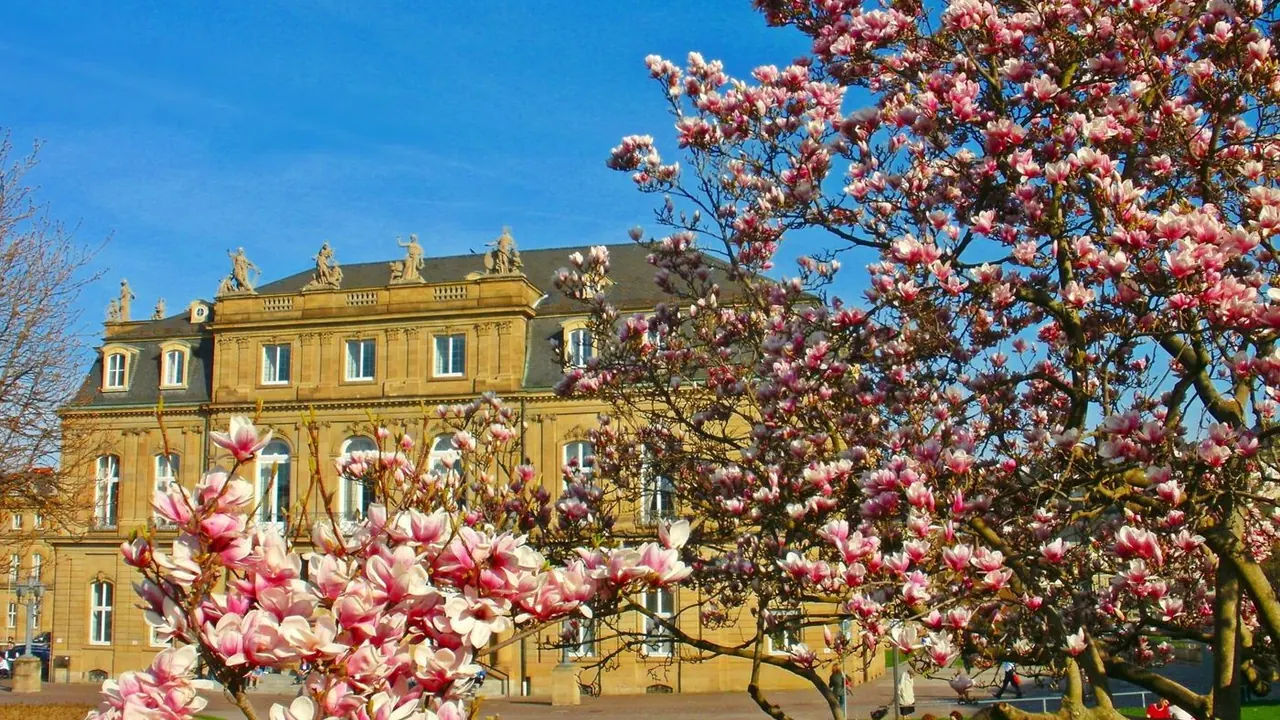
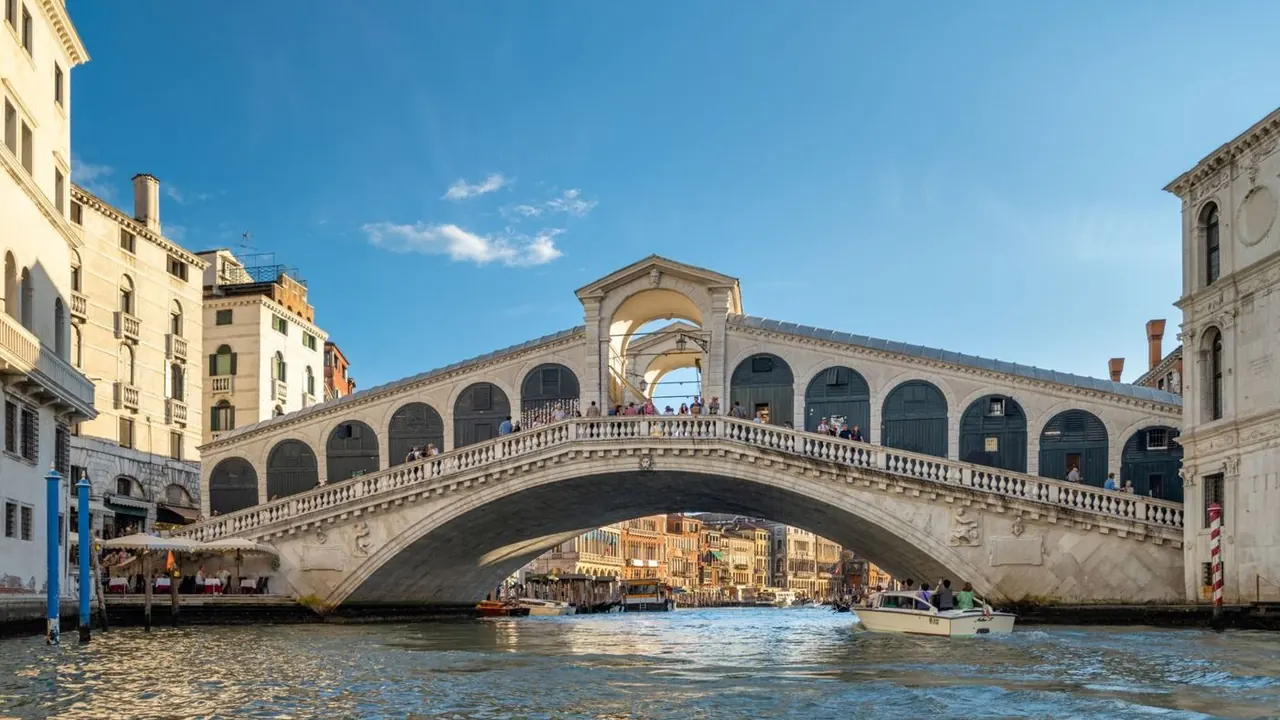
Photos: Stuttgart by Baden de, CC BY 3.0, cropped; Venice by David Vives, Pexels License.
Stuttgart or Venice?
Our verdict in twelve categories, each scored against the same fixed benchmark cities, and the climate month by month, so you can choose for your trip.
Choose Stuttgart for
- wellness
- families
- prices
Stuttgart is the better pick for travellers who like an orderly, green city that also works as a base. Its mineral baths, vineyard walks and wooded hills sit close to the centre, the ballet and opera are among the best in Europe, and children are well looked after at Wilhelma and on Killesberg. It also costs a good deal less to stay, which makes a longer stay with day trips into Swabia and the Black Forest easy to manage.
Choose Venice for
- beaches
- culture and sights
- day trips
Venice suits the traveller who comes for the place itself. Palaces and churches stand on water with no cars, and the Venetian painters hang in the Accademia, the Frari and San Rocco. Add a spritz and cicchetti at a Rialto counter, an afternoon on the Lido and boat trips out to Murano, Burano and Torcello. It is an expensive city, and it rewards adults and older children who can cope with the crowds and the stepped bridges.
Scoreboard
Twelve categories on one fixed scale from 0 to 100. The shaded stretch is the gap between the two.
Your match
Pick a travel style or drag the sliders, and both match scores follow your weighting.
Too close to call, 2 points apart
Wins on wellness and families with your weighting.
Wins on beaches and culture and sights with your weighting.
What matters to you?
Category by category
What the scores mean for a trip.
Beaches & swimming
For anything to do with the sea, Venice wins easily. The Lido is a short boat ride from San Marco and has kilometres of fine Adriatic sand with shallow, warm water that suits children. Pellestrina is quieter, and Jesolo is there for a full resort day. The water is greenish rather than clear, though, and most visitors give it one afternoon.
Stuttgart has no beach at all. The Neckar is a working river and Max-Eyth-See is not for bathing, so summer swimming means the outdoor pools, some of them fed by mineral springs. The nearest open water is Lake Constance, more than two hours away.
Food & drink
The two are about equal for food, but the eating is very different. Stuttgart is about sitting down to hearty Swabian dishes like Maultaschen, Käsespätzle and Zwiebelrostbraten in wine taverns, washed down with Trollinger from vineyards inside the city and, in season, a glass in a grower's Besen. It also has a deeper fine-dining tier.
Venice is better eaten standing up. Cicchetti and a spritz at the bacari around the Rialto, then lagoon cooking such as black cuttlefish risotto with fish from the market. The tourist restaurants near San Marco are poor, so the good meals take some seeking out in Cannaregio or Castello.
Culture & sights
Venice is in another league. The city itself is the monument, with six centuries of palazzi, the Basilica and the Doge's Palace, and art that goes from the Accademia and San Rocco to the Guggenheim and the Biennale. A week barely covers it, and the smaller churches hold masterpieces too.
Stuttgart's sights are mostly modern: the Mercedes-Benz and Porsche museums, the Staatsgalerie's postmodern wing and the Le Corbusier houses at the Weissenhof Estate. Bombing left the old core in pockets around Schlossplatz, and two or three days is enough.
Nightlife
Neither city is a party destination, but Stuttgart keeps going later. Theodor-Heuss-Strasse fills at weekends, clubs sit in basements and old industrial spaces, and the Cannstatter Volksfest and the wine village bring big crowds in late summer and autumn.
Venice's evening peaks at aperitivo time on the Fondamenta della Misericordia. After that, Campo Santa Margherita has a few student bars, and by midnight the canals are dark and silent. That makes for a lovely late walk, but not much of a night out.
Nature & outdoors
Walkers and cyclists get more from Stuttgart. Trails start almost at the edge of the centre, through vineyards and the deer forests of Rotwildpark and Schönbuch. The Swabian Jura's cliffs and caves and the fir ridges of the northern Black Forest are each about an hour away.
Venice's outdoors is the flat world of the lagoon: marshes around Torcello with herons and flamingos, kayaking, rowing lessons and bike rides along the Pellestrina sea walls. There is little green space in the city, and real mountains need a long journey to the Dolomites.
Day trips
Both cities are excellent bases, with Venice slightly ahead. Fast trains reach Padua's Giotto frescoes, Palladio's Vicenza and Roman Verona, and the lagoon adds Murano, Burano and Torcello without a station in sight.
From Stuttgart the trips are more German in flavour: Ludwigsburg's baroque palace, half-timbered Esslingen, student Tübingen and Heidelberg's castle are all close, and Hohenzollern, Maulbronn and Ulm's spire are further out. Strasbourg makes a long day across the border into France.
Good for families
Stuttgart is the easier city with children. Wilhelma's zoo and gardens fill a day, Killesberg has a narrow-gauge railway and a lookout tower, Ludwigsburg has a fairy-tale garden, and beer gardens welcome families. The hills are the only real effort with a pushchair.
Venice thrills children with boats and car-free alleys, and the Lido and the Murano glass furnaces go down well. The daily reality is harder: stepped bridges, summer crowds and heat, and few parks or playgrounds. It works best as a short stay with older children.
Getting around
Both are easy to get around, but in different ways. Stuttgart's flat centre is walkable, and an integrated ticket covers the light rail, S-Bahn, rack railway and funicular up the steep sides of the basin, with Stäffele stairways as shortcuts on foot.
In Venice you walk everywhere, through alleys that twist and end at canals, and use the slow vaporetto or a traghetto across the Grand Canal. The constant bridge steps make luggage and wheels a struggle in a way Stuttgart's trams never do.
Shopping & style
Shoppers after brands will be happier in Stuttgart. Königstrasse runs the length of the centre with the familiar high-street names, Breuninger covers luxury and designer fashion, and the outlet village at Metzingen is about half an hour away. Independent shops around Calwer Strasse add some variety, though crafts and markets are thin.
Venice sells what it has made for centuries: Murano glass, Burano lace, papier-mâché masks, marbled paper and furlane slippers, best bought from workshops in Dorsoduro, Castello and on Murano where you can see the work being done. Cheap imports crowd the main routes. There are no large department stores, so for ordinary everyday shopping you have to go to Mestre.
Affordability
Stuttgart is clearly cheaper, though not cheap. Its hotels fill and get expensive during trade fairs, but they drop at weekends, and tavern meals and day tickets are fairly priced.
Venice is among the most expensive stays in Italy. Central rooms, boat fares, café tables on the piazza and church entry all add up. Cicchetti at the bar, a bed in the quieter sestieri or Mestre, and a late autumn or winter visit help keep costs down.
Live music & performing arts
Stuttgart's stage life is the stronger of the two. The Stuttgart Ballet, famous since Cranko, and a bold opera company share the state theatre, while the Liederhalle has a deep Bach tradition and there are big musicals in Möhringen and jazz during the week.
Venice has La Fenice, where Verdi and Rossini held premieres, plus the Biennale festivals. Most visitors, though, end up at a Vivaldi concert in a church, and those range from excellent to routine. There is little else in the way of live music.
Wellness & relaxation
For a restful break, Stuttgart has something Venice lacks: some of Europe's most productive mineral springs. They feed the baths at Cannstatt and Leuze, where you soak in naturally fizzy warm water indoors and out, with saunas at the bigger baths.
Venice offers hotel spas in palazzi and on the Lido, and thermal mud at Abano Terme about an hour away. Its calm comes from the absence of traffic, at dawn on Giudecca or in late-evening Castello, not from any bathing culture.
When should you go?
Pick your month. The climate figures are measured averages, not a forecast.
Stuttgart in July
Venice in July
Daytime high, °C
Rainfall in the month, mm
Where the figures come from
Venice has no rain gauge within 25 km of the centre, so its rainfall comes from a gridded climate dataset read at the city rather than from a gauge further away.
Venice's sunshine is measured 26 km from the centre, at Treviso / S. Angelo.
Temperature and rainfall are climate normals, averaged over the years shown. Stuttgart: 1991-2020 normals, Stuttgart / Neckartal (2.8 km from centre). Venice: 1991-2020 normals, Venezia / Tessera (6.7 km from centre).
Stuttgart is at its most comfortable from May to September, with daytime highs around 26°C in July and August that are pleasant for walking the hills and vineyards. Summer is also the wettest time of year there, in short showers rather than long grey spells. Winters are cold and dull, and from November to February the city is better for museums, the stage and the warm mineral pools than for the countryside.
Venice runs warmer through the whole year and can feel heavy in high summer, with highs near 29°C and humid air in the alleys. That is also the Lido's season, when the Adriatic reaches about 25°C from July into early September. For walking the city, May, June and early October are kinder. Autumn brings the most rain, up to 78mm in September, and winter is cool but sunnier than in Stuttgart.
Which traveller are you?
On a culture and arts trip, Venice is the clear choice. The whole city is a historic sight, from San Marco and the Grand Canal to Titian, Tintoretto and the Biennale. Stuttgart's car museums and Staatsgalerie make a good two-day visit, but they cannot compete with this.
On a family trip with young children, Stuttgart is far easier. Wilhelma fills a day, Killesberg has its little railway and animals, and there are playgrounds and outdoor pools everywhere. In Venice the stepped bridges are hard work with a pushchair, and there is little built for children.
On a tight budget, Stuttgart stretches the money further. Hotels get cheaper at weekends, tavern portions are generous and a day ticket covers transport. Venice charges heavily for rooms, boats and church entry, and even with cicchetti and a bed in Mestre it costs more.
Before you go
| Measure | Stuttgart | Venice |
|---|---|---|
| Official language | German | Italian |
| Currency | Euro (EUR) | Euro (EUR) |
| Sockets | CF230 V, 50 Hz | CFL230 V, 50 Hz |
| Driving side | Right | Right |
| Time zone | UTC+1, UTC+2 in summer | UTC+1, UTC+2 in summer |
| Emergency number | 112 | 112 |
| Elevation | 245 m | 2 m |
| Main airport | Stuttgart Airport (STR)10 km from centre124 non-stop destinations | Venice Marco Polo Airport (VCE)7 km from centre103 non-stop destinations |
| Public holidays this year | 12 days | 13 days |
By the numbers
| Measure | Stuttgart | Venice |
|---|---|---|
| City population | 609,365 | 250,369 |
| People per km² | 2,938 | 602 |
| Museums within 10 km | 42 | 52 |
| UNESCO World Heritage sites within 50 km | 3 | 5 |
| Swim season, months above 21 °C | - | 4 months |
Where else could you go?
Every comparison below shares a destination with this one, so you can follow Stuttgart or Venice somewhere new.