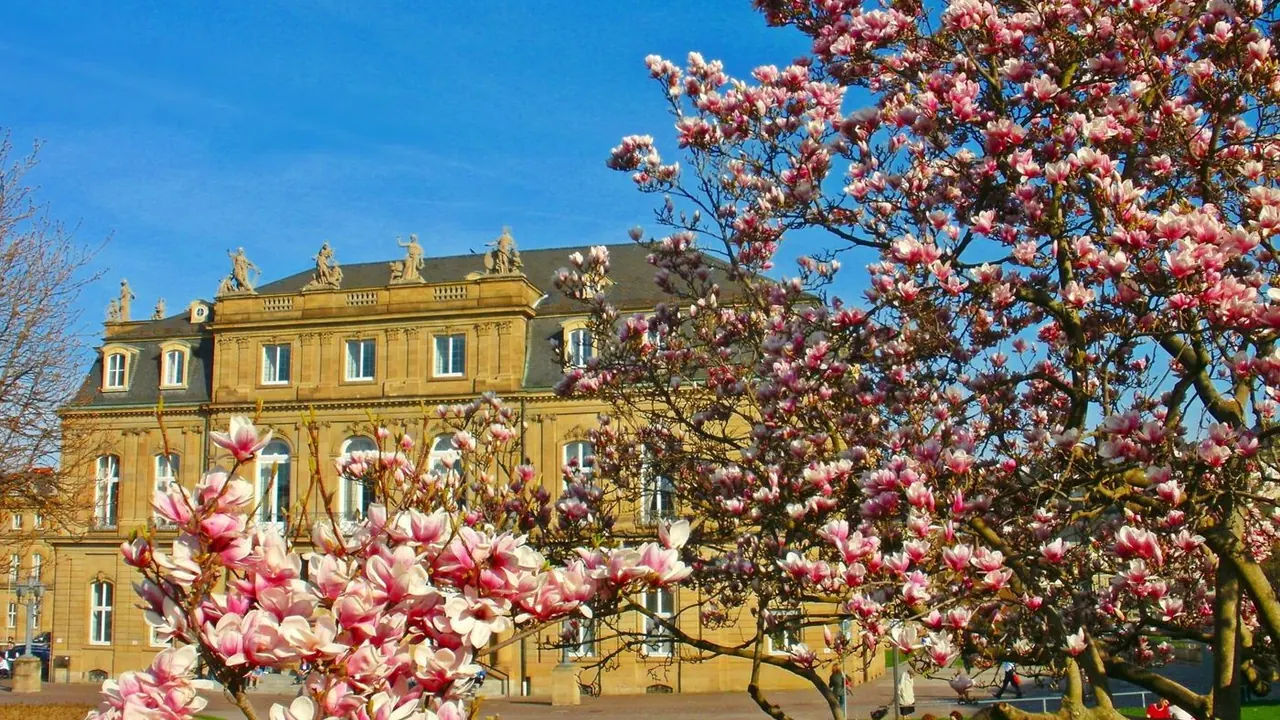
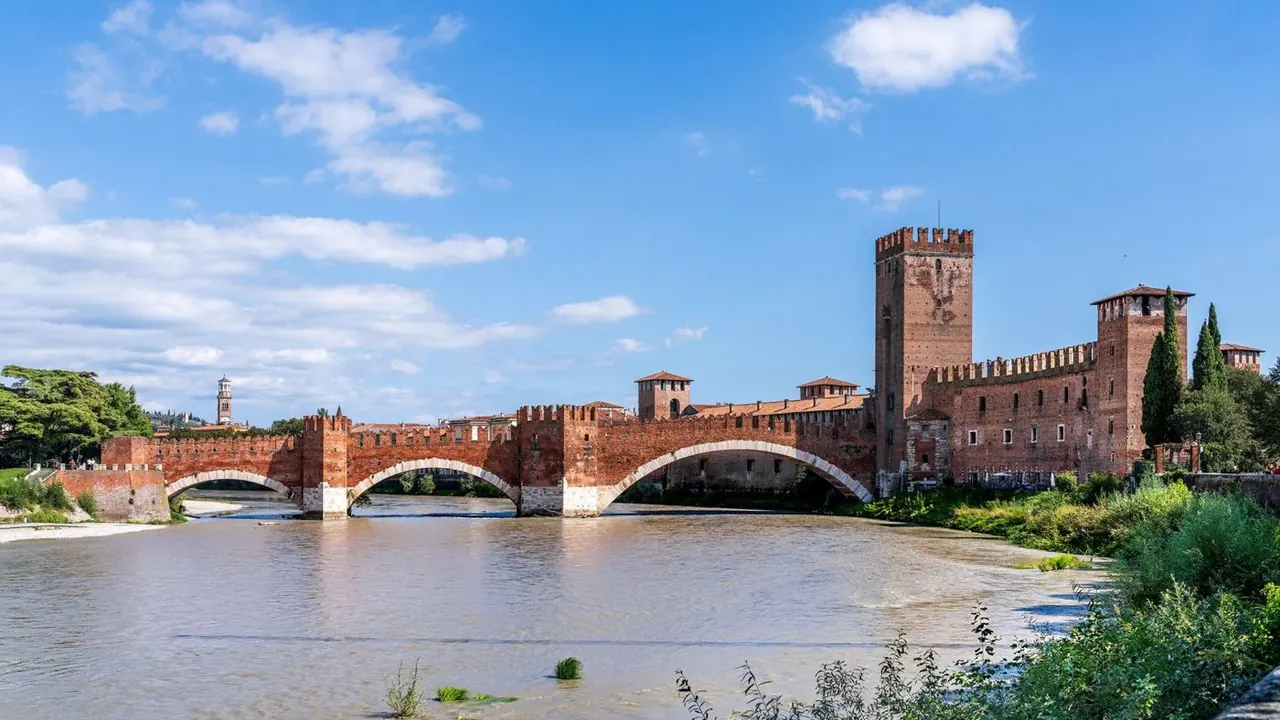
Photos: Stuttgart by Baden de, CC BY 3.0, cropped; Verona by NorbertNagel, CC BY-SA 4.0, cropped.
Stuttgart or Verona?
Our verdict in twelve categories, each scored against the same fixed benchmark cities, and the climate month by month, so you can choose for your trip.
Choose Stuttgart for
- wellness
- live music and the arts
- shopping
Stuttgart is the better choice for a trip built around evenings at the theatre and days of design and engineering. The ballet and opera play to a high standard through the year, and the Mercedes-Benz and Porsche museums and the Weissenhof Estate show a city shaped by industry and modern architecture. Mineral baths fed by the city's own springs, wooded hills for walking and an efficient light rail make a calm, well-run base, even if the old centre survives only in pockets.
Choose Verona for
- beaches
- culture and sights
- day trips
Verona suits travellers who want history to walk through and Italy within easy reach. The Roman Arena, the Romanesque San Zeno and the medieval squares sit together in one compact loop of the Adige. On summer nights there is opera under the stars, and Lake Garda's shore is close enough for an afternoon swim. Venice, Padua and the Valpolicella cellars all make easy days out, so it works especially well for a varied week in the warmer months.
Scoreboard
Twelve categories on one fixed scale from 0 to 100. The shaded stretch is the gap between the two.
Your match
Pick a travel style or drag the sliders, and both match scores follow your weighting.
Wins on wellness and live music and the arts with your weighting.
Wins on beaches and culture and sights with your weighting.
What matters to you?
Category by category
What the scores mean for a trip.
Beaches & swimming
Neither city has a coast, but only Verona gives you real swimming. The southern shore of Lake Garda is about half an hour away, with lidos, lawns that run down to the water and Sirmione's flat limestone shelves, and it is warm enough from June to September. It is still an outing rather than a lake vacation, and the narrow beaches fill up on summer weekends.
Stuttgart has nothing comparable. The Neckar is a working river with barges, and Max-Eyth-See is for boating. In summer you swim in the outdoor pools, some of them fed by the mineral springs, and Lake Constance is more than two hours south.
Food & drink
Verona eats and drinks better, and its wine is the main reason. Valpolicella, Amarone, Soave and Bardolino are all made a short drive away, so an evening glass at a counter with small snacks is part of the day. In the osterie around Piazza delle Erbe and in Veronetta you will find Amarone risotto, bigoli with duck and bollito with peppery pearà. Avoid the tourist menus around the Arena.
Stuttgart's Swabian food is heavier and very much its own: Maultaschen, Käsespätzle and Zwiebelrostbraten, washed down with Trollinger from vineyards inside the city limits. Its seasonal Besen taverns in growers' homes are a real local treat, and the fine-dining tier is deeper than Verona's. Neither city is good for street food or international variety.
Culture & sights
Verona's centre is the sight in itself. Roman, medieval and Renaissance layers fill one walkable river loop, from the Arena and the Roman theatre to the Scaliger tombs, San Zeno's bronze doors and Castelvecchio's museum in its Scarpa setting. Juliet's balcony is the least of it.
Stuttgart's strengths are twentieth-century and industrial: the Mercedes-Benz and Porsche museums, the Le Corbusier houses of the Weissenhof Estate and the Staatsgalerie's postmodern wing. Its older heritage survives in pockets around Schlossplatz and the Altes Schloss, because the wartime bombing left much less of the old city standing than in Verona.
Nightlife
Neither city is a destination for going out, but the evenings feel different. Stuttgart has more of a club night, with basement and former industrial venues, a small electronic scene and the Theodor-Heuss-Strasse bar strip at weekends. Its big nights are the beer tents of the Cannstatter Volksfest and the late-summer wine village.
Verona's evenings are built around the aperitivo, with spritz and Valpolicella at tables in Piazza delle Erbe, and younger, cheaper bars in student Veronetta. There is no dance scene in the centre, though the opera crowd leaving the Arena gives summer nights a late lift.
Nature & outdoors
Both offer good walking country rather than high mountains, but of different kinds. Stuttgart is surrounded by forest: the Rotwildpark and Schönbuch on its edge, then the cliff trails and caves of the Swabian Jura and the fir-covered ridges of the northern Black Forest, all about an hour away.
Verona's surroundings have more water and more variety. Close by there are the cypress-dotted Valpolicella hills and the Lessinia's gorges and pastures. Further out, Monte Baldo rises over Lake Garda, with ridge walks, paragliding, and wind at the lake's northern end that sailors and windsurfers come for.
Day trips
Both are excellent bases, but Verona's options are hard to beat. By train you can reach Venice, Palladio's Vicenza, Giotto's chapel in Padua and lake-ringed Mantua in an hour or so, and Sirmione, Malcesine and the Soave and Valpolicella wine villages are closer still.
Stuttgart's list is strong in a quieter way. It offers the baroque palace at Ludwigsburg, Tübingen's punts, Heidelberg's castle by fast train, Hohenzollern on its hilltop and the monastery at Maulbronn. Ulm, Baden-Baden and a long day in Strasbourg add variety, but none of them is in the same league as a day in Venice.
Good for families
Stuttgart keeps its best treats for children inside the city, while Verona's lie outside it. Wilhelma's zoo and botanical garden among Moorish-style pavilions can fill a whole day, Killesberg has its narrow-gauge railway and lookout tower, and the rack railway is a ride in itself, all reachable by public transport. The hills are hard going with a pushchair, and a big theme park means travelling further afield.
In Verona the centre is the easy part: flat, mostly car-free and simple with a pushchair, with the Arena and the Roman theatre to catch a child's imagination. Gardaland, the water parks and the drive-through safari at Parco Natura Viva are about half an hour out, mostly by car, and hot summer afternoons need planning around.
Getting around
Stuttgart runs on rails once you leave its flat centre, while Verona is a walking city that hardly needs transport. Königstrasse, Schlossplatz and the main museums are easy on foot. Where the basin climbs, the Stadtbahn, S-Bahn, buses, a rack railway and a funicular take over on one ticket, reaching Wilhelma, the car museums and the airport, and the public Stäffele stairways make steep shortcuts.
Verona has no metro or tram. The Arena, the piazzas, the churches and Castelvecchio are a short stroll apart inside the river loop, and buses mostly serve Porta Nuova station and the airport. Trains to Venice and the lake are excellent, but the Valpolicella villages and the Lessinia are far easier by car.
Shopping & style
Stuttgart is a little better for shopping, mainly for brands. Königstrasse is a long pedestrian high street, Breuninger handles designer fashion, and the outlet village at Metzingen is half an hour away.
Verona's Via Mazzini has smart Italian labels and the side streets have jewellers and shoe shops, but the feel is provincial, and serious shoppers go to Milan. Where it wins is the bag you bring home: Amarone, Garda olive oil and a Christmas pandoro.
Affordability
Neither city is cheap, but Verona is a little kinder to your budget. Its walkable centre means you spend almost nothing on transport, the student osterie in Veronetta and the wine counters keep meals reasonable, and local wine costs far less than abroad. Central rooms are the main expense, especially on opera nights.
Stuttgart's hotel prices follow business travel. They are steep during trade fairs and softer at weekends and in quieter months, and transport costs add up more than in Verona. The tavern portions are generous for what you pay.
Live music & performing arts
Stuttgart offers the richer stage life over a whole year. The Stuttgart Ballet, one of Europe's most respected companies since Cranko's day, shares the state theatre with an opera house known for bold productions. The Liederhalle adds orchestras and a strong Bach tradition, and the Möhringen theatres run big musicals.
Verona has the single greater spectacle: grand Verdi and Puccini on the Arena's ancient tiers on summer nights, with candles lit at dusk. Outside that festival and the summer Shakespeare season at the Roman theatre, the Teatro Filarmonico keeps a modest programme going through the cooler months.
Wellness & relaxation
Stuttgart has the stronger bathing culture, with the springs right in town. Bad Cannstatt and Berg are among Europe's most productive mineral sources and feed public baths such as the Mineralbad Cannstatt and Leuze, with warm, naturally carbonated pools and saunas.
Verona's thermal waters are out of town, at Sirmione's lakeside spa, the spring-fed park near Lazise and the old springs at Caldiero. In the city, relaxing means slowing down: long lunches, the evening walk along the river and the terraces of the Giardino Giusti.
When should you go?
Pick your month. The climate figures are measured averages, not a forecast.
Stuttgart in July
Verona in July
Daytime high, °C
Rainfall in the month, mm
Temperature and rainfall are climate normals, averaged over the years shown. Stuttgart: 1991-2020 normals, Stuttgart / Neckartal (2.8 km from centre). Verona: 1991-2020 normals, Verona / Villafranca (11.6 km from centre).
Stuttgart is at its best from May to September, when afternoons reach around 26°C in high summer and the long days are ideal for vineyard walks and beer gardens. Summer is also its wettest stretch, with about 79mm in July, mostly in showers, while winter is grey and chilly at around 6°C. Spring and early autumn are mild and comfortable for walking the city and the Jura.
Verona runs warmer and sunnier all year. July and August reach about 30°C with long hours of sun, which suits the lake and the open-air opera but makes midday sightseeing hard work. June to September is the time for swimming in Garda. Late spring and early autumn are the most pleasant months for walking the centre, though autumn is Verona's rainiest season, peaking around 85mm in September, the reverse of Stuttgart's pattern. Winters in both are cold, and Verona is only slightly milder.
Which traveller are you?
On a beach and sun trip, Verona is the clear pick. Its summers are hotter and sunnier, and the calm, clear water of Lake Garda is a short train ride away at Peschiera. Stuttgart has outdoor pools, but the nearest swimmable lake is hours south.
For a relaxing and wellness trip, Stuttgart has the edge. Its carbonated mineral springs feed public baths with indoor and outdoor pools and saunas right in the city, whereas Verona's thermal centres at Sirmione and Lazise mean a trip out to the lake.
On a culture and arts trip, Verona gives more to see on foot. A Roman amphitheatre, a Roman theatre, Romanesque and Gothic churches and Scarpa's Castelvecchio fill one UNESCO-listed centre, while Stuttgart's bombed core leaves its heritage scattered among modern museums.
Before you go
| Measure | Stuttgart | Verona |
|---|---|---|
| Official language | German | Italian |
| Currency | Euro (EUR) | Euro (EUR) |
| Sockets | CF230 V, 50 Hz | CFL230 V, 50 Hz |
| Driving side | Right | Right |
| Time zone | UTC+1, UTC+2 in summer | UTC+1, UTC+2 in summer |
| Emergency number | 112 | 112 |
| Elevation | 245 m | 59 m |
| Main airport | Stuttgart Airport (STR)10 km from centre124 non-stop destinations | Verona Villafranca Valerio Catullo Airport (VRN)10 km from centre96 non-stop destinations |
| Public holidays this year | 12 days | 13 days |
By the numbers
| Measure | Stuttgart | Verona |
|---|---|---|
| City population | 609,365 | 255,588 |
| People per km² | 2,938 | 1,285 |
| Museums within 10 km | 42 | 18 |
| UNESCO World Heritage sites within 50 km | 3 | 5 |
Where else could you go?
Every comparison below shares a destination with this one, so you can follow Stuttgart or Verona somewhere new.