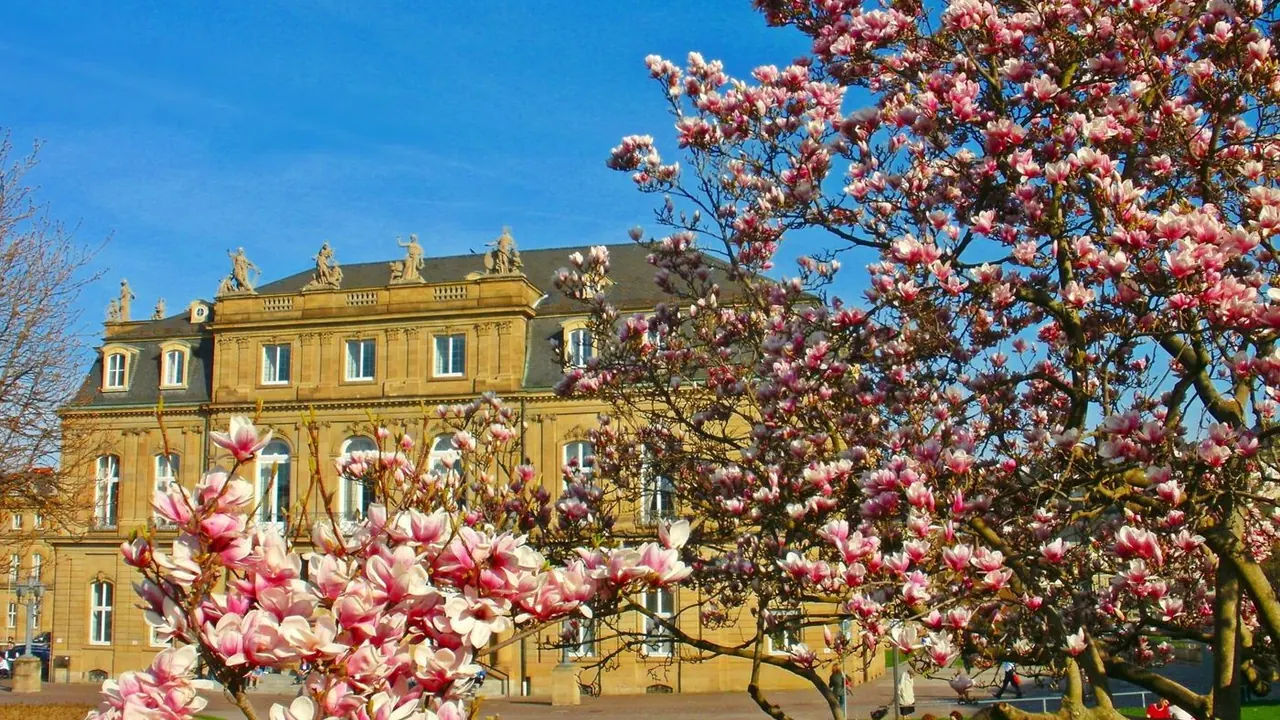
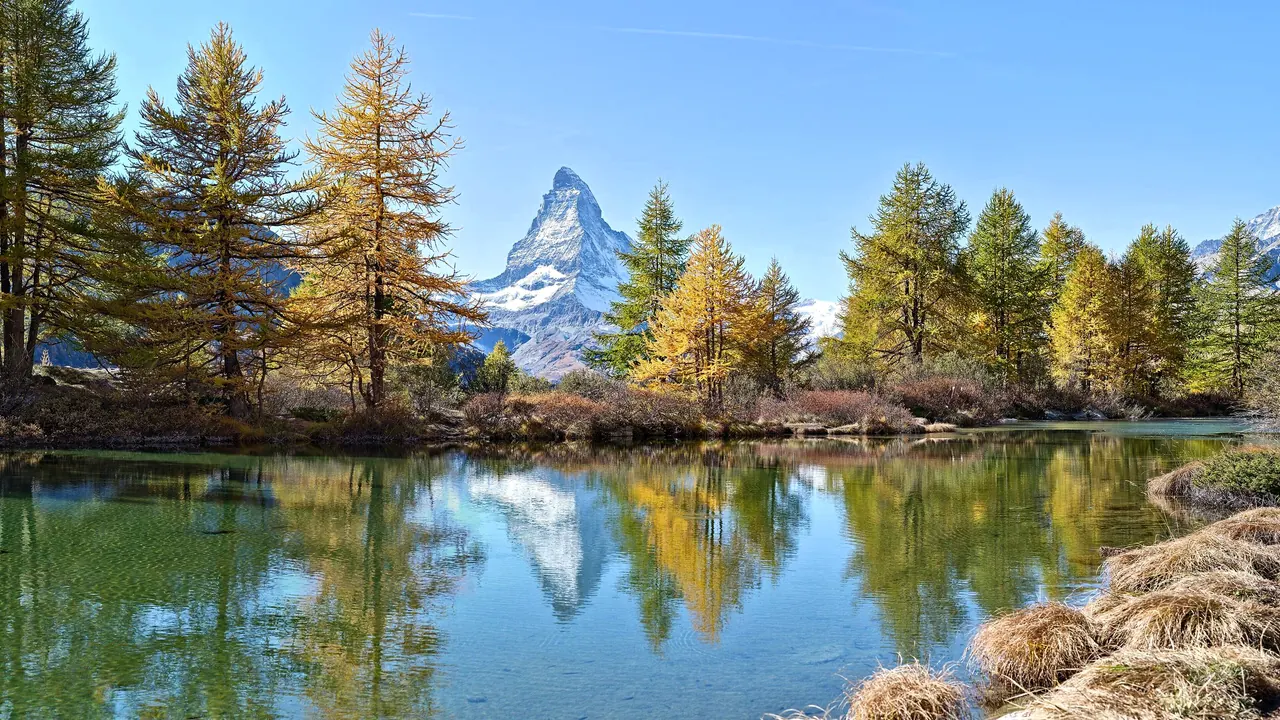
Photos: Stuttgart by Baden de, CC BY 3.0, cropped; Zermatt by Roy Egloff, CC BY-SA 4.0, cropped.
Stuttgart or Zermatt?
Our verdict in twelve categories, each scored against the same fixed benchmark cities, and the climate month by month, so you can choose for your trip.
Choose Stuttgart for
- live music and the arts
- day trips
- culture and sights
Choose Stuttgart for a city trip with plenty to fill it: car museums of international standing, the Staatsgalerie, a ballet company famous across Europe, Swabian wine taverns and a rail network that puts Heidelberg, Tübingen and Ludwigsburg within easy reach. It suits travellers who want to see a lot, eat well and come home with change in their pocket.
Choose Zermatt for
- nature and the outdoors
- getting around
Zermatt is for people who travel to the mountains themselves. The Matterhorn stands over a car-free village, the lifts climb to glaciers and four-thousand-metre peaks, and skiing or hiking fills every day. Evenings are quieter, the sights are few and the bills are steep, so it rewards the active and the well-funded.
Scoreboard
Twelve categories on one fixed scale from 0 to 100. The shaded stretch is the gap between the two.
Your match
Pick a travel style or drag the sliders, and both match scores follow your weighting.
Wins on live music and the arts and day trips with your weighting.
Wins on nature and the outdoors and getting around with your weighting.
What matters to you?
Category by category
What the scores mean for a trip.
Beaches & swimming
Neither place has a beach, so swimming is not a reason to choose either. The difference is in what replaces it: Stuttgart has outdoor pools in summer, some fed by its mineral springs, and Lake Constance a couple of hours away. In Zermatt the mountain tarns are for photographing the Matterhorn, and a swim means a hotel pool.
Food & drink
Stuttgart offers the richer table. Swabian staples such as Maultaschen and Käsespätzle, wine from vineyards inside the city, seasonal Besen taverns and the Markthalle give it real local character, and there is a strong fine-dining tier as well.
Zermatt's best meals are long lunches at chalets in Findeln or Furi, with raclette, air-dried beef and a glass of Petite Arvine in view of the Matterhorn. The setting is memorable, but the range is narrow, cheap options are few and many kitchens close between seasons.
Culture & sights
Stuttgart has far more to see. Its two car museums, the Staatsgalerie, the Le Corbusier houses of the Weissenhof Estate and the palaces around Schlossplatz fill two or three full days, even though wartime bombing left the old core patchy.
Zermatt's heritage is about mountaineering: the Matterhorn Museum and its story of the 1865 first ascent, the climbers' cemetery and the old larch barns of the Hinterdorf. All of that fits into a single morning.
Nightlife
Neither is a party destination, but Stuttgart offers more evenings out across the year. There are bar strips on Theodor-Heuss-Strasse, basement clubs with a loyal electronic crowd, quieter wine bars in the Bohnenviertel, and the huge beer tents of the Cannstatter Volksfest in autumn.
Zermatt's nightlife is winter après-ski: loud slope-side bars at dusk and a handful of late spots on the main street. It is cheerful but expensive, and in summer most people are in bed early for a climb.
Nature & outdoors
This is where Zermatt wins outright. The Matterhorn rises above the village, dozens of four-thousand-metre peaks and the Gorner Glacier surround it, and the lifts open up glacier skiing, the Five Lakes walk and the Europaweg suspension bridge.
Stuttgart's countryside is gentler: vineyard trails above the Neckar, deer in the Rotwildpark, and the cliffs of the Swabian Jura or the fir ridges of the northern Black Forest an hour out. It is good for walking and cycling, but it is not high mountain country.
Day trips
Stuttgart is one of the better day-trip bases in Germany. Ludwigsburg's palace and half-timbered Esslingen are short S-Bahn rides away, Tübingen and Heidelberg take under an hour, and Maulbronn, Hohenzollern Castle, Ulm and even Strasbourg are within reach.
From Zermatt every outing starts with the long train ride down the valley. Sion's castle hills and Brig's Stockalper Palace are worth it, but most visitors sensibly spend their spare days on the mountain.
Good for families
Stuttgart gives children more to do. Wilhelma, the zoo and botanical garden among Moorish pavilions, fills a day, and the Killesberg park railway, the car museums and the fairy-tale garden at Ludwigsburg cover the rest, with or without good weather.
Zermatt's appeal is its car-free calm, with nursery slopes at Sunnegga and marmot-spotting walks in summer. However, there is no zoo or theme park, wet days are hard to fill, and the thin air at the top viewpoints can be too much for small children.
Getting around
Both are easy, though Zermatt is slightly simpler, since everything in the car-free village is on foot and the cog railway, the funicular and the gondolas start a short walk from the centre. Getting there takes more effort, with a shuttle train from Täsch and over an hour of rail to the Rhône valley.
Stuttgart's flat centre is walkable, and one ticket covers the Stadtbahn, the S-Bahn, the rack railway and the funicular up the steep sides of the basin, including the airport and the car museums.
Shopping & style
Stuttgart is the better place to shop. Königstrasse runs for a long stretch of pedestrian high street, Breuninger handles designer fashion, the Bohnenviertel has independent shops, and the outlet town of Metzingen is half an hour away.
Zermatt's single main street sells Swiss watches, cowbells and chocolate. Its one real strength is serious ski and mountaineering gear.
Affordability
Stuttgart is not cheap, but it is far easier on the wallet. Hotel rooms drop at weekends and outside trade fairs, tavern portions are generous, and a day ticket covers transport.
Zermatt ranks among the priciest places in the Alps. Rooms, terrace lunches and the lift passes everyone needs all add up, and only self-catering or sleeping down the valley in Täsch eases the bill.
Live music & performing arts
Stuttgart's stage life is a real reason to go. The Staatsoper and the ballet, celebrated since John Cranko's time, share the state theatre beside the palace gardens, and the Liederhalle, a strong Bach tradition, serious drama and long-running musicals at Möhringen add plenty more.
Zermatt has no theatre or concert hall. Outside the spring Zermatt Unplugged festival and the late-summer chamber music weeks, live music mostly means an après-ski band.
Wellness & relaxation
Stuttgart has a true public bathing culture. The springs of Bad Cannstatt and Berg feed the Mineralbad Cannstatt and the Mineralbad Leuze with naturally carbonated warm water, and saunas are included, though the city itself moves at a businesslike pace.
Zermatt has no springs. It does have a cluster of excellent hotel spas with mountain views, some open to day visitors, and car-free quiet that feels restful after a day on the slopes.
When should you go?
Pick your month. The climate figures are measured averages, not a forecast.
Stuttgart in July
Zermatt in July
Daytime high, °C
Rainfall in the month, mm
Where the figures come from
Zermatt has no weather station within reach, so its figures come from a gridded climate model rather than a measured record, and read a broad area rather than the city itself.
Temperature and rainfall are climate normals, averaged over the years shown. Stuttgart: 1991-2020 normals, Stuttgart / Neckartal (2.8 km from centre). Zermatt: 1991-2020 normals, TerraClimate 4 km grid at the town, no weather station within 90 km.
Stuttgart is best from May to September, when afternoons are warm enough for beer gardens, vineyard walks and the outdoor pools, peaking around 26°C in July and August. Summer is also its wettest stretch, with about 79mm in July, mostly in showers between long sunny spells. Spring and early autumn are ideal for walking the city and the Jura, while winter is short on sunshine and chilly, better suited to museums, the opera and the mineral baths.
Zermatt runs on two seasons that pull in opposite directions. From December to February daytime highs stay around -2°C, which is what keeps the snow good for skiing. Summer brings highs of only about 14°C in July and August, fine weather for hiking but never warm. November is the wettest month at around 130mm, and the late-autumn and spring shoulders are when the village is at its least appealing.
Which traveller are you?
On a culture and arts trip, Stuttgart wins easily. The Mercedes-Benz and Porsche museums, the Staatsgalerie and the Weissenhof Estate fill the days, and the Staatsoper, the ballet and the Liederhalle fill the evenings, while Zermatt's heritage takes one morning.
For an outdoors trip, Zermatt is in a league of its own. Lifts reach glaciers above 3,800m, summer trails lead to lakes and mountain huts, and winter skiing crosses into Italy. Stuttgart's wooded hills and the Swabian Jura are pleasant but gentle by comparison.
On a trip on a tight budget, Stuttgart is the only realistic option of the two. Tavern meals, a day ticket for transport and cheaper weekend hotel rooms keep costs sensible, whereas Zermatt's beds, terrace lunches and lift passes are expensive even when you self-cater.
Before you go
| Measure | Stuttgart | Zermatt |
|---|---|---|
| Official language | German | French, German, Italian, Romansh |
| Currency | Euro (EUR) | Swiss Franc (CHF) |
| Sockets | CF230 V, 50 Hz | CJ230 V, 50 Hz |
| Driving side | Right | Right |
| Time zone | UTC+1, UTC+2 in summer | UTC+1, UTC+2 in summer |
| Emergency number | 112 | 112 |
| Elevation | 245 m | 1,624 m |
| Main airport | Stuttgart Airport (STR)10 km from centre124 non-stop destinations | Geneva International Airport (GVA)128 km from centre150 non-stop destinations |
| Public holidays this year | 12 days | 9 days |
By the numbers
| Measure | Stuttgart | Zermatt |
|---|---|---|
| City population | 609,365 | 6,023 |
| People per km² | 2,938 | 25 |
| Museums within 10 km | 42 | 2 |
| UNESCO World Heritage sites within 50 km | 3 | 2 |
Where else could you go?
Every comparison below shares a destination with this one, so you can follow Stuttgart or Zermatt somewhere new.
- Chamonixvs Zermatt
- Baden-Badenvs Stuttgart
- Interlakenvs Zermatt
- Heidelbergvs Stuttgart
- Luganovs Zermatt
- Lausannevs Zermatt