Kiruna
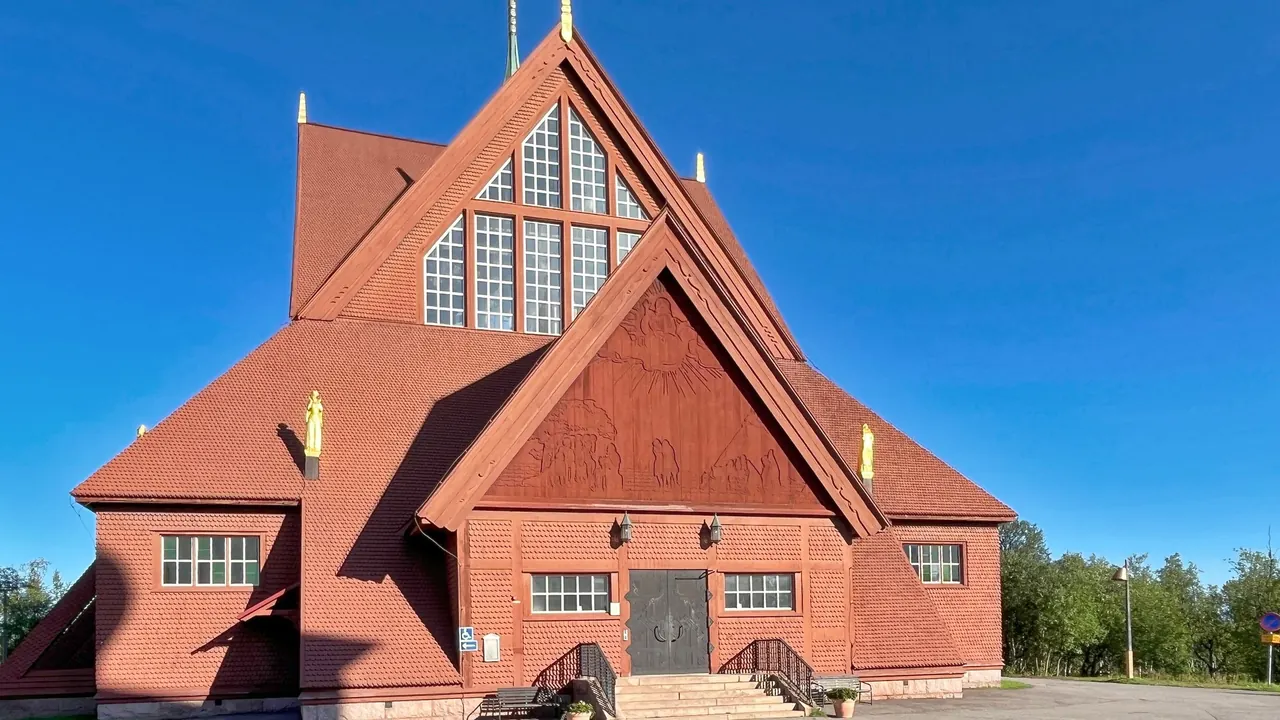
The front of Kiruna church in full sun
- Nature & outdoors84
- Getting around40
- Wellness & relaxation36
Match
27
Every category weighted equally
- Beach & sun27
- Culture & arts25
- Food & nightlife21
- Family trip30
- Outdoors34
- Relax & unwind30
- Shopping & style24
- On a budget27
Kiruna in twelve categories
Our verdict on each, scored 0 to 100 against the same fixed benchmark cities, so a score means the same thing on every page.
Beaches & swimming. Scores 8 out of 100.
Food & drink. Scores 22 out of 100.
Culture & sights. Scores 25 out of 100.
Nightlife. Scores 12 out of 100.
Nature & outdoors. Scores 84 out of 100.
Day trips. Scores 18 out of 100.
Good for families. Scores 32 out of 100.
Getting around. Scores 40 out of 100.
Shopping & style. Scores 12 out of 100.
Affordability. Scores 24 out of 100.
Live music & performing arts. Scores 9 out of 100.
Wellness & relaxation. Scores 36 out of 100.
Kiruna category by category
Beaches & swimming
8Kiruna is a long way north of the Arctic Circle, so beach life barely exists. On warm days in July, locals swim in the lakes around town and in the Torne river. The water stays cold, rarely much above 15°C, and the season lasts only a few weeks. A cold plunge after a sauna is the closest most visitors come to swimming here.
Food & drink
22Eating in Kiruna is about northern produce in a small mining town. The best meals feature reindeer, moose, Arctic char and whitefish, served with lingonberries, cloudberries, root vegetables and thin flatbreads. Some of the best cooking happens at the wilderness lodges and the ice hotel complex at Jukkasjärvi, where tasting menus are built around Sami and Lapland traditions.
In town the choice is short: hotel dining rooms, a few pizzerias and grill places, and Swedish cafés serving cinnamon buns and filter coffee for fika. There is no street food, no market scene and little variety, so a long stay quickly repeats itself.
Culture & sights
25Kiruna is a company town built around one of the world's largest iron-ore mines, and that history is the main thing to see. The mining company runs guided visits deep underground into the mine itself, and these are the town's signature sight. Kiruna Church is a large wooden church from the early twentieth century, shaped like a Sami goahti hut, and it is among Sweden's best-loved buildings. The town hall clock tower and the mine director's old residence fill in the story of the company town.
Sami culture adds depth to the visit, though much of it is shown through excursions rather than museums. Once these few sights are done, the attraction is the landscape around the town.
Nightlife
12Evenings in Kiruna are quiet. There are a few pubs and hotel bars, and on weekends one or two places stay open late for miners and locals. On winter nights, though, most visitors are out in the cold looking for the northern lights rather than in a bar. Anyone who wants a night out will be disappointed.
Nature & outdoors
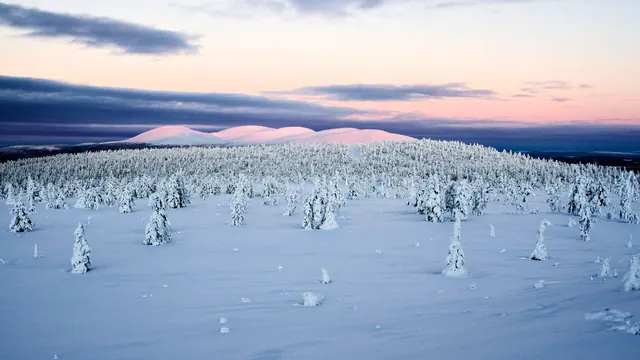
84Nature is the reason to come. In winter the town sits under one of the most reliable auroral zones on earth, and dark, clear nights between September and March bring the northern lights. Days are spent dog-sledding, snowmobiling, cross-country skiing and snowshoeing across frozen lakes and birch forest, with temperatures often well below -20°C. Around midwinter the sun does not rise at all.
Summer brings the opposite: weeks of midnight sun, then hiking and fishing. Abisko National Park, about an hour and a half away by train, has canyon trails and the start of the Kungsleden long-distance trail. Kebnekaise, Sweden's highest mountain, is reached from Nikkaluokta, about an hour's drive away. The Torne river is good for rafting and canoeing. The landscape is open and the wilderness is real.
Day trips
18Outside Kiruna the land is mostly wilderness, so there are few towns to visit. The main outing is Jukkasjärvi, a village on the Torne river about 17km away. It has the famous ice hotel, rebuilt from river ice every winter, a seventeenth-century wooden church with a striking altarpiece, and a Sami homestead museum. Gällivare, a fellow mining town, is about an hour and a half by train. Abisko is mainly a base for walks. The Norwegian fjord port of Narvik is too far for a comfortable day.
Good for families
32Older children often love Kiruna. They can drive a team of huskies, ride a snowmobile, sleep in a room made of ice and stay up late for the aurora. The town is small, safe and unhurried. However, nothing here is built for children. Every activity is a guided excursion, and the winter cold and long darkness are tough on toddlers. Northern lights hunting means very late nights, so families do better with older children who can handle long days outdoors in deep cold.
Getting around
40The town centre is small enough to walk, though in winter the streets and pavements are icy, so good boots matter. Local buses run to the airport and Jukkasjärvi, and the railway along the Malmbanan line reaches Abisko and the mountains to the west. Most of what visitors come for, from dog-sledding to aurora trips, involves a pickup by the tour operator. Anyone who wants to explore on their own usually needs a hire car and experience of driving on snow.
Shopping & style
12Shopping is limited to a few practical streets: outdoor clothing and gear, supermarkets and souvenir shops. The one thing worth seeking out is Sami handicraft, known as duodji, which includes reindeer-horn knives, birch-wood cups, leather goods and woven bands. These are sold in a few craft shops and at the Sami homesteads around Jukkasjärvi.
Affordability
24Kiruna is an expensive place to stay. Rooms are scarce and in demand during the aurora season, and meals cost what they do anywhere in Sweden. The real cost is the activities: dog-sledding, snowmobile trips, aurora tours and a night in the ice hotel all come at premium prices, and most of the stay is spent on them. Supermarkets and self-catering apartments help with food. Summer is easier on the wallet than winter.
Live music & performing arts
9There is very little live performance in Kiruna. Occasional concerts take place in the church and the community hall, and the winter festival brings some music and Sami performances, including traditional joik singing. There is no regular theatre or concert programme.
Wellness & relaxation
36Kiruna is about cold air and silence rather than spas. The Nordic sauna is the main form of relaxation: wood-fired saunas at wilderness lodges, an ice-hole plunge in a frozen lake, and outdoor hot tubs under the night sky. The ice hotel area and a few hotels have spa facilities, but there is no bathing culture or thermal tradition. The pace of the town is slow and the stillness of a snowbound winter night is genuinely restorative, though most days are spent outdoors in demanding cold.
When should you go?
Pick a month to see what it is like. The climate figures are measured averages, not a forecast.
Kiruna in July
Daytime high, °C
Rainfall in the month, mm
The whole year
Shaded against this destination’s own year: the deepest cell is its best month for that figure and the palest its weakest.
Where the figures come from
Kiruna has no rain gauge within 25 km of the centre, so its rainfall comes from a gridded climate dataset read at the destination rather than from a gauge further away.
Temperature and rainfall are climate normals, averaged over the years shown. Kiruna: 2005-2020 (rainfall 1991-2020) normals, Kiruna Airport (3.8 km from centre).
Before you go
| Measure | Kiruna |
|---|---|
| Official language | Swedish |
| Currency | Swedish Krona (SEK) |
| Sockets | CF230 V, 50 Hz |
| Driving side | Right |
| Time zone | UTC+1, UTC+2 in summer |
| Emergency number | 112 |
| Elevation | 550 m |
| Main airport | Kiruna Airport (KRN)3 km from centre4 non-stop destinations |
| Public holidays this year | 16 days |
By the numbers
| Measure | Kiruna |
|---|---|
| Population | 17,284 |
| People per km² | 1,516 |
| Museums within 10 km | 1 |
| UNESCO World Heritage sites within 50 km | 0 |
Compare Kiruna with
Every comparison with a written verdict behind it.