Sweden
Stockholm
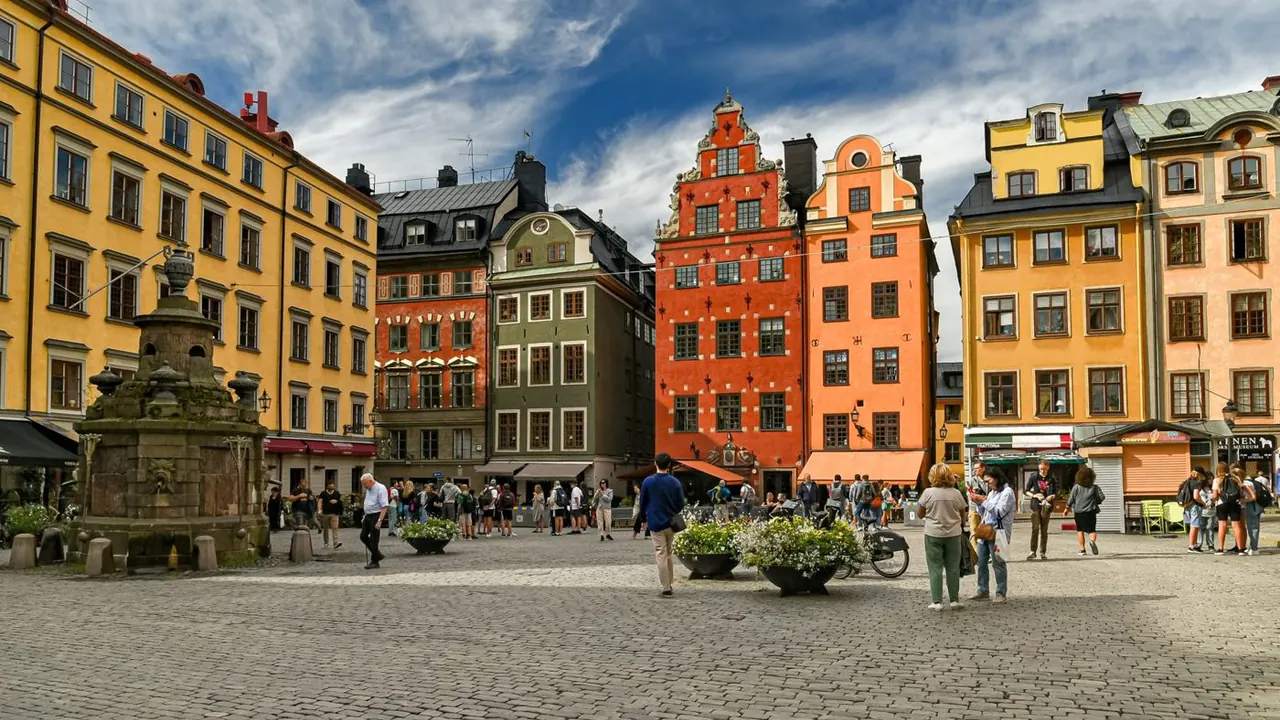
Stortorget in Gamla stan
- Getting around84
- Families82
- Culture & sights77
Photo: Jorge Franganillo, CC BY 2.0, cropped
Match
64
Every category weighted equally
- Beach & sun59
- Culture & arts67
- Food & nightlife63
- Family trip64
- Outdoors63
- Relax & unwind61
- Shopping & style66
- On a budget60
Stockholm in twelve categories
Our verdict on each, scored 0 to 100 against the same fixed benchmark cities, so a score means the same thing on every page.
Beaches & swimming. Scores 40 out of 100.
Food & drink. Scores 64 out of 100.
Culture & sights. Scores 77 out of 100.
Nightlife. Scores 57 out of 100.
Nature & outdoors. Scores 72 out of 100.
Day trips. Scores 68 out of 100.
Good for families. Scores 82 out of 100.
Getting around. Scores 84 out of 100.
Shopping & style. Scores 70 out of 100.
Affordability. Scores 30 out of 100.
Live music & performing arts. Scores 65 out of 100.
Wellness & relaxation. Scores 56 out of 100.
Stockholm category by category
Beaches & swimming
40Stockholm is built on water clean enough to swim in, and in July and August locals do exactly that, straight from the city. Bathing spots such as Långholmen's rocks, Smedsuddsbadet on Kungsholmen and the lake beaches at Hellasgården on the southern edge are reached by metro, bus or bicycle, and the brackish Baltic and the freshwater lakes reach about 18 to 21°C in a warm summer.
These are small beaches of rock slabs, jetties and patches of sand and lawn, not long strands, and the swimming season lasts barely two months. The archipelago adds rocky coves and bathing jetties a ferry ride away. It makes for a lovely summer habit, but nobody books Stockholm for a beach vacation, and outside summer the water is for the hardy winter dippers only.
Food & drink
64Eating in Stockholm runs on two tracks. At the top is a serious tasting-menu scene built on Nordic produce: foraged herbs, archipelago fish, game and root vegetables cooked with restraint. Below it sits traditional husmanskost, the home cooking of meatballs with lingonberries, fried herring, pickled fish and creamy toast skagen, served in old-fashioned dining rooms and lunch places. Östermalms Saluhall, the historic market hall, is the place to see it laid out.
The daily ritual is fika, coffee with a cardamom or cinnamon bun taken slowly in cafés and bakeries all over Södermalm and Vasastan. Weekday lunch deals make eating out more manageable, while wine and cocktails are costly and alcohol to take away is sold only in state shops. Street food is limited, apart from the hot-dog kiosks.
Culture & sights
77Stockholm's sights are spread across islands, which makes exploring them a pleasure. Gamla Stan, the medieval old town, packs narrow lanes, ochre merchant houses, the Storkyrkan cathedral and the vast Royal Palace onto one small island. Across the water, Djurgården holds the Vasa Museum, where a warship that sank on its maiden voyage in 1628 stands almost complete, and Skansen, the oldest open-air museum in the world, with farmhouses gathered from across Sweden.
Elsewhere there is the Nationalmuseum for Swedish and European art, Moderna Museet on Skeppsholmen, the Nordic Museum and the brick City Hall where the Nobel banquet is held. Skogskyrkogården, a woodland cemetery from the early twentieth century, is a UNESCO site in the southern suburbs. It is a rich, well-kept set rather than a city of overwhelming monuments.
Nightlife
57Going out in Stockholm splits by district. Around Stureplan in Östermalm are the polished clubs and lounges, with queues, strict doors and a well-dressed crowd that keeps going until the small hours on weekends. Södermalm is looser: neighbourhood bars, beer pubs, wine bars and small dance floors around Medborgarplatsen and the streets south of Folkungagatan, where most visitors will feel more at home.
The city comes alive on summer nights, when it barely gets dark and outdoor terraces and waterfront bars fill up. In winter much of the life moves indoors and weekdays are quiet. Drinks are expensive, which shapes the rhythm: many locals start the evening at home. It is a good night out rather than a reason to visit.
Nature & outdoors
72Water and forest are woven through the city. Royal Djurgården is a huge parkland of oak meadows and shoreline paths a short walk from the centre, and the Nackareservatet and Tyresta National Park, with its old-growth pine forest and lakes, are within about forty minutes by public transport. The Sörmlandsleden trail starts on the edge of the city.
The great draw is the archipelago, tens of thousands of granite islands that begin almost at the quayside. Ferries thread through it, and kayaking between skerries, sailing and island hikes are classic summer outings. Cycling along the waterfront is easy and flat. In a cold winter, long-distance skating on natural ice on the lakes and the frozen Baltic is a local passion. What it lacks is any relief: there are no hills of note or mountains within reach.
Day trips
68Uppsala, about forty minutes by train, is the classic outing: Scandinavia's largest cathedral, an old university, and the royal burial mounds of Gamla Uppsala on the edge of town. Sigtuna, Sweden's oldest town, has church ruins and a wooden main street, and Drottningholm Palace, the royal family's UNESCO-listed home with its baroque gardens, is reached by boat across Lake Mälaren.
In summer the boats widen the choice: to Birka, the Viking trading town on a Mälaren island, to Mariefred and Gripsholm Castle, and out into the archipelago to fortress-town Vaxholm or the sailing village of Sandhamn. Västerås and Nyköping add more by train. Many of the best trips are seasonal, and in winter the list shrinks to the towns reachable by rail.
Good for families
82Sweden builds daily life around children and Stockholm shows it: buggies on every bus, changing rooms everywhere, playgrounds in every park and a calm, safe street life. Djurgården alone fills days. Skansen has Nordic animals such as moose, bears and seals alongside its historic farms, Junibacken brings Astrid Lindgren's stories to life with a little train ride through them, and Gröna Lund is a waterfront amusement park with rides for all ages in the warmer months.
The Vasa Museum fascinates children too, while the Tekniska museet, the Naturhistoriska riksmuseet and an aquarium cover rainy days. Ferry hops count as an attraction in themselves, and summer swimming spots are close. Long, dark winters and high prices are the main drawbacks.
Getting around
84Stockholm is easy to manage without a car. The central islands of Gamla Stan, Norrmalm and Östermalm are walkable, and the Tunnelbana metro, trams, buses and commuter ferries share one ticketing system with contactless payment. The metro stations themselves, carved from bedrock and painted, are a sight. Ferries across the harbour to Djurgården and Södermalm double as sightseeing.
The city is spread across fourteen islands, so walks between sights involve bridges, and Södermalm has steep streets up from the water. Cycling is popular on good paths in summer, though winter brings ice and short days. Archipelago trips need longer boat journeys rather than city transport.
Shopping & style
70Stockholm shops for design and clean-lined fashion. Swedish labels known for minimalist clothing and denim sit along Biblioteksgatan and around Norrmalmstorg, where the international luxury houses are also clustered. NK, the grand department store on Hamngatan since the early twentieth century, is the classic stop.
On Södermalm, the SoFo area south of Folkungagatan is the place for independent boutiques, vintage and second-hand shops, which are a big part of local style. Homeware, glass, textiles and Dalarna horses fill the design shops and Gamla Stan's souvenir lanes. Markets are few, and prices are high, but for Scandinavian design it is a destination in itself.
Affordability
30Stockholm is an expensive city for a visitor. Restaurant dinners, cocktails and beer cost well above most of Europe, and alcohol is heavily taxed and sold to take away only in state shops. Hotels follow a business calendar: rooms are dearest on weekdays in spring and autumn, when conferences fill the city, and noticeably cheaper at weekends and through July, when much of Sweden is away on its own summer break.
There are ways to soften the cost. The weekday lunch deal, with a main dish, salad, bread and coffee, is the cheapest way to eat well. Public transport is good value on a multi-day pass, and parks, bathing spots and several museums are free. Budget travellers will still feel the pinch.
Live music & performing arts
65Stockholm's formal stage is solid and handsome. The Royal Swedish Opera on Gustav Adolfs torg stages opera and ballet through the season, the Royal Dramatic Theatre is the country's leading drama house, though mostly in Swedish, and the Konserthuset, home of the Royal Stockholm Philharmonic, and Berwaldhallen give orchestral concerts. In summer the Drottningholm Palace Theatre performs baroque opera with its original eighteenth-century stage machinery, a rare experience.
The city has a strong pop and live-music culture, with clubs and concert halls drawing touring acts, a long-running jazz scene and big arena shows. Musicals in Swedish fill several theatres. There is no single tradition that defines a night out the way some cities have, but a visitor will find something good most evenings outside high summer.
Wellness & relaxation
56Stockholm has a quiet bathing tradition of its own. Centralbadet, an Art Nouveau bathhouse from 1904 with a pool and a garden courtyard, and the even older Sturebadet in Östermalm are long-established city spas. Sauna is part of Nordic life, and at lakeside places such as Hellasgården locals go from a hot sauna to a dip through a hole in the ice. Along the shores of Nacka and the inner archipelago, waterside spa hotels with saunas, outdoor pools and sea views are less than an hour from the centre.
The pace helps as well. Fika is a daily pause, the city is quiet and orderly for a capital, and long summer evenings on a jetty feel restful in themselves. It is not a city of grand thermal baths, but it is an easy place to slow down.
When should you go?
Pick a month to see what it is like. The climate figures are measured averages, not a forecast.
Stockholm in July
Daytime high, °C
Rainfall in the month, mm
The whole year
Shaded against this city’s own year: the deepest cell is its best month for that figure and the palest its weakest.
Where the figures come from
Stockholm has no rain gauge within 25 km of the centre, so its rainfall comes from a gridded climate dataset read at the city rather than from a gauge further away.
Stockholm's sunshine is measured 26 km from the centre, at Stockholm Observatoriet.
Temperature and rainfall are climate normals, averaged over the years shown. Stockholm: 2003-2020 (sunshine 1991-2020, rainfall 1991-2020) normals, Stockholm Bromma Airport (7.1 km from centre).
Before you go
| Measure | Stockholm |
|---|---|
| Official language | Swedish |
| Currency | Swedish Krona (SEK) |
| Sockets | CF230 V, 50 Hz |
| Driving side | Right |
| Time zone | UTC+1, UTC+2 in summer |
| Emergency number | 112 |
| Elevation | 22 m |
| Main airport | Stockholm-Arlanda Airport (ARN)36 km from centre174 non-stop destinations |
| Public holidays this year | 16 days |
By the numbers
| Measure | Stockholm |
|---|---|
| City population | 984,748 |
| People per km² | 5,260 |
| Museums within 10 km | 266 |
| UNESCO World Heritage sites within 50 km | 3 |
| Swim season, months above 21 °C | None |
Compare Stockholm with
Every comparison with a written verdict behind it.