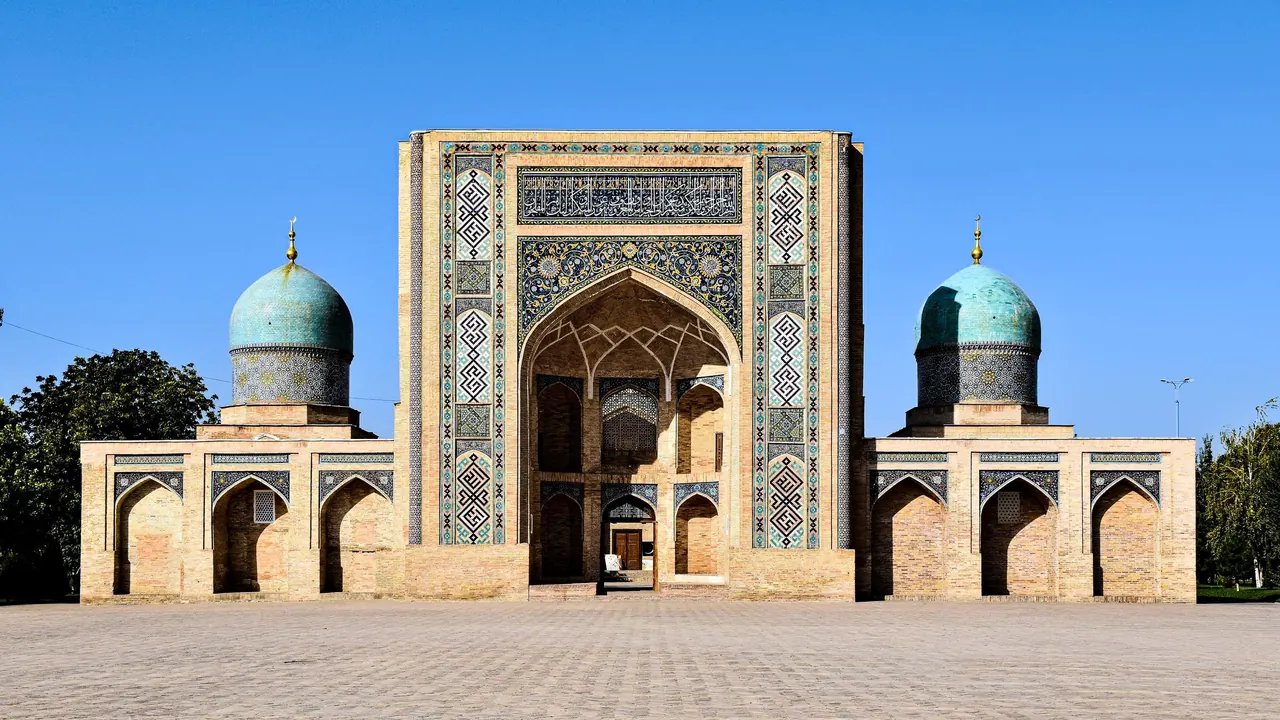
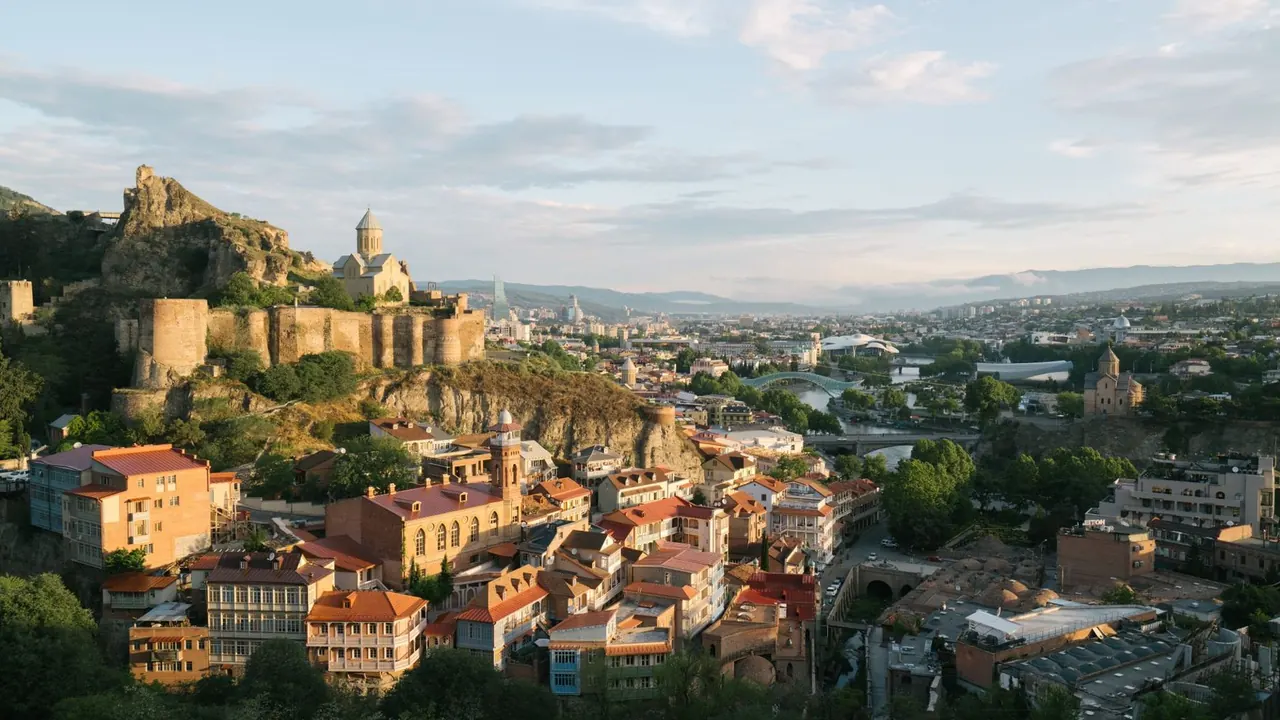
Photos: Tashkent by AXP Photography, Pexels License; Tbilisi by ArtHouse Studio, Pexels License.
Tashkent or Tbilisi?
Our verdict in twelve categories, each scored against the same fixed benchmark cities, and the climate month by month, so you can choose for your trip.
Choose Tashkent for
- beaches
- getting around
- families
Tashkent is the choice for a traveller drawn to Central Asia itself: a Soviet-built capital of grand avenues and chandeliered metro stations, midday plov from communal cauldrons, an inexpensive night at the Navoi opera, and Samarkand two hours away by fast train. It suits a calm trip with early evenings, or a first stop on a wider Silk Road route, more than a city break.
Choose Tbilisi for
- nightlife
- wellness
- day trips
Tbilisi gives more to anyone who travels for pleasure in the evenings and on the side trips. Its old town is intact, and the food and amber wine are a reason to come in their own right. The sulphur baths, late wine bars and serious techno clubs fill the nights, and Mtskheta, Kakheti and the Caucasus are all within easy reach. Pick it for eating, drinking and a varied week.
Scoreboard
Twelve categories on one fixed scale from 0 to 100. The shaded stretch is the gap between the two.
Your match
Pick a travel style or drag the sliders, and both match scores follow your weighting.
Wins on beaches and getting around with your weighting.
Wins on nightlife and wellness with your weighting.
What matters to you?
Category by category
What the scores mean for a trip.
Beaches & swimming
Neither city is a beach destination, but Tashkent's swimming is the better day out. The Charvak reservoir, about 80km away in the foothills, has pebbly shores, lakeside resorts and clear, cool mountain water, and the city's large water parks fill the summer afternoons.
Tbilisi offers the Tbilisi Sea reservoir and the small lakes on the hills, which are fine for cooling off but are not worth a special trip. The Black Sea is about five hours away, far enough to make a separate journey.
Food & drink
Tbilisi eats far better. Khinkali, Adjarian khachapuri, walnut and pomegranate sauces, piles of fresh herbs and hot shoti bread from clay ovens give it a range of flavours Tashkent cannot match. The wine of thousands of years of qvevri tradition is poured all over Sololaki.
Tashkent's cooking centres on plov eaten at midday, with samsa, lagman and shashlik around it, and Chorsu Bazaar is a great sight. The cooking is heavy on mutton and fat, though, and the wine culture is thin. Neither city has much fine dining.
Culture & sights
Tbilisi's old city survived, so you can wander lanes with carved balconies below Narikala, step into sixth-century Anchiskhati church and see the Colchian gold at the National Museum. Tashkent lost most of its old fabric in the 1966 earthquake. What it offers instead is Soviet modernism on a monumental scale, the Hazrat Imam complex with its ancient Quran, the painted rooms of the Museum of Applied Arts and metro stations that are worth seeing for themselves.
In both cities a few days of looking around is enough. Tbilisi's appeal is the walk through the old streets, while Tashkent's best heritage lies in Samarkand.
Nightlife
The gap here is wide. Tbilisi has a techno scene that draws dancers from across Europe to clubs in old Soviet buildings, which run past dawn at weekends. It also has wine and cocktail bars in Sololaki's old houses and courtyard bars near Marjanishvili.
Tashkent goes out quietly. Pubs, beer gardens and a few lounges around Amir Timur Square, karaoke and long dinners make up most evenings, and the city is largely asleep by midnight.
Nature & outdoors
Both cities have serious mountains within a couple of hours, with hiking and paragliding in summer and skiing in winter. The difference is in the city itself. Tbilisi sits among steep green hills, with a funicular, a cable car and trails from Turtle Lake into a forested national park, so you can walk straight out of town.
Tashkent lies on a flat, hot plain where the green space is mostly parks and the Botanical Garden. Its outdoor life is out at Chimgan and the Ugam-Chatkal park above Charvak, with tulip-covered foothills in spring. Tbilisi's high Caucasus around Kazbek is grander but needs an overnight stay.
Day trips
Tashkent has one great outing, Samarkand's Registan and Shah-i-Zinda by fast train, and little else that works as a day trip. Bukhara and Khiva need a proper itinerary.
Tbilisi has a whole menu of trips. Mtskheta's cathedral and Jvari Monastery are half an hour away, and there are the rock-cut town of Uplistsikhe, the wineries and walled Sighnaghi in Kakheti, the cave monastery of David Gareja and Ananuri fortress on the road north. You could fill a week with them.
Good for families
Both cities make a real fuss of children, and they come out about even. Tashkent has the flatter ground, plus water parks, fairy-tale amusement parks and a big zoo. Summer heat above 35°C and long distances on wide avenues are the strain there.
Tbilisi has more charm in its outings, with the funicular to the Mtatsminda Ferris wheel and the cable car to Narikala. It is physically harder, though: cobbles, steep slopes and underpasses with stairs make a pushchair a struggle.
Getting around
The two are much alike, but they work differently. Tashkent's metro is clear and frequent and stops near the old town and the main squares, but the Soviet-scale blocks make walking between them slow and hot.
Tbilisi's centre, from the Old Town to Rustaveli Avenue, is compact enough to walk, though it is uphill and the pavements are broken. Its two metro lines miss the hillsides. In both cities cheap ride-hailing apps fill the gaps, and Tbilisi's day trips are easiest with a driver.
Shopping & style
Neither city is a shopping destination, and both rely on malls for anything modern. Tashkent's draw is the craft stalls around Chorsu: suzani embroidery, ikat silk and blue Rishtan ceramics. Much of that work is better bought in Samarkand or Bukhara.
In Tbilisi you hunt among Soviet badges, cameras and old silver at the Dry Bridge market. It also has enamel jewellery, bottles of qvevri wine and chacha, and a few local designers in Vera and Sololaki.
Affordability
Both are cheap places to visit, and food, metro rides and app taxis cost very little in either. Where they differ is in what pushes the bill up. In Tashkent it is the international business hotels, though guesthouses keep a stay inexpensive. In Tbilisi it is the boutique hotels of the Old Town and imported cocktails, while most of its churches cost nothing to enter.
Live music & performing arts
The two are well matched, each with a grand opera and ballet house and a full season. Tashkent's Alisher Navoi Theatre has halls decorated in different regional styles and seats that are easy to get, and maqom singing turns up at concerts and festivals.
Tbilisi's special strengths are its own traditions. The national dance ensembles are athletic, and polyphonic singing in church services is the most moving way to hear it. The Gabriadze marionette theatre needs no translation, which helps when most drama is staged in Georgian.
Wellness & relaxation
Tbilisi was built on its warm springs, and taking a private room in the domed sulphur baths of Abanotubani, with a kisi scrub, is one of the defining things to do there. Tashkent has neighbourhood hammams and hotel spas, but bathing is not part of a visit.
In Tashkent, relaxing means an afternoon on a tea-house platform or in the Botanical Garden, or a retreat to the mountain sanatoria near Chimgan.
When should you go?
Pick your month. The climate figures are measured averages, not a forecast.
Tashkent in July
Tbilisi in July
Daytime high, °C
Rainfall in the month, mm
Temperature and rainfall are climate normals, averaged over the years shown. Tashkent: 1991-2020 normals, Tashkent (5.1 km from centre). Tbilisi: 1991-2020 (sunshine 1961-1990) normals, Tbilisi (13.8 km from centre).
Tashkent has the harsher, sunnier climate. From June to August the afternoons reach about 36°C and almost no rain falls. That makes the streets hard going by midday, but it is the season for a swim at the Charvak reservoir. The wet season runs from November to April, peaking at around 73mm in February, and winter days are cold. The best walking weather comes in May, when the city is warm and drying out, and again from late September through October.
Tbilisi has milder summers, topping out around 32°C with noticeably less sunshine, and its rain comes at a different time of year. April is damp in both cities. In May, though, Tbilisi reaches its wettest, with close to 97mm, just as Tashkent turns dry. Tbilisi's winters are cold but fairly dry. September and October are its most reliable months, and they are good in Tashkent too, so autumn is the season when both cities are at their best together.
Which traveller are you?
For a food and nightlife trip, Tbilisi is the clear pick. Khinkali, cheese breads and qvevri wine make every meal an event, and the evenings go on late in Sololaki's wine bars and the industrial techno clubs. Tashkent's plov and karaoke make for quieter nights.
On a relaxing and wellness trip, Tbilisi again wins. You can spend an afternoon in a private room at the Abanotubani sulphur baths, with a scrub and a hot pool, then sit over a long courtyard meal. Tashkent's bathhouses are not part of a visit in the same way.
On a family trip with young children, Tashkent is slightly easier. It is flat, its metro is clear, and it has water parks and amusement parks for children. Tbilisi's steep cobbles and stepped underpasses are hard with a pushchair, although its funicular to the Ferris wheel is a real treat.
Before you go
| Measure | Tashkent | Tbilisi |
|---|---|---|
| Official language | Uzbek | Georgian |
| Currency | Uzbekistan Sum (UZS) | Lari (GEL) |
| Sockets | CFI220 V, 50 Hz | CF220 V, 50 Hz |
| Driving side | Right | Right |
| Time zone | UTC+5 | UTC+4 |
| Emergency number | 112 | 112 |
| Elevation | 455 m | 575 m |
| Main airport | Tashkent International Airport (TAS)6 km from centre112 non-stop destinations | Tbilisi International Airport (TBS)15 km from centre64 non-stop destinations |
| Public holidays this year | - | 17 days |
By the numbers
| Measure | Tashkent | Tbilisi |
|---|---|---|
| City population | 2,956,384 | 1,331,485 |
| People per km² | 8,830 | 1,849 |
| Museums within 10 km | 27 | 29 |
| UNESCO World Heritage sites within 50 km | 1 | 1 |
Where else could you go?
Every comparison below shares a destination with this one, so you can follow Tashkent or Tbilisi somewhere new.
- Yerevanvs Tbilisi
- Samarkandvs Tashkent
- Bukharavs Tashkent
- Bakuvs Tbilisi
- Almatyvs Tashkent
- Istanbulvs Tbilisi