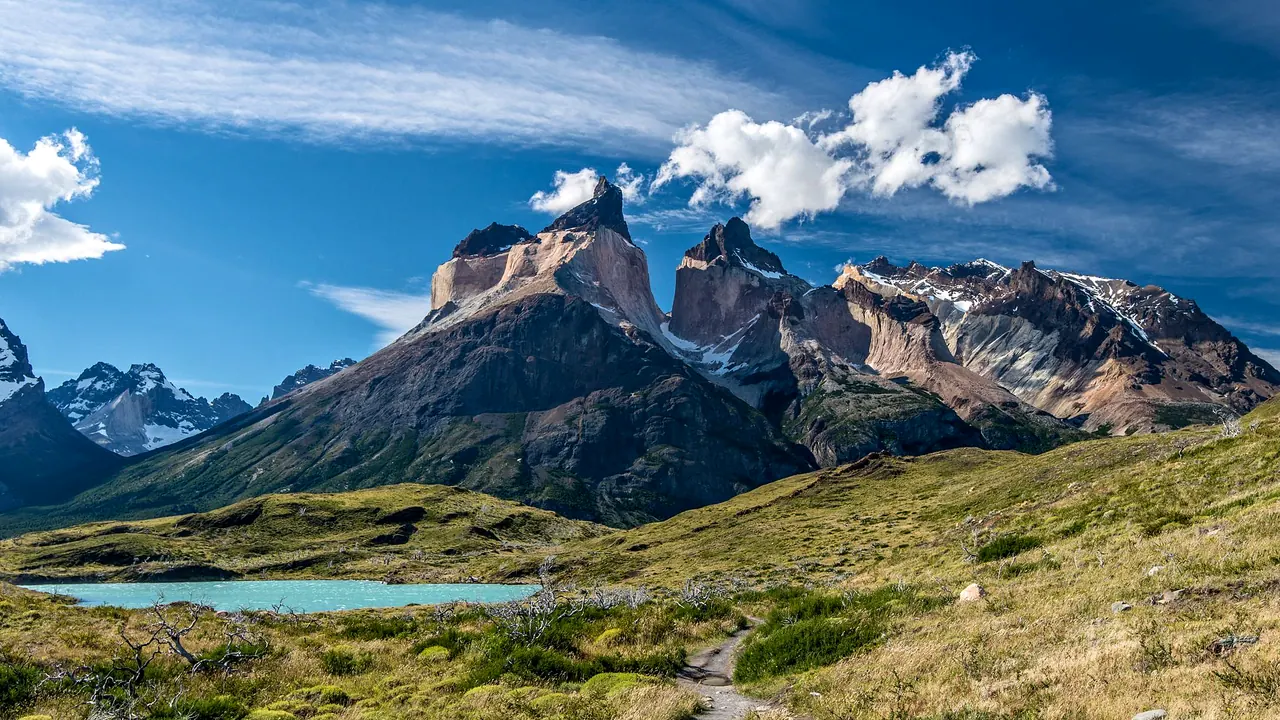
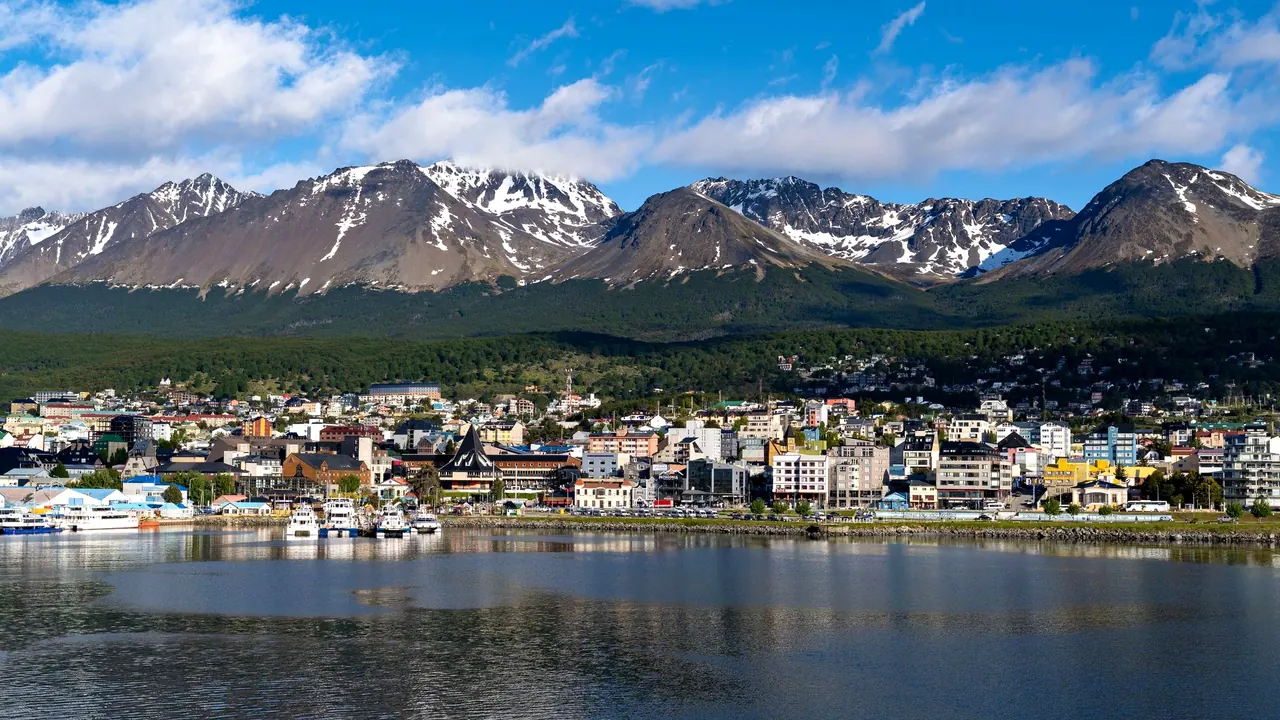
Photos: Torres del Paine by Holger J. Bub, Pexels License; Ushuaia by Jan Tang, Pexels License.
Torres del Paine or Ushuaia?
Our verdict in twelve categories, each scored against the same fixed benchmark cities, and the climate month by month, so you can choose for your trip.
Choose Torres del Paine for
- nature and the outdoors
- wellness
Torres del Paine is the choice when the walking is the whole point. The granite Towers, the Cuernos and Grey Glacier make up a single mountain massif built for days on foot, whether on the W Trek, the full circuit or day hikes from a lodge, and it is also one of the best places anywhere to track pumas. In return you accept a long journey in, gravel roads, refugio places that must be booked well ahead, high costs and evenings that end early.
Choose Ushuaia for
- getting around
- prices
- families
Ushuaia gives you wild country with a working town attached. You can walk to the Martial Glacier in the morning, take a boat past sea lions on the Beagle Channel in the afternoon and finish with king crab over a late Argentine dinner. The town is easier to get around, kinder to families and lighter on the wallet, and in winter it adds skiing and dog-sledding. The mountains are less grand than Paine's, but the trip is easier to put together.
Scoreboard
Twelve categories on one fixed scale from 0 to 100. The shaded stretch is the gap between the two.
Your match
Pick a travel style or drag the sliders, and both match scores follow your weighting.
Wins on nature and the outdoors and wellness with your weighting.
Wins on getting around and prices with your weighting.
What matters to you?
Category by category
What the scores mean for a trip.
Beaches & swimming
Neither is a place to swim, and the water you meet is different in kind. In Torres del Paine it is inland and glacial: milky lakes a few degrees above freezing, best seen from the boat to Grey Glacier.
Ushuaia actually sits on the sea, but the Beagle Channel shore is rock, shingle and kelp, and anyone who goes in is doing a polar plunge. Here too the water is something to see from a deck.
Food & drink
Both share the Patagonian staples, lamb roasted on a cross over an open fire and southern king crab, but Ushuaia does more with them. Its small centre has a cluster of seafood restaurants and parrillas serving centolla straight from the channel, along with toothfish and mussels, and dinner runs to late Argentine hours.
In Torres del Paine, what you eat depends on where you sleep. That means careful set menus at the lodges, hearty plates in the refugios or your own camp stove, with Puerto Natales's short street of restaurants and brewpubs for the days either side of a trek.
Culture & sights
Ushuaia has the one proper sight between them: the old penal colony, whose radial cell blocks now hold the Maritime Museum, with its exhibits on Antarctic exploration. Smaller museums on the Yámana and the pioneer houses in the streets make up a full day.
Torres del Paine has less to offer here. Near Puerto Natales there is the Milodon Cave with its giant ground sloth, the old Puerto Bories freezing works and a small museum on the sheep-ranching era, and that is enough for an afternoon at most.
Nightlife
Ushuaia keeps going later. After a long dinner there are craft-beer pubs, the odd late bar and a casino, and Argentine habits stretch the evening even this far south, though there is still no club scene. In Torres del Paine the night is a trekkers' beer in a Puerto Natales brewpub or a drink at the lodge bar, and in summer it is often still light when you go to bed.
Nature & outdoors
Both are first-rate, but Torres del Paine is the more spectacular. The Towers and the dark-capped Cuernos rise straight from the steppe above turquoise lakes, Grey Glacier calves icebergs, and the W Trek and O Circuit are among the world's classic multi-day walks. Puma tracking in the eastern sector is something Ushuaia cannot match.
Ushuaia gives you mountains and sea together. From town you can hike up to the Martial Glacier or out to Laguna Esmeralda, walk through beech forest in Tierra del Fuego National Park, or take a boat to sea lion and penguin colonies. Winter adds skiing at Cerro Castor, so this is a place for day outings from a town base rather than days spent deep in the hills.
Day trips
Neither is a base for visiting other towns, and the outings work differently. From Torres del Paine everything is a long road journey: Puerto Natales is two hours away, while Punta Arenas and El Calafate across the border make more sense as separate stages of the trip.
Ushuaia's outings are shorter and more varied. You can go by road or boat to Estancia Harberton, the island's oldest ranch, drive out to Tolhuin and Lago Fagnano, or cross the channel by boat to Puerto Williams in Chile.
Good for families
Ushuaia is the easier choice with children. The town is small and safe, the steam train into the national park and the boat trips to see wildlife make good days out, and winter brings snow to play in. Even so, there is no zoo or theme park, and the wind wears young children down.
Torres del Paine suits older, sturdy walkers who will be thrilled by guanacos and the glacier boat. For small children, the long gravel drives, sudden cold and lack of facilities between lodges make it hard going.
Getting around
Torres del Paine takes planning. Most visitors fly into Punta Arenas or Puerto Natales. From Natales it is about two hours by road to the park entrances, and Punta Arenas is roughly three hours farther back. Inside the park, gravel roads link the sectors, buses from Natales arrive only a few times a day and a boat crosses Lake Pehoé to the western trailheads. Trekkers need their refugio or campsite places booked well ahead.
Ushuaia is much simpler. The centre is a compact grid along the waterfront, boats leave from a pier in town, and shuttles, taxis or a hire car get you to the national park and the trailheads without fuss. Only the steep streets up the hillside, icy in winter, need some care.
Shopping & style
Neither is somewhere to shop, but Ushuaia has a proper main street of souvenir, chocolate, wool and outdoor shops, and Tierra del Fuego's special tax regime makes some goods cheaper. Shopping for Torres del Paine happens in Puerto Natales and is about getting ready for a trek: hired gear, gas canisters, supermarket supplies and some sheep's-wool knitwear.
Affordability
Both are costly for their countries, but Ushuaia is clearly cheaper. Rooms and excursions are expensive at the height of summer, yet casual meals and hostels stay reasonable, and a spring or autumn visit eases the cost of a room.
Torres del Paine needs a budget planned around it. Foreign visitors pay a hefty park entry fee, refugio beds are dear for what they are, and the lodges are among the priciest stays in South America. The cheapest way to do it is to sleep in a Natales hostel, take the bus and camp at the simpler sites.
Live music & performing arts
There is little to see in either place, though Ushuaia has slightly more. Its cultural centre puts on occasional concerts and local productions, and the odd pub has a band. In Torres del Paine, the most you can hope for is a folk guitarist in a Natales bar or a gaucho evening at an estancia.
Wellness & relaxation
Torres del Paine is the better place to unwind, provided you stay in one of the upmarket lodges. Several have saunas, small spas and outdoor hot tubs facing the Paine massif, and the silence stretches for hundreds of kilometres. In a refugio or a tent, the most you get is a hot shower.
Ushuaia relies on hotel spas, some of them in the forest above town with views over the channel. Its calm comes from the quiet town once the cruise passengers have left rather than from any particular retreat.
When should you go?
Pick your month. The climate figures are measured averages, not a forecast.
Torres del Paine in July
Ushuaia in July
Daytime high, °C
Rainfall in the month, mm
Where the figures come from
Torres del Paine has no weather station within reach, so its figures come from a gridded climate model rather than a measured record, and read a broad area rather than one spot.
Temperature and rainfall are climate normals, averaged over the years shown. Torres del Paine: 1991-2020 normals, TerraClimate 4 km grid at the town, no weather station within 90 km. Ushuaia: 1991-2020 normals, Ushuaia Aerodrome (1 km from centre).
Neither place is ever warm. Around the park, December to February is the warmest stretch, with daytime highs of about 17°C, and the main walking season runs from October to April. Rain falls fairly steadily all year, but it is heaviest in early autumn and peaks around March at 84mm. The wind rarely lets up. From May to September highs drop to single figures and the trails are cold and exposed. That makes winter a narrower season, mainly for wildlife watchers, who come in these quiet months because pumas are especially well tracked in the eastern sector.
Ushuaia is a few degrees cooler all year, with summer highs of about 14°C, but it is drier than the park in every month. November to January is its brightest stretch, while June gets only 44 hours of sunshine, so midwinter days are short and dim. Ushuaia's snowy winter is when the town turns to skiing and dog-sledding. That gives it a second season for a much wider range of visitors, while Paine's winter suits only that smaller group of wildlife watchers.
Which traveller are you?
On an outdoors trip, Torres del Paine is the stronger pick. The W Trek and the O Circuit give you several days of walking through granite peaks, glaciers and steppe full of guanacos and condors, and the eastern sector offers some of the best puma tracking on earth.
For a family trip with children, Ushuaia is much easier. The town is small, safe and walkable, the old convict steam train and the boat trips to see sea lions and penguins hold a child's attention, and you never face Paine's long gravel drives.
On a tight budget, Ushuaia goes further. It is pricey for Argentina, but casual meals and hostels stay reasonable and the trailheads are close by. In Torres del Paine the entry fee, refugio beds and transfers add up fast, even if you camp.
Before you go
| Measure | Torres del Paine | Ushuaia |
|---|---|---|
| Official language | Spanish | Spanish |
| Currency | Chilean Peso (CLP) | Argentine Peso (ARS) |
| Sockets | CL220 V, 50 Hz | CI220 V, 50 Hz |
| Driving side | Right | Left |
| Time zone | UTC-3 | UTC-3 |
| Emergency number | Police 133/134, ambulance 131, fire 132 | 117 or 911 |
| Elevation | - | 23 m |
| Main airport | President Carlos Ibáñez International Airport (PUQ)7 non-stop destinations | Ushuaia - Malvinas Argentinas International Airport (USH)4 km from centre9 non-stop destinations |
| Public holidays this year | 16 days | 16 days |
By the numbers
| Measure | Torres del Paine | Ushuaia |
|---|---|---|
| Population | - | 82,615 |
| People per km² | - | 3,592 |
| Museums within 10 km | - | 5 |
| UNESCO World Heritage sites within 50 km | - | 0 |
Where else could you go?
Every comparison below shares a destination with this one, so you can follow Torres del Paine or Ushuaia somewhere new.
- El Calafatevs Torres del Paine
- Puerto Natalesvs Ushuaia
- El Calafatevs Ushuaia
- Barilochevs Ushuaia
- Buenos Airesvs Ushuaia
- Queenstownvs Ushuaia