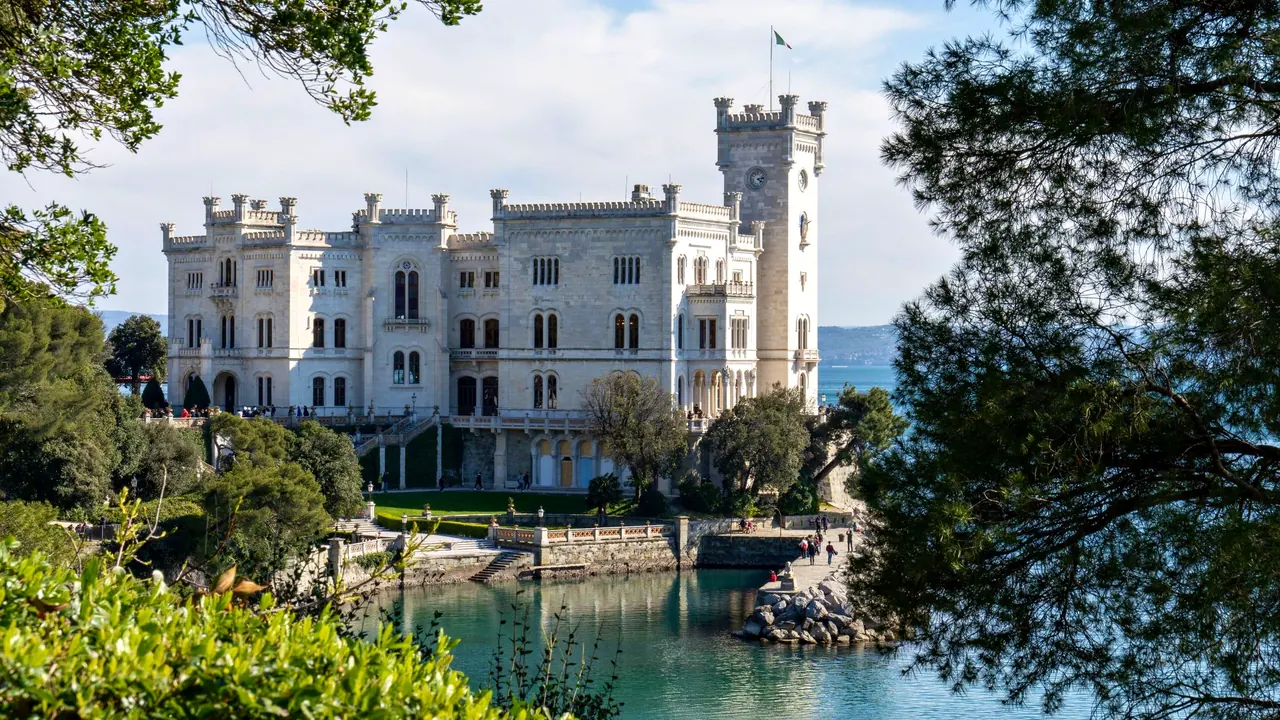
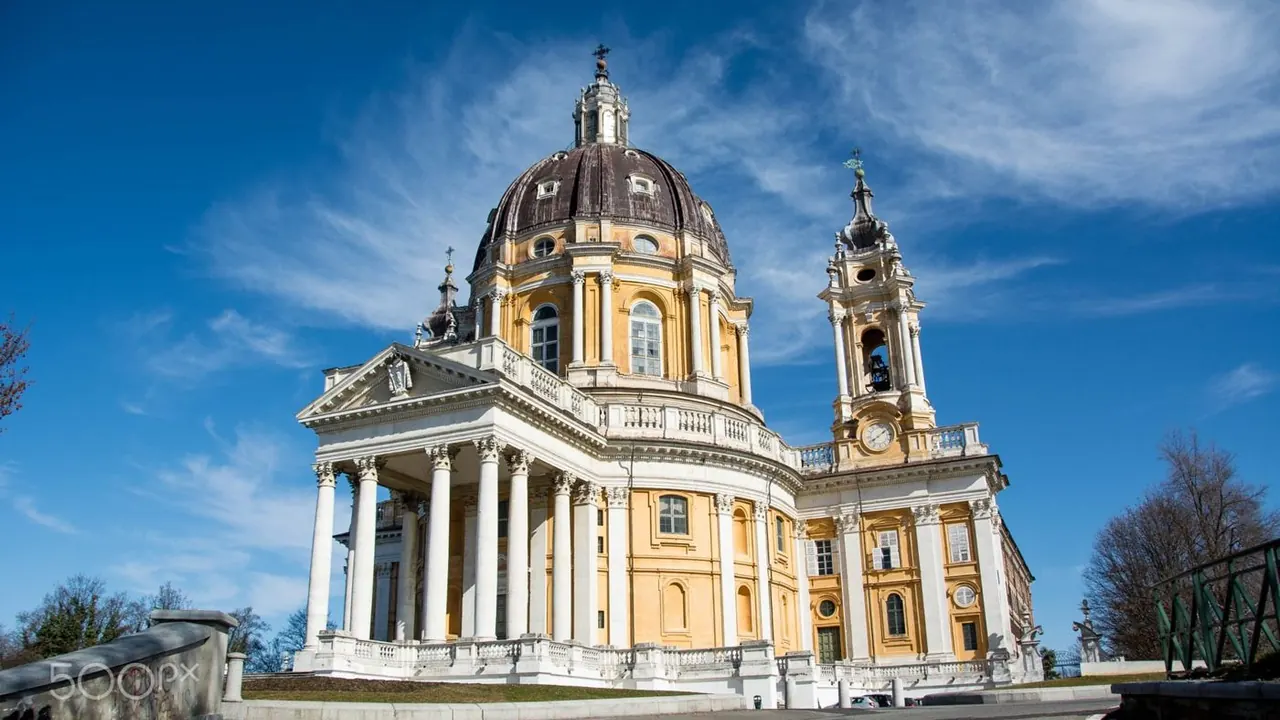
Photos: Trieste by Tibor Szabo, Pexels License; Turin by Konstantin Dacosta, CC BY 3.0, cropped.
Trieste or Turin?
Our verdict in twelve categories, each scored against the same fixed benchmark cities, and the climate month by month, so you can choose for your trip.
Choose Trieste for
- beaches
- getting around
Trieste is the one for a slower trip by the sea. You can swim off the Barcola platforms or in the coves below Sistiana and Duino, linger in the old Habsburg coffee houses, walk the edge of the Karst above the gulf and cross easily into Slovenia and Croatia. It suits couples and independent travellers who want quiet evenings rather than a full programme.
Choose Turin for
- shopping
- food and drink
- nightlife
If the trip is about eating, museums and evenings out, choose Turin. You get Piedmontese cooking and the Langhe wine country, the Museo Egizio and the Savoy palaces, livelier bar streets, better shopping and a fuller concert calendar, and the Alps are close enough for days in the mountains. The one thing it lacks is the sea.
Scoreboard
Twelve categories on one fixed scale from 0 to 100. The shaded stretch is the gap between the two.
Your match
Pick a travel style or drag the sliders, and both match scores follow your weighting.
Wins on beaches and getting around with your weighting.
Wins on shopping and food and drink with your weighting.
What matters to you?
Category by category
What the scores mean for a trip.
Beaches & swimming
Trieste is a swimming city and Turin is not. In Trieste the Adriatic is part of an ordinary summer day: the concrete platforms and pine-shaded lawns of Barcola, the old bathing establishments with their cabins, and the pebble coves below the cliffs at Sistiana and Duino. There is almost no sand, but the water is clear and you can reach it by bus.
Turin sits on the Po plain, and the Ligurian coast around Savona is close to two hours away. That makes it a long day out, not an afternoon swim. Locals cool off at lakes such as Avigliana or Viverone, but nobody should choose Turin for the water.
Food & drink
Both cities have their own coffee rituals: in Trieste you order a 'nero' or a 'capo in b', and in Turin you drink bicerin under the arcades. Even so, Turin is the better place to eat. Its Piedmontese cooking runs from agnolotti del plin to autumn white truffles, with Barolo and Barbaresco on the wine lists, a serious aperitivo tradition and the stalls of Porta Palazzo.
Trieste is more of a curiosity than a feast. You eat carved pork with horseradish at the old buffets, jota, fried sardoni and Central European cakes, and drink Karst wine at the farmhouse osmize. It is distinctive, but there are few restaurants to choose from and little fine dining.
Culture & sights
Turin has far more to see. The Museo Egizio alone is worth the trip. Around it are the Royal Palace, Palazzo Madama, the ring of Savoy residences out to Venaria, the Cinema Museum inside the Mole and strong contemporary art at Rivoli.
Trieste is smaller and more about atmosphere: Piazza Unità opening onto the sea, the Canal Grande with San Spiridione, the cathedral and castle on San Giusto, and Miramare on the shore. Two days cover it comfortably, and you feel its literary past in the streets rather than in museums.
Nightlife
Neither is a party city, but Turin has much more going on after dinner. The aperitivo leads on to the wine bars of the Quadrilatero Romano, the pavement crowds of San Salvario and Vanchiglia and, in summer, the Murazzi along the Po. There are also clubs in old industrial spaces for anyone who wants to stay out.
In Trieste an evening means a spritz on Piazza Unità or in Cavana, and in warm weather a drink at the kiosks along Barcola. There are few clubs and the streets go quiet early, so it suits a long dinner by the sea rather than a late night.
Nature & outdoors
Turin has the bigger landscapes. The Alps fill its horizon, and Gran Paradiso, the Susa valley and the Via Lattea ski slopes are about an hour or an hour and a half away, for skiing, hut-to-hut hiking and climbing. Closer in, the Superga hills and the Mandria forest have easy walks.
Trieste's nature is smaller but right on the doorstep: the Strada Napoleonica above the gulf, the Rilke Path near Duino, the Val Rosandra gorge and the caves of the Karst. It also has the sea, with sailing on the gulf and snorkelling in the Miramare reserve, which Turin cannot offer.
Day trips
Both are excellent bases, and the difference lies in what surrounds them. Trips from Trieste cross borders: Aquileia's mosaics and star-shaped Palmanova in Friuli, Piran in Slovenia, the Škocjan and Postojna caves, Istria by car and Venice as a long day by train.
Turin's days out are about wine and mountains. There are the Langhe and Roero around Alba and Barolo, Asti and the Monferrato hills, and the Sacra di San Michele on its rock above the Susa valley, and Milan is about an hour away by fast train.
Good for families
Trieste gives children the sea and caves, and Turin gives them museums and a flat centre that is easy with a pushchair. In Trieste the best days are summer on the Barcola promenade, the gardens around Miramare, the huge Grotta Gigante and the small aquarium on the waterfront. However, swimming is off rocks and concrete steps, and the streets above the waterfront are steep and stepped.
Turin is easier day to day. Its flat grid and long arcades keep pushchairs out of the rain and the sun. Older children like the glass lift through the Mole to the Cinema Museum, the Egizio's mummies and the rack railway up to Superga, and Zoom Torino is a large zoo park a drive away. In both cities, older children will get more from the trip than toddlers.
Getting around
In both cities the centre is flat and most sights are within walking distance, so the differences are at the edges. Trieste's catch is the steep, stepped climb to San Giusto. Its buses run out to Barcola, Miramare and the Karst, and boats cross the bay to Muggia.
Turin has its grid of arcades, one driverless metro line and trams and buses that take some working out, and its main stations connect well with the rest of Italy. In either city you only need a car for the hills beyond.
Shopping & style
Turin is the more rewarding place to shop. The big fashion labels line Via Roma under its arcades and the mainstream shops line Via Garibaldi. There are antique dealers on Via Maria Vittoria and the Balon flea market every Saturday, though the choice of designer clothes is still limited.
Trieste has ordinary clothing shops around Corso Italia, a few antique and second-hand shops in the old town and little else. In both cities the best things to take home are edible: coffee and Karst wine from Trieste, gianduiotti and truffles from Turin.
Affordability
In Trieste the savings are in everyday pleasures. A coffee at a standing bar and a plate of boiled meats at a buffet cost little, and swimming at Barcola and walks on the Karst cost nothing. Rooms get tighter around the Barcolana regatta and in high summer, and seafood restaurants charge what you would pay in any Italian city.
Turin saves you money at the table in a different way: a generous aperitivo can replace dinner, and the neighbourhood trattorie and the stalls of Porta Palazzo are good value. Hotels cost more during trade fairs, and the truffle season and museum tickets add up. Overall, a stay costs much the same in either city.
Live music & performing arts
Turin has the fuller calendar. The Teatro Regio stages a full opera and ballet season, the RAI National Symphony Orchestra plays in its own hall and the Lingotto auditorium hosts concerts. Jazz clubs and long-running festivals keep live music going through the year.
Trieste's offer is narrower: opera and ballet at the Teatro Verdi on the waterfront, a Habsburg fondness for operetta that is rare in Italy, and summer concerts on San Giusto. Outside the theatres there is not much live music.
Wellness & relaxation
Neither city has thermal baths, and the spas are mostly in hotels, so the calm comes from the pace of life. Trieste's version faces the sea, with old coffee houses and sunset walks on the Molo Audace, while Turin's is inland, with historic cafés, the arcades and Valentino park. From Turin, real thermal waters at Acqui Terme or in the Aosta valley are about two hours away, and from Trieste you also have to leave the city for proper baths.
When should you go?
Pick your month. The climate figures are measured averages, not a forecast.
Trieste in July
Turin in July
Daytime high, °C
Rainfall in the month, mm
Where the figures come from
Turin has no rain gauge within 25 km of the centre, so its rainfall comes from a gridded climate dataset read at the city rather than from a gauge further away.
Temperature and rainfall are climate normals, averaged over the years shown. Trieste: 1991-2020 normals, Trieste (1.6 km from centre). Turin: 1991-2020 normals, Torino / Caselle (15.4 km from centre).
Trieste is at its best from June to September. Daytime highs are in the high twenties, July is the sunniest month and the Adriatic warms to about 25°C, warm enough for a daily swim off Barcola. Autumn is the wettest season, with rainfall rising to about 125mm in November, and winter brings cool days and the cold Bora. May and early June, before the heat, are the best time for the steep streets and walks on the Karst.
Turin's temperatures follow much the same curve and peak at about 29°C in July. Inland, with no sea to cool off in, high summer can feel heavy. Its wettest time is spring, with May the wettest month at around 115mm. Winter is dry but colder, with highs near 7°C. September and early October are the most comfortable months for walking the arcades and getting out to the wine hills.
Which traveller are you?
On a beach and sun trip, Trieste is the clear choice. In summer the sea is clear and warm, swimming from the Barcola platforms or the coves at Sistiana and Duino is part of daily life, and July days are long and sunny. Turin is inland, and the coast is a long day away.
For a food and nightlife trip, Turin comes out ahead. Piedmontese cooking, Barolo on the wine lists and the aperitivo, which began here, lead on to the bars of San Salvario, the Quadrilatero and the banks of the Po. Trieste's evenings wind down early after a spritz.
On a shopping trip, Turin gives you more to do. The big labels are under the Via Roma arcades, the Balon flea market fills Saturdays, and the chocolate makers and delicatessens make good gifts. Trieste's shops are modest, and the best things to take home are coffee and Karst wine.
Before you go
| Measure | Trieste | Turin |
|---|---|---|
| Official language | Italian | Italian |
| Currency | Euro (EUR) | Euro (EUR) |
| Sockets | CFL230 V, 50 Hz | CFL230 V, 50 Hz |
| Driving side | Right | Right |
| Time zone | UTC+1, UTC+2 in summer | UTC+1, UTC+2 in summer |
| Emergency number | 112 | 112 |
| Elevation | 2 m | 239 m |
| Main airport | Trieste Airport (TRS)31 km from centre32 non-stop destinations | Turin Airport (TRN)14 km from centre65 non-stop destinations |
| Public holidays this year | 13 days | 13 days |
By the numbers
| Measure | Trieste | Turin |
|---|---|---|
| City population | 198,417 | 841,600 |
| People per km² | 2,332 | 6,474 |
| Museums within 10 km | 33 | 72 |
| UNESCO World Heritage sites within 50 km | 5 | 4 |
| Swim season, months above 21 °C | 4 months | - |
Where else could you go?
Every comparison below shares a destination with this one, so you can follow Trieste or Turin somewhere new.