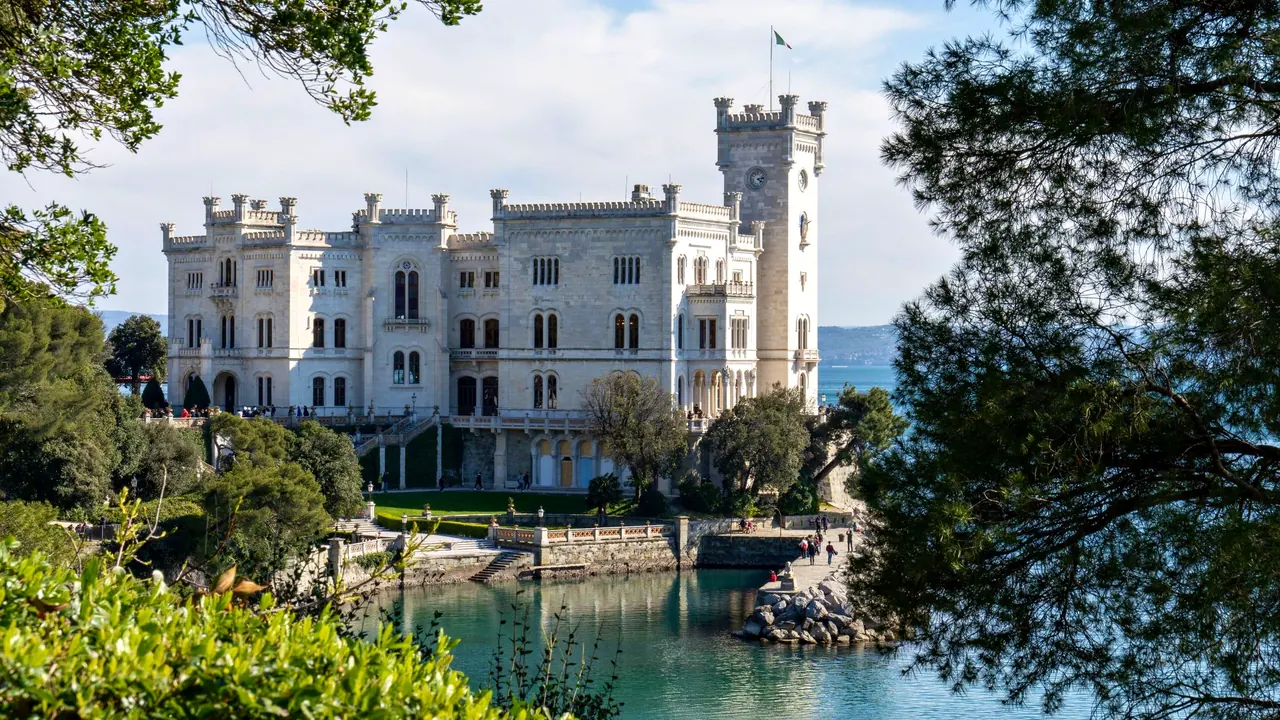
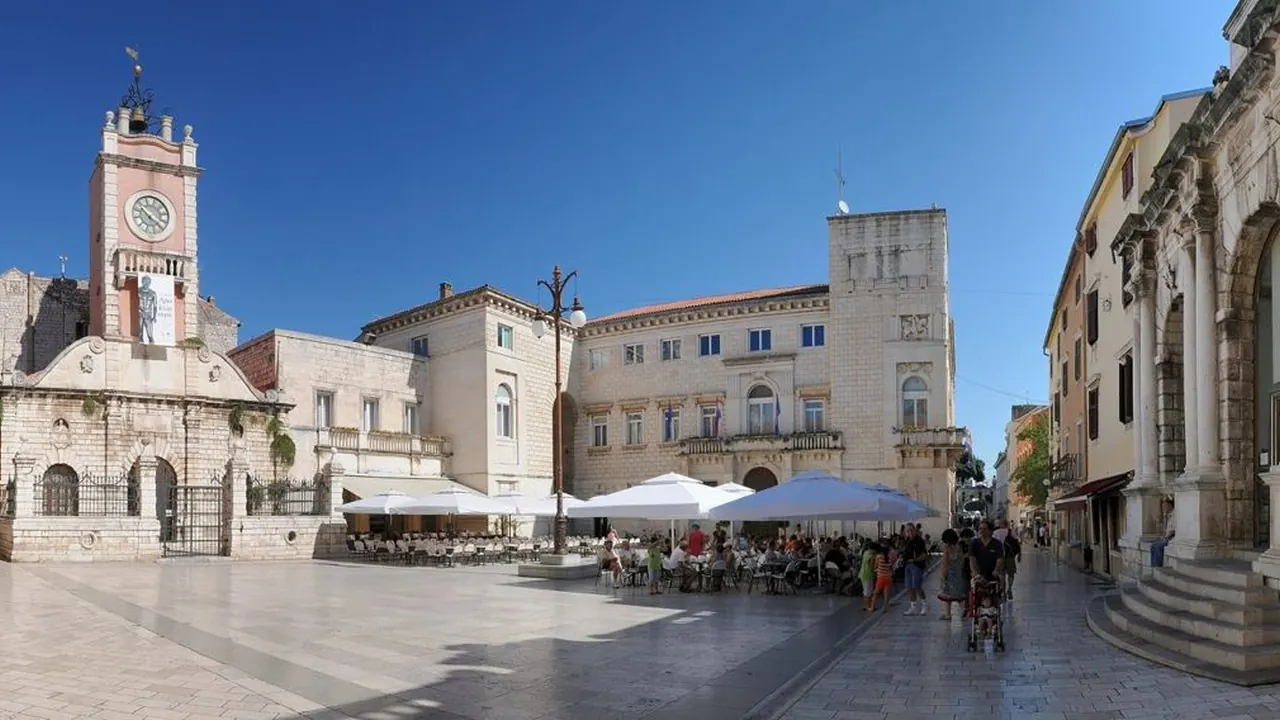
Photos: Trieste by Tibor Szabo, Pexels License; Zadar by Böhringer Friedrich, CC BY-SA 2.5, cropped.
Trieste or Zadar?
Our verdict in twelve categories, each scored against the same fixed benchmark cities, and the climate month by month, so you can choose for your trip.
Choose Trieste for
- live music and the arts
- food and drink
- getting around
Trieste is the better pick for a traveller who wants a city with some depth to it. It has Habsburg squares and palaces, a real opera house, coffee houses and buffets that serve food you won't find elsewhere in Italy, and an unusually wide choice of day trips into Friuli, Slovenia and as far as Venice. It suits people who like to walk, look, eat and talk more than they like to lie on the sand.
Choose Zadar for
- nature and the outdoors
- beaches
- nightlife
Zadar works better when the sea and the landscape are the point of the trip. The swimming is better, and Nin has proper sandy beaches. Ferries run from the edge of the old town out to hundreds of islands, and Paklenica, Kornati and Krka are all close enough for a day. The Roman and medieval peninsula fills a couple of days well, and the rest of the week belongs to boats, beaches and hiking.
Scoreboard
Twelve categories on one fixed scale from 0 to 100. The shaded stretch is the gap between the two.
Your match
Pick a travel style or drag the sliders, and both match scores follow your weighting.
Wins on live music and the arts and food and drink with your weighting.
Wins on nature and the outdoors and beaches with your weighting.
What matters to you?
Category by category
What the scores mean for a trip.
Beaches & swimming
Zadar is the better place for a swimming vacation, mostly because of what lies just beyond it. In town, Kolovare and Borik are pebble and concrete, much like Trieste. But Nin's long sandy shallows are twenty minutes away, and ferries from the harbour run to island coves such as Sakarun on Dugi Otok.
Trieste's sea is just as clear, and swimming at Barcola is a pleasant local ritual. You do it from stepped concrete and lawns, though, and the prettier coves at Sistiana and Duino are rocky. If you want sand, Trieste has almost none.
Food & drink
Trieste is the more interesting place to eat. Its buffets carve boiled pork and ham with horseradish, jota soup appears on menus next to Adriatic sardoni, and the coffee houses have their own vocabulary. The Karst osmize, where farms sell their own wine and cheese for a few weeks at a time, are an experience Zadar has nothing like.
Zadar serves sound Dalmatian cooking, such as peka lamb, black risotto and Pag cheese, and it has Maraschino as its own liqueur. But the konobas on the peninsula mostly serve the same menu. You'll eat well enough there, but not in as much variety.
Culture & sights
Trieste has more to see, and it spans more of history. There are the imperial set pieces of Piazza Unità and the Borgo Teresiano, the cathedral and castle on San Giusto, Miramare on the coast and one of Europe's largest synagogues. The Risiera di San Sabba memorial adds the twentieth century to the story.
Zadar packs three thousand years onto a small walled peninsula. The Roman forum, round St Donatus and the Venetian gates stand within a few minutes of each other, and the glass museum is excellent. Two days covers it all, and the Sea Organ gives it a modern sight Trieste has no equivalent for.
Nightlife
Neither city is built for a big night out, and they differ mainly in season. Trieste's evenings run on year-round aperitivo around the Canal Grande and Cavana, with student bars that stay open through the winter.
Zadar is livelier in July and August, when people move from the Riva to terrace bars on the walls. Serious clubbers make the hour's journey to Zrće on Pag. Out of season it goes quieter than Trieste does.
Nature & outdoors
Zadar has the bigger and wilder outdoors. Paklenica's gorges and climbing walls rise behind the coast, the stark Kornati and Telašćica lie out at sea, and Krka's waterfalls are an hour away. Sea kayaking among the islands is easy to arrange.
Trieste's landscape is tighter but very close at hand. You can walk the Strada Napoleonica above the gulf or the Rilke Path at Duino, explore the Grotta Gigante and snorkel in the Miramare reserve. Its sailing water is a match for Zadar's.
Day trips
Trieste has the richer choice, because three countries meet around it. Aquileia's mosaics, star-shaped Palmanova and the Collio vineyards are in Italy, Piran and Ljubljana are across the Slovenian border, and Venice is a long but realistic day by train.
Zadar's best outings are Šibenik's cathedral town and little Nin. Split and Trogir are possible but make long days, and you'll need a car or a tour for most of them. Its own strength is the island ferries, out to Ugljan, Pašman and car-free Silba.
Good for families
Both cities are safe and calm with children, and neither has much built for them. Trieste's best family outings are the Grotta Gigante, the small aquarium and the science centre, which suit older children. Its steep, stepped streets and lack of sand make it harder going with toddlers.
Zadar is easier with small children: the old town is flat and car-free, Nin has shallow sandy beaches, and the Sea Organ and light-up Greeting to the Sun go down well with most children.
Getting around
Trieste is the easier city to get around without a car. Its flat waterfront centre is walkable, and dense city buses run out to Barcola, Miramare and up onto the Karst. Passenger boats cross the bay to Muggia. The only hard work is the climb up San Giusto.
Zadar's peninsula takes a quarter of an hour to cross on foot, and the island ferries leave from its edge. Beyond Borik, though, the local buses don't help much, and the national parks really need a hire car or an organised excursion.
Shopping & style
Neither city is a shopping destination, but Trieste gives you a little more to browse. The shops around Corso Italia cover ordinary Italian fashion, and antique shops in the old town lanes recall the merchant port. Its coffee, Karst wine and presnitz make good things to take home.
Zadar's Kalelarga has jewellers, chains and souvenir shops. The best things to bring back are edible or handmade: Maraschino, Pag cheese and Pag lace, most easily found at the market by the walls.
Affordability
The two cost much the same over a stay, but the money goes in different places. Trieste is steady through the year, with rooms tightening only around the Barcolana regatta and in high summer. A buffet lunch or a coffee at the bar costs little.
In Zadar the price depends on the season. Apartments are good value in June and September and much dearer in July and August. Boat trips and national park entry add up quickly in a vacation built around them.
Live music & performing arts
Trieste is the clear choice for evenings at the theatre. The Teatro Verdi on the waterfront runs a full opera and ballet season, operetta survives there as a Habsburg legacy, and the Rossetti and the Slovenian theatre add drama.
Zadar has one memorable highlight, the summer early-music concerts inside St Donatus. You may also hear klapa singing in the squares. Outside July and August there is very little on.
Wellness & relaxation
Trieste's way of switching off belongs to the city, and it works in any month. You can spend a slow morning with the papers in one of the grand Habsburg-era coffee houses, then end the day on the Molo Audace, strolling out along the stone pier into the gulf as the light fades. Its literary past gives those idle hours some atmosphere, but for thermal baths you have to leave town.
Zadar's slow pace is tied more to the sea and to summer. Life eases off in the midday heat, and in the evening people gather on the waterfront steps by the Sea Organ to watch the sun drop behind the islands. Nearby Nin has a shallow lagoon with an old local custom of mud bathing, which Trieste has nothing like, and most of Zadar's spas are in the resort hotels at Borik.
When should you go?
Pick your month. The climate figures are measured averages, not a forecast.
Trieste in July
Zadar in July
Daytime high, °C
Rainfall in the month, mm
Where the figures come from
Zadar has no rain gauge within 25 km of the centre, so its rainfall comes from a gridded climate dataset read at the city rather than from a gauge further away.
Temperature and rainfall are climate normals, averaged over the years shown. Trieste: 1991-2020 normals, Trieste (1.6 km from centre). Zadar: 1999-2020 (rainfall 1991-2020) normals, Zadar / Zemunik (9.9 km from centre).
Both cities follow the same Adriatic pattern. In Trieste the sea is warm enough for swimming from June to September and peaks at about 25°C in July and August, and Zadar's water follows almost the same curve. Trieste's summer highs reach about 29°C, and showers come through the warm months, though there is plenty of sun and July is the brightest month. Zadar runs a couple of degrees hotter, at around 31°C, which makes the middle of the day hard going on its open waterfront. Its summer is markedly drier than Trieste's, and July is its driest month.
The rain sets in during September in both cities and stays heavy until November. Trieste's November is the wettest month in either city. Winters are mild but grey. Trieste also gets the cold Bora wind, while Zadar's winter sea stays a few degrees warmer. May and late September are the best months for walking the streets in both. In spring and autumn Zadar is the better choice if you also want to hike in the Velebit range.
Which traveller are you?
For a beach and sun trip, Zadar is the better choice. It has a drier, hotter summer and Nin's shallow sandy beaches, and island coves such as Sakarun are a ferry ride away. In Trieste you swim mainly from concrete platforms and ladders at Barcola.
On a culture and arts trip, Trieste comes out ahead. Piazza Unità, San Giusto, Miramare and the great synagogue give it more to see, and the Teatro Verdi runs a full opera season. Zadar's St Donatus concerts are lovely, but they only happen in summer.
For an outdoors trip, Zadar is the stronger base. You can climb in Paklenica, sail the stark Kornati islands and see Krka's waterfalls, all within an hour or so. Trieste's Karst walks and Val Rosandra are good, but they don't add up to as much.
Before you go
| Measure | Trieste | Zadar |
|---|---|---|
| Official language | Italian | Croatian |
| Currency | Euro (EUR) | Euro (EUR) |
| Sockets | CFL230 V, 50 Hz | CF230 V, 50 Hz |
| Driving side | Right | Right |
| Time zone | UTC+1, UTC+2 in summer | UTC+1, UTC+2 in summer |
| Emergency number | 112 | 112 |
| Elevation | 2 m | 5 m |
| Main airport | Trieste Airport (TRS)31 km from centre32 non-stop destinations | Zadar Airport (ZAD)10 km from centre66 non-stop destinations |
| Public holidays this year | 13 days | 14 days |
By the numbers
| Measure | Trieste | Zadar |
|---|---|---|
| City population | 198,417 | 70,779 |
| People per km² | 2,332 | - |
| Museums within 10 km | 33 | 1 |
| UNESCO World Heritage sites within 50 km | 5 | 2 |
| Swim season, months above 21 °C | 4 months | 4 months |
Where else could you go?
Every comparison below shares a destination with this one, so you can follow Trieste or Zadar somewhere new.
- Rovinjvs Trieste
- Ljubljanavs Trieste
- Bledvs Trieste
- Venicevs Trieste
- Splitvs Zadar
- Cortina d'Ampezzovs Trieste